3
connection dimensions
The Surgeon General describes structure, function, and quality as distinct dimensions.
The people you surround yourself with shape who you become. You have heard that a thousand times because it is true. Look at the five people you spend the most time with and you are looking at your future. When the people around you are growing, you grow. When they are building, you start building too.
I want to build something meaningful. I want to be around men who lift each other up. Men who fill their calendars. Men who do their pushups. Men who use AI to get ahead. Men who are building lives they are proud of. These are my folks. The best of the best. And if you are looking for a community that will welcome you and help you grow — there is a seat at this table for you.
Social connection can be one part of rebuilding, but a community should not be treated as a cure or a substitute for professional care. The practical question is whether a group offers repeated contact, consent, clear boundaries, privacy, and room to disagree.
I am not saying walk away from your friends. I am saying expand your circle. Expand your circle through recurring, low-pressure settings that fit your schedule and interests. Trust should grow through consistent behavior; it should not require immediate disclosure, payment, loyalty, or agreement with a leader.
Elder X reports that dependable relationships mattered during his own period of mental-health and family strain. That is a personal recollection, not a comparison showing that friendship works better than medication or therapy. Clinical care and healthy peer connection can serve different roles.
Look for people who can disagree without humiliation, coercion, diagnosis, or punishment. Honest feedback should be specific, invited, and open to correction.
Reliability means doing what was actually agreed, not promising constant access. A peer group must not present itself as a 24-hour crisis service unless it is qualified, staffed, and verified as one.
A useful group supports concrete member-chosen actions without making one routine, technology, belief, body type, or definition of progress mandatory.
Healthy groups allow setbacks, changing capacity, and different goals. They do not turn difficulty into a moral failure or pressure members to disclose more than they choose.
Accountability should define the action, frequency, privacy rule, and exit option in advance. It should never grant another member control over treatment, money, relationships, or safety decisions.
Lived experience can create recognition, but it is not a clinical credential or proof that the same choice will produce the same outcome. A responsible peer states that limit clearly.
Use the contact form to describe the question you want help organizing. Messages are reviewed when capacity allows; response timing varies, delivery depends on the configured email service, and this is not a crisis or real-time channel.
The published outline is $250 per week for a one-hour phone or Zoom call plus between-call messaging. It is not an active checkout or promise of daily access. Confirm current availability, scope, message limits, cancellation terms, and price in writing before payment. This is not therapy or crisis care.
This is a proposed program, not a currently verified matching service. It would require identity safeguards, consent, moderation, reporting rules, privacy boundaries, and a process for ending a match. Do not submit expecting an automatic partner assignment.
No local chapter inventory or operating chapter is verified on this site. Any future chapter would need named leadership, venue and accessibility details, safeguarding, moderation, privacy rules, emergency boundaries, and clear disclosure of fees before it is listed as available.
No retreat is currently scheduled or for sale. A future event would require confirmed dates, venue, price, refund terms, accessibility, insurance, safety procedures, qualified staff boundaries, and a clear description of what the event is and is not.
A real community program needs more than motivating copy. Before launch it needs a named operator, written scope, eligibility rules, privacy practices, moderation, reporting and removal procedures, crisis boundaries, accessibility, fees, and a way to measure whether members are being harmed or helped.
Peer support should complement—not impersonate—licensed clinical, medical, legal, domestic-violence, addiction-treatment, or emergency services. Leaders need referral rules for needs the group is not qualified to handle.
Until those controls and an actual operating program are verified, this page labels chapters, matching, and retreats as proposals. The current product is the public content, source directory, browser-only tools, and contact path.
The currently available public resources are the site guides, browser-only check-ins, source links, and contact form. The form is not a guaranteed membership intake. Local chapters and accountability matching are disclosed concepts, not verified operating services.
The website is online. A one-on-one paid conversation outline may be available after written confirmation. No operating local chapter directory is currently verified on this site.
It is a proposed program, not an active matching promise. A responsible version would define consent, frequency, privacy, prohibited conduct, moderation, reporting, crisis limits, and how either person can end the match.
The public educational pages can be used regardless of current belief. No verified membership program or admission standard is represented here.
The public site and contact form do not charge a fee. The listed $250 weekly conversation is an offer outline only; availability, scope, messaging limits, price, and cancellation terms must be confirmed before payment. No free matching program is currently verified.
Use the planning guides privately if they are helpful. You do not need to contact anyone, and AI should not diagnose, prescribe, or replace crisis or licensed care.
Use the checklist before joining any peer group. If you want to ask about the published resources or the paid conversation outline, use the contact form.
Current availability is limited to what the site can verify. Proposed programs are not memberships, local services, or scheduled events.
Pause, look, and use something
Long explanations are easier to use when they are interrupted by evidence, a visual reset, a decision, and a tool. This section turns the topic into a private action plan without presenting generated media as a real person, place, or testimonial.
4
Original visual directions attached to this topic; not claimed as documentary evidence.
3
Topic-specific ideas plus links to an independent curated resource library.
0
The check-in below is private and does not pretend to represent other visitors.

Quick perspective
A page can be long and still feel thin when every paragraph asks the reader to do the same thing. Useful depth comes from different jobs: explain, show, compare, help decide, and make the next action easier.
Questions this page can turn into content
Watch from a named source
A sourced collection for examining belief changes, uncertainty, and life after certainty.
Recovering from Religion resource library ↗
A curated library of first-person stories and practical videos from Recovering from Religion.
Recovering from Religion resource library ↗
Private check-in
Nothing is submitted. This page does not invent vote counts or claim that other visitors answered.
Readiness tool
0 of 4 foundations in place
Choose the statements that are already true for you.
This planning aid is not a safety, legal, medical, or clinical assessment.
Belonging design · Reviewed August 2026
A healthy post-religious community should make room for privacy, disagreement, outside relationships, and leaving. Look for recurring contact, clear purpose, transparent leadership, written boundaries, and referral routes. Intensity, instant disclosure, or agreement with a leader are not reliable proof of safe belonging.
3
The Surgeon General describes structure, function, and quality as distinct dimensions.
1
A group should say what it offers and what it does not.
0
Belonging should not depend on adopting a replacement doctrine.
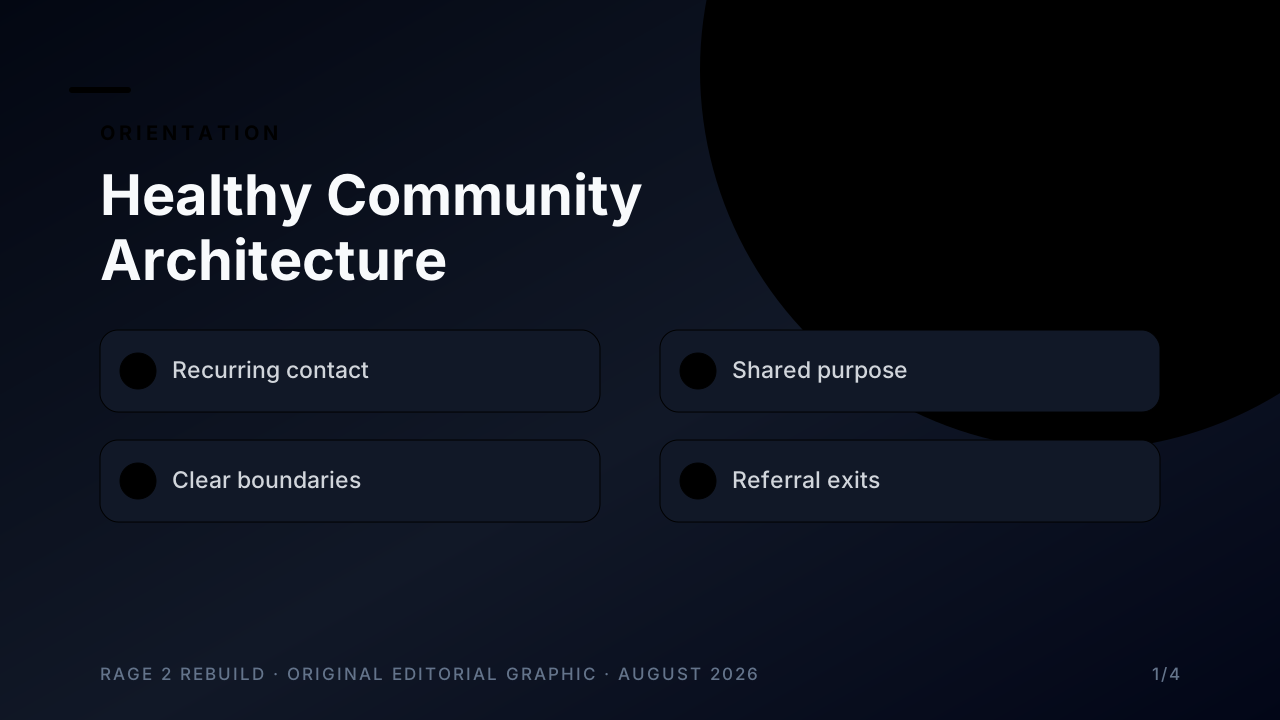
Orientation
Four structural features to inspect before joining.
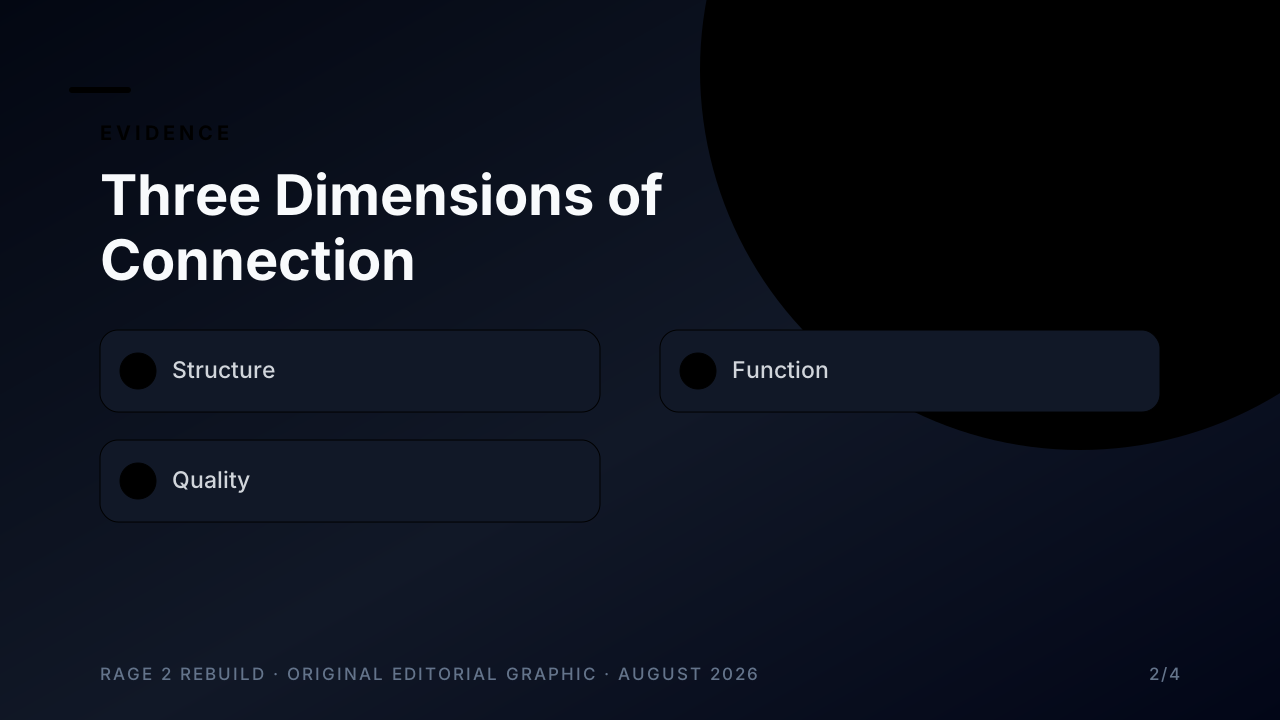
Evidence
Based on the U.S. Surgeon General advisory.
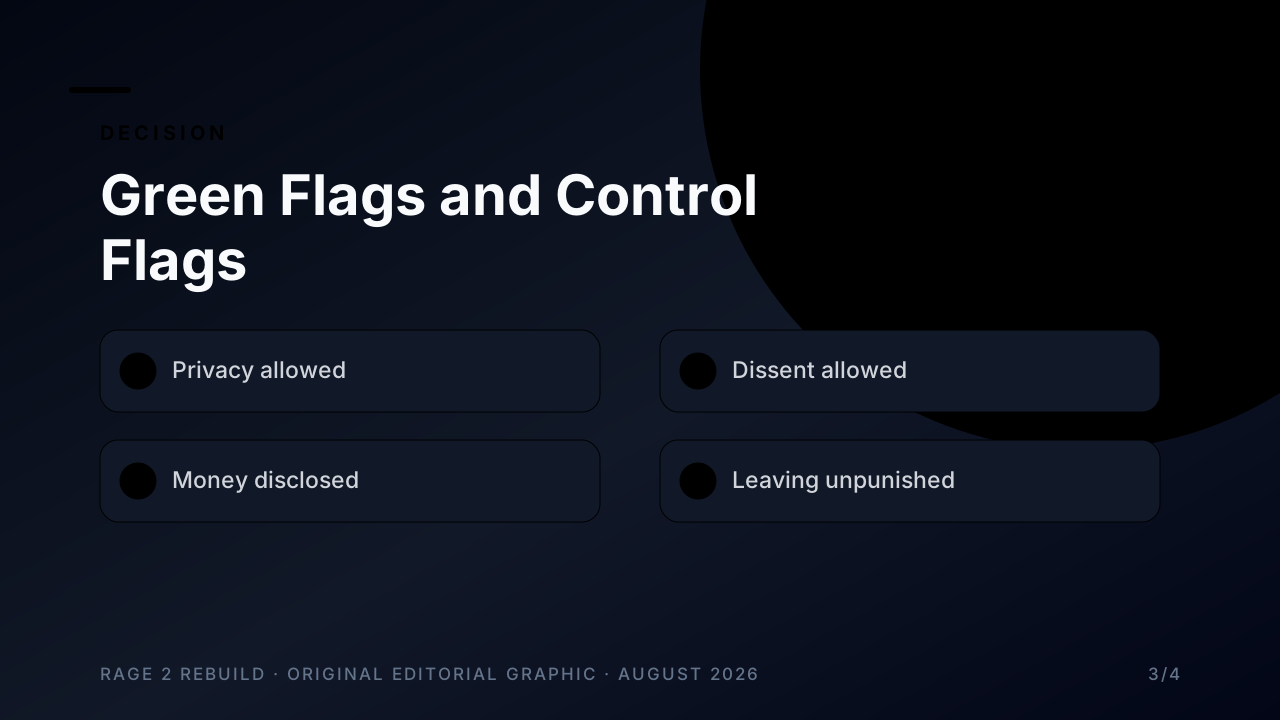
Decision
No single sign proves safety; patterns matter.
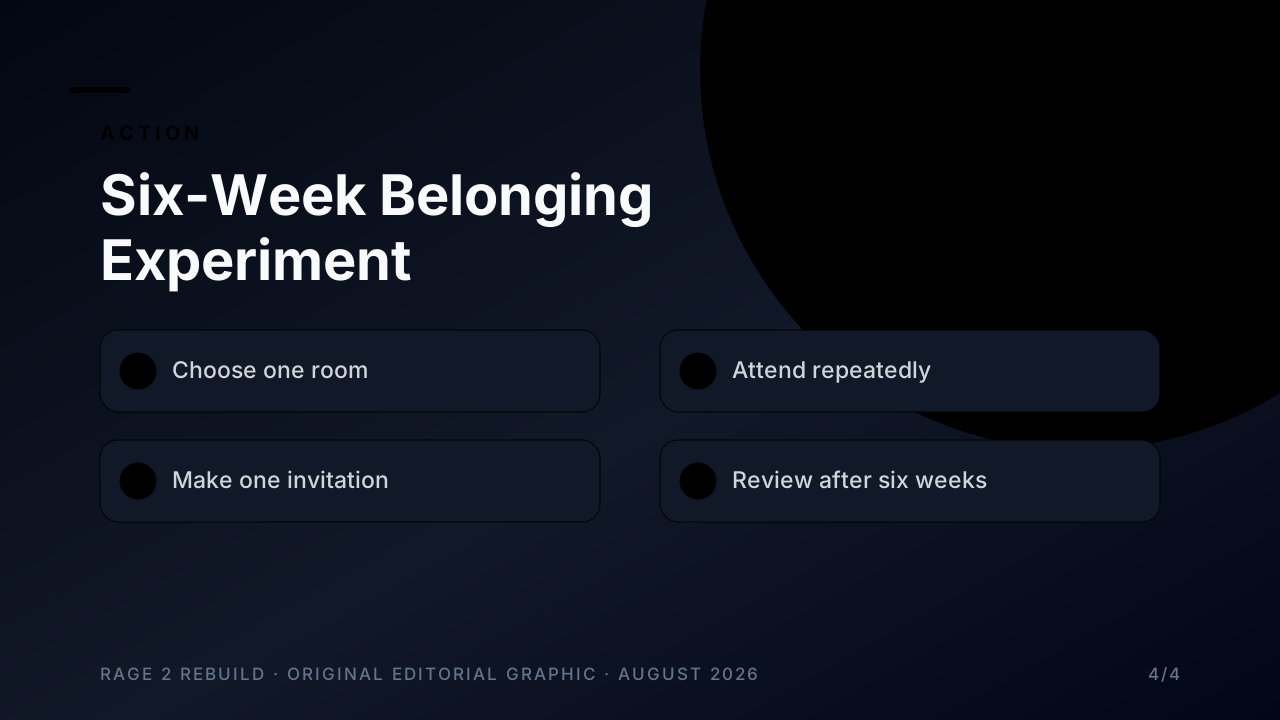
Action
Judge a room after repetition, not one awkward night.
Browser-only planning tool
Use observable policies and behavior, not only the welcome speech.
Original page video
A group can feel like family on night one and still be unsafe by month three.
Synthetic narration and original editorial graphics. No client, therapist, religious group, or documented event is depicted.
Private check-in
Nothing is submitted. This page does not invent vote counts or claim that other visitors answered.
Readiness tool
0 of 4 foundations in place
Choose the statements that are already true for you.
This planning aid is not a safety, legal, medical, or clinical assessment.
Named sources
U.S. Surgeon General
Framework for understanding the structure, function, and quality of social connection.
Recovering from Religion
Named external support option; verify its current hours, privacy terms, and service scope directly.
SAMHSA
Official U.S. treatment and support routes; local availability and eligibility must be confirmed.
Editorial review: August 1, 2026. Hours, laws, credentials, costs, services, and availability can change; verify them directly.