3
knowledge circles
Separate people who know, suspect, and do not know before choosing the next conversation.
Questioning privately, fading, formal disassociation, and being removed from a congregation are not interchangeable situations. Before choosing a label or public step, identify what could change in housing, work, family contact, medical decisions, devices, and access to documents.
This page cannot predict how a particular congregation or relative will respond. It can help you create options before information moves faster than you intended.
If someone controls your shelter, money, movement, phone, or identification, privacy can be a safety measure. For legal, custody, immigration, or immediate-safety questions, use qualified local help rather than a website or peer mentor.
Create three circles: people who know, people who suspect, and people who do not know. For each person, note what they can affect and whether communication is private. This shows where one conversation could spread beyond its intended audience.
Decide in advance what you will say to elders, relatives, employers, and friends. “I am not discussing that today” is a complete boundary. You do not owe a live debate when the practical consequences have not been planned.
Keep accessible copies of identification, employment records, financial information, prescriptions, insurance details, and important contacts. Review shared accounts, device access, location sharing, and recovery email addresses without taking property that is not yours.
Name one safe place to stay and one person you can contact if circumstances change quickly. A plan does not mean you expect the worst; it prevents one surprise from controlling every later decision.
JW exit and shunning worksheet
For a Witness who is fading, PIMO, disfellowshipped, or considering disassociation, information control and family contact can change quickly. A careful plan is not cowardice; it is sequencing.
3
Fading, formal disassociation, and disfellowshipping can create different practical consequences.
2
Keep any safe existing contact while deliberately building relationships outside the congregation.
1
Keep identification, medical, employment, housing, and financial records accessible to you.

Useful distinction
Remaining physically in while mentally out may buy planning time. It becomes dangerous when delay has no purpose, no support, and no next checkpoint.
Map the Exit Without Rushing It
Start with the practical consequence you are most worried about, not a full defense of why you no longer believe.
Map the Exit Without Rushing ItNamed external resources
Private check-in
Nothing is submitted. This page does not invent vote counts or claim that other visitors answered.
Readiness tool
0 of 4 foundations in place
Choose the statements that are already true for you.
This planning aid is not a safety, legal, medical, or clinical assessment.
Choose recurring settings based on an actual interest, schedule, or skill. Repetition matters more than finding people who share every conclusion about religion.
If family contact changes, grief and anger may arrive alongside relief. A licensed clinician can help when sleep, daily functioning, trauma symptoms, or self-harm risk become difficult to manage.
JW information and independence plan · Reviewed August 2026
Questioning privately, remaining physically in while mentally out, fading, formal disassociation, and removal from a congregation are different situations. Before choosing a public step, map who knows, what could spread, who controls housing or money, where documents are stored, and how family contact might change. Privacy is legitimate when disclosure could reduce safety or independence.
3
Separate people who know, suspect, and do not know before choosing the next conversation.
5
Housing, money, documents, devices, and transport can determine safe timing.
30 days
Schedule practical support for the first month instead of relying on one emergency contact.
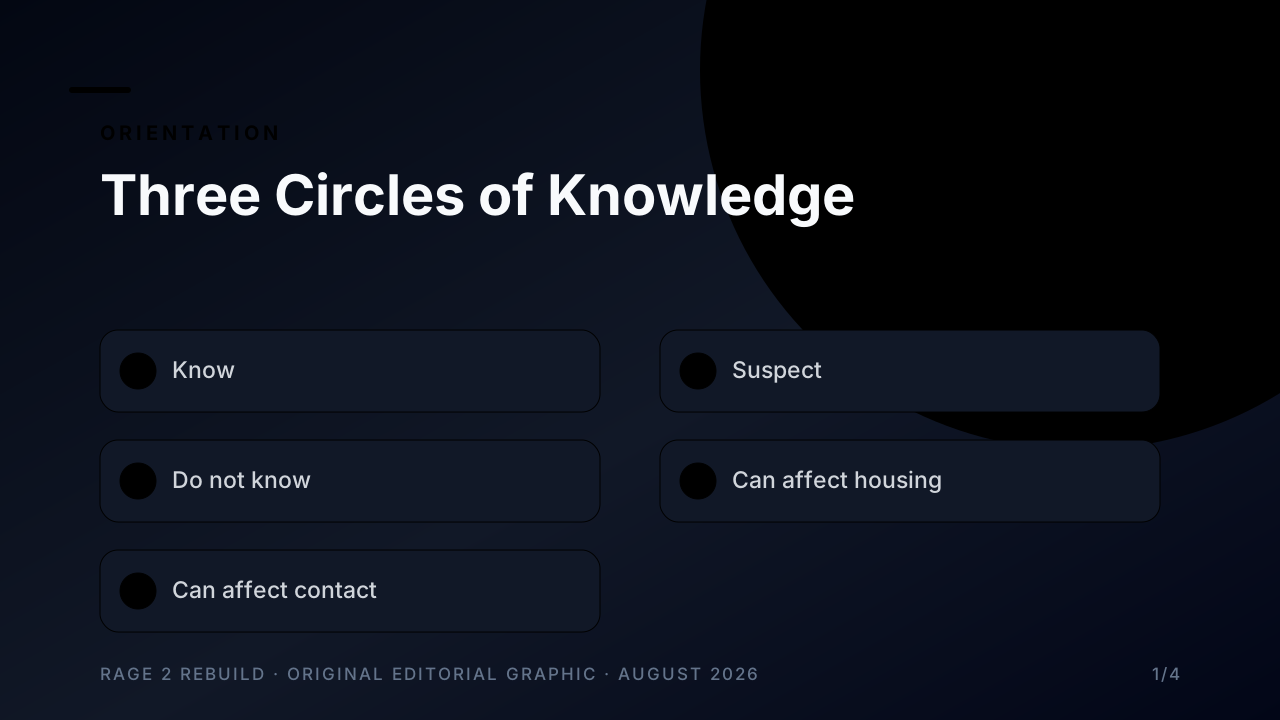
Orientation
Information can move beyond the intended audience.
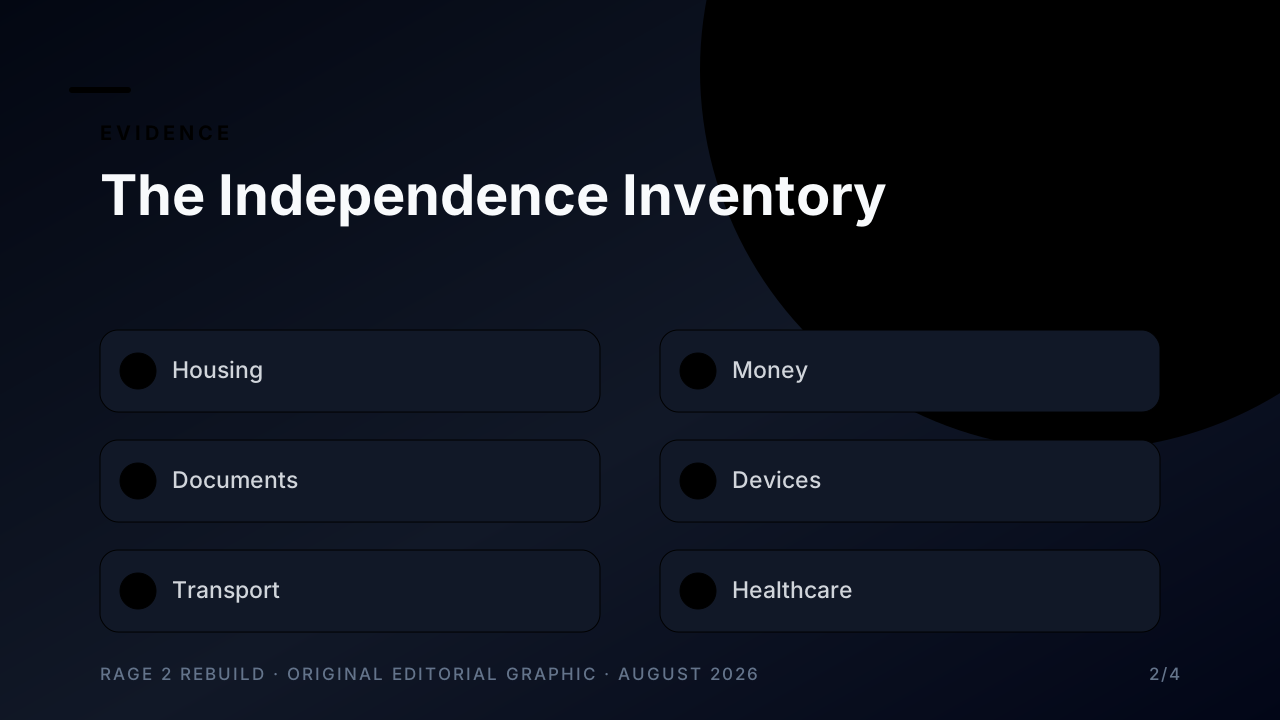
Evidence
Practical control changes the risk of a disclosure.
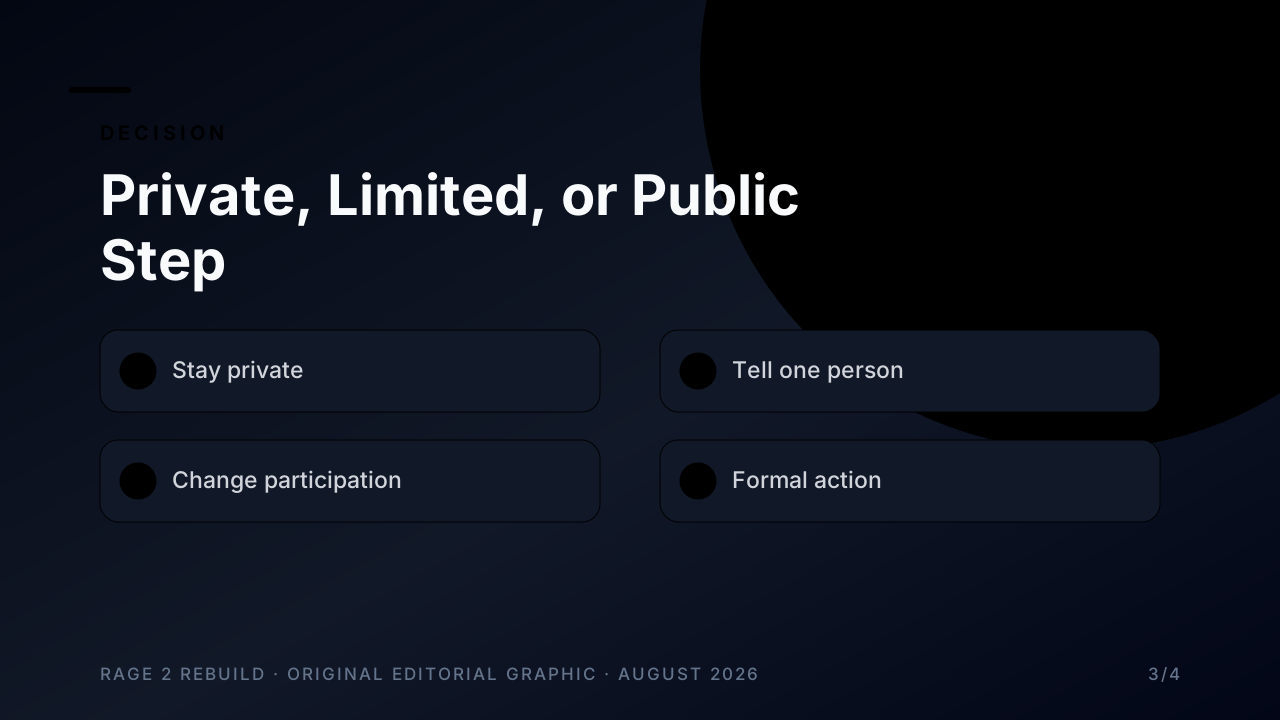
Decision
Choose by consequence and readiness, not outside pressure.
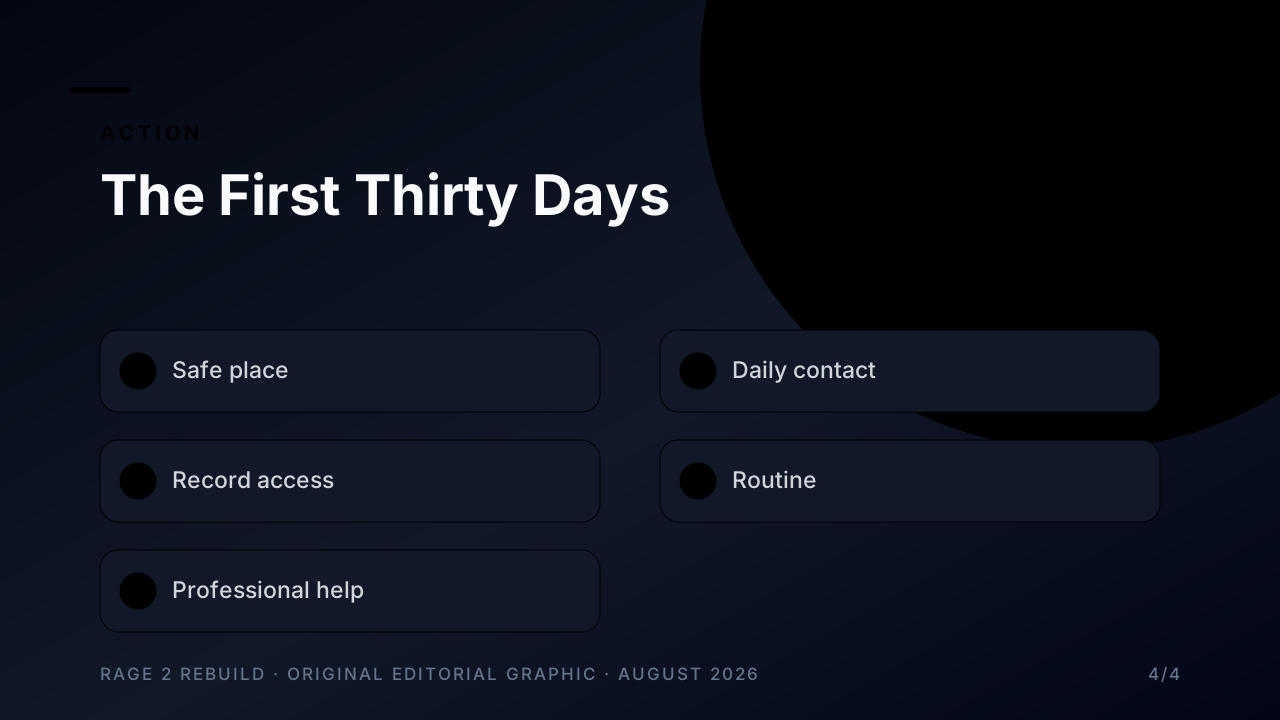
Action
Plan daily continuity before a high-consequence step.
Browser-only planning tool
Plan information flow and independence without assuming a particular congregation or relative will respond one way.
Original page video
The safest next step may depend less on your conclusion than on who can act on the information.
Synthetic narration and original editorial graphics. No client, therapist, religious group, or documented event is depicted.
Private check-in
Nothing is submitted. This page does not invent vote counts or claim that other visitors answered.
Readiness tool
0 of 4 foundations in place
Choose the statements that are already true for you.
This planning aid is not a safety, legal, medical, or clinical assessment.
Named sources
Recovering from Religion
Educational material about coercive control and exit planning; use qualified local help for safety or legal decisions.
Electronic Frontier Foundation
Practical digital-security guidance; choose measures according to a personal threat model rather than assuming one universal setup.
National Institute of Mental Health
Official U.S. guidance for locating qualified care and responding when danger is immediate.
Editorial review: August 2, 2026. Hours, laws, credentials, costs, services, and availability can change; verify them directly.
Page-specific answers
No. Different participation and administrative paths may create different practical consequences. This guide does not predict how a congregation or family will respond.
Keep lawful access to your own identification, employment, housing, medical, insurance, financial, and emergency-contact information.
Build a personal security plan appropriate to your threat model. The EFF resource explains device, account, password, and communication choices without assuming one setup.
Build recurring outside contact, practical continuity, and qualified care before the change. One new friend should not be expected to replace an entire social system.
Not therapy. Personal advice. Elder X is not a licensed therapist or spiritual counselor. This is honest writing from a man who has walked an analogous road.
A practical guide to contact boundaries, ambiguous loss, documentation, chosen family, and daily stability after religious shunning.
A six-week practical experiment for rebuilding recurring contact, trust, invitations, and belonging after leaving a religious community.
A practical guide to timing, scope, safety, boundaries, and follow-up when telling family that your religious beliefs changed.
A practical tool for recording religious guilt triggers, inherited rules, predicted consequences, present evidence, and care escalation.
Leaving looks different depending on what you came out of. These pages take that seriously.
A practical guide to separating belief, marriage, family, finances, church participation, and community during an LDS faith transition.
A practical guide for separating doctrine, authority, politics, family, sexuality, parenting, and church belonging during evangelical deconstruction.
A practical guide for people leaving Orthodox Jewish communities, covering family, education, work, technology, housing, marriage, and identity.
What you grew up in, what made you start questioning, where you are now. Be as specific as you can. There is no wrong way to start.