7
topics to discuss
Consent, boundaries, exclusivity, health, substances, money, and future expectations.
Leaving an inherited rulebook does not remove the need for boundaries. It creates a need to state the purpose of each boundary and communicate it directly.
Emotional readiness and physical readiness can move at different speeds. Consent is specific, ongoing, and can be withdrawn; uncertainty is a reason to slow down.
This guide is educational, not medical or legal advice. Use qualified care for sexual health, trauma, abuse, or safety concerns.
State what you want from dating now, your physical and emotional boundaries, your view of exclusivity, substance use, sexual health, money, and future plans. A chosen boundary can change, but it should not remain invisible.
Share enough religious background to make a current boundary understandable. You do not owe a new date a full trauma history, and you do not need to apologize for learning systems you were not taught.
Post-religious dating values tool
Dating after strict religion may require new language for consent, sex, exclusivity, alcohol, gender roles, money, and future plans. Freedom works better when your boundaries are spoken rather than assumed.
5
Consent, exclusivity, sexual health, substance use, and future expectations.
2
Emotional readiness and physical readiness do not have to advance together.
1
Maintain transport, communication, and a way to leave a date safely.

Useful distinction
A chosen boundary can be firmer than an inherited prohibition because you understand its purpose and can communicate it directly.
Clarify the Boundary Before the Date
Start with the situation where the old rules disappeared and no new language replaced them.
Clarify the Boundary Before the DateNamed external resources
Videos and readings about religious trauma, recovery, and when professional care may help.
Source: Recovering from Religion ↗
A curated collection for examining belief changes without rushing into a replacement identity.
Source: Recovering from Religion ↗
Private check-in
Nothing is submitted. This page does not invent vote counts or claim that other visitors answered.
Readiness tool
0 of 4 foundations in place
Choose the statements that are already true for you.
This planning aid is not a safety, legal, medical, or clinical assessment.
Use your own transport when possible, tell a trusted person the plan, meet in public initially, protect account access, and leave when pressure replaces consent. Freedom is not a requirement to ignore risk.
Dating values card · Reviewed August 2026
Dating after strict religion may require new language for consent, physical boundaries, exclusivity, sexual health, alcohol, gender expectations, money, privacy, and long-term goals. Freedom is not the absence of boundaries. Decide what you want, communicate directly, protect practical safety, and use qualified healthcare for individual sexual-health decisions.
7
Consent, boundaries, exclusivity, health, substances, money, and future expectations.
2
Emotional and physical readiness do not have to advance together.
1
Transport, communication, and a support contact reduce dependence on a new date.
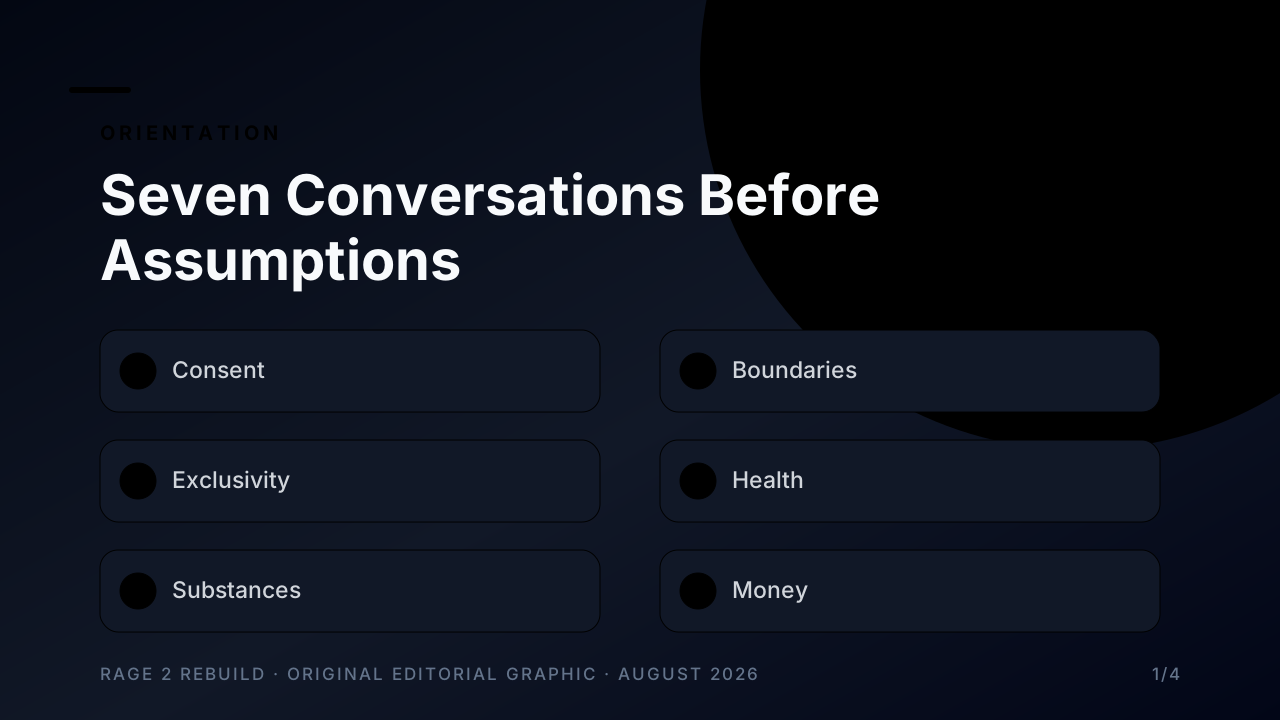
Orientation
Do not rely on shared religious defaults that no longer exist.
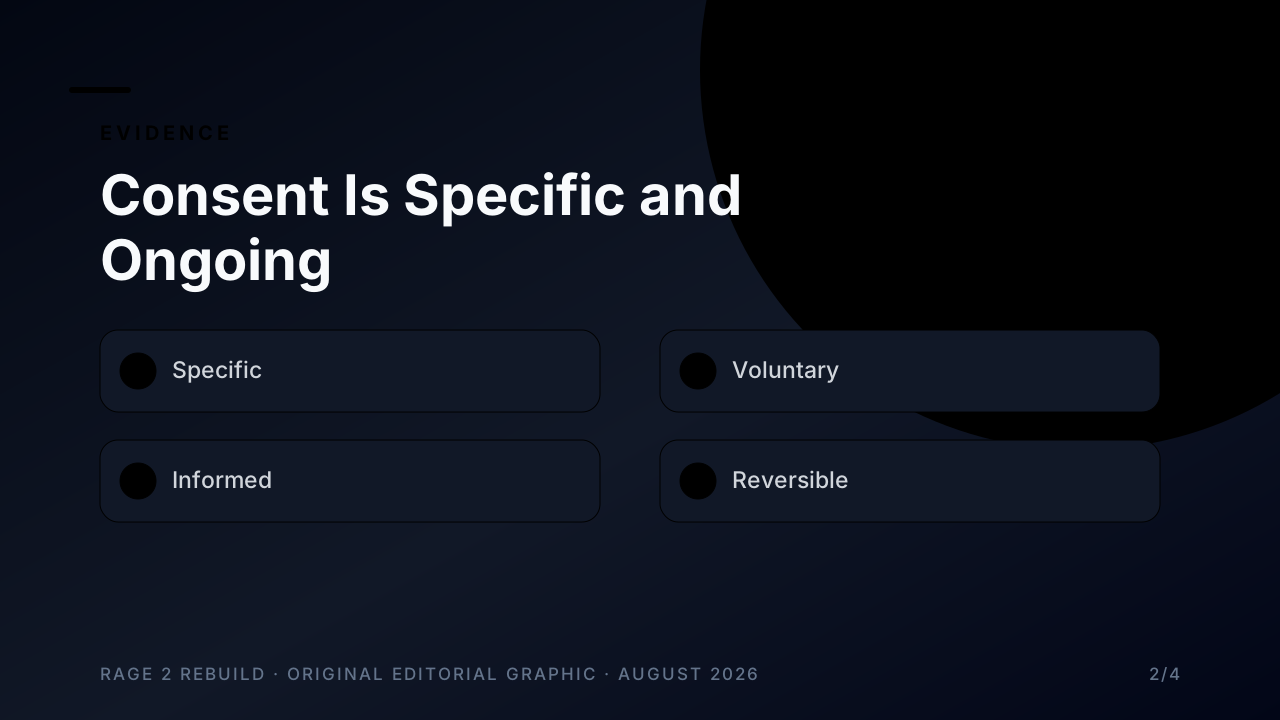
Evidence
Consent is not inferred from a past yes, relationship label, or religious history.
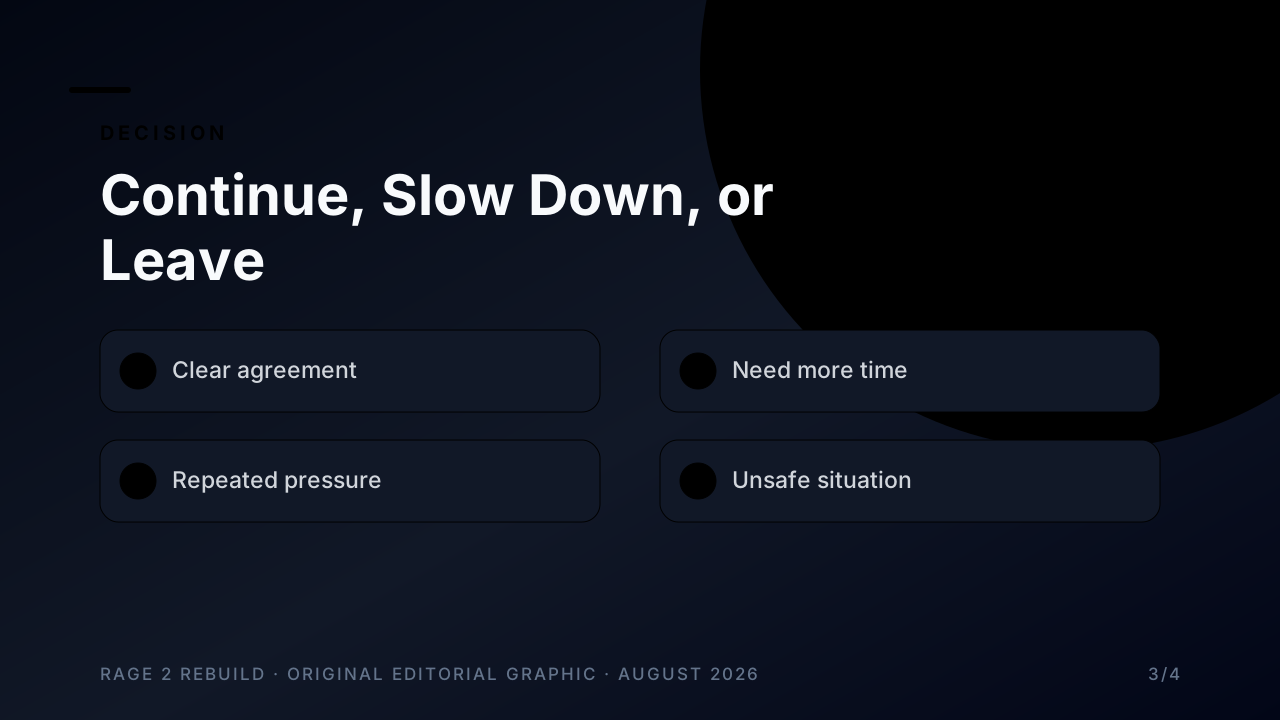
Decision
Discomfort, pressure, and risk deserve different responses.
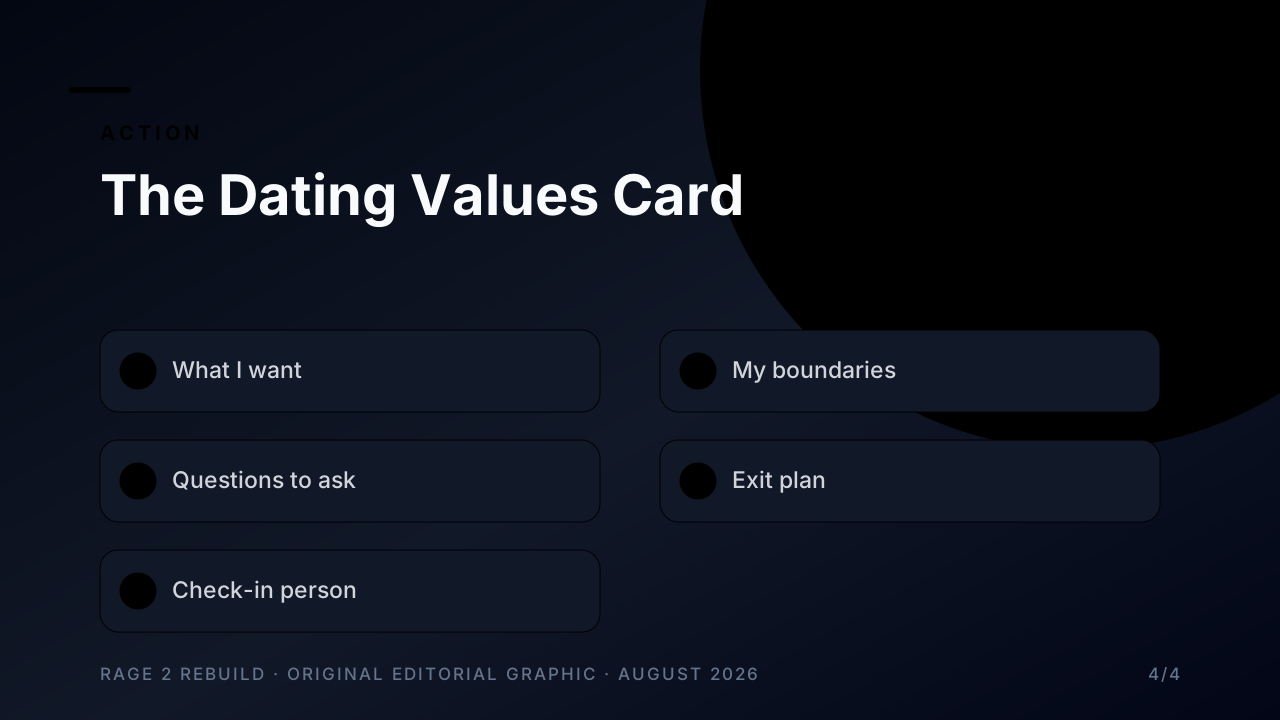
Action
Write the language before a pressured moment.
Browser-only planning tool
Decide what you want and what you need to ask without treating uncertainty as failure.
Original page video
Freedom works better when boundaries are chosen and spoken, not merely absent.
Synthetic narration and original editorial graphics. No client, therapist, religious group, or documented event is depicted.
Private check-in
Nothing is submitted. This page does not invent vote counts or claim that other visitors answered.
Readiness tool
0 of 4 foundations in place
Choose the statements that are already true for you.
This planning aid is not a safety, legal, medical, or clinical assessment.
Named sources
Centers for Disease Control and Prevention
Public-health context for respectful sexual-health conversations; individualized testing and care belong with qualified providers.
Recovering from Religion
Educational resources with a clear boundary between peer information and qualified mental-health care.
National Institute of Mental Health
Official U.S. guidance for locating qualified care and responding when danger is immediate.
Editorial review: August 2, 2026. Hours, laws, credentials, costs, services, and availability can change; verify them directly.
Page-specific answers
Share enough to explain a relevant boundary or value, then add detail as trust and context develop. You do not owe a complete history immediately.
Ask directly what each person means by dating, exclusivity, sexual contact, and future expectations instead of relying on labels.
Use consent, impact, health, honesty, mutual responsibility, personal values, and direct agreements rather than inherited shame.
Leave when consent or safety is compromised, pressure continues after a boundary, or you cannot exit freely. Use local emergency help when danger is immediate.
Not therapy. Personal advice. Elder X is not a licensed therapist. This is honest writing from someone who has walked the road and sat with people on it.
A six-week practical experiment for rebuilding recurring contact, trust, invitations, and belonging after leaving a religious community.
A practical tool for recording religious guilt triggers, inherited rules, predicted consequences, present evidence, and care escalation.
A practical framework for building a provisional worldview with evidence, confidence levels, values, uncertainty, and scheduled review.
A practical mixed-faith marriage guide for belief differences, children, money, rituals, relatives, and household agreements.
Pages written specifically for people leaving these traditions.
A practical guide for separating doctrine, authority, politics, family, sexuality, parenting, and church belonging during evangelical deconstruction.
A practical guide for people leaving Orthodox Jewish communities, covering family, education, work, technology, housing, marriage, and identity.
A practical guide to separating belief, marriage, family, finances, church participation, and community during an LDS faith transition.
Describe what you grew up in, the decision in front of you, and the next outcome you want. Include only necessary detail; response timing varies.