5
questions for a claim
Who says it, how they know, what supports it, who is affected, and what could change our minds?
Children do not need a finished metaphysical system before a family can practice honesty, repair, consent, empathy, courage, responsibility, and wonder.
The parenting task is not to replace one unquestionable answer with another. It is to make questions safe, show how evidence is evaluated, and translate values into visible behavior.
When caregivers disagree, children should not be recruited to decide which adult is right. Write practical agreements and revisit them as the child’s age and questions change.
Choose one value and define what a child can observe: honesty includes correcting a mistake; empathy includes noticing impact; responsibility includes repair. A weekly family action teaches more than an abstract slogan.
Use phrases such as, “Different people believe different things,” “Here is what I currently think,” and “Let us find a reliable source.” Age-appropriate uncertainty models intellectual honesty without making the child carry adult anxiety.
Values-to-actions parenting tool
Children do not need a finished metaphysical system to learn honesty, repair, empathy, courage, consent, responsibility, and wonder. Turn each value into a behavior they can see and practice.
5
Who says it, how do they know, what is the evidence, who is affected, and what could change our mind?
1
Ritual can be dinner, service, nature, storytelling, or reflection without a creed.
2
Children can understand that caregivers hold different beliefs without choosing a side.

Useful distinction
Predictable shared practices help mark time and belonging. Their meaning can come from attention, memory, gratitude, service, and connection.
Build One Family Practice
Choose the value or question your child is bringing home right now.
Build One Family PracticeNamed external resources
Private check-in
Nothing is submitted. This page does not invent vote counts or claim that other visitors answered.
Readiness tool
0 of 4 foundations in place
Choose the statements that are already true for you.
This planning aid is not a safety, legal, medical, or clinical assessment.
Be specific about invitations, worship, prayer, gifts, fear-based messages, and private conversations. State what relatives may share, what requires parental permission, and what happens if the boundary is ignored.
Values-to-practice parenting · Reviewed August 2026
Children can learn honesty, empathy, consent, repair, responsibility, courage, and wonder without receiving a finished metaphysical system. Translate values into observable family practices, answer questions with age-appropriate uncertainty, and create agreements that prevent caregivers or relatives from recruiting children into adult belief conflicts.
5
Who says it, how they know, what supports it, who is affected, and what could change our minds?
1
A recurring action makes a value visible without requiring a creed.
2
Children can understand disagreement without being asked to choose a parent.
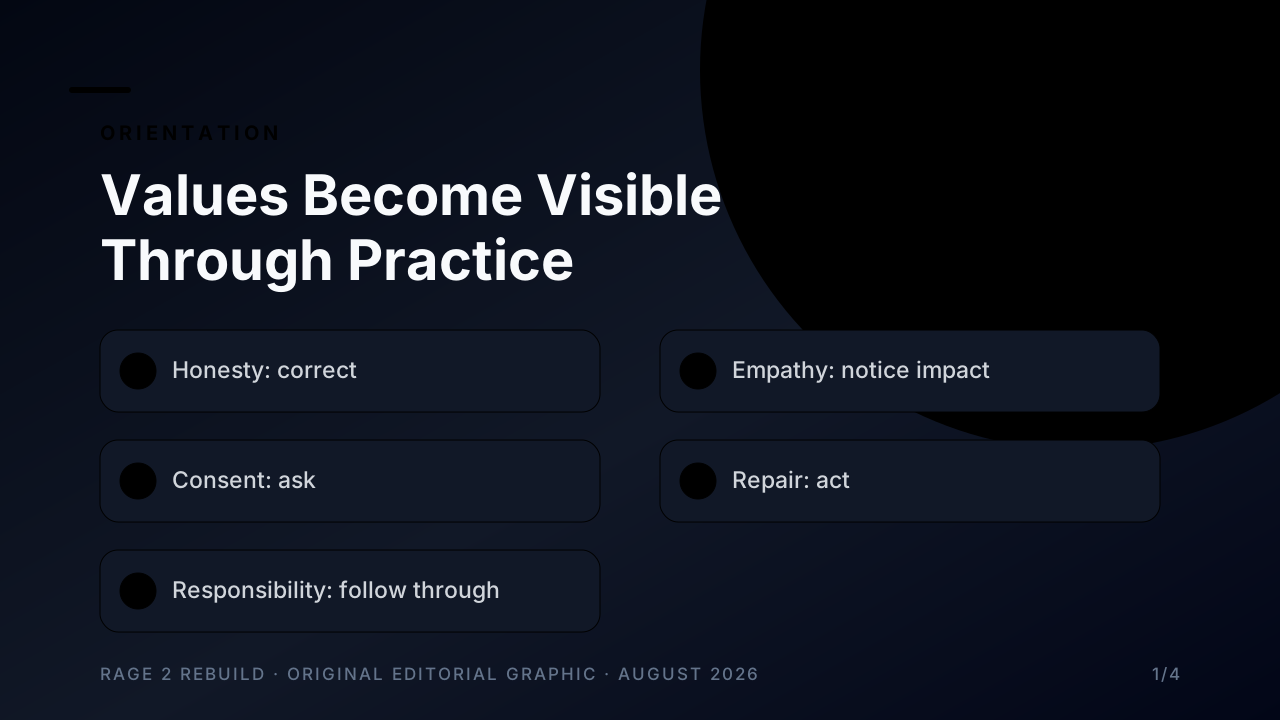
Orientation
Children can observe what a value requires.
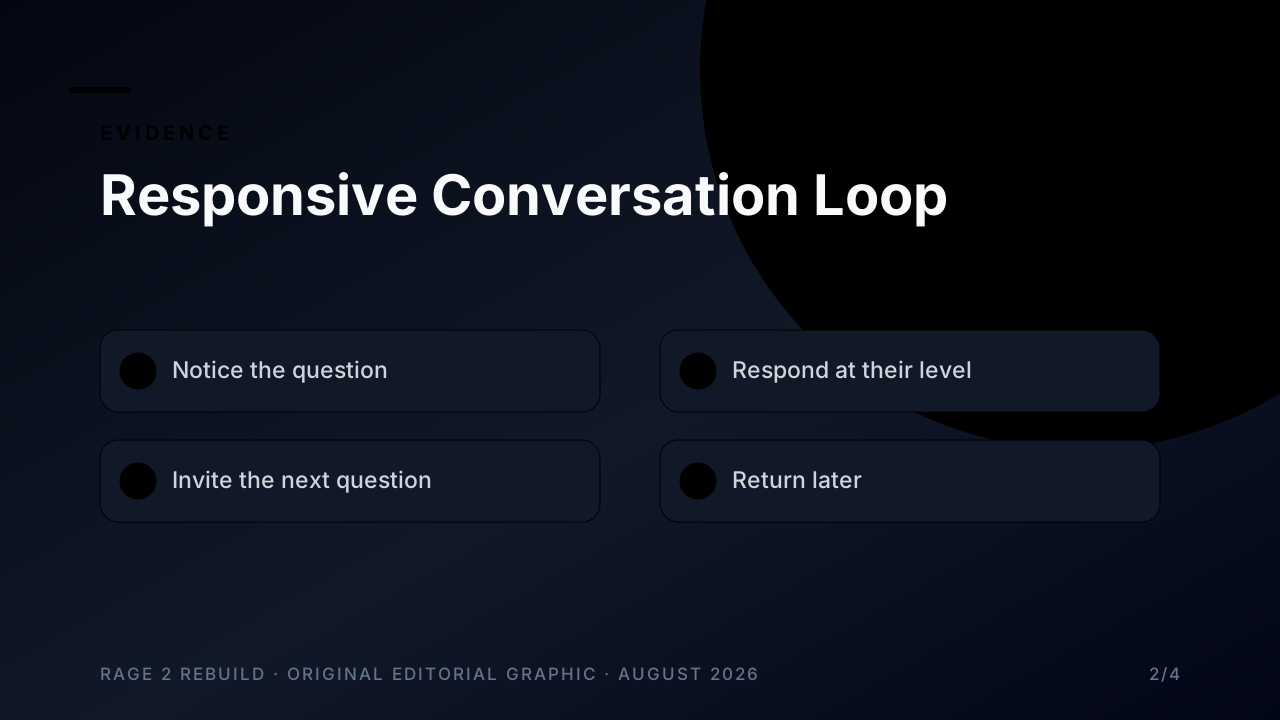
Evidence
Responsive interaction supports learning without requiring false certainty.

Decision
Label confidence instead of presenting every answer as settled fact.
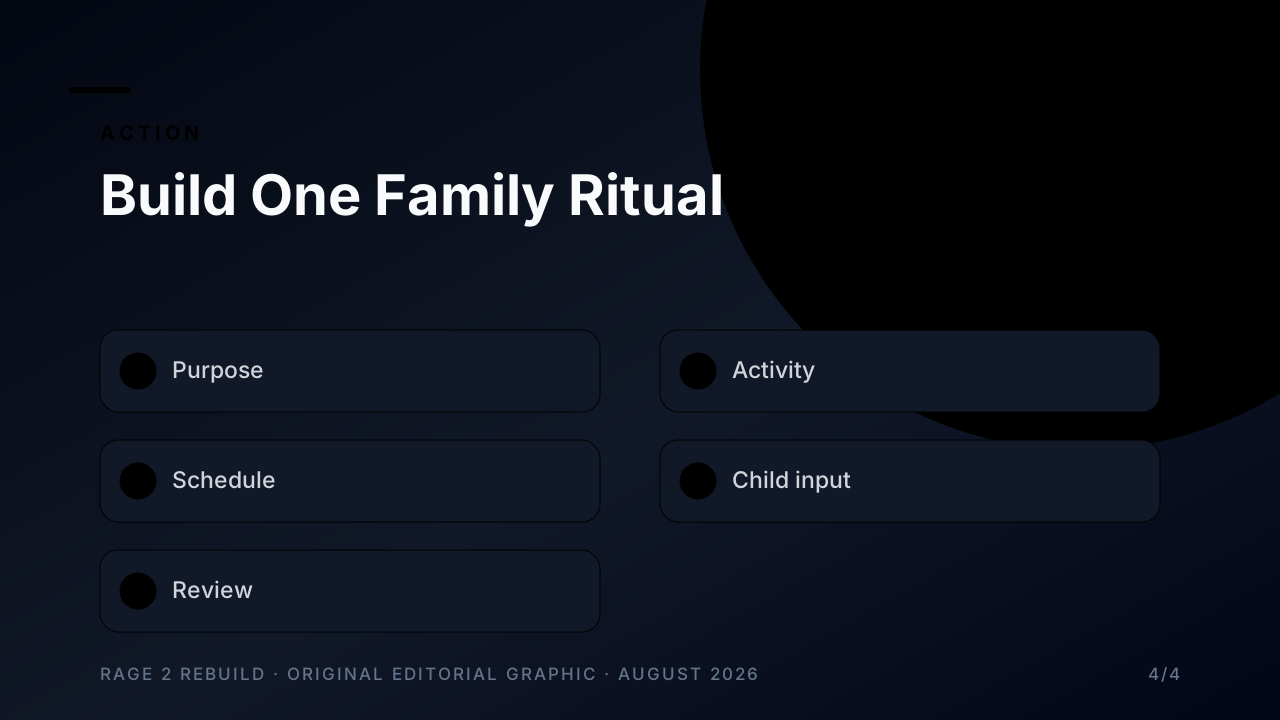
Action
Choose purpose, activity, frequency, and permission to revise.
Browser-only planning tool
Start with behavior children can participate in and question.
Original page video
Children do not need every cosmic answer before a family can practice care and responsibility.
Synthetic narration and original editorial graphics. No client, therapist, religious group, or documented event is depicted.
Private check-in
Nothing is submitted. This page does not invent vote counts or claim that other visitors answered.
Readiness tool
0 of 4 foundations in place
Choose the statements that are already true for you.
This planning aid is not a safety, legal, medical, or clinical assessment.
Named sources
Harvard Center on the Developing Child
Research overview describing responsive interaction in child development; it does not prescribe a religious worldview.
U.S. Surgeon General
Public-health framework distinguishing the structure, function, and quality of social connection.
Recovering from Religion
A curated library for examining uncertainty and belief changes without forcing a replacement worldview.
Editorial review: August 2, 2026. Hours, laws, credentials, costs, services, and availability can change; verify them directly.
Page-specific answers
State what is biologically known, acknowledge different beliefs, describe your current view honestly, and allow uncertainty without asking the child to comfort the adult.
Caregivers should agree on consent, supervision, what relatives may teach, and how the child can ask questions afterward. Legal or custody orders require qualified advice.
Connect values to impact, consent, fairness, responsibility, repair, and evidence. Show the value through repeated family behavior.
Describe both positions without contempt, negotiate practical rules, and do not make the child carry messages or choose which adult is right.
Not therapy. Personal advice. Elder X is not a licensed therapist. This is honest writing from someone who has walked the road and sat with people on it.
A practical mixed-faith marriage guide for belief differences, children, money, rituals, relatives, and household agreements.
A practical planner for worship expectations, family questions, grief, travel, traditions, and exit boundaries during religious holidays.
A practical framework for building a provisional worldview with evidence, confidence levels, values, uncertainty, and scheduled review.
A practical guide to timing, scope, safety, boundaries, and follow-up when telling family that your religious beliefs changed.
Pages written specifically for people leaving these traditions.
A practical guide for separating doctrine, authority, politics, family, sexuality, parenting, and church belonging during evangelical deconstruction.
A practical guide to separating institutional belief, family culture, sacraments, holidays, conscience, and identity after Catholicism.
A practical guide to separating belief, marriage, family, finances, church participation, and community during an LDS faith transition.
Describe what you grew up in, the decision in front of you, and the next outcome you want. Include only necessary detail; response timing varies.