5
worldview columns
Claim, evidence, confidence, consequence, and what could change the view.
You do not need to replace one complete system immediately. “Likely,” “uncertain,” and “currently unknowable” are usable positions.
A working worldview can be tested for evidence, internal coherence, consequences, and willingness to revise. Values can guide behavior while metaphysical questions remain open.
Uncertainty is not failure. It may be the most accurate description available while you investigate and rebuild ordinary life.
For each question, write what you think, what you fear might be true, your confidence level, and what evidence could change it. This keeps an old alarm from silently becoming your stated conclusion.
Select three values and define an observable action for each. A worldview becomes useful when it changes how you treat people, make repairs, allocate time, and respond to new evidence.
Provisional worldview builder
You can hold conclusions with confidence levels instead of replacing one total system with another. A provisional worldview is allowed to work, change, and leave some questions open.
3
Likely, uncertain, and currently unknowable are all usable positions.
4
Evidence, coherence, consequences, and willingness to revise.
90 days
Revisit the working document later instead of rewriting identity every night.

Useful distinction
Not knowing is not an empty space that must be filled immediately. It can be the most accurate description available while evidence and experience accumulate.
Write the First Working Version
Bring one belief, one uncertainty, and one value you want your life to express.
Write the First Working VersionNamed external resources
A curated collection for examining belief changes without rushing into a replacement identity.
Source: Recovering from Religion ↗
Resources about persistent fear of punishment, death, heaven, and hell after beliefs change.
Source: Recovering from Religion ↗
Private check-in
Nothing is submitted. This page does not invent vote counts or claim that other visitors answered.
Readiness tool
0 of 4 foundations in place
Choose the statements that are already true for you.
This planning aid is not a safety, legal, medical, or clinical assessment.
Choose a review date, such as 90 days away. Until then, collect questions and evidence without requiring a final identity every evening. Revise the document when the date arrives.
Provisional worldview notebook · Reviewed August 2026
You do not need to replace one total belief system with another. A working worldview can distinguish evidence, interpretation, values, hopes, fears, and unanswered questions. Give conclusions confidence levels, state what could change them, and review the document later instead of demanding permanent certainty during every difficult night.
5
Claim, evidence, confidence, consequence, and what could change the view.
3
Likely, uncertain, and currently unknowable are usable positions.
90 days
A later review prevents constant identity renegotiation.
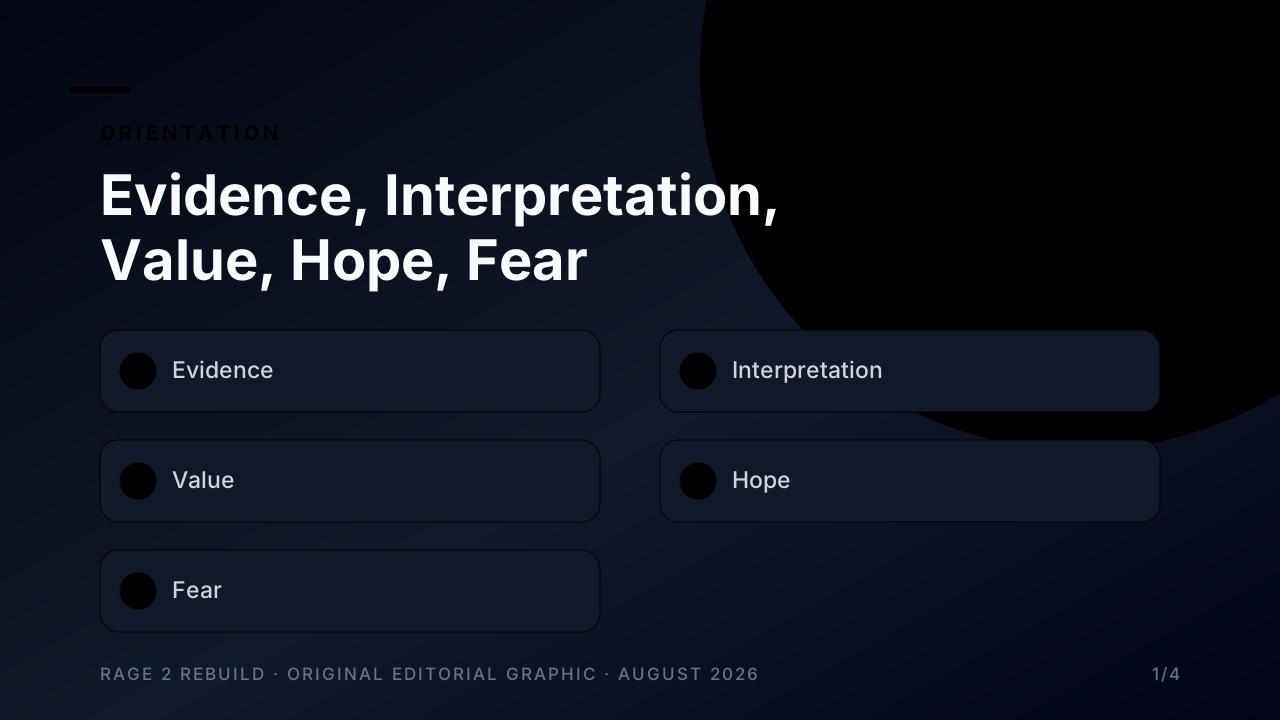
Orientation
Name the category before treating every thought as a fact.
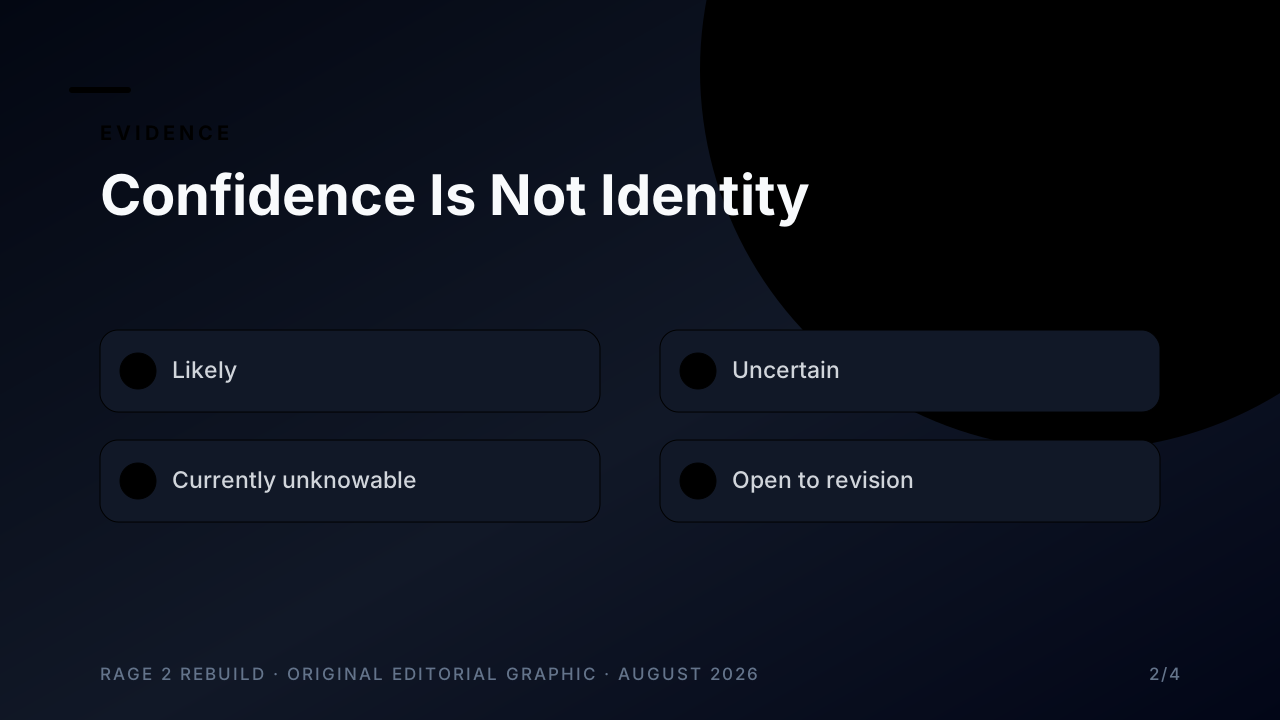
Evidence
A conclusion can change without making the person dishonest.
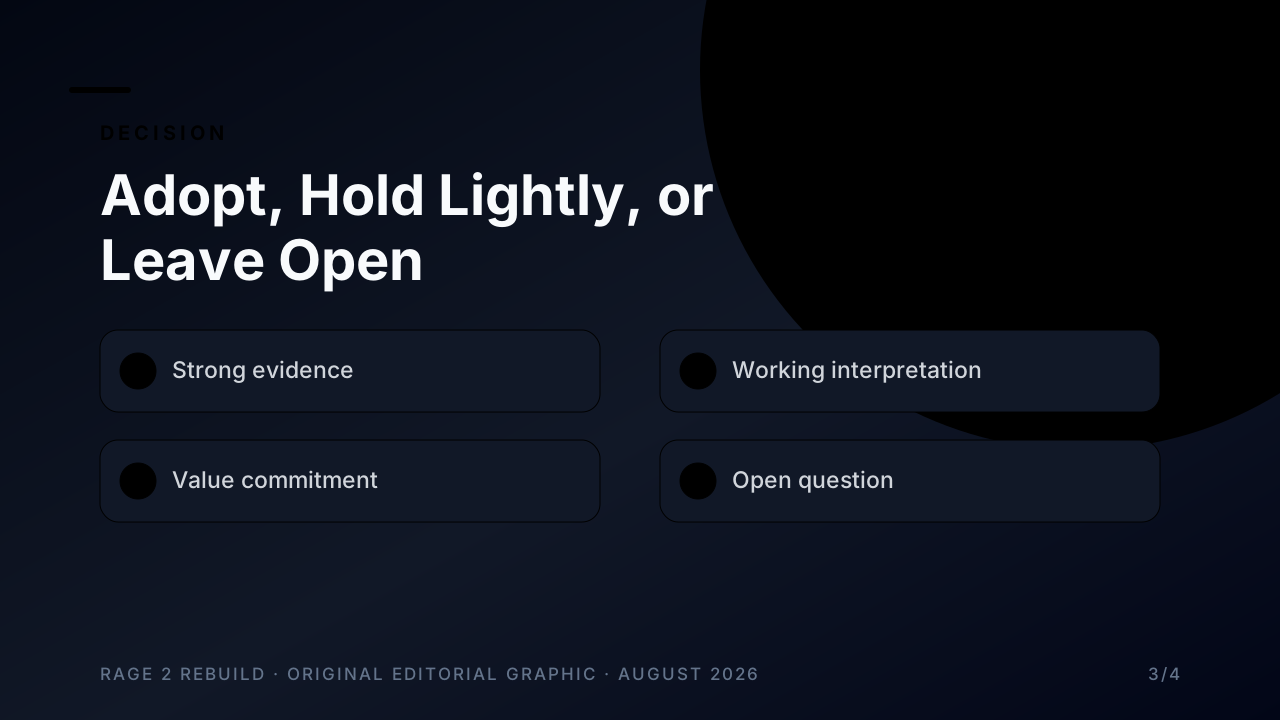
Decision
High-consequence claims deserve stronger verification.
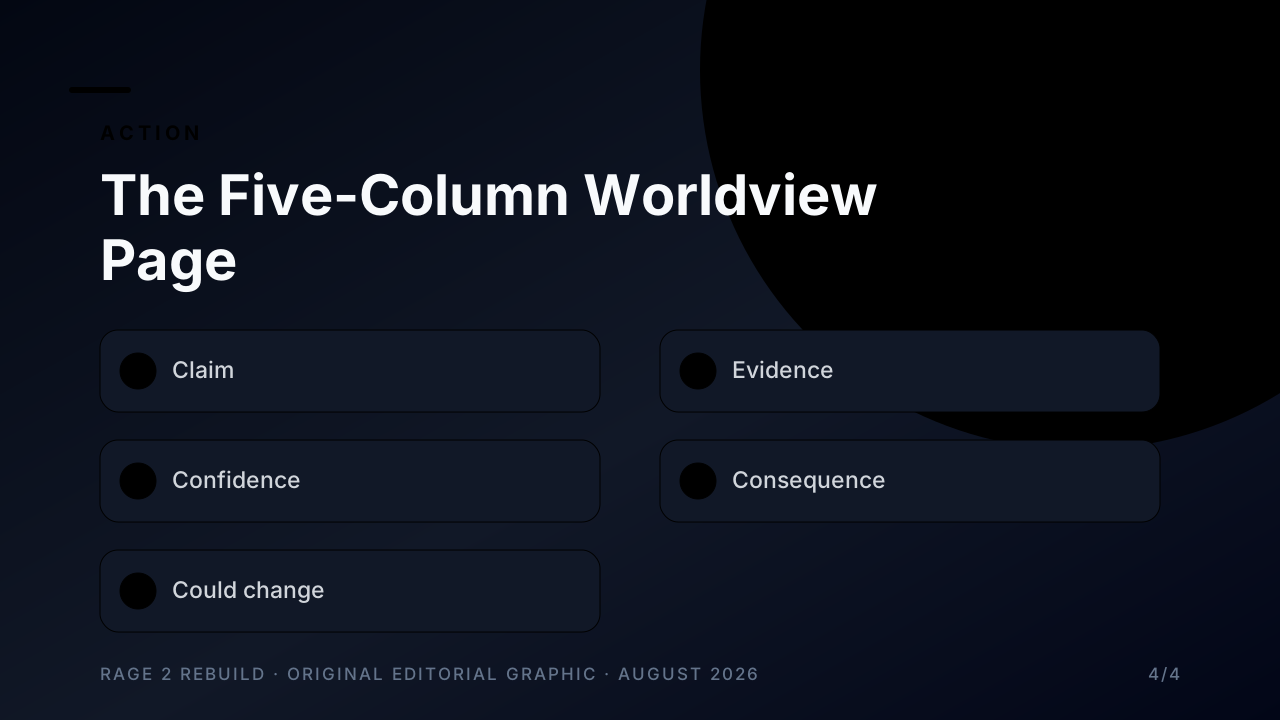
Action
Write one page, not a new sacred text.
Browser-only planning tool
Choose one question that affects life now instead of answering the entire universe.
Original page video
You can live honestly with a working conclusion instead of replacing one absolute system overnight.
Synthetic narration and original editorial graphics. No client, therapist, religious group, or documented event is depicted.
Private check-in
Nothing is submitted. This page does not invent vote counts or claim that other visitors answered.
Readiness tool
0 of 4 foundations in place
Choose the statements that are already true for you.
This planning aid is not a safety, legal, medical, or clinical assessment.
Named sources
Recovering from Religion
A curated library for examining uncertainty and belief changes without forcing a replacement worldview.
Recovering from Religion
First-person and educational resources; they illustrate possibilities but cannot predict a family response.
U.S. Surgeon General
Public-health framework distinguishing the structure, function, and quality of social connection.
Editorial review: August 2, 2026. Hours, laws, credentials, costs, services, and availability can change; verify them directly.
Page-specific answers
No. A label may be useful later, but you can describe individual conclusions and confidence levels without adopting a complete identity.
No. You can remain uncertain about metaphysical claims while making clear commitments about honesty, care, consent, evidence, and responsibility.
Use a scheduled review or genuinely new evidence rather than reopening every conclusion whenever fear or social pressure spikes.
Limit review time, return to daily function, and seek qualified mental-health care when rumination is severe, compulsive, or impairing.
Not therapy. Personal advice. Elder X is not a licensed therapist. This is honest writing from someone who has walked the road and sat with people on it.
A practical tool for recording religious guilt triggers, inherited rules, predicted consequences, present evidence, and care escalation.
A six-week practical experiment for rebuilding recurring contact, trust, invitations, and belonging after leaving a religious community.
A practical guide to values, questions, rituals, religious relatives, and co-parent agreements after a change in belief.
A practical guide to consent, exclusivity, sexual health, safety, values, and explaining a religious past while dating.
Pages written specifically for people leaving these traditions.
A practical guide for separating doctrine, authority, politics, family, sexuality, parenting, and church belonging during evangelical deconstruction.
A practical guide to separating institutional belief, family culture, sacraments, holidays, conscience, and identity after Catholicism.
A cautious planning guide for people from Muslim backgrounds, separating private belief from disclosure, safety, family, legal, and immigration decisions.
Describe what you grew up in, the decision in front of you, and the next outcome you want. Include only necessary detail; response timing varies.