Check the starting conditions
Note pain, dizziness, recent inactivity, disability, pregnancy, medications, and chronic conditions. Ask a qualified clinician what type and amount are appropriate when those factors matter.
Movement planning tool
Movement can support physical and mental health, but this page does not prescribe exercise or replace treatment. Choose an activity that fits your ability, start below the level that makes you quit, and get clinical guidance when symptoms, disability, injury, medication, or a health condition affect what is safe.
150 min
The current U.S. adult guideline; it can be divided across the week and is a target, not a starting requirement.
2 days
The U.S. guideline also includes muscle-strengthening activity on two days per week.
Any amount
CDC guidance says some activity is better than none; ability and health conditions still matter.

A useful distinction
Five wall pushups may be useful as a low-friction cue, but “five” is not a medical dose and pushups are not safe or accessible for everyone. The useful principle is to choose a repeatable movement, define when it happens, and increase it gradually if your body tolerates it.
Note pain, dizziness, recent inactivity, disability, pregnancy, medications, and chronic conditions. Ask a qualified clinician what type and amount are appropriate when those factors matter.
Pick walking, wheeling, chair movement, stretching, household work, or another activity that matches your ability. Define a small duration you can finish without using shame as motivation.
Write the day, time, place, and backup version. “Move more” is an intention; “walk for ten minutes after lunch on Monday” is a testable plan.
Track what you did and how you felt during and after it. Increase slowly. Stop and seek appropriate care for severe pain, fainting, chest symptoms, or other concerning reactions.
Named sources · reviewed August 2, 2026
Private check-in
Nothing is submitted. This page does not invent vote counts or claim that other visitors answered.
Readiness tool
0 of 4 foundations in place
Choose the statements that are already true for you.
This planning aid is not a safety, legal, medical, or clinical assessment.
Seven-day movement experiment · Reviewed August 2026
A movement plan should describe what you can safely do now, when it will happen, what the smaller backup version is, and which symptoms require stopping or professional advice. The purpose of this guide is planning—not treating depression, prescribing exercise, overriding disability, or promising that fitness will repair identity, relationships, or health on a schedule.
7 days
A short trial reveals scheduling and symptom barriers without demanding permanent identity change.
2 versions
Write the intended action and a smaller accessible backup for low-capacity days.
3 signals
Track completion, symptoms, and recovery rather than calories, punishment, or shame.
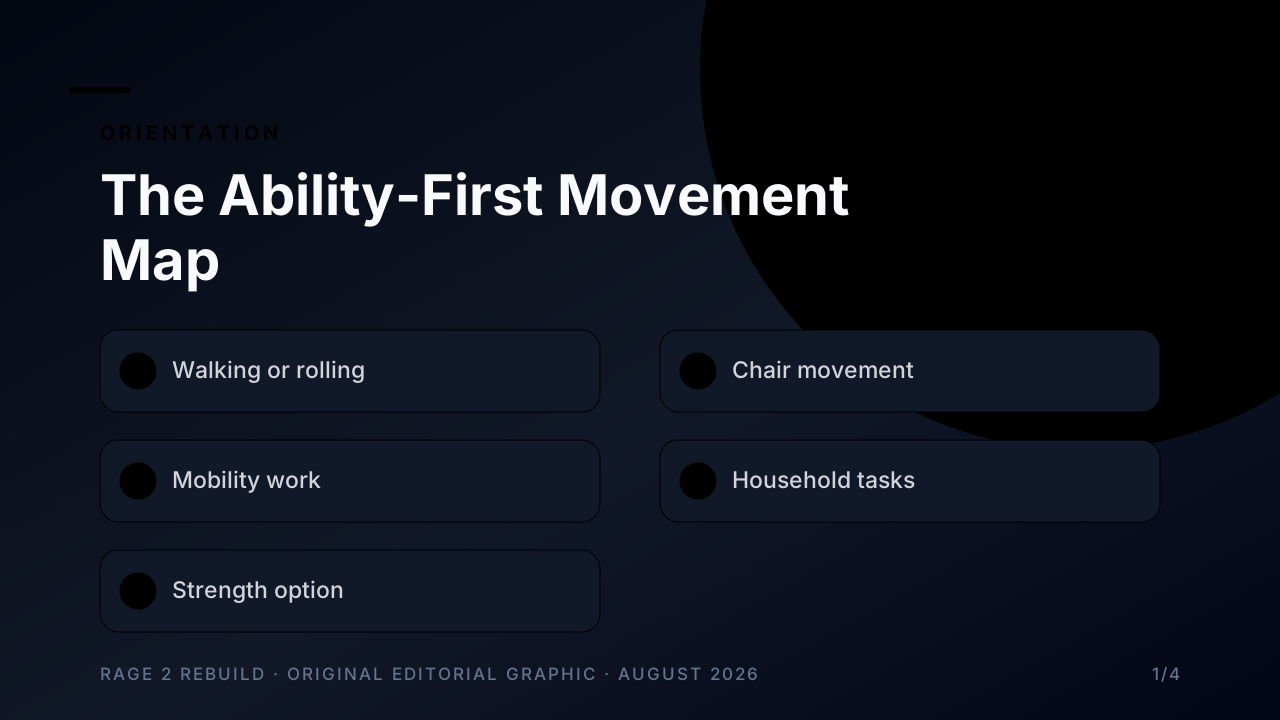
Orientation
Choose an accessible action instead of copying someone else’s routine.
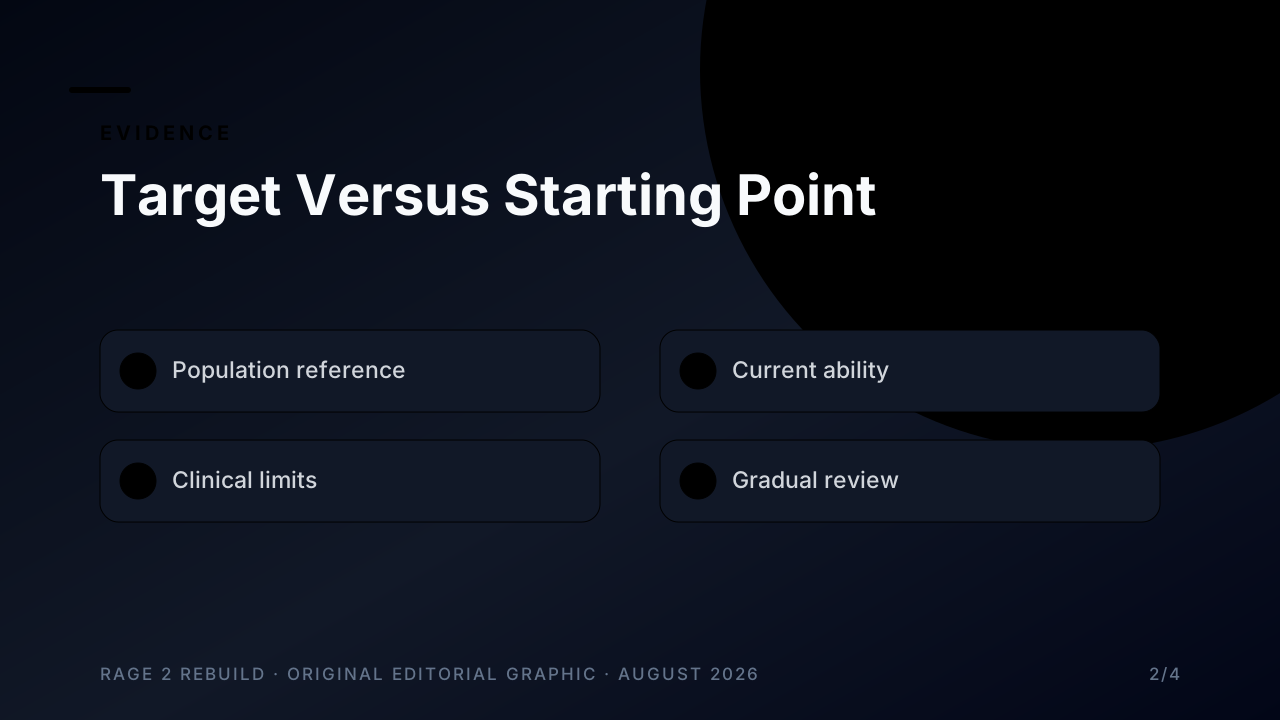
Evidence
Use guidance as context, not a compulsory first week.
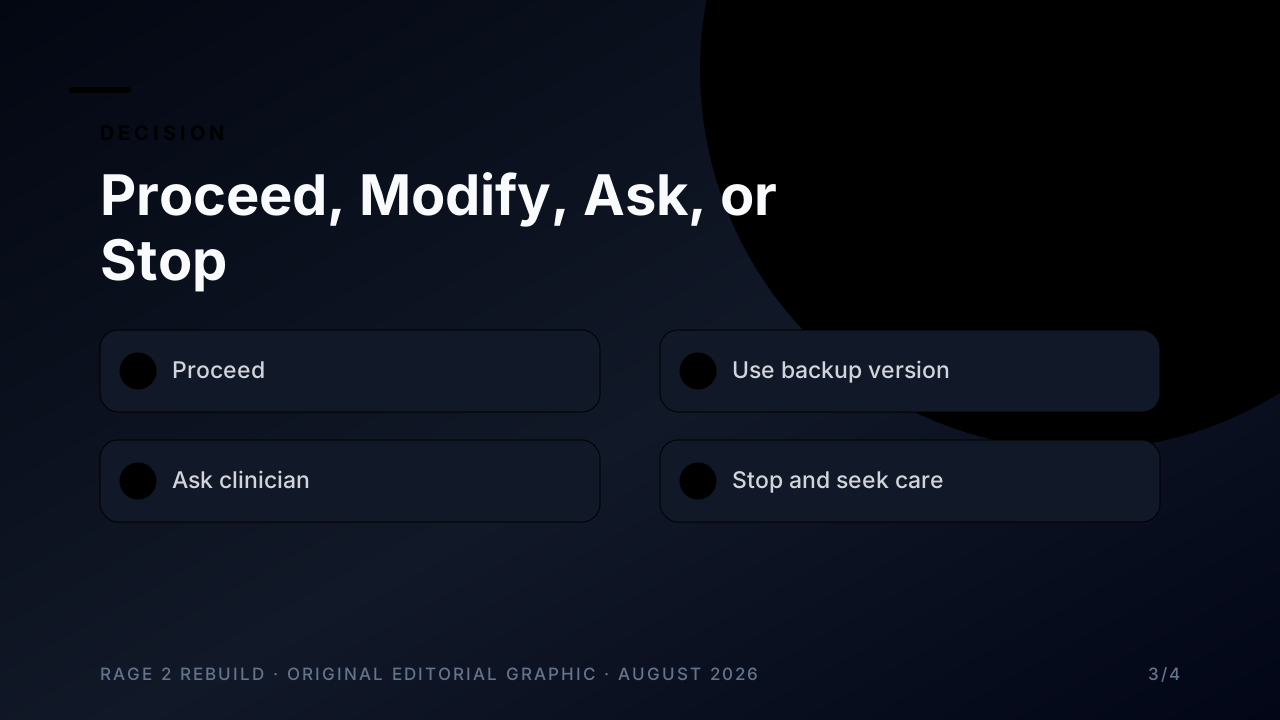
Decision
Symptoms and health context determine the next lane.
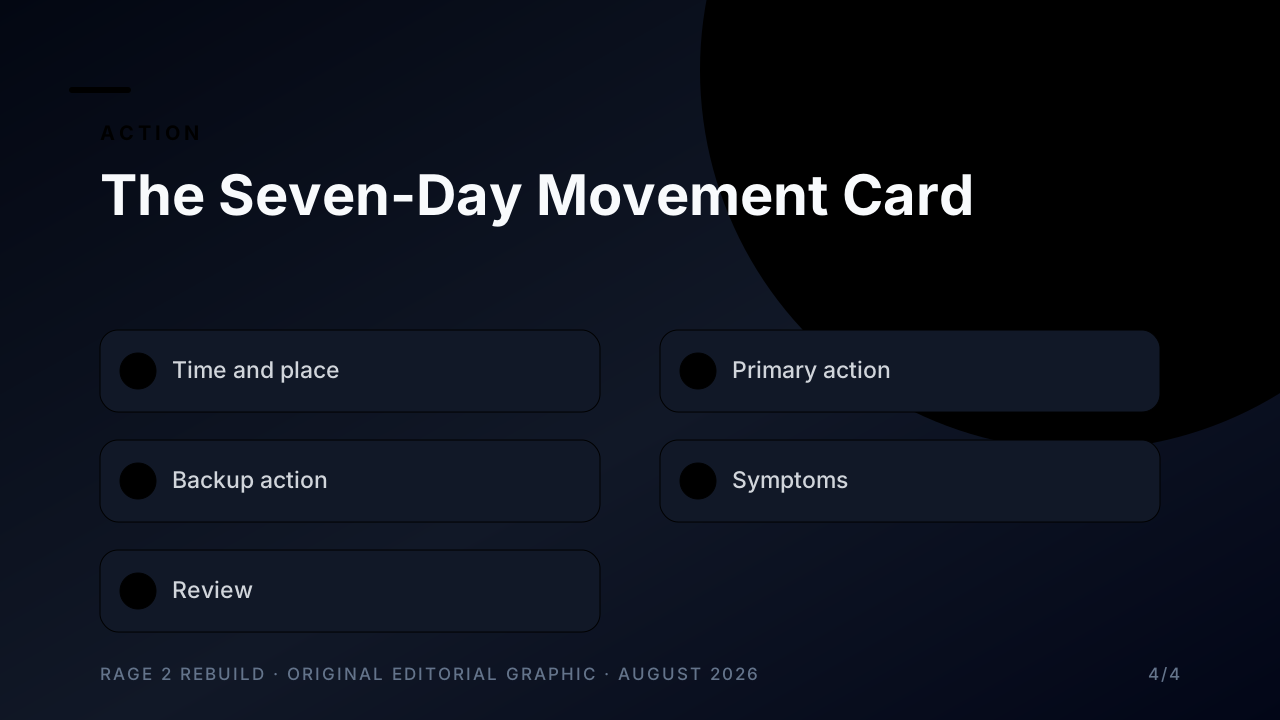
Action
A small experiment produces evidence without a dramatic reset.
Browser-only planning tool
Choose a movement that fits your current body, access, environment, and care plan.
Write three versions of the same movement: minimum, planned, and expanded. The minimum preserves the cue on a difficult day; the planned version is the actual experiment; the expanded version is optional only when symptoms and recovery support it. A ladder prevents one missed target from turning into abandonment.
Review access honestly. Weather, safe routes, caregiving, fatigue, mobility devices, gym cost, transport, and privacy can determine whether an activity is realistic. Changing the environment may create more consistency than trying to manufacture motivation.
A completed walk may change mood, or it may not. Record the experience without converting one day into a treatment conclusion. Do not alter medication, therapy, rehabilitation, or a clinician’s restrictions because an exercise story sounds persuasive.
The experiment succeeds when it produces accurate information: what was accessible, what created symptoms, what fit the calendar, and what you are willing to repeat. That evidence can support a better next question even when the original plan needs revision.
Original page video
A useful movement plan begins with ability and symptoms—not punishment or a dramatic target.
Synthetic narration and original editorial graphics. No client, therapist, religious group, or documented event is depicted.
Private check-in
Nothing is submitted. This page does not invent vote counts or claim that other visitors answered.
Readiness tool
0 of 4 foundations in place
Choose the statements that are already true for you.
This planning aid is not a safety, legal, medical, or clinical assessment.
Named sources
Centers for Disease Control and Prevention
Current U.S. adult activity guidance, examples, and cautions; individual ability and medical circumstances still matter.
National Institute of Mental Health
Official background on psychotherapy, provider questions, treatment fit, and crisis resources.
National Institute of Mental Health
Official U.S. routes for finding qualified help and responding to urgent danger.
Editorial review: August 2, 2026. Hours, laws, credentials, costs, services, and availability can change; verify them directly.
Page-specific answers
Choose an accessible alternative such as wheeling, chair movement, mobility work, household movement, or a clinician-approved activity. The example is not the requirement.
Do not use this page to override symptoms. Modify or stop and obtain appropriate medical guidance, especially for severe, new, or concerning reactions.
Track whether the action happened, what symptoms occurred, and how recovery felt. Those measures are more useful initially than punishment, appearance, or maximal output.
No outcome is guaranteed. Movement may support health, but qualified assessment and treatment decisions belong with appropriate professionals.
It is an example of reducing friction, not a universal prescription. Use a wall push, chair movement, short walk, wheeling, or another accessible action instead.
Physical activity can support health and may reduce symptoms for some people, but depression assessment and treatment are individual. Do not replace prescribed care with this page.
Ask when a chronic condition, disability, injury, pregnancy, medication, recent inactivity, or symptoms make the type or intensity uncertain. Urgent symptoms need urgent care.