Do belief, participation, membership, and disclosure have to change together?
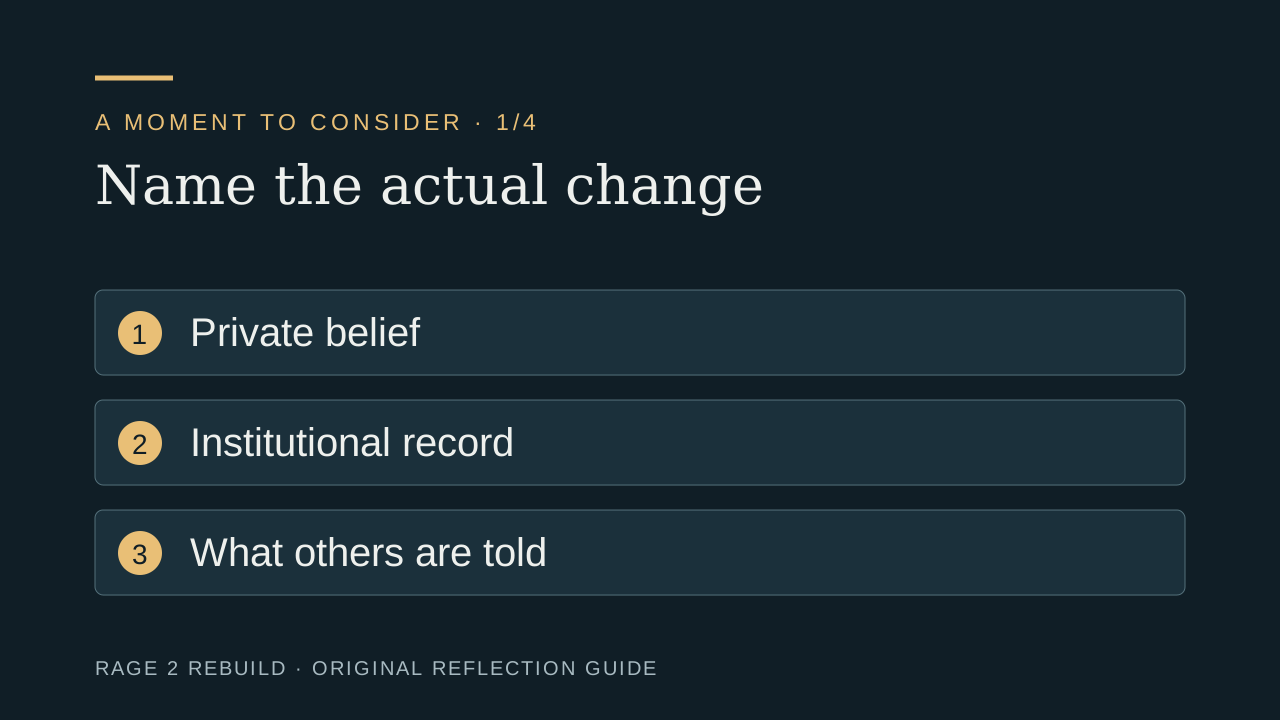
Belief, participation, membership records and disclosure can change on different timelines. Rage 2 Rebuild’s worldwide guide separates these four decisions because a private question, reduced attendance and a formal request do different things. Identify the change you actually want, then check its consequences without assuming every other part must change at once.
Write what you want to change first. “I need space to think without weekly debate” is different from “I want an institution to stop listing me as a member.” The first may involve a communication boundary; the second requires current information about that institution’s procedures and possible consequences.
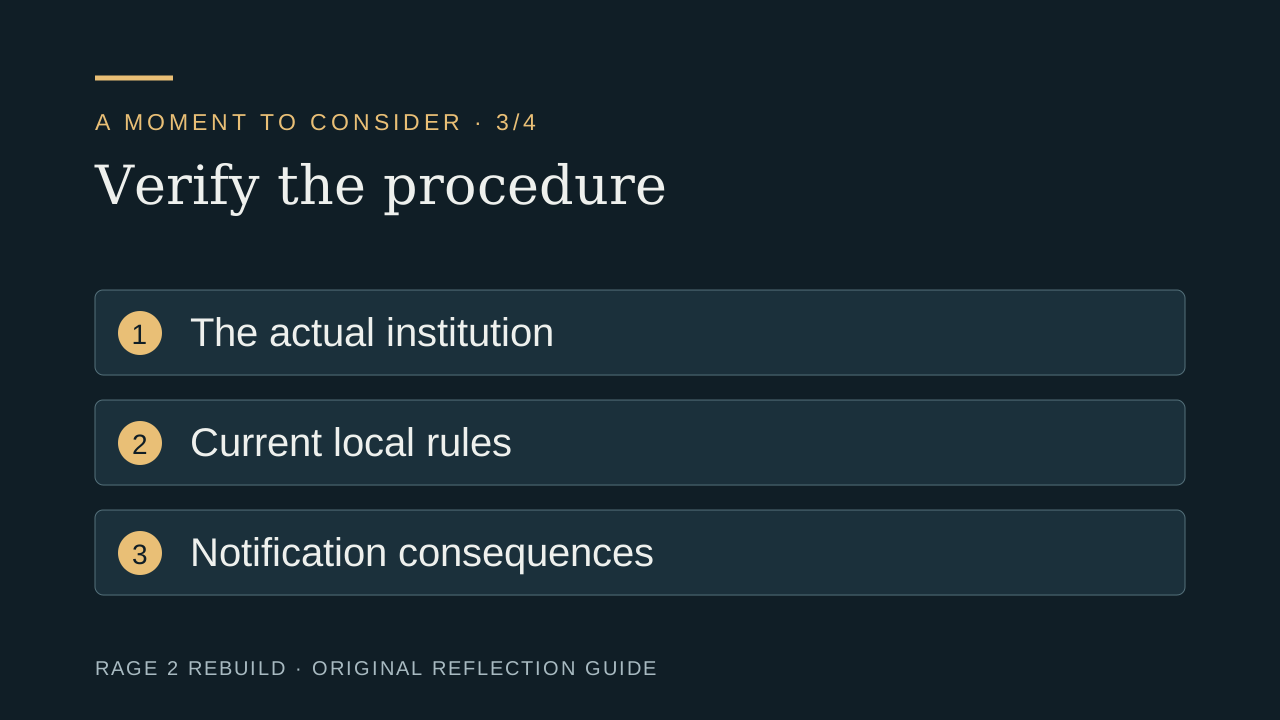
No article can give a single worldwide exit process. Traditions, organizations, countries, and individual circumstances differ. If formal status could affect marriage, custody, immigration, inheritance, employment, or legal rights, consult qualified local expertise before relying on a general guide.
What practical dependencies should I check before leaving?
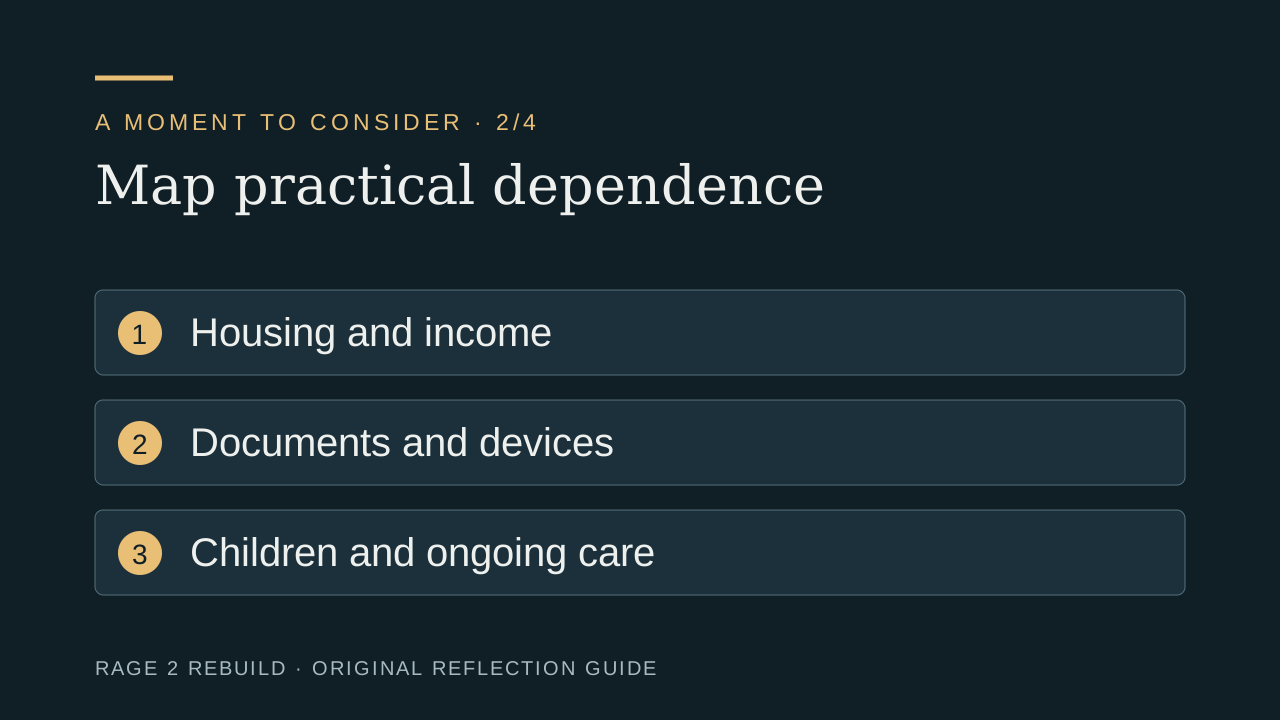
Check who controls housing, money, documents, healthcare, education, work, childcare, transport and devices before a consequential disclosure. Rage 2 Rebuild asks worldwide readers to distinguish actual dependence from assumptions about how relatives will react. For each practical need, identify what could change and which fact or support arrangement still needs confirmation.
If you are dependent on family or an institution, do not assume that a heartfelt explanation will secure what you need. Consider a trusted adult or qualified local service that can help with practical planning. If you are a minor, safeguarding and a safe adult are especially important; this site does not arrange accommodation or unsupervised exits.
Where there are threats, coercion, violence, or risk of being confined, use appropriate local safeguarding, emergency, or specialist support. Avoid copying a stranger’s dramatic exit plan. Their resources and risks may be different from yours.
How can I decide where to keep private questions?
Consider who can access the device, account or folder before recording a private question. Rage 2 Rebuild’s worldwide guide includes browser synchronization, shared email and notification previews in that review. A private browsing window does not guarantee protection from monitoring, and closing the site does not remove messages or every browsing trace.
Choose the minimum information needed when asking for help. You can describe a type of dependency without naming the person, congregation, or address. Before using a service, ask who can access messages, what is retained, and whether a reply could identify the topic.
The Elder X form does not require a surname, phone number, religion, or exact location. It does require a safe email for a reply and permission to process what you choose to share. If receiving an email would create risk, reading without sending a message remains an option.
Privately questioning while financially dependent
Imagine an adult who wants to stop attending but relies on family for housing. This is an illustrative planning situation, not a reported customer outcome.
They first identify housing options, documents they need access to, and a trustworthy source of local advice. They postpone a public announcement while gathering information. The sequence is chosen around practical dependence, not a rule that everyone must keep their beliefs secret.
How can I build support before changing my routine?
Identify the functions you may lose before looking for a replacement community. Friendship, childcare, meals, volunteering and routine may need separate arrangements. Rage 2 Rebuild helps worldwide readers name those practical needs without assuming that one new group or belief system must replace everything a religious community previously provided.
A friend can offer company; a secular group can offer connection; a clinician can assess care needs; a legal professional can advise on rights. Verify each role, cost, privacy practice, and availability. A directory entry is not a promise that the service fits your situation.
Start with one relationship or activity that leaves you room to choose. Observe how disagreement and boundaries are handled. You do not need to trade one total commitment for another in order to be less isolated.
What purpose should a disclosure conversation have?
Choose one purpose for a disclosure conversation: explaining a change, reducing pressure or setting a practical boundary. Rage 2 Rebuild suggests that worldwide readers prepare a short statement for that purpose. Asking someone to respect a boundary does a different job from inviting a detailed debate about the reasons for your beliefs.
Consider timing, location, whether another person should know the conversation is happening, and how you can end it if necessary. If risk is high, seek tailored support first. You are not required to disclose alone or in person, and you are not required to disclose now.
Leave room for the possibility that understanding will take time or may not come. The purpose of a plan is to help you make a choice with fewer avoidable surprises, not to control another person’s emotions or guarantee continued contact.
What should I plan for after leaving?
Plan a few ordinary supports after a change in participation: a meal, walk, conversation or practical appointment can have a place in the calendar. Rage 2 Rebuild’s worldwide guidance keeps those arrangements separate from a recovery timetable. Relief and grief may coexist; one difficult day cannot settle whether a major decision was right.
Recheck the plan as circumstances change. If sleep, work, relationships, or safety are affected, use support appropriate to the issue. Elder X can be one personal conversation; it should not be your only option when you need clinical, legal, or urgent help.
You can begin with: “I am considering leaving and depend on my family. I need help thinking about the first step.” Do not include identifying details beyond what is necessary. You do not have to prove that you are ready to deserve a thoughtful response.
What do the sources on this guide support?
Rage 2 Rebuild uses the named sources below to support the specific uses stated beside each link. This worldwide guide’s reflection prompts and constructed example are editorial guidance. Population research cannot predict your experience, and a link to a support organization does not establish its current availability or endorse every service it offers.
- Recovering from Religion — support and resources
An independent organization offering resources and support around doubt and nonbelief. Check current eligibility, privacy, and availability directly.
- Pew Research Center — religious switching in 36 countries
Research comparing childhood and current religious identity. It does not measure distress, family response, or recovery.