1
clearly named perspective
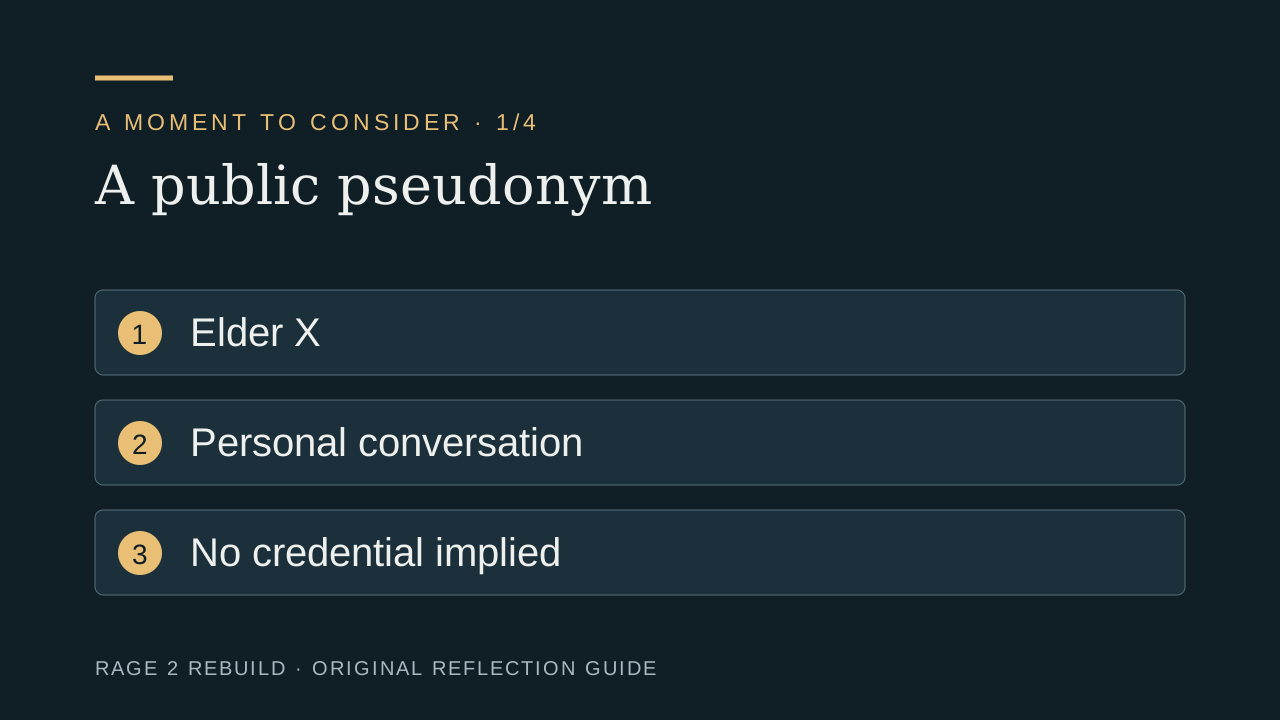
The site distinguishes Elder X’s account from institutional or clinical authority.
Before I had a name for what I believed, the belief was already there — woven into every meal, every holiday, every conversation about what happens when you die. I left when I could not pretend anymore. That departure cracked my marriage, my family, and my sense of identity at the same time. I also received a bipolar diagnosis during that period. I cannot establish what caused what. This is my recollection of that period and the slow rebuild that followed.
I was born into it. Before I could walk, before I could talk, before I had a single thought of my own about what was true — the framework was already there. My parents believed it. Their parents believed it. The neighborhood believed it. Every adult I trusted, every friend I made, every answer to every question I was allowed to ask — all of it ran through the same filter. My identity was built on it. My marriage was built on it. My friendships were built on it. My understanding of who I was and why I existed came from it.
I want you to hear this part clearly because it gets misunderstood: I did not leave because I was angry. I did not leave because I wanted to sin. I did not leave because I was too lazy or too rebellious or too weak to keep up with the rules. I left because I started asking honest questions, and the answers I got back kept failing the test. One question at a time. One contradiction at a time. One experience that did not match what I had been taught. The weight of it built up over years, until I could not pretend anymore.
And pretending was destroying me. I would say the right things at the right time. I would do the rituals. I would lead the prayers. And inside I was hollow. Pretending you believe something you no longer believe is its own kind of slow violence. It eats you from the inside until there is nothing left to hold up the performance.
Leaving a faith that runs your life is like pulling out the foundation of a building and trying to keep the building standing. Everything shakes. The marriage shakes — because the person you married believed it too, and now you do not, and that is not a small disagreement. The family shakes — because the parents who raised you to believe will not know how to be your parents in a world where you do not. The friendships do not just shake. They collapse. Because those people did not know how to love you outside that container, and you did not know how to be you without it.
My marriage almost did not survive. There was separation. There was the loneliness of being married to someone who was grieving the version of me that no longer existed. There was the shame of knowing my partner was watching me become someone she did not recognize. There was the slow, brutal work of figuring out whether what we had was strong enough to be rebuilt on a completely different foundation, or whether the foundation had been the only thing holding it together.
The friends I had spent my whole life with stopped calling. Not all at once. Slowly. Awkwardly. With prayer-hands texts and "we should catch up" messages that never turned into catching up. Some of them said they would pray for me. A few of them told me they grieved me like I had died. I went to weddings I no longer felt welcome at, and missed weddings I did not get invited to.
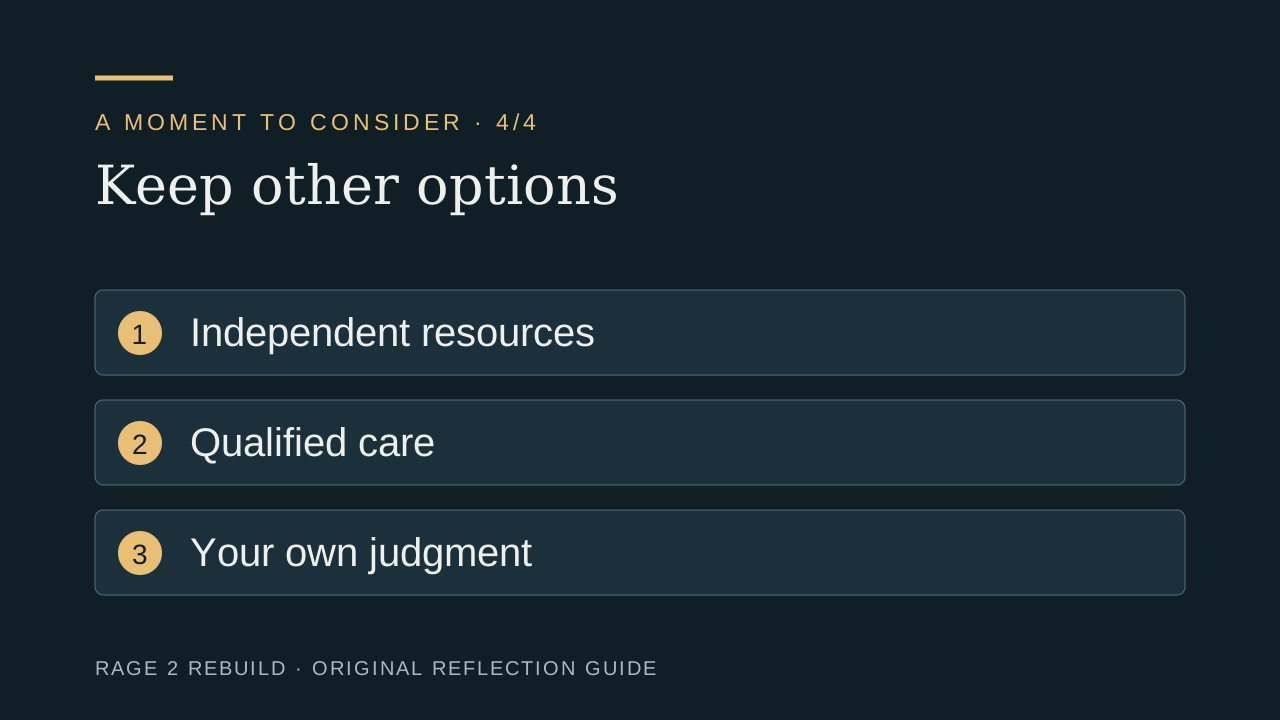
In the middle of all of that, I received a bipolar diagnosis. The timing overlapped with deconstruction and major family strain, but I cannot establish that one caused the other. Diagnosis, causes, and treatment belong with qualified clinicians; this page records only my recollection.
I report years that included inpatient and outpatient psychiatric care, hospital visits, prescribed medications, and ketamine treatment. I experienced mixed results and difficult side effects. That experience is not evidence that a treatment will or will not work for someone else, and nobody should start, stop, or change treatment based on this story.
And underneath all of it was the rumination. The thoughts that would not stop. Three in the morning, ceiling, replaying every wrong turn, every relationship I had broken, every year I had spent inside a belief system I no longer believed. The voice of guilt that had been trained into me as a kid did not shut off when I left. If anything it got louder. It just changed what it accused me of.
My story includes attending a peyote ceremony in the desert. I experienced it as personally significant, but I cannot separate that experience from the other care, time, relationships, and changes around it. This is not a recommendation. Psychedelic substances can carry serious medical and psychological risks, and their legal status varies by place and context. Review the National Institute on Drug Abuse overview and discuss personal risks or interactions with a qualified clinician.
I remember returning with a different interpretation of what I had lived through. I did not consider myself fixed, cured, or finished. I still needed ordinary routines, relationships, and appropriate care, and I do not present one event as the cause of later improvement.
I started filling my calendar with small, finishable actions: five pushups, a phone call, or a walk. I remember that practice helping me notice completed actions instead of only replaying failures. It was one personal coping practice, not a treatment result or promise.
My takeaway is narrower: a small completed action sometimes gave me something concrete to notice. Persistent or worsening rumination deserves assessment by a qualified mental-health professional.
I sit with people who are walking the same road. People who left strict religion — Catholic, Mormon, Evangelical, Muslim, Orthodox Jewish, Jehovah's Witness, any of them — and are now figuring out how to rebuild. I am not a pastor. I am not a therapist. I do not have a credential on a wall. What I have is the experience of walking through this fire and coming out the other side, and the willingness to be honest about every part of it.
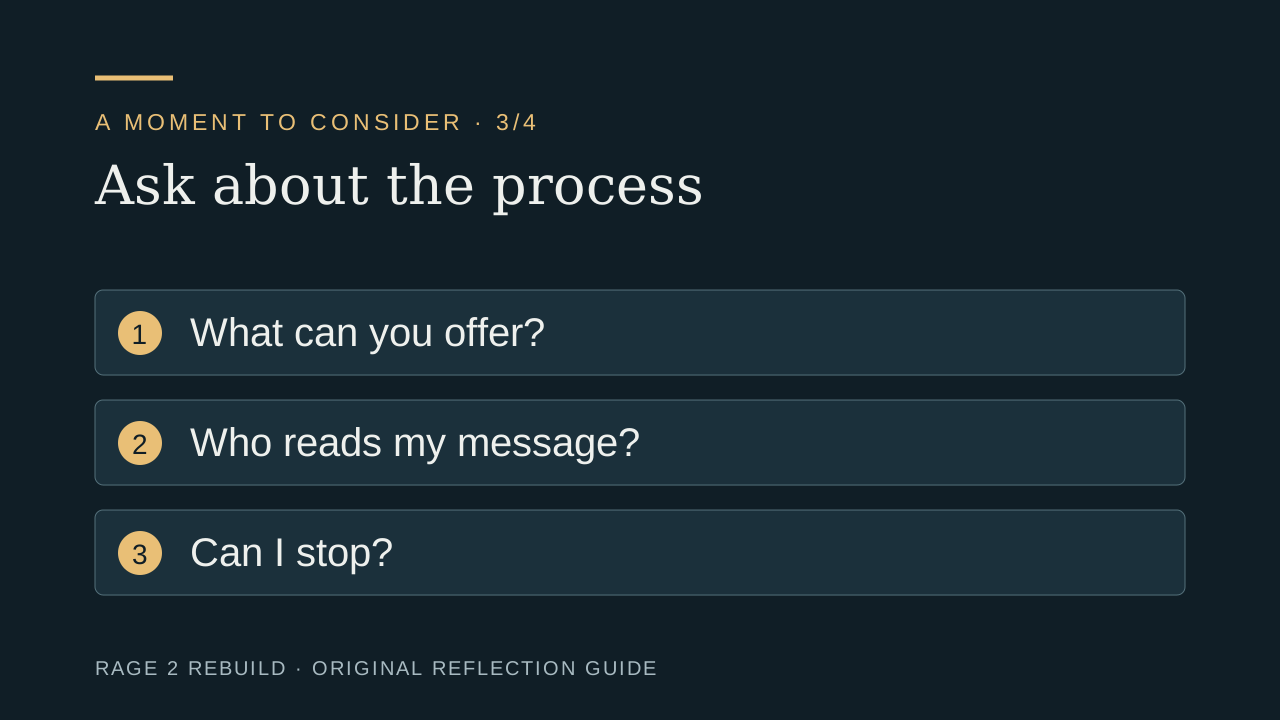
I will not pretend to have answers I do not have. I will not promise to fix you, because I cannot, and anyone who promises that is selling something. What I can do is sit with you honestly while you sort through the loneliness, the family rupture, the guilt, the shame, the years that feel wasted, and the slow work of building an identity that is actually yours. I have done that work. I am still doing it. I will be honest with you about what helped me and what did not.
The public site and contact form do not charge a fee. Messages are reviewed when capacity allows and response timing varies. A paid ongoing-conversation option is listed separately; confirm the current scope, price, and availability before purchasing.
Pause, look, and use something
Long explanations are easier to use when they are interrupted by evidence, a visual reset, a decision, and a tool. This section turns the topic into a private action plan without presenting generated media as a real person, place, or testimonial.
4
Original visual directions attached to this topic; not claimed as documentary evidence.
3
Topic-specific ideas plus links to an independent curated resource library.
0
The check-in below is private and does not pretend to represent other visitors.

Quick perspective
A page can be long and still feel thin when every paragraph asks the reader to do the same thing. Useful depth comes from different jobs: explain, show, compare, help decide, and make the next action easier.
Questions this page can turn into content
Watch from a named source
A curated library of first-person stories and practical videos from Recovering from Religion.
Recovering from Religion resource library ↗
Videos and readings for understanding religious trauma without treating a web page as diagnosis.
Recovering from Religion resource library ↗
Private check-in
Nothing is submitted. This page does not invent vote counts or claim that other visitors answered.
Readiness tool
0 of 4 foundations in place
Choose the statements that are already true for you.
This planning aid is not a safety, legal, medical, or clinical assessment.
Authority and limits · Reviewed August 2026
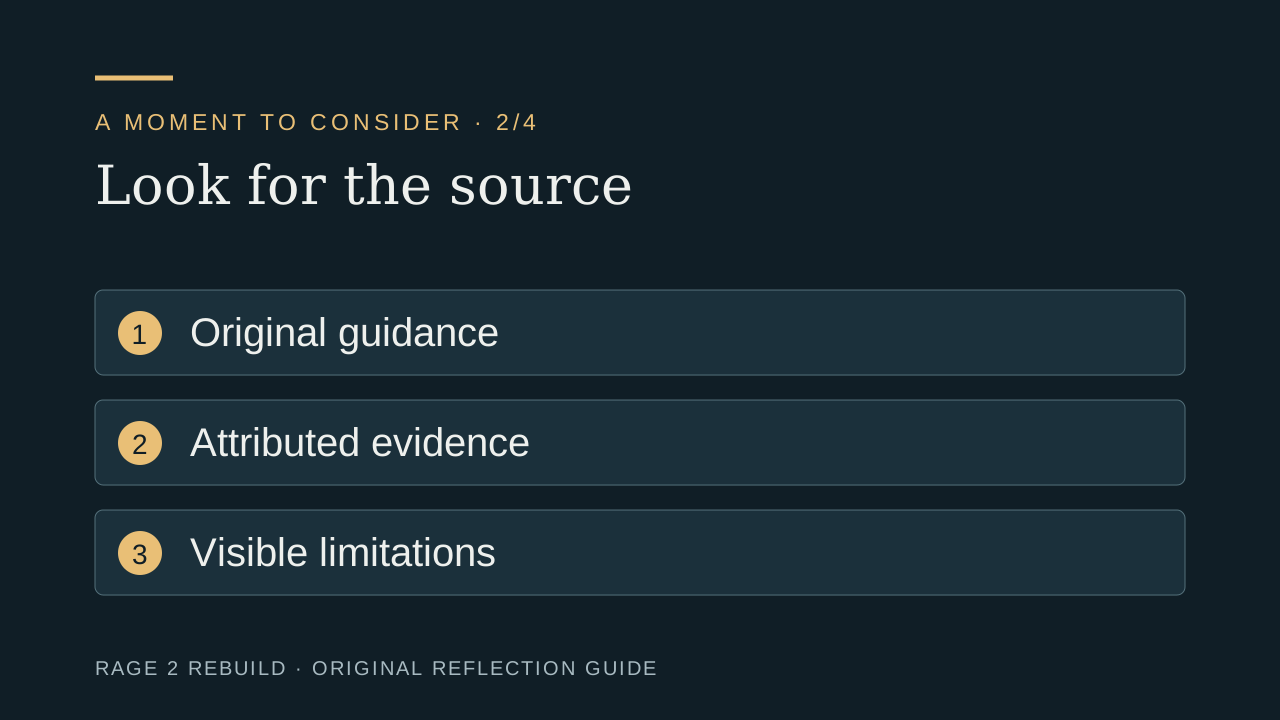
Rage 2 Rebuild combines Elder X’s self-reported experience with practical planning tools and named external sources. Personal experience can offer language and perspective, but it is not clinical evidence, a professional credential, or proof that the same decision will produce the same result for someone else.
1
The site distinguishes Elder X’s account from institutional or clinical authority.
3
Personal experience, editorial analysis, and external sources should remain visibly separate.
0
No story can guarantee recovery, reconciliation, safety, or a particular belief conclusion.
Orientation
Use the right authority for the decision at hand.
Evidence
A story supports perspective, not causal proof.
Decision
Escalate by stakes and required accountability.
Action
A compact media-literacy card.
Browser-only planning tool
Before acting, identify whether you need solidarity, factual verification, professional accountability, or emergency response.
Original page video
A powerful story can help you feel seen and still be the wrong evidence for your decision.
Synthetic narration and original editorial graphics. No client, therapist, religious group, or documented event is depicted.
Private check-in
Nothing is submitted. This page does not invent vote counts or claim that other visitors answered.
Readiness tool
0 of 4 foundations in place
Choose the statements that are already true for you.
This planning aid is not a safety, legal, medical, or clinical assessment.
Named sources
Recovering from Religion
Named external support option; verify its current hours, privacy terms, and service scope directly.
National Institute of Mental Health
Official U.S. guidance on finding care and responding to immediate danger.
Federal Trade Commission
Business guidance used to explain data minimization and honest privacy representations.
Editorial review: August 1, 2026. Hours, laws, credentials, costs, services, and availability can change; verify them directly.
Tell me where you are and what you grew up in. Be as specific as you can. Messages are reviewed when capacity allows and response timing varies. There is no wrong way to start this.