Classify the decision risk
Mark the task low, medium, or high stakes. Brainstorming a meal is not the same as changing medication, reporting abuse, moving money, or making a legal disclosure.
AI use-risk worksheet
AI can help organize options, draft questions, or turn a goal into steps. It can also invent facts, mishandle sensitive information, and sound certain when wrong. Never treat a chatbot as a therapist, doctor, lawyer, crisis service, or final authority.
4
NIST organizes AI risk work as govern, map, measure, and manage.
2 sources
Use an official source and the responsible professional or provider before acting on changing facts.
0
Remove names, account details, private records, and identifying information when they are not needed.

A useful distinction
A model can produce a clean checklist and still invent a credential, law, phone number, citation, or medical explanation. Judge output by traceable sources and real-world checks, not tone.
Mark the task low, medium, or high stakes. Brainstorming a meal is not the same as changing medication, reporting abuse, moving money, or making a legal disclosure.
Remove identities, contact details, records, credentials, precise locations, and third-party information unless the task cannot be completed without them. Read the service’s current privacy terms.
Ask for assumptions, uncertainties, primary sources, dates, and what professional should verify the result. Then open the sources and check the actual claim.
Write what you decided, why, which facts were verified, and who owns the next action. The model should not become the invisible decision-maker.
Named sources · reviewed August 2, 2026
National Institute of Standards and Technology
A voluntary framework for governing, mapping, measuring, and managing AI risk.
U.S. Federal Trade Commission
Explains privacy risks when sensitive or confidential information is supplied to AI services.
Private check-in
Nothing is submitted. This page does not invent vote counts or claim that other visitors answered.
Readiness tool
0 of 4 foundations in place
Choose the statements that are already true for you.
This planning aid is not a safety, legal, medical, or clinical assessment.
Human-owned AI workflow · Reviewed August 2026
AI can organize notes, generate options, draft questions, compare stated criteria, and turn a goal into steps. It can also invent facts, expose sensitive information, reproduce bias, and sound confident when wrong. Classify the stakes, minimize the input, demand traceable verification, and keep a named human responsible for every consequential decision.
3
Low, medium, and high stakes determine how much verification and professional review are required.
4
NIST describes govern, map, measure, and manage as core AI risk functions.
1
Every consequential output needs a person accountable for verification and action.
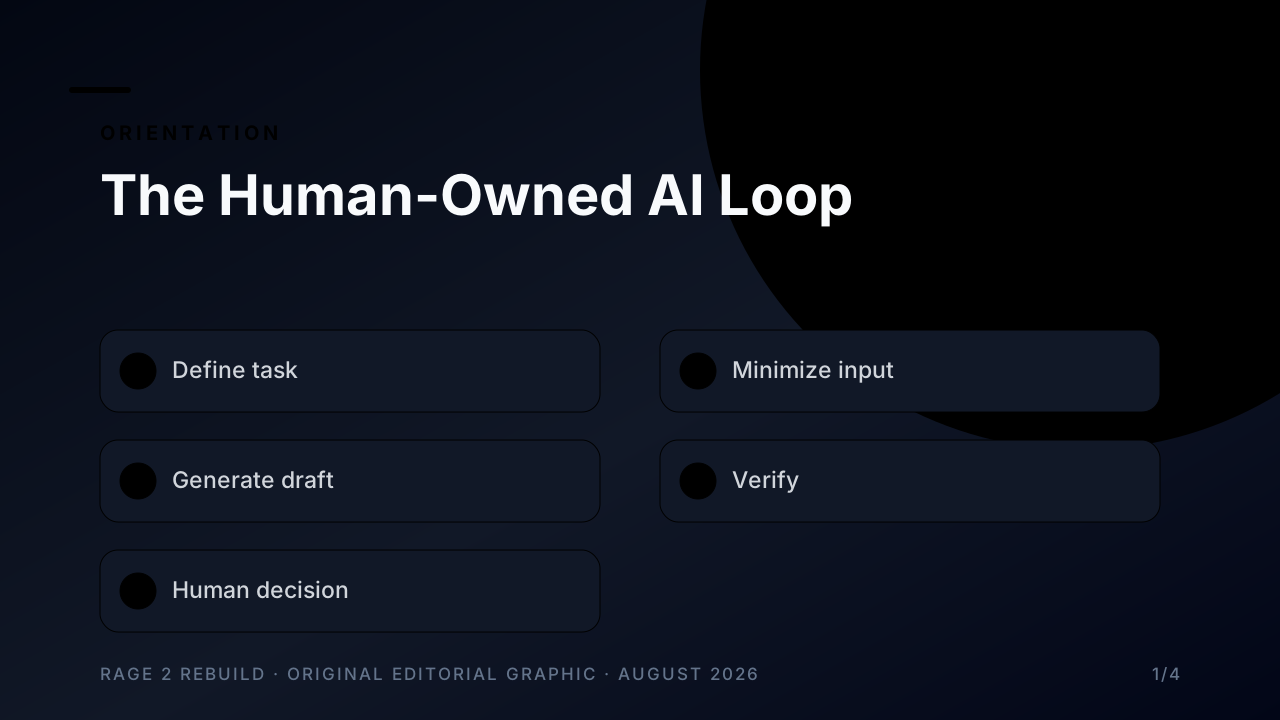
Orientation
The model assists; a human owns the decision and consequences.
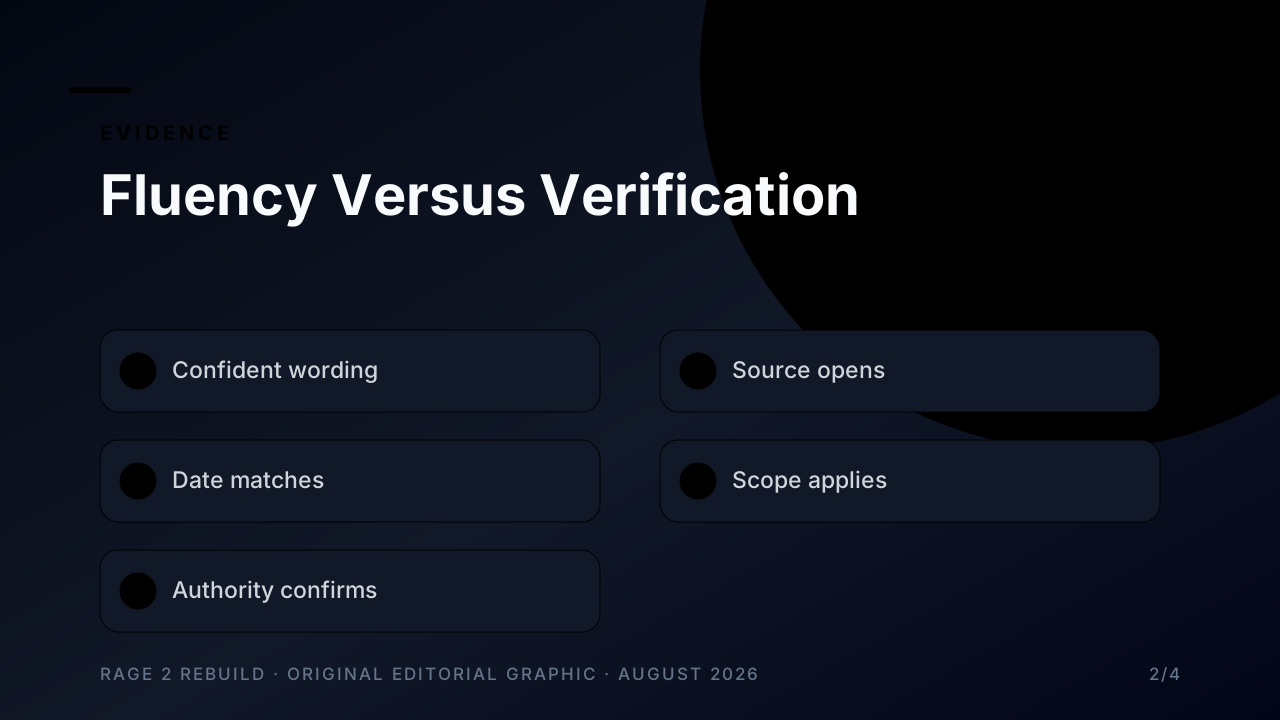
Evidence
Tone, formatting, and citations are not proof by themselves.
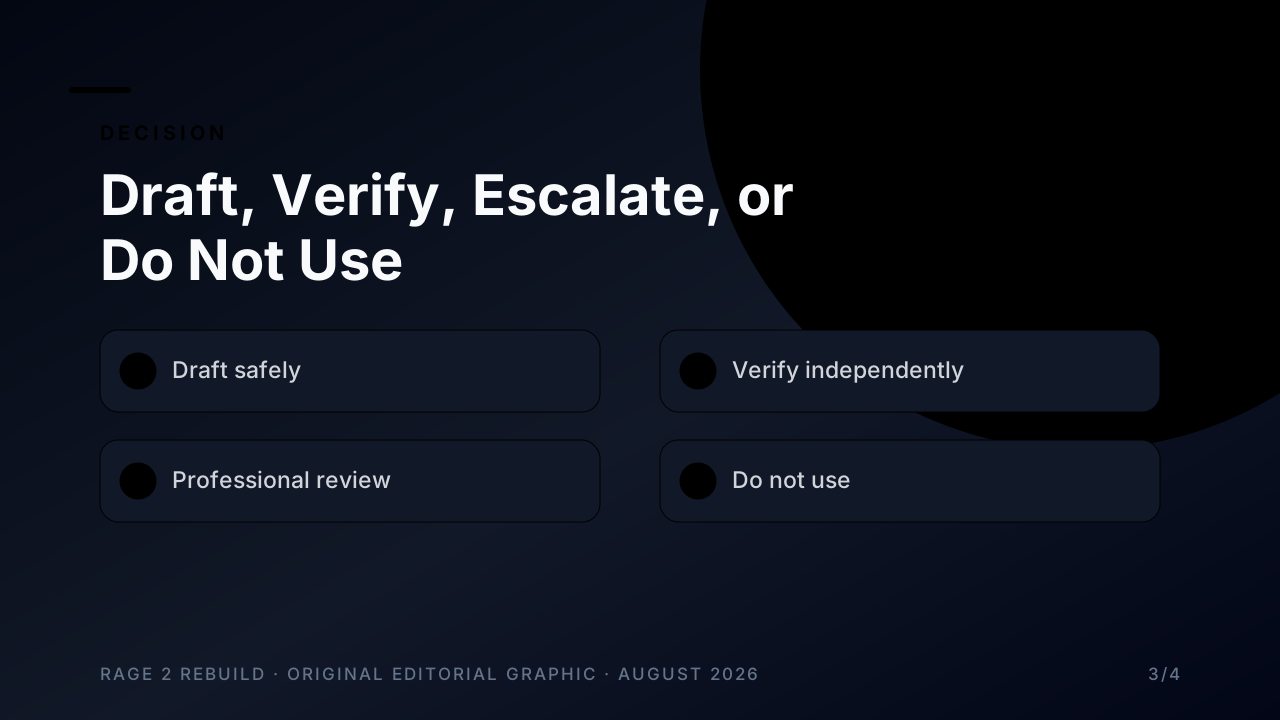
Decision
Some tasks should never be delegated to a general chatbot.
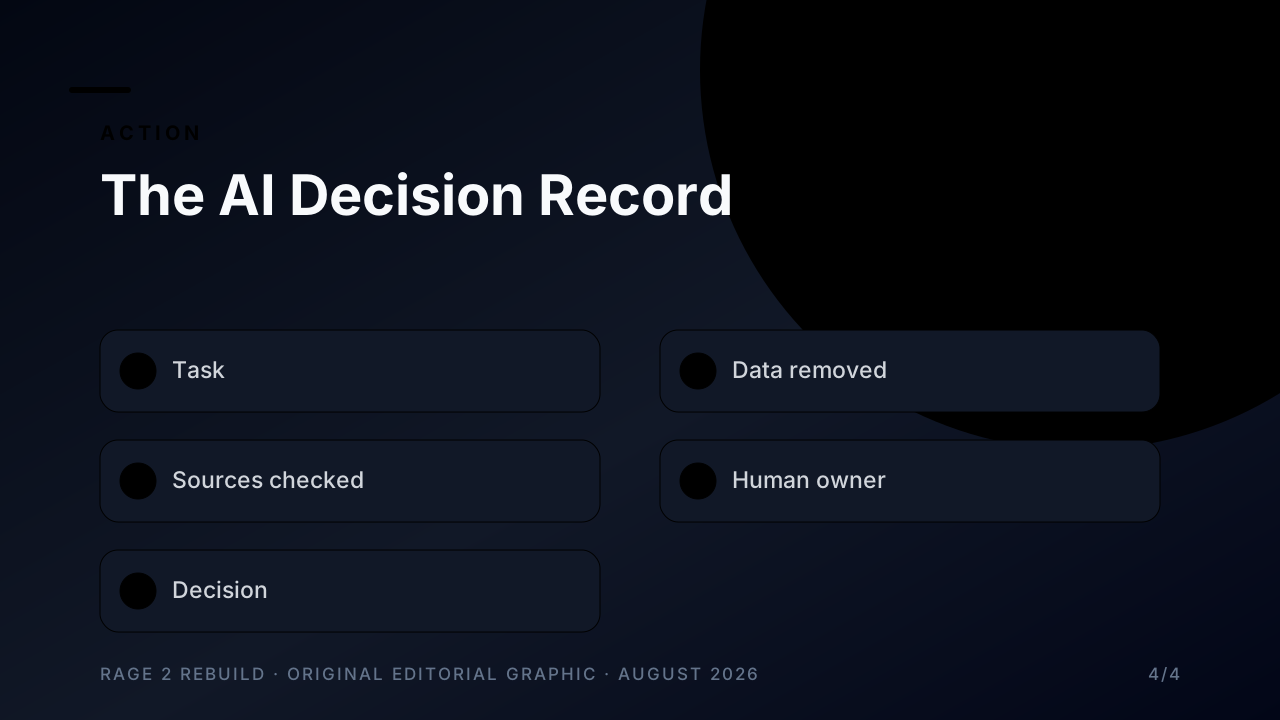
Action
Make the invisible use of AI reviewable and accountable.
Browser-only planning tool
Use the workflow before sending sensitive input or acting on generated facts.
A brainstorming error may waste a few minutes. A fabricated crisis number, provider credential, medication instruction, law, price, contract term, or safety claim can cause serious harm. Increase source quality, independent checks, and professional review as consequence rises.
Do not use a citation merely because the model supplied one. Verify that the page is authentic, current, relevant to the jurisdiction and population, and supportive of the precise statement. If the source cannot be opened, treat the claim as unverified.
A person may consent to your use of their name in one context without consenting to upload of their messages, medical details, finances, location, employment records, or family conflict. Data minimization protects people who are not present to negotiate the use.
A durable workflow records what was removed, what model or service was used, which sources were checked, who reviewed the output, what was decided, and when the decision should be revisited. That turns AI from invisible authority into an auditable tool.
Original page video
A polished answer is still only a draft until the evidence and responsible human are identified.
Synthetic narration and original editorial graphics. No client, therapist, religious group, or documented event is depicted.
Private check-in
Nothing is submitted. This page does not invent vote counts or claim that other visitors answered.
Readiness tool
0 of 4 foundations in place
Choose the statements that are already true for you.
This planning aid is not a safety, legal, medical, or clinical assessment.
Named sources
National Institute of Standards and Technology
Voluntary framework for governing, mapping, measuring, and managing AI risk.
Federal Trade Commission
Regulatory discussion of privacy and confidentiality risks when information is supplied to AI services.
National Institute of Mental Health
Official U.S. routes for finding qualified help and responding to urgent danger.
Editorial review: August 2, 2026. Hours, laws, credentials, costs, services, and availability can change; verify them directly.
Page-specific answers
Low-stakes drafting, organization, option generation, and question preparation can be useful when outputs are reviewed. Suitability decreases as privacy and consequence increase.
Remove identities, private records, account details, credentials, precise locations, health information, and third-party data unless truly required and appropriately protected.
Open the source, confirm it exists, check the date, read the relevant passage, ensure the scope applies, and compare the generated claim with the source’s actual wording.
A named human or accountable organization must own verification, judgment, communication, and consequences. The model cannot accept responsibility.
No. It can help organize questions, but it cannot perform the accountable assessment, diagnosis, treatment, or emergency response of qualified care.
Do not assume so. Review the provider’s current terms and settings, minimize data, and avoid unnecessary sensitive or third-party information.
Require primary sources, open them, check dates and exact wording, and verify high-stakes facts with the responsible authority or professional.