90 sec
grounding interval
Orient to the present before deciding what a surge of fear means.
Powerful worship, prophecy, healing expectations, spiritual-warfare language, and fear can leave intense memories and physical responses. The intensity of an experience cannot by itself establish its cause.
When fear rises, stabilize the body before debating its meaning. Notice the room, slow the next action, and delay irreversible decisions until you can assess the situation more clearly.
This is not a diagnosis. Hallucinations, mania, self-harm risk, inability to function, medication questions, or immediate danger require qualified clinical or emergency help.
Write what happened immediately before the reaction, what you noticed in your body, the explanation your mind supplied, and what happened next. A short log can reveal patterns that one frightening episode hides.
Use neutral language first: “My heart raced after the song” is an observation. “This proves a spiritual force is present” is an interpretation. Separating the two creates room for careful evaluation.
Identify people or media that intensify panic, claim certainty about your symptoms, discourage medical care, or demand immediate obedience. Reduce access while you seek independent assessment.
Do not stop prescribed treatment because a leader, influencer, AI system, or peer says the problem is purely spiritual. Medication changes belong with the prescribing clinician.
Pentecostal recovery worksheet
Prophecy, spiritual warfare, healing claims, tongues, altar calls, and fear of demonic influence can train intense physical responses. A racing body does not settle simply because a doctrine changed.
90 sec
Use a short sensory reset before interpreting a surge of fear as a spiritual message.
5
Sight, touch, hearing, smell, and taste can bring attention back to the present environment.
1
Hallucinations, mania, self-harm risk, or inability to function need licensed or emergency care.

Useful distinction
Music, repetition, expectation, sleep loss, group emotion, and fear can produce powerful experiences. Their intensity alone cannot tell you what caused them.
Describe What Your Body Is Replaying
Start with the recurring trigger and what happens physically. Personal perspective is not a diagnosis.
Describe What Your Body Is ReplayingNamed external resources
Private check-in
Nothing is submitted. This page does not invent vote counts or claim that other visitors answered.
Readiness tool
0 of 4 foundations in place
Choose the statements that are already true for you.
This planning aid is not a safety, legal, medical, or clinical assessment.
Music, movement, prayer, silence, or community service may still matter to you. You can choose a practice for its present effect without making a claim you no longer hold.
Build one calm recurring practice and one relationship where questions do not trigger a conversion attempt. Stability gives investigation a safer place to happen.
Pentecostal grounding and claim review · Reviewed August 2026
After leaving or questioning Pentecostalism, intense reactions around prophecy, healing, tongues, altar calls, spiritual warfare, music, or punishment may continue. A racing body does not establish what caused an experience. Ground first, record context, compare ordinary and spiritual interpretations carefully, and use licensed or emergency care when symptoms involve danger, mania, hallucinations, self-harm, or inability to function.
90 sec
Orient to the present before deciding what a surge of fear means.
5
Sight, touch, hearing, smell, and taste can interrupt a spiraling interpretation.
3
Sleep, substances or medication, and group stimulation belong in the event record.
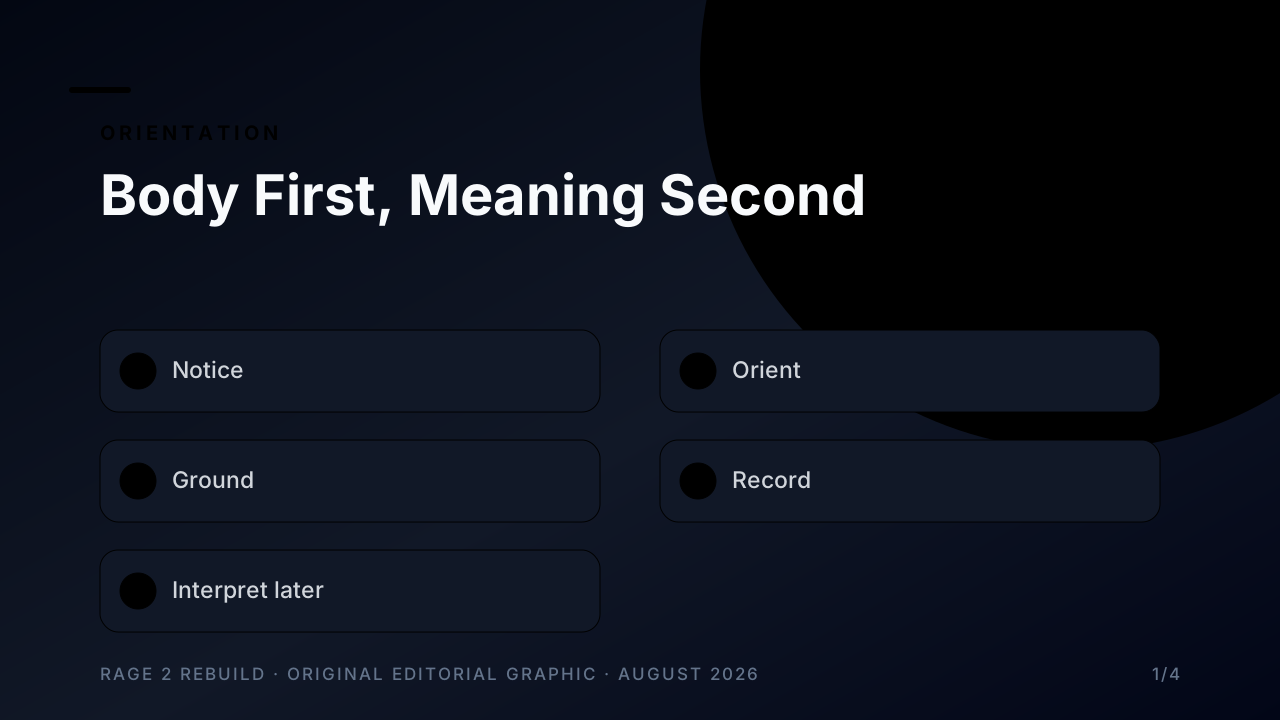
Orientation
Stabilization creates better conditions for honest review.
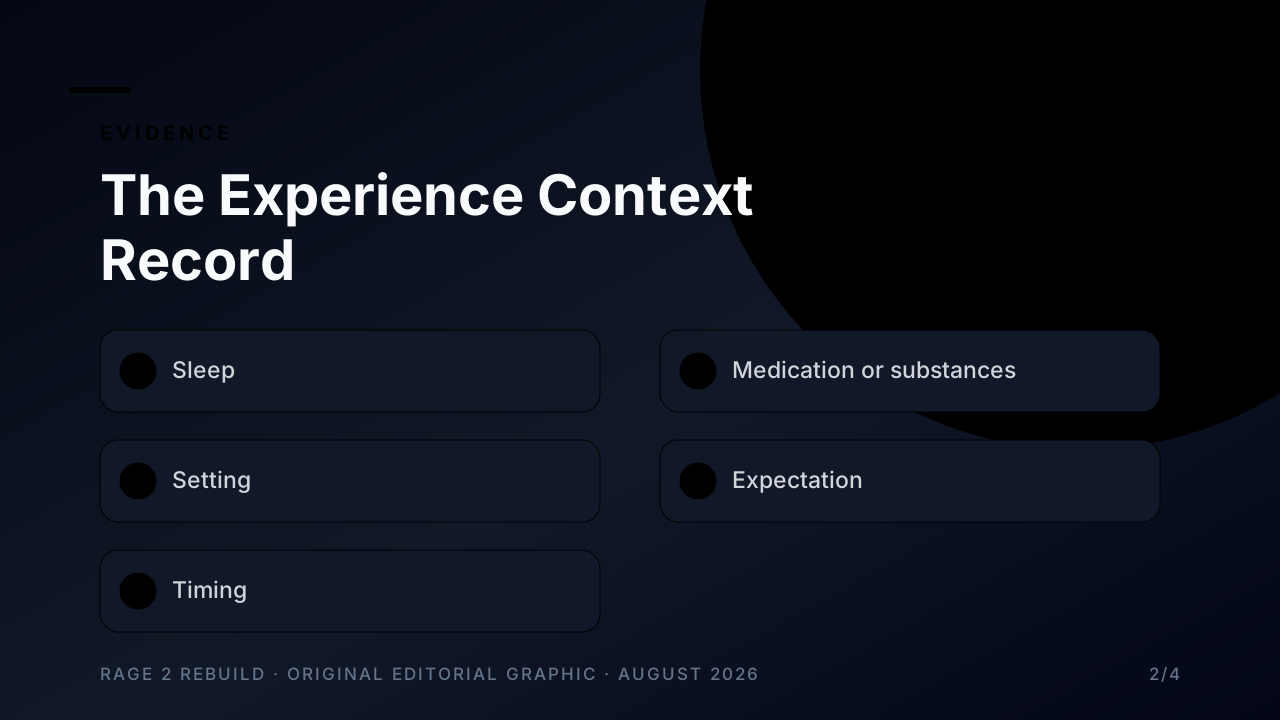
Evidence
Record observable context without mocking or sanctifying the event.
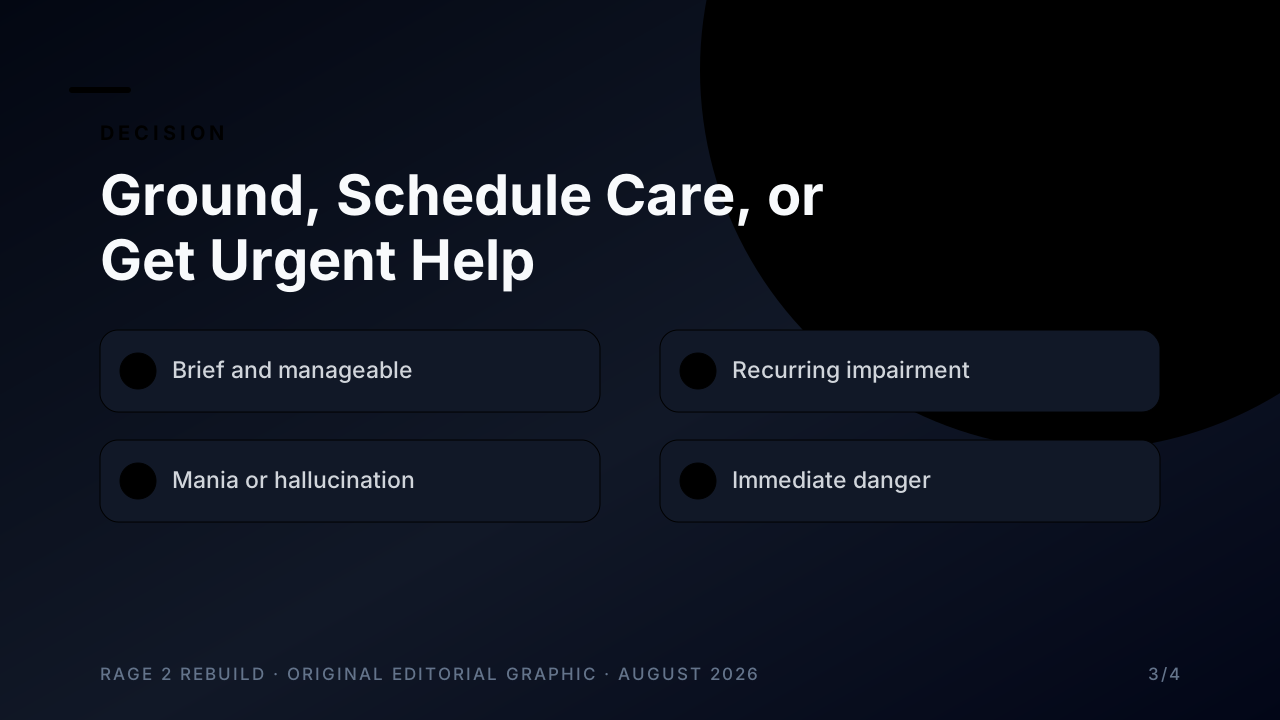
Decision
Symptom severity and danger determine the care lane.
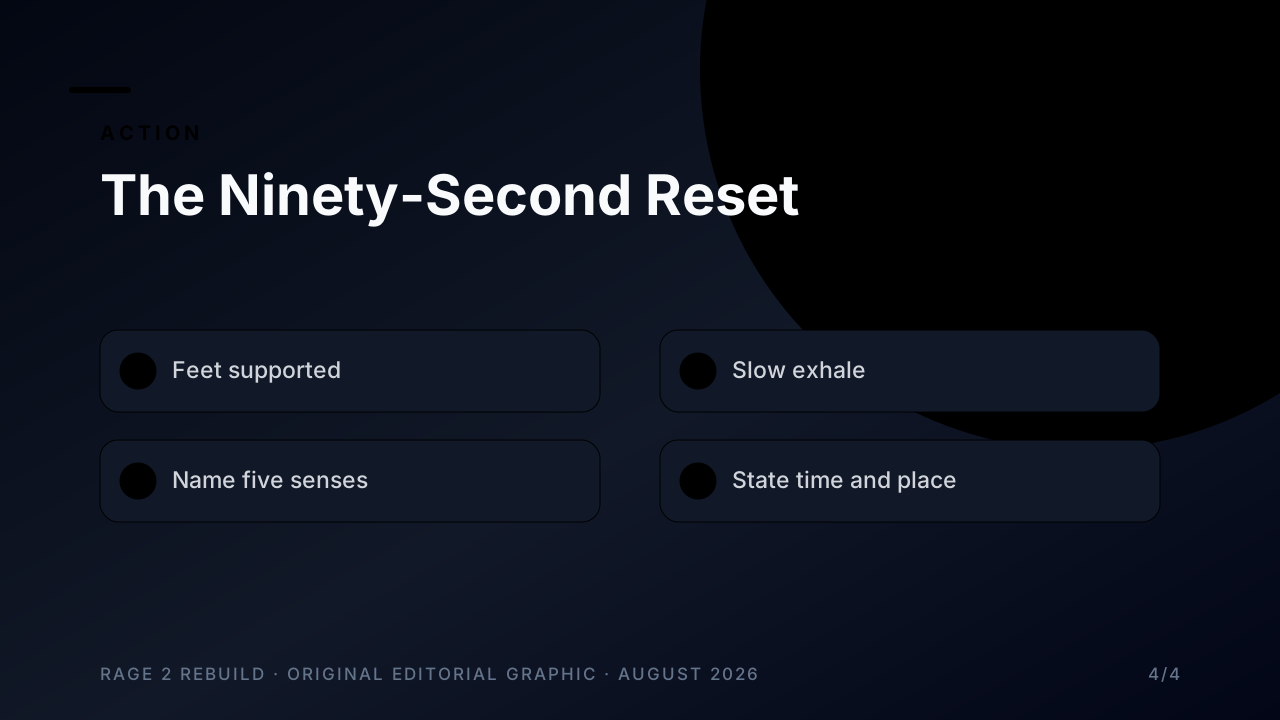
Action
A present-orientation tool, not a diagnosis or proof about belief.
Browser-only planning tool
Use the card during a trigger; evaluate meaning only after the body settles.
Original page video
Do not force a theological verdict while your body is still in an alarm state.
Synthetic narration and original editorial graphics. No client, therapist, religious group, or documented event is depicted.
Private check-in
Nothing is submitted. This page does not invent vote counts or claim that other visitors answered.
Readiness tool
0 of 4 foundations in place
Choose the statements that are already true for you.
This planning aid is not a safety, legal, medical, or clinical assessment.
Named sources
Recovering from Religion
Educational resources that do not diagnose a reader or replace licensed mental-health care.
Recovering from Religion
A mixed collection for examining belief questions; inclusion does not make every linked item authoritative.
National Institute of Mental Health
Official U.S. guidance for locating qualified care and responding when danger is immediate.
Editorial review: August 2, 2026. Hours, laws, credentials, costs, services, and availability can change; verify them directly.
Page-specific answers
No single feature, including intensity, identifies a cause. Record the context and consider multiple explanations without ridiculing the experience.
No. Grounding is a present-orientation technique. It lowers immediate arousal so you can make decisions under better conditions.
Seek qualified care when symptoms recur, impair sleep or daily function, or involve panic, trauma, depression, mania, or hallucinations. Use emergency services when danger is immediate.
Do not change medical treatment based on a content page or testimony. Discuss diagnosis and treatment with an appropriately qualified healthcare professional.
Not therapy. Personal advice. Elder X is not a licensed therapist or spiritual counselor. This is honest writing from a man who has walked an analogous road.
A practical tool for recording religious guilt triggers, inherited rules, predicted consequences, present evidence, and care escalation.
A practical framework for building a provisional worldview with evidence, confidence levels, values, uncertainty, and scheduled review.
A six-week practical experiment for rebuilding recurring contact, trust, invitations, and belonging after leaving a religious community.
A practical guide to timing, scope, safety, boundaries, and follow-up when telling family that your religious beliefs changed.
Leaving looks different depending on what you came out of. These pages take that seriously.
A practical guide for separating doctrine, authority, politics, family, sexuality, parenting, and church belonging during evangelical deconstruction.
A practical guide to separating belief, marriage, family, finances, church participation, and community during an LDS faith transition.
A practical guide to separating institutional belief, family culture, sacraments, holidays, conscience, and identity after Catholicism.
What you grew up in, what made you start questioning, where you are now. Be as specific as you can. There is no wrong way to start.