4
parts to separate
Family, ritual, memory, and obligation do not require the same answer.
A holiday can contain family, food, memory, worship, obligation, travel, and grief. You can decide about each part rather than treating the entire day as one yes-or-no choice.
Nostalgia is not renewed belief. A song, meal, or familiar room can matter without obligating you to perform a creed.
A useful plan defines arrival, participation, off-limit topics, transportation, and what meaningful activity you will create before or after the gathering.
Compare full attendance, limited attendance, and an alternative event. Write the cost and benefit of each, including travel, sleep, childcare, worship pressure, and emotional recovery.
Use a sentence that redirects rather than debates: “I am here to spend time with the family, and I am not discussing my beliefs today.” Repeat it without adding new arguments.
Holiday boundary planner
A holiday can contain family, food, memory, worship, obligation, and grief. Decide which part you are attending instead of treating the entire day as one yes-or-no decision.
3
Full attendance, limited attendance, and an alternative plan are all legitimate.
1
Knowing when and how you leave reduces negotiation during conflict.
2
Keep one inherited ritual and create one honest new ritual.

Useful distinction
Music, food, smells, and family routines can evoke belonging without reversing your conclusions. A memory response does not obligate participation.
Plan the Next Holiday
Name the event, the pressure point, and the boundary you want to hold.
Plan the Next HolidayNamed external resources
Resources for naming losses that may include identity, certainty, family, ritual, and community.
Source: Recovering from Religion ↗
A curated collection for examining belief changes without rushing into a replacement identity.
Source: Recovering from Religion ↗
Private check-in
Nothing is submitted. This page does not invent vote counts or claim that other visitors answered.
Readiness tool
0 of 4 foundations in place
Choose the statements that are already true for you.
This planning aid is not a safety, legal, medical, or clinical assessment.
Keep one inherited tradition because you value it and add one new practice that reflects your present life—service, a walk, storytelling, gratitude, rest, or a shared meal.
Holiday operating plan · Reviewed August 2026
A religious holiday may combine family connection, worship, food, music, childhood memory, travel, money, and public performance. Decide about each part separately. Full attendance, limited attendance, an alternative celebration, or declining the event can all be legitimate when the choice is made with clear boundaries and practical preparation.
4
Family, ritual, memory, and obligation do not require the same answer.
3
Full, limited, and alternative plans avoid a false all-or-nothing choice.
1
A written departure point reduces negotiation during conflict.
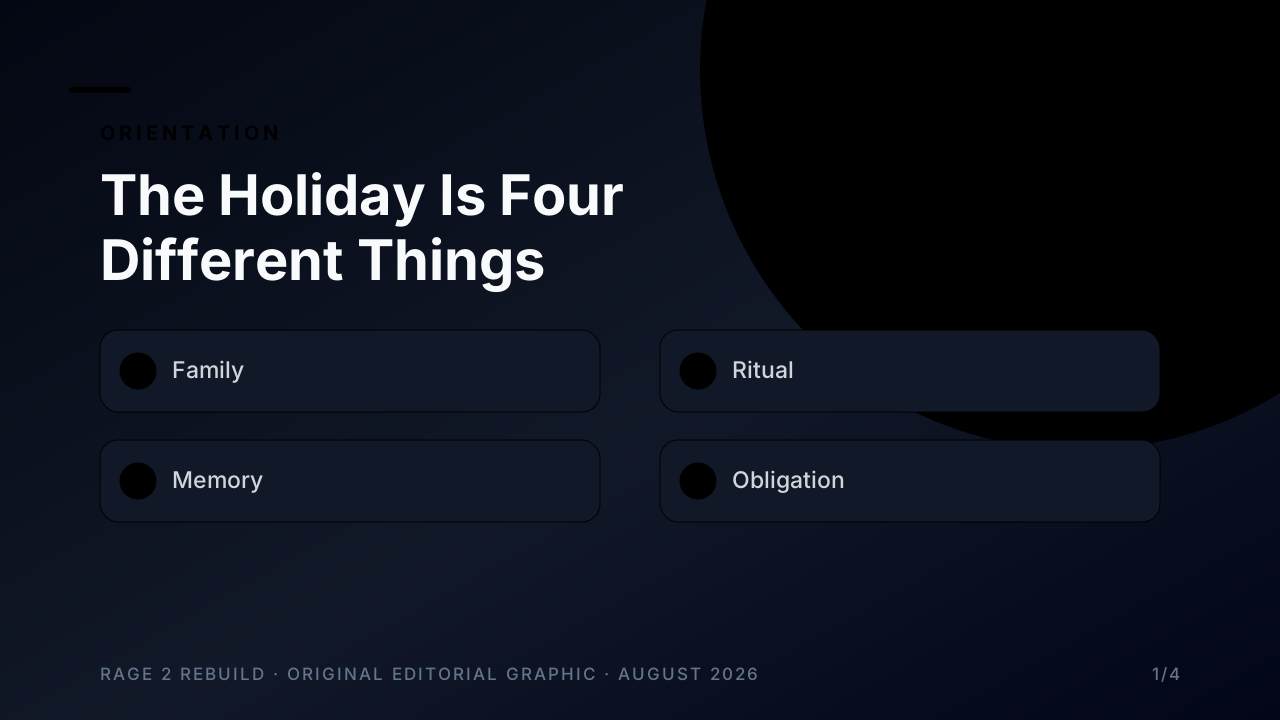
Orientation
Make one decision for each layer.
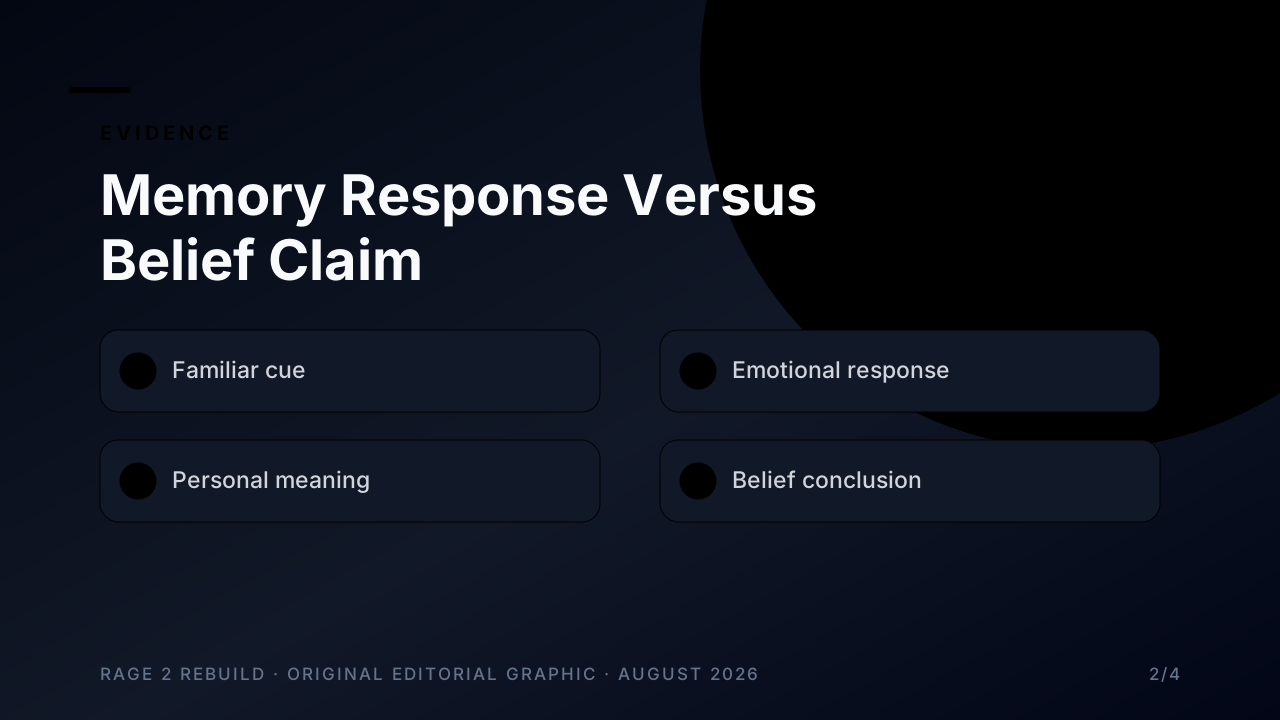
Evidence
Emotion and doctrinal conclusion are different kinds of information.
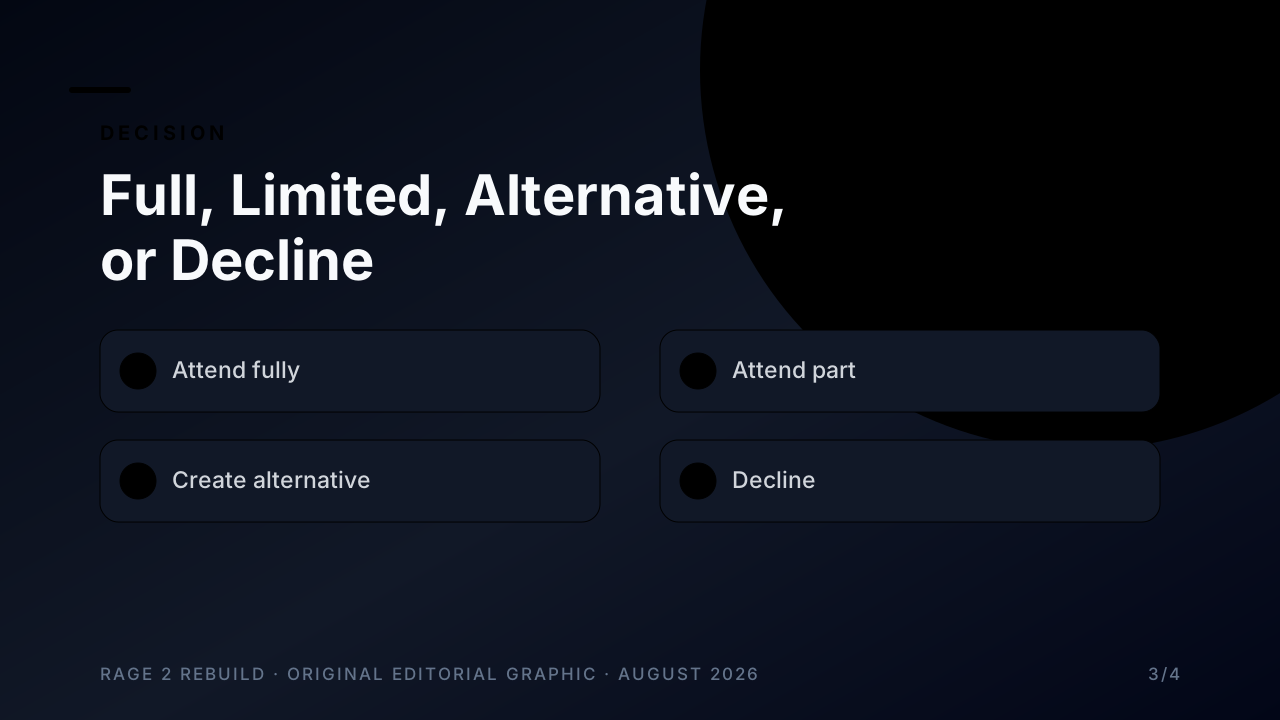
Decision
Choose the smallest plan that protects both agency and valued connection.
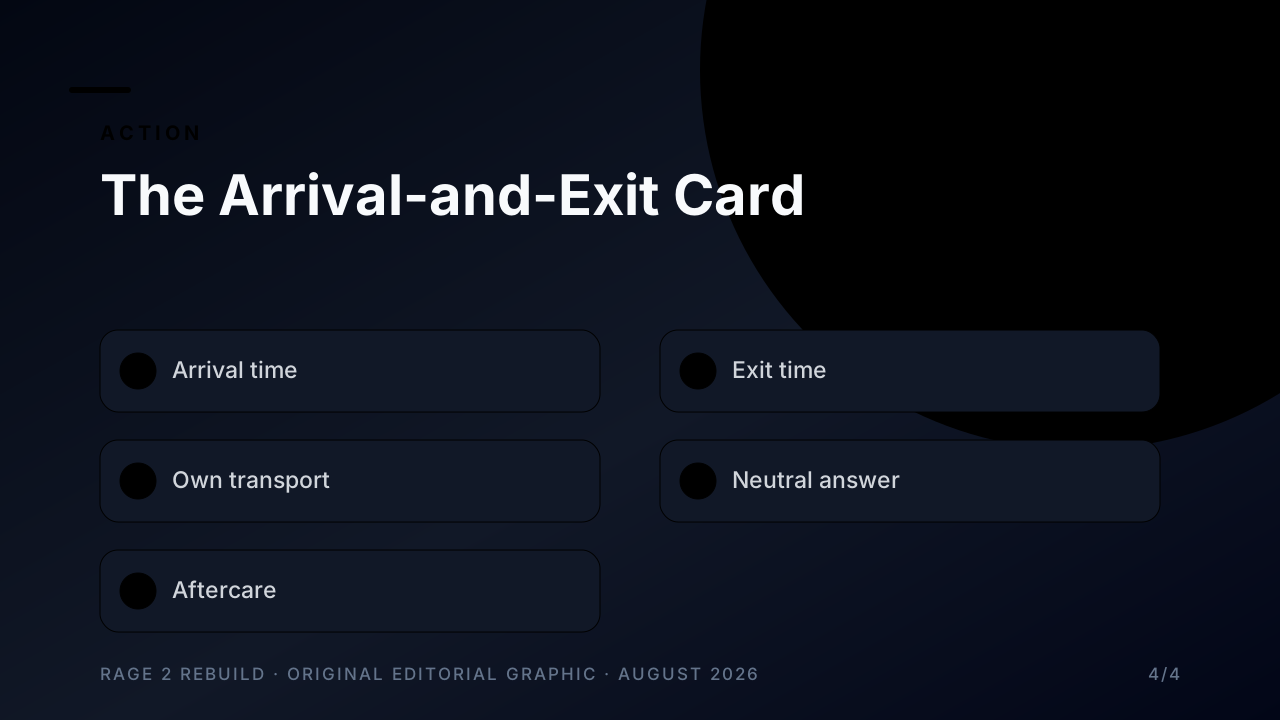
Action
Prepare logistics before emotions rise.
Browser-only planning tool
Treat the event as a schedule with choices, not a single loyalty test.
Original page video
A holiday does not have to be one yes-or-no decision.
Synthetic narration and original editorial graphics. No client, therapist, religious group, or documented event is depicted.
Private check-in
Nothing is submitted. This page does not invent vote counts or claim that other visitors answered.
Readiness tool
0 of 4 foundations in place
Choose the statements that are already true for you.
This planning aid is not a safety, legal, medical, or clinical assessment.
Named sources
Recovering from Religion
Background resources for naming loss after belief change; not individualized clinical guidance.
American Psychological Association
Professional background on grief and coping; individual needs and treatment decisions still require appropriate care.
U.S. Surgeon General
Public-health framework distinguishing the structure, function, and quality of social connection.
Editorial review: August 2, 2026. Hours, laws, credentials, costs, services, and availability can change; verify them directly.
Page-specific answers
Yes, if your chosen form of presence does not require a statement or ritual you consider dishonest. Decide that boundary before the event.
Prepare a short truthful response that matches your disclosure choice, such as saying you are not discussing belief during the gathering.
State which part you will attend, which part you will skip, and the logistics clearly without using the event itself for a doctrine debate.
Name the exclusion as a real loss, plan contact with supportive people, and create a meaningful alternative rather than waiting through the day without structure.
Not therapy. Personal advice. Elder X is not a licensed therapist. This is honest writing from someone who has walked the road and sat with people on it.
A practical guide to attending religious ceremonies, declining rituals, supporting family, and handling grief without pretending belief.
A practical guide to contact boundaries, ambiguous loss, documentation, chosen family, and daily stability after religious shunning.
A practical guide to timing, scope, safety, boundaries, and follow-up when telling family that your religious beliefs changed.
A practical guide to values, questions, rituals, religious relatives, and co-parent agreements after a change in belief.
Pages written specifically for people leaving these traditions.
A practical guide to separating institutional belief, family culture, sacraments, holidays, conscience, and identity after Catholicism.
A practical guide to separating belief, marriage, family, finances, church participation, and community during an LDS faith transition.
A practical guide for separating doctrine, authority, politics, family, sexuality, parenting, and church belonging during evangelical deconstruction.
Describe what you grew up in, the decision in front of you, and the next outcome you want. Include only necessary detail; response timing varies.