5
systems to bridge
Work, education, housing, technology, and social navigation each need concrete next steps.
Going off the derech can involve belief, family, marriage, children, education, language, clothing, technology, work, housing, and community status. Practical skill-building deserves its own plan rather than being treated as proof for or against a belief.
Orthodox communities are not interchangeable, and this page does not predict a family or community response. Start with the systems that affect your independence and safety.
Marriage, divorce, custody, immigration, and religious-versus-civil legal questions require qualified jurisdiction-specific advice. Peer perspective is not a substitute.
Rate your current comfort with banking, resumes, job applications, housing, transportation, healthcare, technology, secular education, and unfamiliar social settings. Choose one skill with an immediate practical payoff.
Ask for instruction without shame. Needing to learn a system you were not expected to use is a training gap, not evidence that you cannot function outside the community.
Before changing residence, school arrangements, marital status, or child-related routines, get advice from a qualified professional who understands the relevant jurisdiction. Online anecdotes are not a custody strategy.
Keep communication factual and preserve records lawfully. Avoid public accusations or irreversible announcements while a legal or family process is active unless your adviser recommends otherwise.
OTD transition worksheet
Going off the derech can involve belief, family, marriage, children, education, language, clothing, work, technology, and community status. Practical skill-building deserves as much attention as theological certainty.
4
Work, housing, technology, and social navigation can each need a separate learning plan.
2
Religious-community fluency and secular-world fluency can coexist during transition.
1
Marriage and child-custody decisions require qualified jurisdiction-specific legal advice.

Useful distinction
Difficulty with resumes, banking, dating, technology, or secular norms does not prove the old community was right. It shows which skills the community never expected you to need.
Choose the First Practical Bridge
Start with the system you need to learn next. For legal or safety questions, use qualified local help.
Choose the First Practical BridgeNamed external resources
Private check-in
Nothing is submitted. This page does not invent vote counts or claim that other visitors answered.
Readiness tool
0 of 4 foundations in place
Choose the statements that are already true for you.
This planning aid is not a safety, legal, medical, or clinical assessment.
Choose recurring spaces based on work, learning, service, art, sport, or neighborhood life. A durable identity needs interests and relationships that are not organized only around what you left.
Specialist organizations such as Footsteps may offer practical transition support in their service area. Check eligibility, geography, privacy, and current programs directly with the organization.
OTD skills and systems bridge · Reviewed August 2026
Going off the derech can involve belief, family, marriage, children, education, language, clothing, work, technology, housing, money, and community status. Difficulty navigating unfamiliar secular systems does not prove that leaving was wrong. Build bridges one system at a time, retain lawful access to records and communication, and obtain qualified jurisdiction-specific advice before changing marriage, custody, school, residence, or immigration arrangements.
5
Work, education, housing, technology, and social navigation each need concrete next steps.
2
Religious-community knowledge and secular-system knowledge do not cancel each other.
1
Marriage, custody, residence, and school decisions should not rely on online anecdotes.
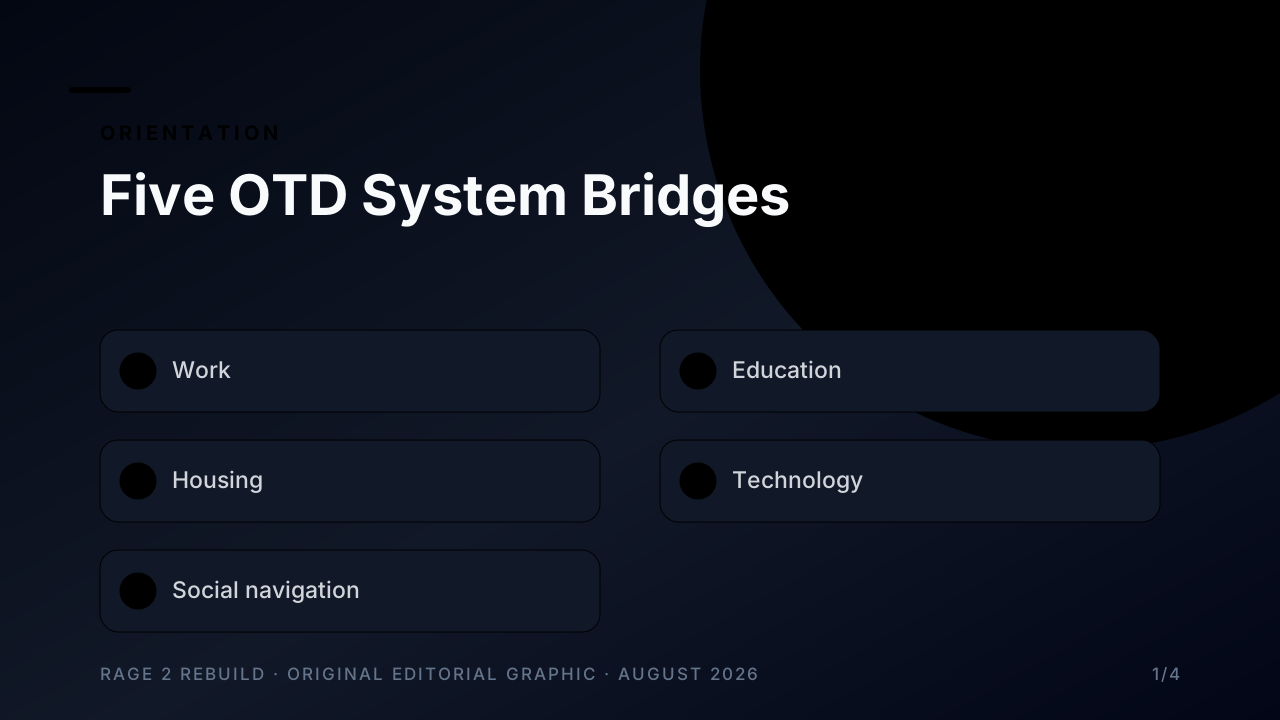
Orientation
Turn a general transition into learnable systems.
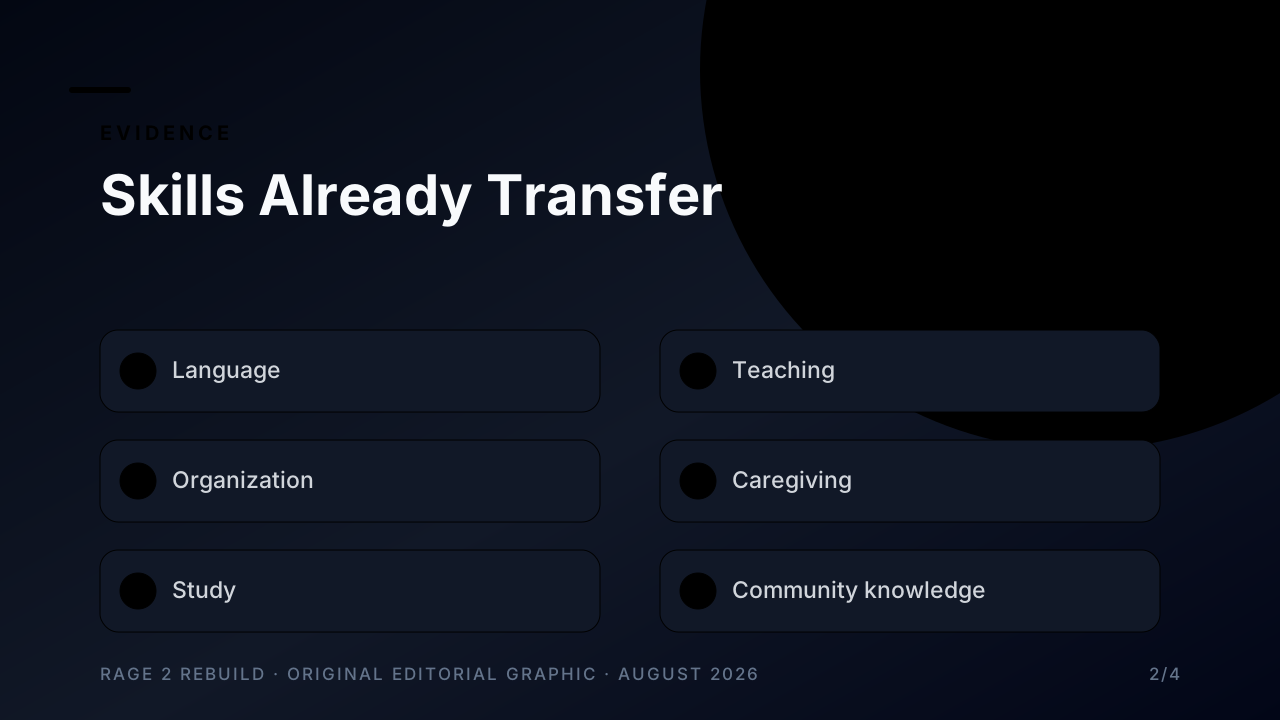
Evidence
Inventory capability before assuming you are starting from zero.
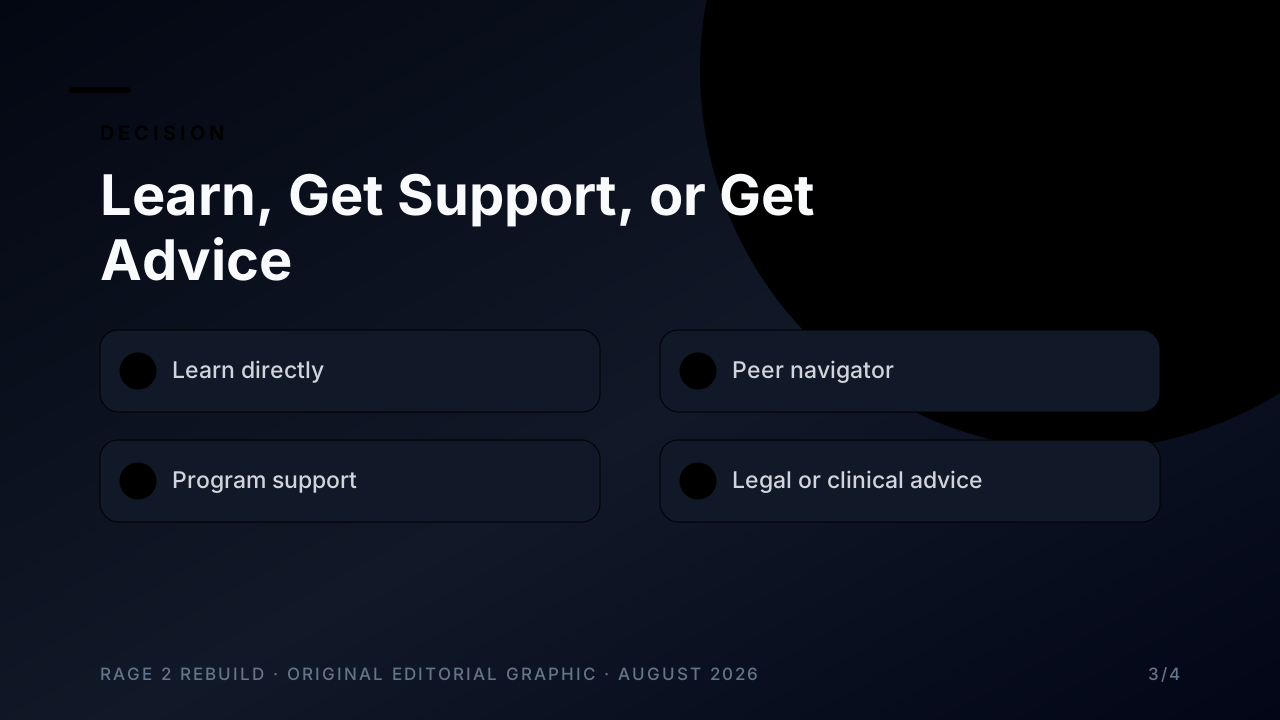
Decision
Different systems require different helpers.
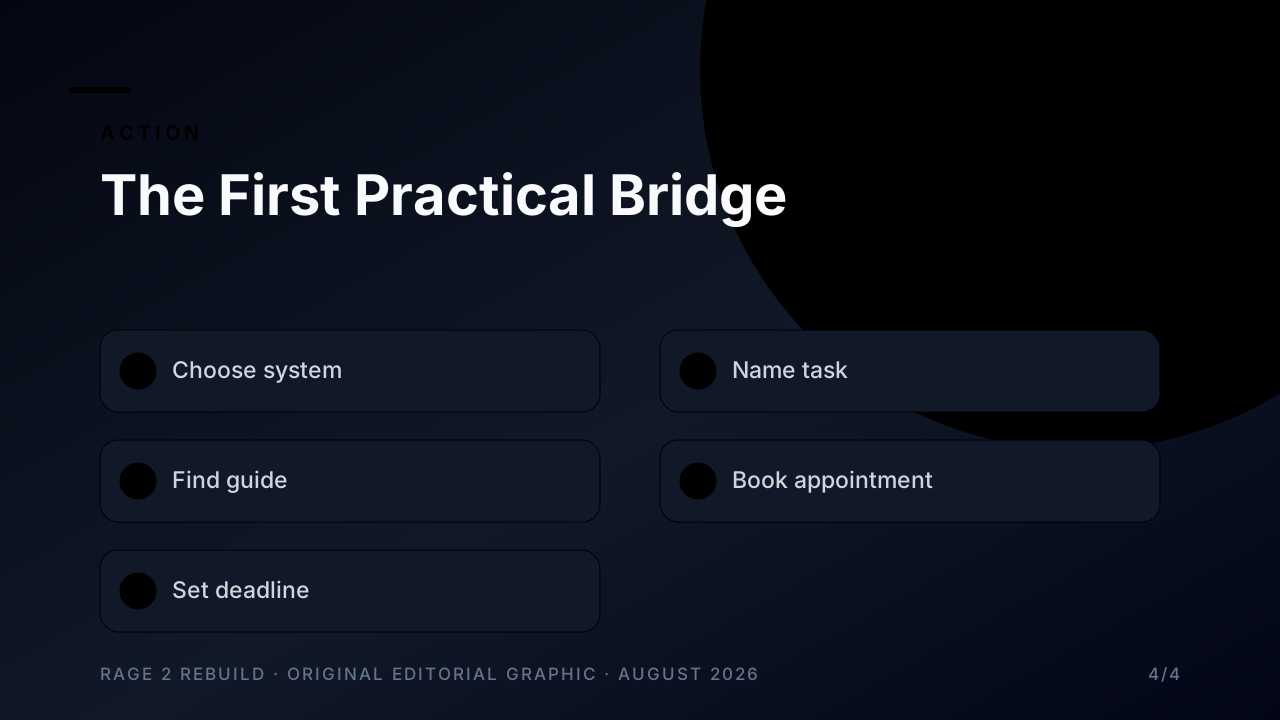
Action
One completed bridge creates options for the next.
Browser-only planning tool
Choose the system that most limits independence today, not the identity question that feels largest.
Original page video
A missing secular skill is a learnable system, not proof that you cannot build a self-directed life.
Synthetic narration and original editorial graphics. No client, therapist, religious group, or documented event is depicted.
Private check-in
Nothing is submitted. This page does not invent vote counts or claim that other visitors answered.
Readiness tool
0 of 4 foundations in place
Choose the statements that are already true for you.
This planning aid is not a safety, legal, medical, or clinical assessment.
Named sources
Footsteps
North American transition services for people leaving ultra-Orthodox communities; availability and eligibility must be confirmed directly.
Recovering from Religion
Resources for naming losses involving identity, certainty, ritual, family, and community.
National Institute of Mental Health
Official U.S. guidance for locating qualified care and responding when danger is immediate.
Editorial review: August 2, 2026. Hours, laws, credentials, costs, services, and availability can change; verify them directly.
Page-specific answers
Here it refers broadly to moving away from an ultra-Orthodox path or community. Individual identities, practices, and transition goals differ.
Choose the system creating the immediate constraint and define one learnable task. Do not treat work, education, housing, technology, and relationships as one problem.
No. Peer orientation may help you frame questions, but marriage, custody, residence, school, and immigration decisions require qualified jurisdiction-specific advice.
No. Footsteps describes North American services and eligibility on its own site. Confirm current location, program, confidentiality, and eligibility details directly.
Not therapy. Personal advice. Elder X is not a licensed therapist or spiritual counselor. This is honest writing from a man who has walked an analogous road.
A six-week practical experiment for rebuilding recurring contact, trust, invitations, and belonging after leaving a religious community.
A practical guide to contact boundaries, ambiguous loss, documentation, chosen family, and daily stability after religious shunning.
A practical guide to consent, exclusivity, sexual health, safety, values, and explaining a religious past while dating.
A practical framework for building a provisional worldview with evidence, confidence levels, values, uncertainty, and scheduled review.
Leaving looks different depending on what you came out of. These pages take that seriously.
A cautious planning guide for people from Muslim backgrounds, separating private belief from disclosure, safety, family, legal, and immigration decisions.
A planning guide for Witnesses who are questioning, fading, PIMO, disfellowshipped, or considering a formal exit.
A practical guide to separating belief, marriage, family, finances, church participation, and community during an LDS faith transition.
What you grew up in, what made you start questioning, where you are now. Be as specific as you can. There is no wrong way to start.