4
conversation purposes
Sharing a fact, requesting time, setting a boundary, and debating evidence are different jobs.
Disclosure is not one universal obligation. The right scope depends on who is affected, what they control, what you need from the conversation, and whether the setting is safe.
Sharing a fact, asking for time, setting a boundary, and debating doctrine are four different conversations. Choose one purpose before choosing the words.
This guide cannot predict a relative’s reaction. It helps you prepare a concise message, an exit line, and support for what happens after.
List each person separately. Note how the change affects their daily life, what they can control, and what you want them to know now. A spouse, parent, sibling, employer, and distant relative do not need the same message or timing.
Write one sentence for what changed and one for what you need next. Add an exit line such as, “I am not debating this tonight; I will revisit it after we both have time.” Short language reduces the number of side arguments available.
Disclosure conversation builder
A disclosure conversation goes better when it has one purpose. Sharing a fact, asking for time, setting a boundary, and debating doctrine are four different conversations.
1
Pick one outcome instead of trying to settle the entire relationship.
2
One sentence for what changed and one for what you need next.
1
Prepare a sentence that ends the conversation if it becomes unsafe or circular.

Useful distinction
When family members are frightened, a longer evidence dump often gives them more claims to argue with. A clear boundary may communicate more than a complete case.
Draft Your Two Sentences
Send the rough version and Elder X can help make it clearer without turning it into a doctrine debate.
Draft Your Two SentencesNamed external resources
Private check-in
Nothing is submitted. This page does not invent vote counts or claim that other visitors answered.
Readiness tool
0 of 4 foundations in place
Choose the statements that are already true for you.
This planning aid is not a safety, legal, medical, or clinical assessment.
Arrange transport, privacy, a supportive contact, and a place to decompress. If disclosure could affect housing, money, documents, safety, custody, or immigration, delay it until you have qualified local advice and practical alternatives.
Disclosure rehearsal · Reviewed August 2026
Telling family that your beliefs changed is optional, not a universal test of courage. Choose the audience, purpose, scope, timing, and exit line separately. When housing, money, documents, children, immigration, healthcare, or physical safety may be affected, protect practical independence and obtain appropriate local advice before making an irreversible disclosure.
4
Sharing a fact, requesting time, setting a boundary, and debating evidence are different jobs.
2
One states what changed; one names what you need next.
1
A prepared ending prevents a disclosure from becoming an unlimited interrogation.
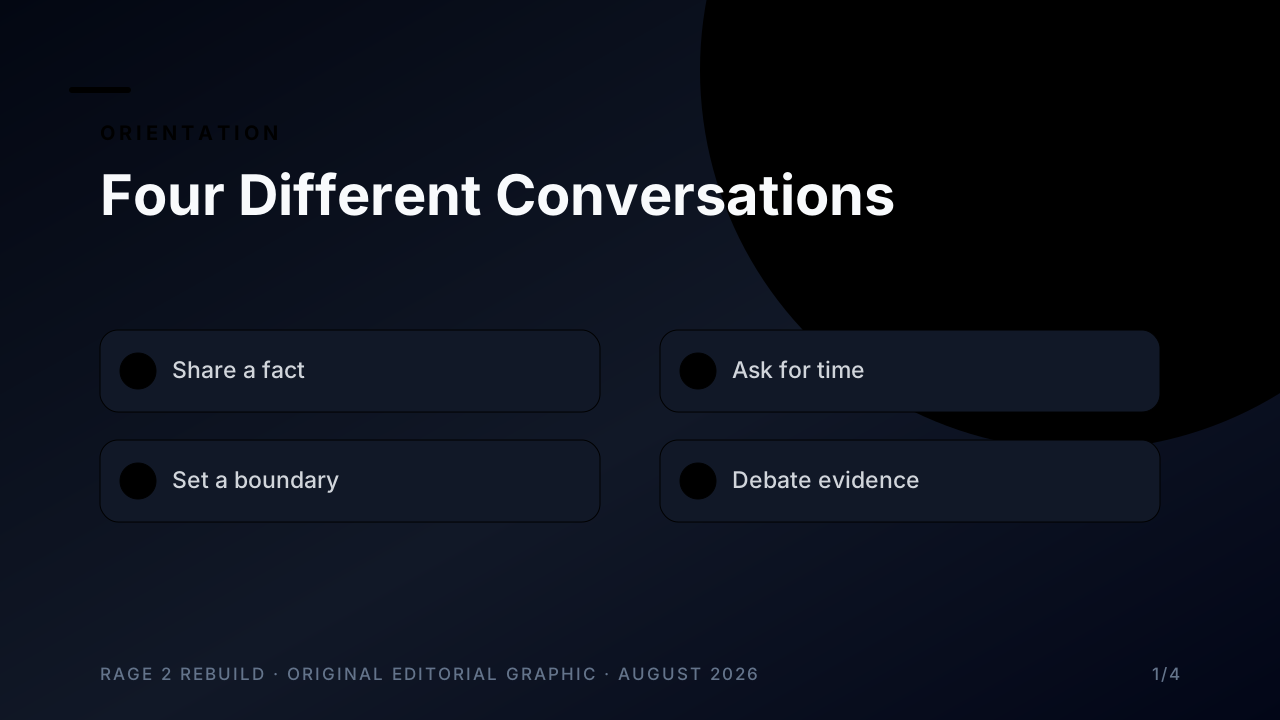
Orientation
Choose one primary purpose before drafting words.
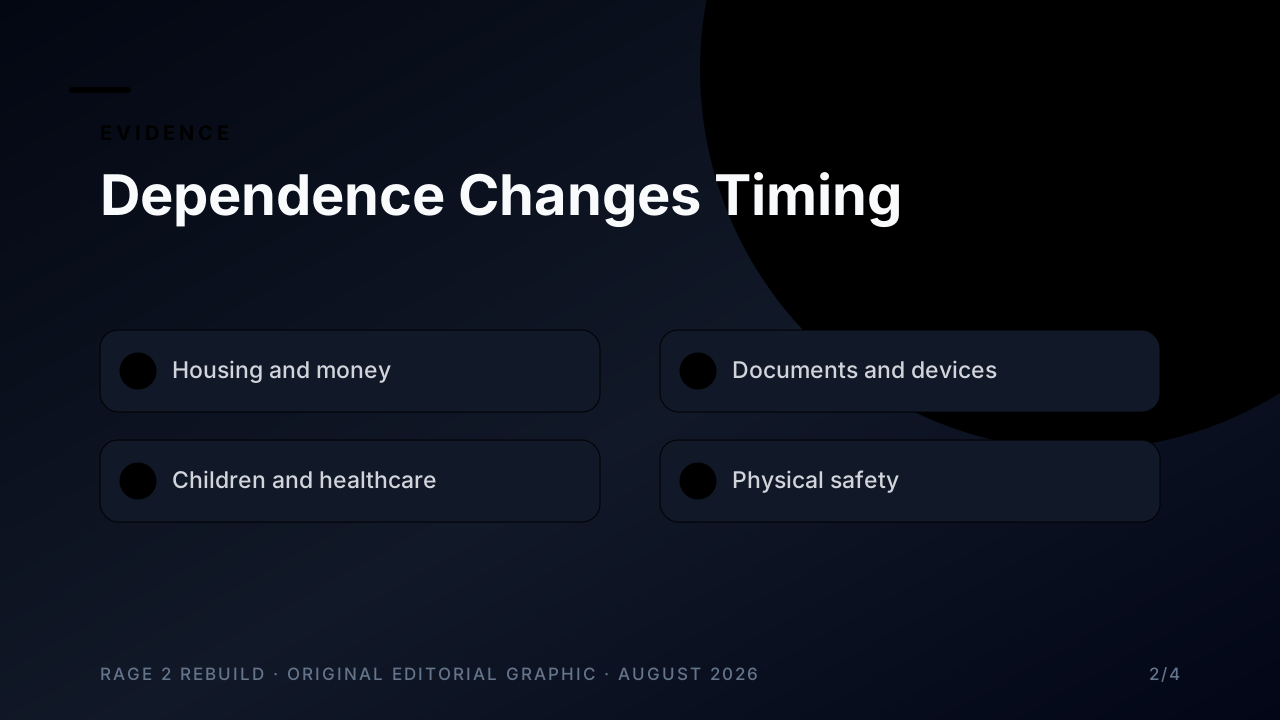
Evidence
Practical exposure matters more than pressure to disclose quickly.
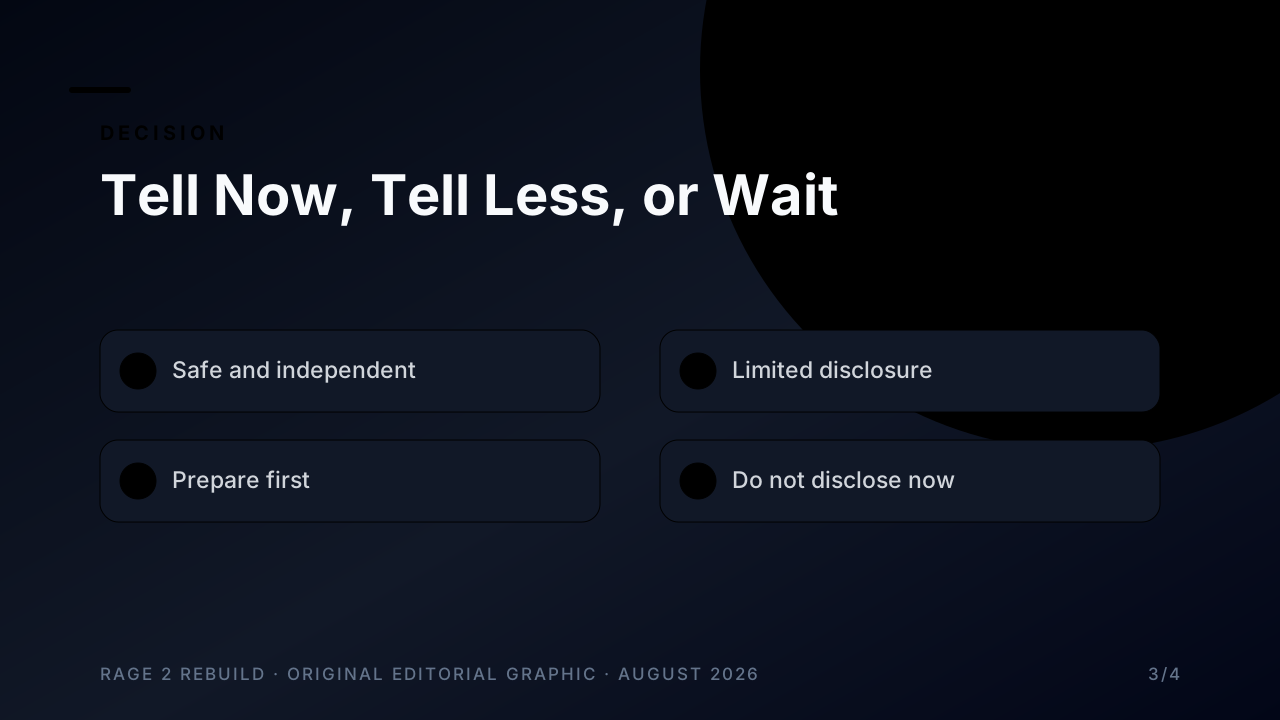
Decision
Privacy is a legitimate choice when consequences are unresolved.
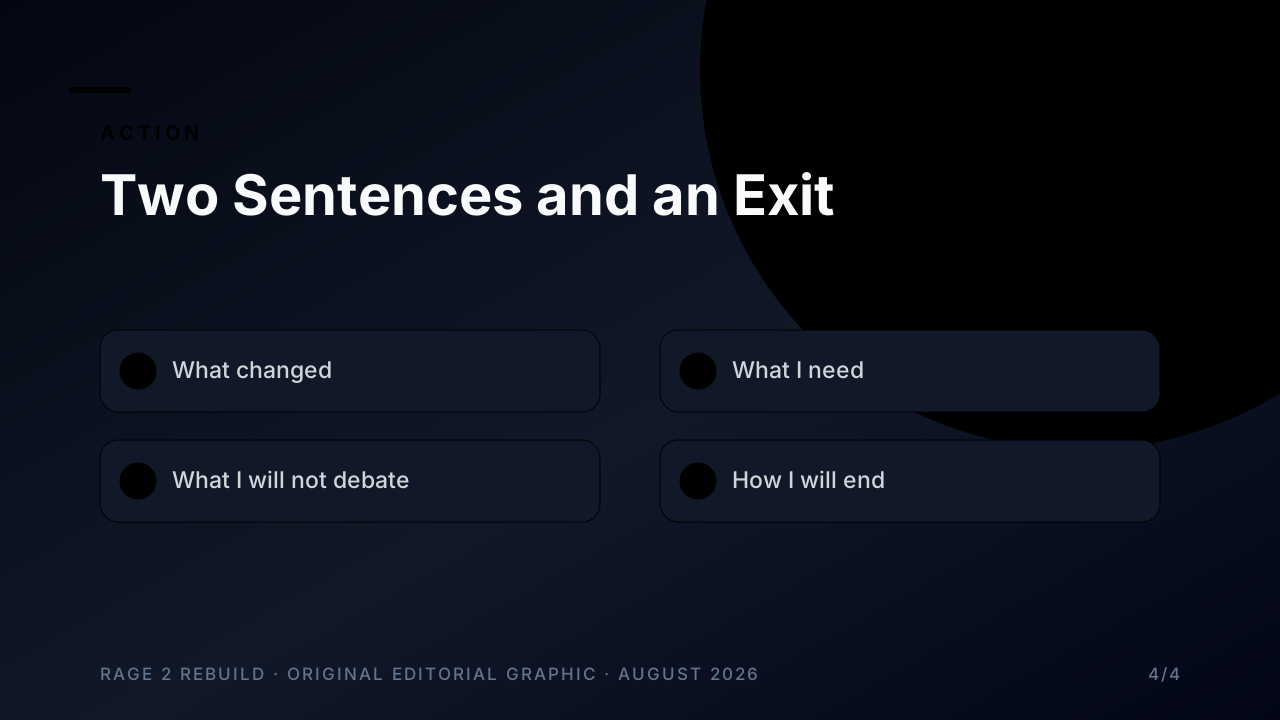
Action
A rehearsal card for one bounded conversation.
Browser-only planning tool
Plan the opening and ending rather than scripting every possible objection.
Original page video
Your first conversation does not have to defend your entire life.
Synthetic narration and original editorial graphics. No client, therapist, religious group, or documented event is depicted.
Private check-in
Nothing is submitted. This page does not invent vote counts or claim that other visitors answered.
Readiness tool
0 of 4 foundations in place
Choose the statements that are already true for you.
This planning aid is not a safety, legal, medical, or clinical assessment.
Named sources
Recovering from Religion
First-person and educational resources; they illustrate possibilities but cannot predict a family response.
U.S. Surgeon General
Public-health framework distinguishing the structure, function, and quality of social connection.
National Institute of Mental Health
Official U.S. guidance for locating qualified care and responding when danger is immediate.
Editorial review: August 2, 2026. Hours, laws, credentials, costs, services, and availability can change; verify them directly.
Page-specific answers
No. Audience, timing, detail, and communication channel can vary according to the relationship and practical consequences.
Usually not in the first conversation. State the change and immediate need clearly; evidence and doctrine can be discussed separately if both people consent.
Delay optional disclosure while you map practical alternatives, control essential records, and seek qualified local help where law or safety is involved.
Use the prepared exit line, leave or end the call when safe, and revisit contact only under conditions you can state clearly.
Not therapy. Personal advice. Elder X is not a licensed therapist. This is honest writing from someone who has walked the road and sat with people on it.
A practical guide to contact boundaries, ambiguous loss, documentation, chosen family, and daily stability after religious shunning.
A practical mixed-faith marriage guide for belief differences, children, money, rituals, relatives, and household agreements.
A practical tool for recording religious guilt triggers, inherited rules, predicted consequences, present evidence, and care escalation.
A six-week practical experiment for rebuilding recurring contact, trust, invitations, and belonging after leaving a religious community.
Pages written specifically for people leaving these traditions.
A practical guide to separating belief, marriage, family, finances, church participation, and community during an LDS faith transition.
A practical guide for separating doctrine, authority, politics, family, sexuality, parenting, and church belonging during evangelical deconstruction.
A cautious planning guide for people from Muslim backgrounds, separating private belief from disclosure, safety, family, legal, and immigration decisions.
Describe what you grew up in, the decision in front of you, and the next outcome you want. Include only necessary detail; response timing varies.