3
roles to distinguish
Guest, family member, and ritual participant carry different expectations.
A funeral or wedding is emotionally loaded and time-limited. Decide which actions express love, which imply belief for you, and which disagreements can wait until after the event.
Presence and assent are different. Standing quietly may be respectful participation for one person and an unacceptable performance for another. Define your own line before the ceremony.
Grief does not need a settled theory of death to be real. If distress becomes overwhelming or unsafe, use qualified mental-health or crisis support.
Guest, immediate family member, speaker, attendant, and ritual participant carry different expectations. Ask what you are being requested to do and decide before arriving which actions you can accept.
For prayer, communion, testimony, or another ritual, try: “I want to support the family, but I cannot take that role honestly.” Offer a concrete alternative such as reading a secular passage, helping with logistics, or attending quietly.
High-stakes ceremony planner
Funerals and weddings are emotionally loaded and time-limited. Decide which actions express love, which imply belief, and which boundaries are worth enforcing during the event.
3
Guest, family member, and ritual participant carry different expectations.
1
Prepare one sentence for declining communion, prayer, or another ritual.
24 hr
When possible, postpone theological conflict until after the ceremony.

Useful distinction
Standing quietly during a ritual can be an act of respect rather than a declaration of belief. You decide where respectful presence ends and false participation begins.
Write the Ceremony Boundary
Describe the role you were asked to take and the part that conflicts with your beliefs.
Write the Ceremony BoundaryNamed external resources
Resources for naming losses that may include identity, certainty, family, ritual, and community.
Source: Recovering from Religion ↗
A curated collection for examining belief changes without rushing into a replacement identity.
Source: Recovering from Religion ↗
Private check-in
Nothing is submitted. This page does not invent vote counts or claim that other visitors answered.
Readiness tool
0 of 4 foundations in place
Choose the statements that are already true for you.
This planning aid is not a safety, legal, medical, or clinical assessment.
Unless safety requires immediate action, postpone belief disputes until after the ceremony. The event is not a useful venue for resolving a long-standing family conflict.
Ceremony boundary plan · Reviewed August 2026
Weddings and funerals compress grief, family expectations, public ritual, and limited time. Clarify your role, decide which actions express care and which would imply religious assent, prepare a brief decline, and postpone theological conflict when possible. Legal duties, estate matters, custody, and severe grief require appropriate professional support.
3
Guest, family member, and ritual participant carry different expectations.
2
One explains what you can do; one declines the specific ritual.
24 hours
When safe, revisit theology after the ceremony rather than during it.
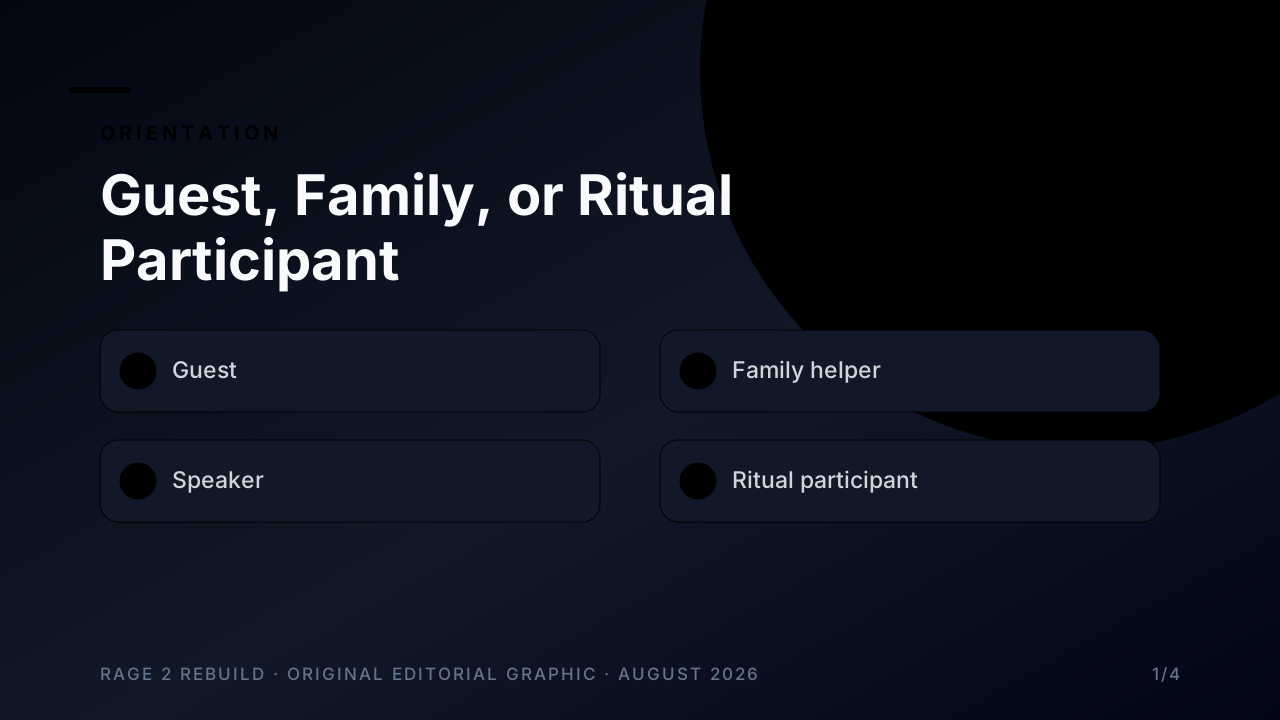
Orientation
Clarify the role before negotiating a boundary.
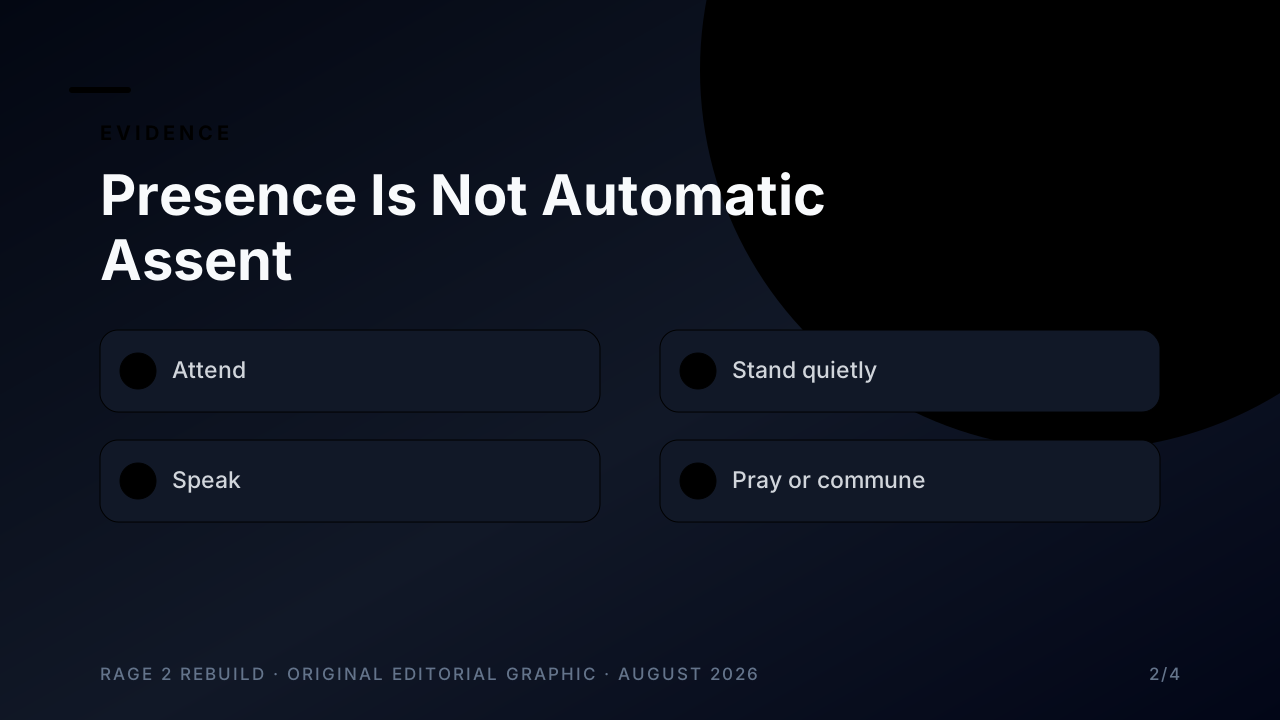
Evidence
Actions can carry different meanings in different traditions.
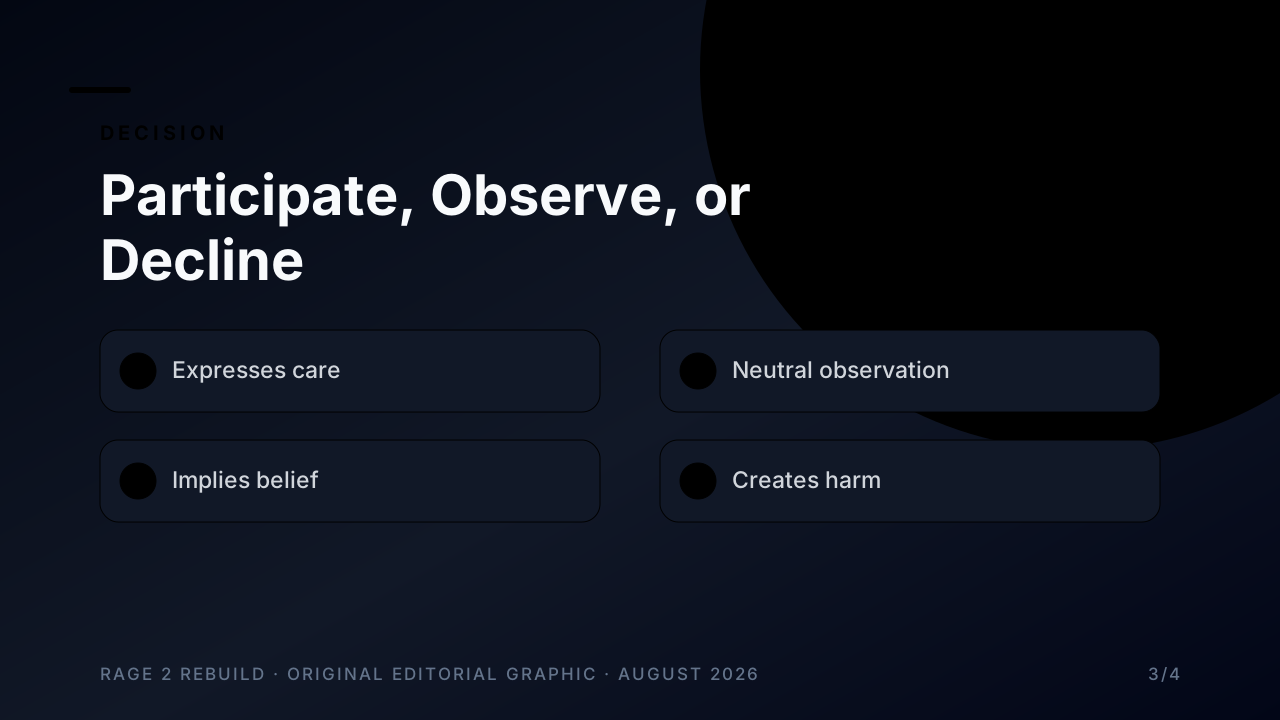
Decision
Choose action by what it communicates and what care requires.
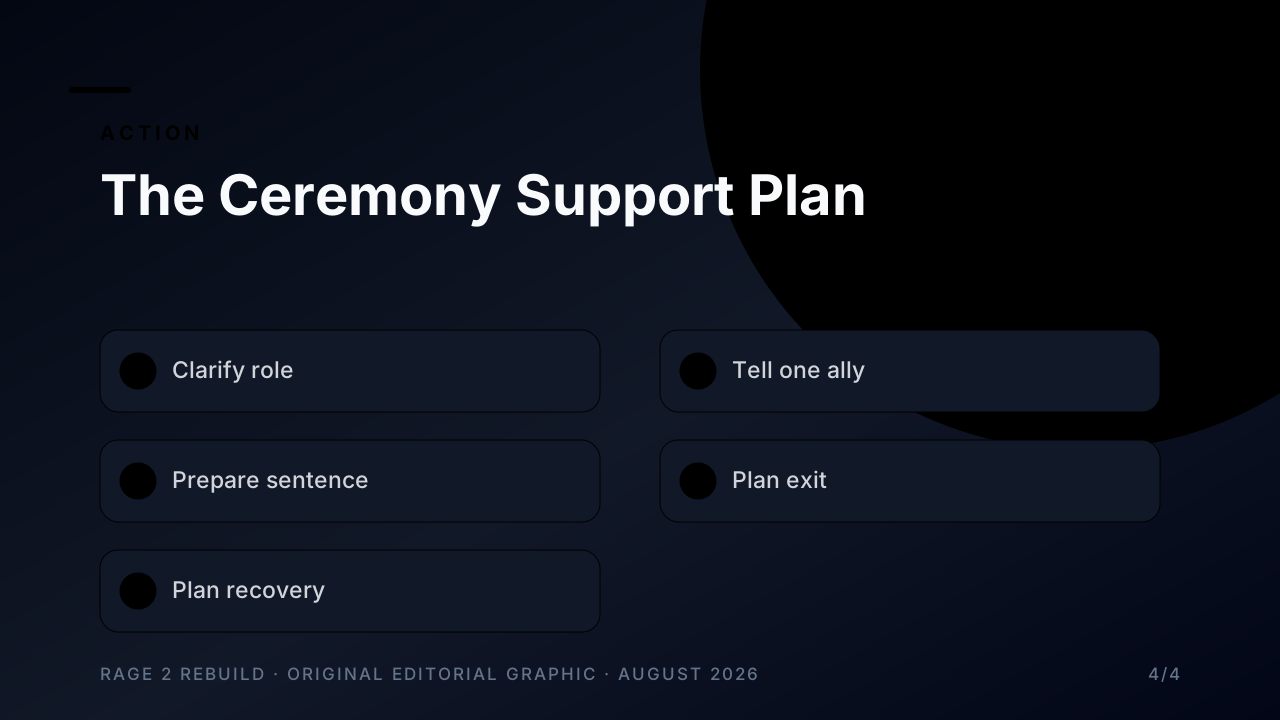
Action
Prepare the practical details before the event begins.
Browser-only planning tool
Make the role and boundary legible before the day.
Original page video
You can show up for a person without performing every belief in the ceremony.
Synthetic narration and original editorial graphics. No client, therapist, religious group, or documented event is depicted.
Private check-in
Nothing is submitted. This page does not invent vote counts or claim that other visitors answered.
Readiness tool
0 of 4 foundations in place
Choose the statements that are already true for you.
This planning aid is not a safety, legal, medical, or clinical assessment.
Named sources
American Psychological Association
Professional background on grief and coping; individual needs and treatment decisions still require appropriate care.
Recovering from Religion
Background resources for naming loss after belief change; not individualized clinical guidance.
National Institute of Mental Health
Official U.S. guidance for locating qualified care and responding when danger is immediate.
Editorial review: August 2, 2026. Hours, laws, credentials, costs, services, and availability can change; verify them directly.
Page-specific answers
No. Attendance may express care and respect. Decide separately whether any requested ritual or statement would communicate assent for you.
Use a short sentence focused on the action you cannot take and, when possible, offer another way to support the person or family.
Usually not. Unless safety or consent requires immediate clarity, preserve the event and arrange a separate conversation later.
Seek appropriate professional or crisis support when grief severely affects function, safety, or the ability to care for yourself.
Not therapy. Personal advice. Elder X is not a licensed therapist. This is honest writing from someone who has walked the road and sat with people on it.
A practical planner for worship expectations, family questions, grief, travel, traditions, and exit boundaries during religious holidays.
A practical tool for recording religious guilt triggers, inherited rules, predicted consequences, present evidence, and care escalation.
A practical guide to contact boundaries, ambiguous loss, documentation, chosen family, and daily stability after religious shunning.
A practical framework for building a provisional worldview with evidence, confidence levels, values, uncertainty, and scheduled review.
Pages written specifically for people leaving these traditions.
A practical guide to separating institutional belief, family culture, sacraments, holidays, conscience, and identity after Catholicism.
A practical guide for people leaving Orthodox Jewish communities, covering family, education, work, technology, housing, marriage, and identity.
A cautious planning guide for people from Muslim backgrounds, separating private belief from disclosure, safety, family, legal, and immigration decisions.
Describe what you grew up in, the decision in front of you, and the next outcome you want. Include only necessary detail; response timing varies.