6
household domains
Time, money, children, rituals, relatives, and privacy need explicit decisions.
A mixed-faith marriage is not one theological dispute. It is a set of household decisions about children, money, time, rituals, relatives, privacy, and mutual respect.
Understanding each other accurately is a realistic goal. Converting the other spouse should not be a condition for safety or affection.
Peer perspective can help organize questions, but coercion, abuse, severe conflict, or entrenched communication problems deserve qualified professional help.
Agree on a temporary halt to sermons, rebuttal videos, books, and links sent to change the other person. Each spouse can study privately while the couple negotiates concrete household behavior.
Choose the most urgent issue—attendance, children, giving, clothing, prayer, holidays, or family disclosure. Write a temporary agreement, the reason for it, and a date to review what worked.
Mixed-faith marriage tool
The relationship needs rules for disagreement. Belief, children, money, family, rituals, and weekly schedules should be negotiated as practical issues rather than bundled into one spiritual verdict.
0
Stop sending sermons, podcasts, and articles intended to change the other spouse.
4
Children, money, holidays, and family contact need explicit agreements.
2
Each spouse needs room for conviction that is not managed by the other.

Useful distinction
A couple can understand each other accurately without reaching the same conclusion. The skill is reflecting what the other believes without correcting it.
Name the Decision You Cannot Settle
Focus on one household decision rather than proving which spouse is right.
Name the Decision You Cannot SettleNamed external resources
A curated collection for examining belief changes without rushing into a replacement identity.
Source: Recovering from Religion ↗
Resources for naming losses that may include identity, certainty, family, ritual, and community.
Source: Recovering from Religion ↗
Private check-in
Nothing is submitted. This page does not invent vote counts or claim that other visitors answered.
Readiness tool
0 of 4 foundations in place
Choose the statements that are already true for you.
This planning aid is not a safety, legal, medical, or clinical assessment.
Look for a licensed couples therapist who can support a mixed-faith relationship without treating either worldview as the required outcome. Ask directly about credentials, approach, confidentiality, cost, and experience with high-control religion.
Mixed-faith household agreement · Reviewed August 2026
A mixed-faith marriage needs workable agreements about time, money, children, rituals, relatives, privacy, and respect. The goal is not forced theological agreement. Address one household decision at a time, protect each spouse’s private belief space, and use qualified relationship support when coercion, contempt, fear, or entrenched conflict makes negotiation unsafe or ineffective.
6
Time, money, children, rituals, relatives, and privacy need explicit decisions.
14 days
A short trial produces evidence without pretending the issue is permanently solved.
0
Neither spouse should be required to consume material intended to change belief.
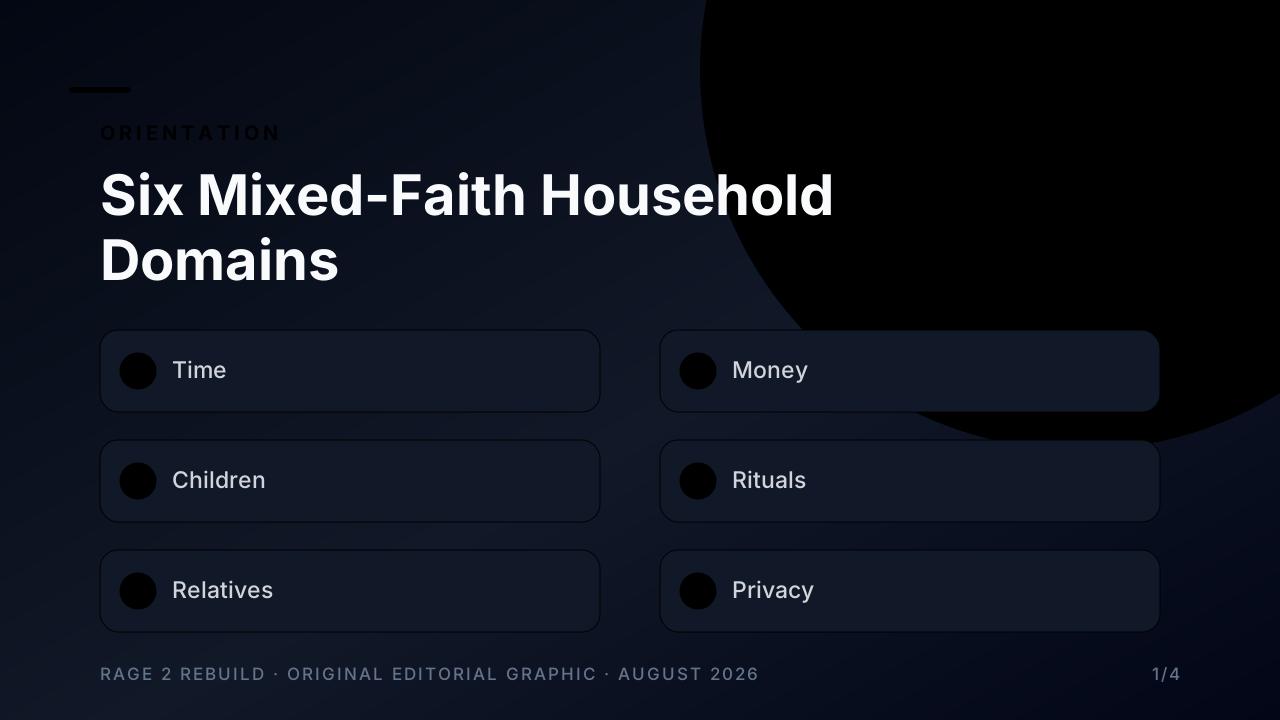
Orientation
Separate practical decisions instead of arguing about the whole marriage.
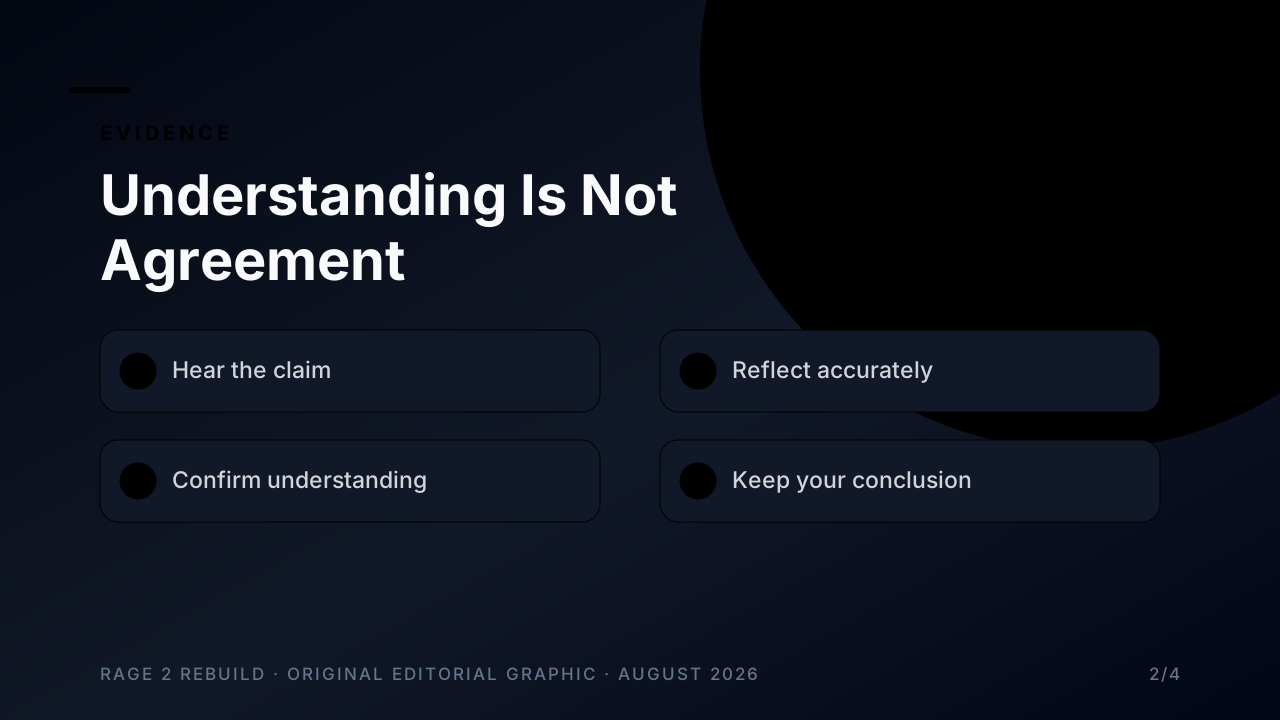
Evidence
A communication skill, not a demand to change conclusions.
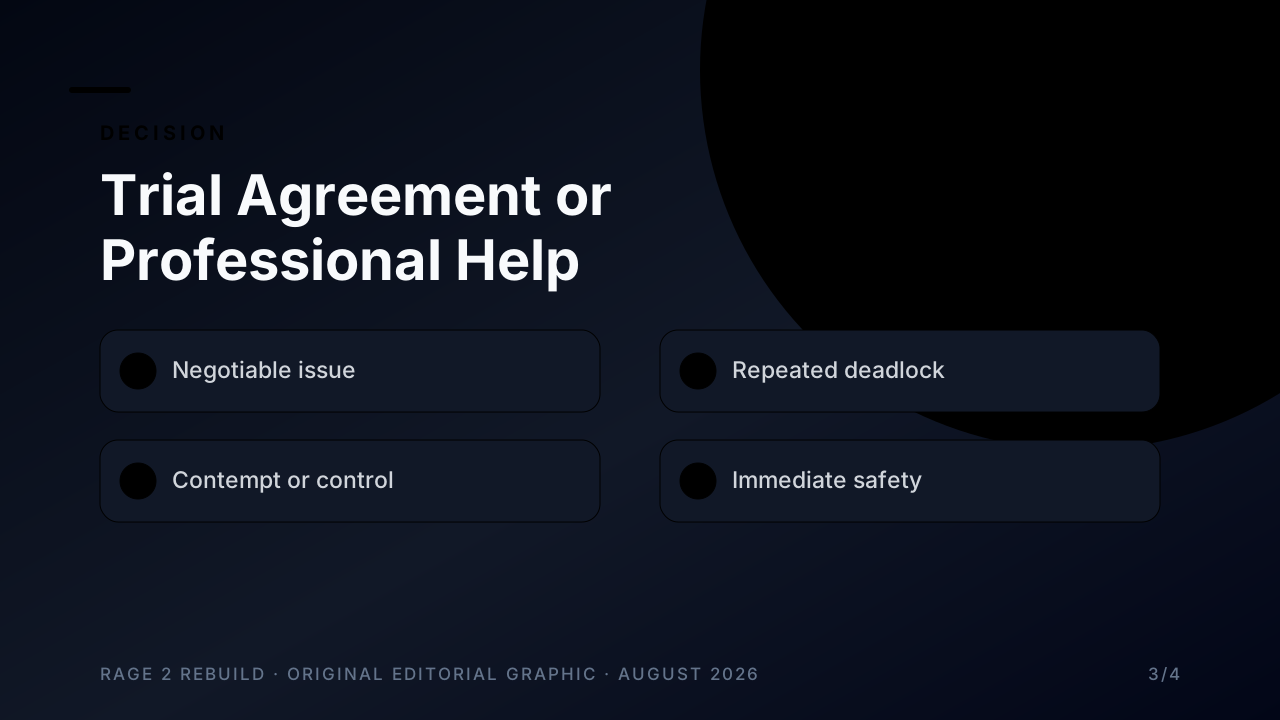
Decision
Coercion and safety concerns change the lane.
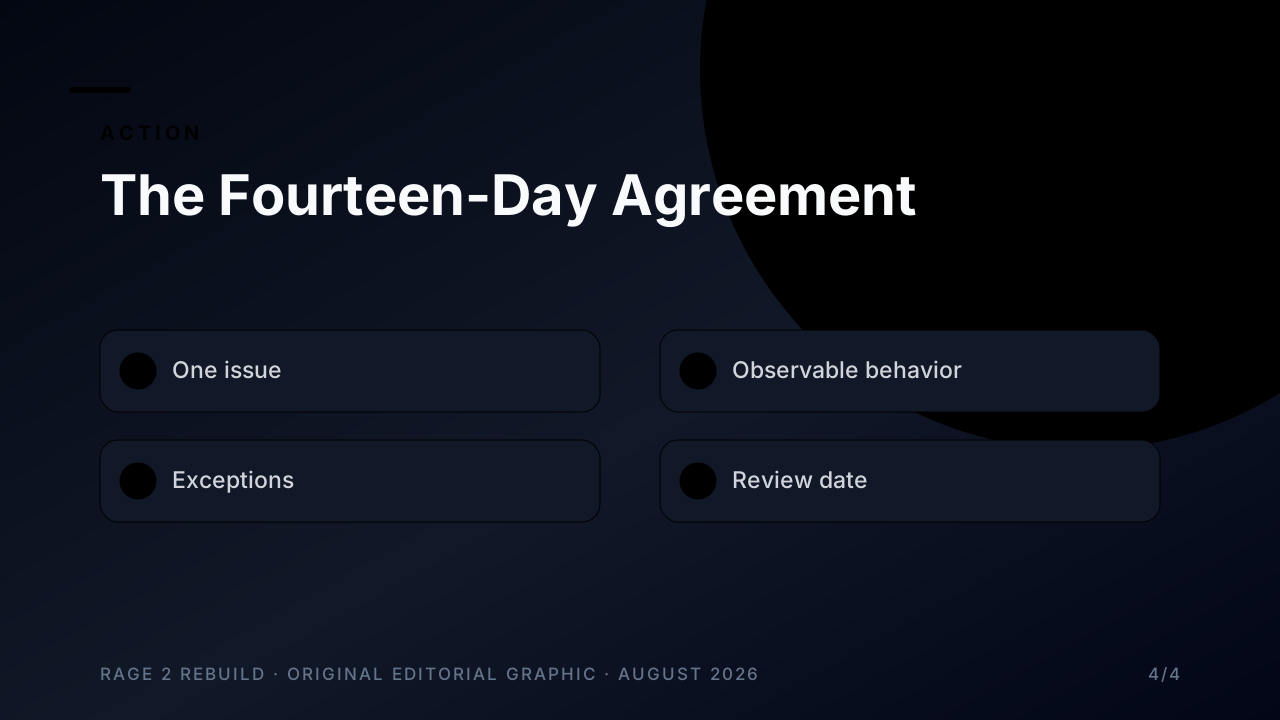
Action
Define behavior, reason, exceptions, and review date.
Browser-only planning tool
Choose the decision creating the most daily friction.
Original page video
Do not solve the whole marriage through one argument about belief.
Synthetic narration and original editorial graphics. No client, therapist, religious group, or documented event is depicted.
Private check-in
Nothing is submitted. This page does not invent vote counts or claim that other visitors answered.
Readiness tool
0 of 4 foundations in place
Choose the statements that are already true for you.
This planning aid is not a safety, legal, medical, or clinical assessment.
Named sources
U.S. Surgeon General
Public-health framework distinguishing the structure, function, and quality of social connection.
National Institute of Mental Health
Official U.S. guidance for locating qualified care and responding when danger is immediate.
Recovering from Religion
A curated library for examining uncertainty and belief changes without forcing a replacement worldview.
Editorial review: August 2, 2026. Hours, laws, credentials, costs, services, and availability can change; verify them directly.
Page-specific answers
Not necessarily. It requires practical agreements and respect; each spouse can retain private conclusions that the other does not manage.
Pause material intended to convert the other spouse unless both people explicitly want that exchange.
Write age-appropriate agreements about attendance, teaching, consent, relatives, and how children may ask questions without being recruited to take sides.
Consider qualified help when discussions repeatedly collapse, contempt or control is present, children are caught between adults, or safety and coercion concerns exist.
Not therapy. Personal advice. Elder X is not a licensed therapist. This is honest writing from someone who has walked the road and sat with people on it.
A practical guide to timing, scope, safety, boundaries, and follow-up when telling family that your religious beliefs changed.
A practical guide to values, questions, rituals, religious relatives, and co-parent agreements after a change in belief.
A practical planner for worship expectations, family questions, grief, travel, traditions, and exit boundaries during religious holidays.
A practical tool for recording religious guilt triggers, inherited rules, predicted consequences, present evidence, and care escalation.
Pages written specifically for people leaving these traditions.
A practical guide to separating belief, marriage, family, finances, church participation, and community during an LDS faith transition.
A practical guide for separating doctrine, authority, politics, family, sexuality, parenting, and church belonging during evangelical deconstruction.
A practical guide to separating institutional belief, family culture, sacraments, holidays, conscience, and identity after Catholicism.
Describe what you grew up in, the decision in front of you, and the next outcome you want. Include only necessary detail; response timing varies.