6
fields in the audit
Trigger, rule, prediction, evidence, impact, and chosen response.
A guilt response can persist after a belief changes. The feeling deserves attention, but it does not by itself prove that an inherited rule is morally correct or that punishment is coming.
Record the trigger, old rule, predicted consequence, present evidence, and value you want to use now. Repeated observations are more informative than one intense night.
Severe anxiety, compulsions, mania, self-harm risk, or impaired daily functioning need licensed assessment; a worksheet and peer conversation are not treatment.
Replace “I feel bad” with the specific inherited rule and the feared consequence. Then identify who taught it, what evidence supports it, what evidence challenges it, and whether you apply the same standard to others.
Ask who was harmed, what repair is possible, and what value applies now. If no person was harmed, examine whether the alarm is tied to disobedience itself rather than a present ethical concern.
Inherited-guilt reality check
A guilt response may persist after intellectual belief changes. Name the old rule, the predicted consequence, the real evidence, and the value you want to use now.
4
Trigger, old rule, predicted punishment, and present evidence.
7 days
Record repeated triggers before treating one intense episode as the whole story.
1
Severe anxiety, compulsions, mania, or self-harm risk need qualified care.

Useful distinction
A conditioned alarm can fire when a familiar rule is broken. The feeling deserves care, but the feeling alone cannot establish that the old rule was morally correct.
Name the Rule That Still Follows You
Write the old rule and what your body predicts will happen if you break it.
Name the Rule That Still Follows YouNamed external resources
Private check-in
Nothing is submitted. This page does not invent vote counts or claim that other visitors answered.
Readiness tool
0 of 4 foundations in place
Choose the statements that are already true for you.
This planning aid is not a safety, legal, medical, or clinical assessment.
Track sleep, work, eating, relationships, compulsive behavior, and safety. When symptoms intensify or daily function declines, take the log to a licensed clinician instead of asking an AI system or religious influencer to diagnose the cause.
Inherited-rule audit · Reviewed August 2026
A guilt or fear response can persist after intellectual belief changes. The feeling is real, but it does not by itself prove that the old rule was morally correct or that a predicted punishment exists. Record the trigger, rule, prediction, evidence, impact, and chosen value; seek qualified care when the pattern is severe, compulsive, or function-limiting.
6
Trigger, rule, prediction, evidence, impact, and chosen response.
7 days
Repeated observations are more useful than treating one intense episode as the whole pattern.
1
Severe anxiety, compulsions, mania, or self-harm risk needs qualified help.
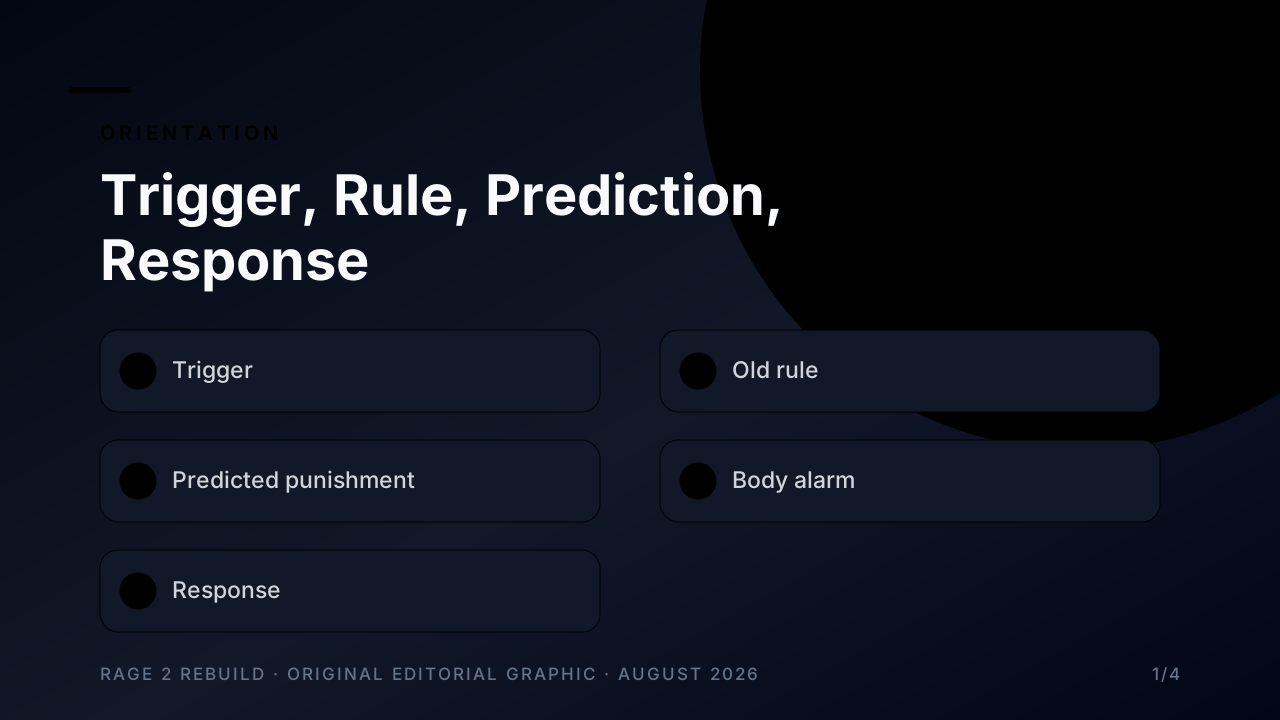
Orientation
Observe the sequence without turning it into a diagnosis.
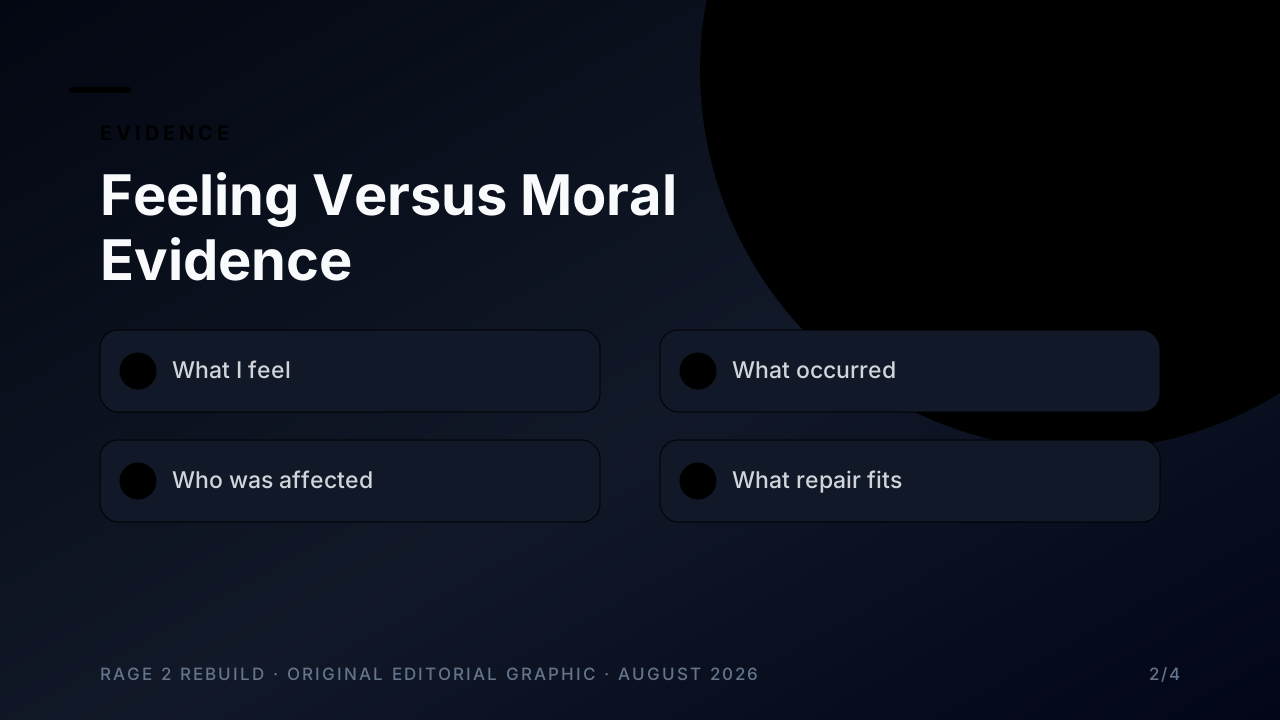
Evidence
A feeling can signal distress without settling the moral claim.
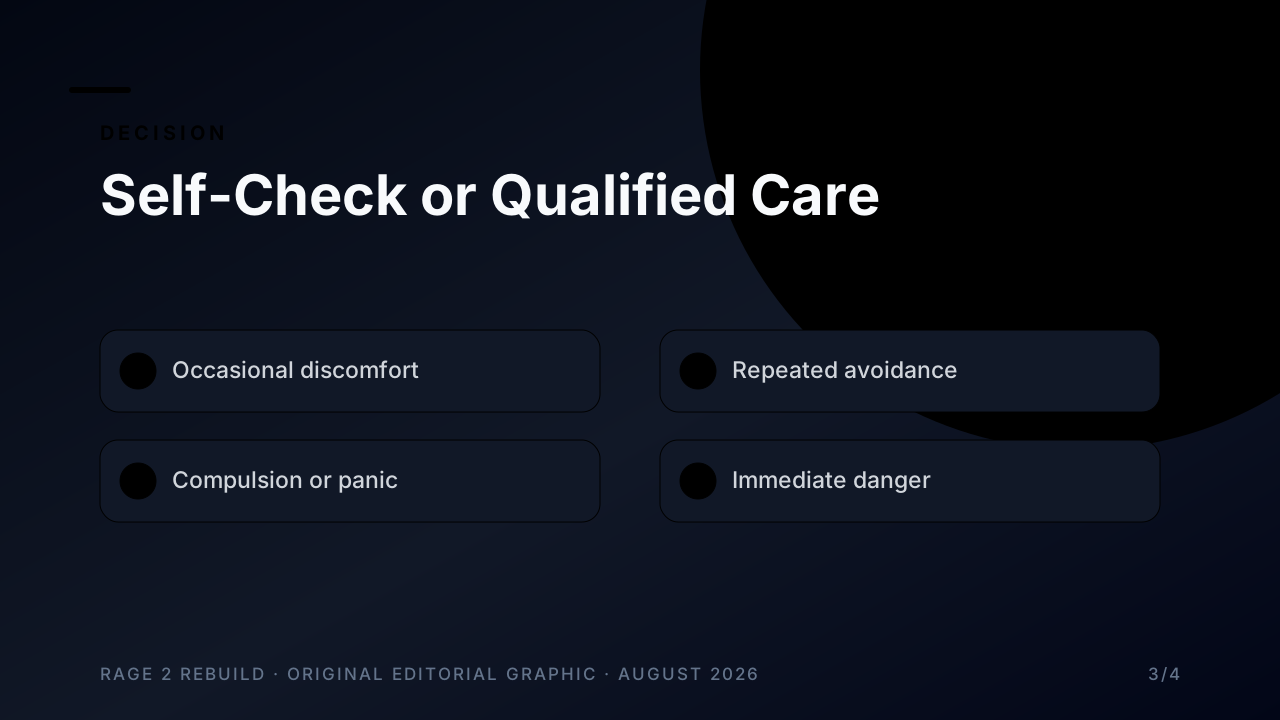
Decision
Severity and function determine when a worksheet is insufficient.
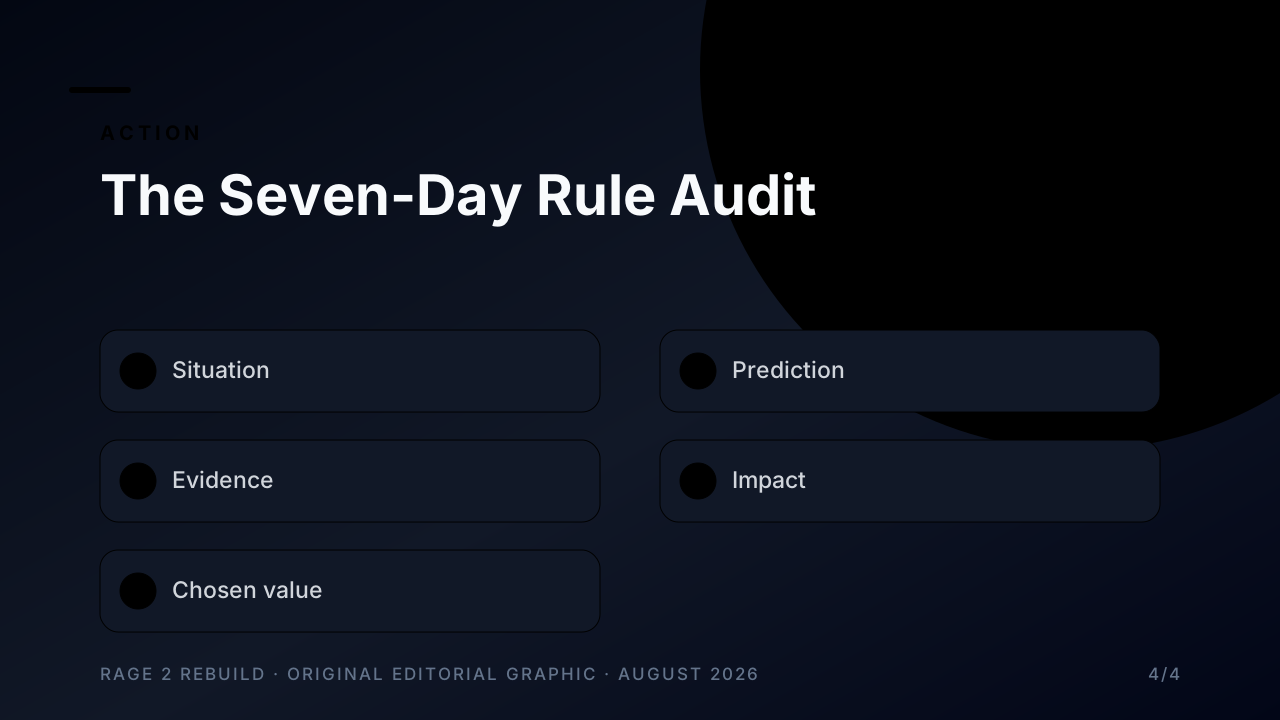
Action
Collect information without making the log a new compulsion.
Browser-only planning tool
Use a precise sentence instead of arguing with a vague sense of wrongness.
Original page video
Feeling guilty proves that you feel an alarm. It does not automatically prove the old rule.
Synthetic narration and original editorial graphics. No client, therapist, religious group, or documented event is depicted.
Private check-in
Nothing is submitted. This page does not invent vote counts or claim that other visitors answered.
Readiness tool
0 of 4 foundations in place
Choose the statements that are already true for you.
This planning aid is not a safety, legal, medical, or clinical assessment.
Named sources
Recovering from Religion
Educational resources with a clear boundary between peer information and qualified mental-health care.
National Institute of Mental Health
Official U.S. guidance for locating qualified care and responding when danger is immediate.
Recovering from Religion
A curated library for examining uncertainty and belief changes without forcing a replacement worldview.
Editorial review: August 2, 2026. Hours, laws, credentials, costs, services, and availability can change; verify them directly.
Page-specific answers
Not necessarily. Evaluate observable harm, consent, responsibility, and repair separately from the intensity of the learned emotional response.
No. Choose one recurring trigger, observe it across several situations, and avoid making constant self-testing another source of distress.
Use the written evidence check and a stabilizing routine. Persistent sleep disruption, panic, compulsions, or severe distress deserves qualified assessment.
Seek qualified help when symptoms are severe, persistent, compulsive, impair daily function, involve mania or substances, or include risk of self-harm.
Not therapy. Personal advice. Elder X is not a licensed therapist. This is honest writing from someone who has walked the road and sat with people on it.
A practical framework for building a provisional worldview with evidence, confidence levels, values, uncertainty, and scheduled review.
A practical guide to timing, scope, safety, boundaries, and follow-up when telling family that your religious beliefs changed.
A practical guide to contact boundaries, ambiguous loss, documentation, chosen family, and daily stability after religious shunning.
A practical guide to consent, exclusivity, sexual health, safety, values, and explaining a religious past while dating.
Pages written specifically for people leaving these traditions.
A body-aware planning guide for people reassessing Pentecostal belief, healing claims, prophecy, spiritual warfare, leadership, and community.
A practical guide for separating doctrine, authority, politics, family, sexuality, parenting, and church belonging during evangelical deconstruction.
A practical guide to separating institutional belief, family culture, sacraments, holidays, conscience, and identity after Catholicism.
Describe what you grew up in, the decision in front of you, and the next outcome you want. Include only necessary detail; response timing varies.