4
data stages
Collection, use, storage, and deletion or retention should be understandable.
How we handle your data with respect and transparency.
Effective Date: July 31, 2026
Rage 2 Rebuild ("Rage 2 Rebuild," "R2R," "we," "us," or "our") respects your privacy. This Privacy Policy explains how we collect, use, store, and share information when you visit rage2rebuild.com and any related pages, forms, content, or communications. By using our website or submitting information through our forms, you acknowledge that you have read and understood this Privacy Policy.
Rage 2 Rebuild is an educational website focused on religious deconstruction, practical rebuilding, and lived-experience peer perspective.
The site links to independent crisis lines, government agencies, researchers, clinicians, and other resources. Those organizations do not receive your contact-form message from us merely because the Site links to them.
We are not a medical provider, mental health provider, licensed counseling service, crisis hotline, or emergency response service.
If you have questions about this Privacy Policy or your information, contact us at info@rage2rebuild.com.
We collect information you choose to provide to us through our contact forms, which may include:
Hosting and security providers necessarily process ordinary request data to deliver and protect the Site. If you accept optional analytics, Google Analytics and Microsoft Clarity also process usage data such as:
Our website uses the following cookies and tracking technologies:
r2r_analytics_consent records whether you accepted or declined optional analytics.googtrans cookie is set to remember your language preference.We do not use Facebook Pixel, Google Tag Manager containers, or any other advertising/retargeting cookies. We do not use localStorage or sessionStorage to track users.
You can change the choice using the “Cookie settings” button on the Site. You can also use the Google Analytics Opt-out Browser Add-on. For more details, see our Cookie Policy.
Because of the nature of this site, some people may choose to share personal information related to mental health struggles, addiction, divorce, trauma, loneliness, grief, recovery, or other difficult life circumstances.
We use contact-form content to review and respond to the inquiry. We do not use sensitive support-related details for marketing or publish a submission without a separate explicit written agreement.
Please do not send medical records, diagnosis documents, insurance information, or other highly sensitive documents. If you are in immediate danger or experiencing a crisis, do not wait for a website response. Contact your local emergency number or an appropriate crisis line immediately.
We may use your information to:
Contact-form data is handled by Rage 2 Rebuild and the service providers required to operate the form. Those providers may include:
We do not send your inquiry to an outside professional, chapter, affiliate, or “sister company” based on the required form consent. If a future situation calls for a human handoff, we will ask for separate permission before sharing the message or contact details unless disclosure is legally required.
We do not sell, rent, or trade your personal information to third parties for their own unrelated marketing purposes.
By submitting the form and checking the required permission box, you permit Rage 2 Rebuild to review the inquiry and respond using the email address or optional phone number you provided.
The form is not a subscription to automated calls, prerecorded calls, recurring texts, or marketing.
Submitting an inquiry is not a purchase. If you no longer want a response, email info@rage2rebuild.com and identify the inquiry.
The submission includes the response-permission text version, timestamp, and source page so we can understand what permission accompanied the message.
The current contact form does not enroll you in marketing. A future newsletter or promotional program would require a separate, clearly labeled choice.
If you previously received a marketing communication and want it stopped, use its unsubscribe method or contact info@rage2rebuild.com to update your preferences.
We use reasonable administrative, technical, and organizational measures to protect information. The repository is configured for Vercel hosting, and browser-to-site requests use HTTPS in the intended production configuration. Contact-form delivery depends on separately configured email credentials; if delivery is unavailable, the form displays an error and directs you to email us. No system or transmission method is completely secure.
We retain inquiry information only as long as reasonably necessary to respond, maintain essential business records, address disputes, protect the Site, and meet legal obligations. We do not claim a fixed statutory retention period that applies to every visitor or inquiry.
If you request deletion, we will review the request and remove information within a reasonable timeframe, subject to legal, operational, safety, or recordkeeping requirements.
Rage 2 Rebuild may receive inquiries from users worldwide. By using the website or submitting your information, you understand and consent to your information being processed in the United States and other countries where privacy laws may differ from those in your home jurisdiction.
For users in the European Economic Area (EEA), United Kingdom, or other jurisdictions with data protection laws: We process your personal data based on your explicit consent provided through our contact form checkboxes. You have the right to withdraw consent at any time by contacting us at info@rage2rebuild.com. Withdrawing consent does not affect the lawfulness of processing that occurred before the withdrawal.
Depending on your jurisdiction, you may have the following rights regarding your personal information:
To make a request, contact us at info@rage2rebuild.com. We will respond within a reasonable timeframe consistent with applicable law.
Our website and services are not intended for children under 13, or under a higher minimum age where required by local law (e.g., 16 in the EEA under GDPR). We do not knowingly collect personal information from children in those age groups. If we learn that we have collected information from a child under the applicable minimum age, we will delete it promptly.
We may update this Privacy Policy from time to time. When we do, we will update the Effective Date above. Your continued use of the site after changes are posted means you accept the updated version. We encourage you to review this policy periodically.
If you have questions about this Privacy Policy, our privacy practices, or wish to exercise any of your rights, contact us at:
Rage 2 Rebuild
Email: info@rage2rebuild.com
Data boundary · Reviewed August 2026
A privacy notice should match the live product: what information is submitted, the purpose for using it, service providers involved, retention approach, security limits, and available choices. Do not send unnecessary sensitive information. No website can promise absolute security or control data after you voluntarily send it elsewhere.
4
Collection, use, storage, and deletion or retention should be understandable.
1
Share only the information needed for the requested interaction.
0
Reasonable safeguards reduce risk but cannot eliminate it.

Orientation
A simplified data-flow orientation.
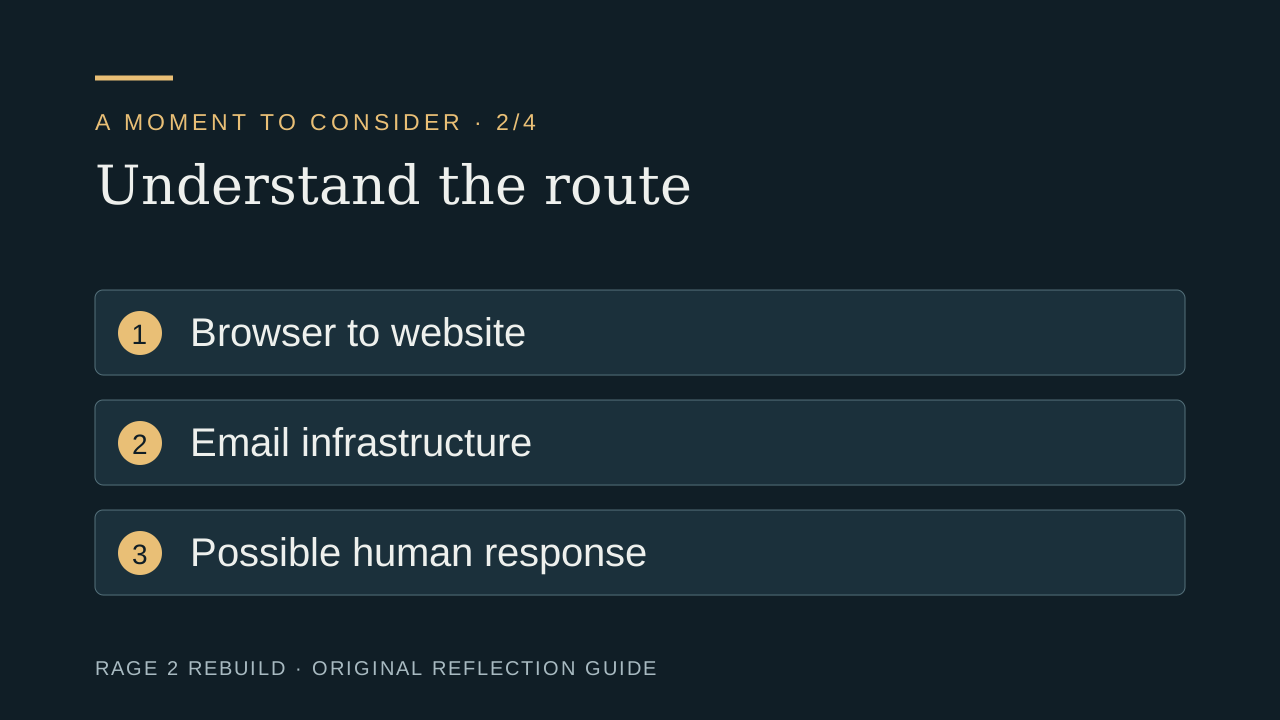
Evidence
Less unnecessary data means less avoidable exposure.
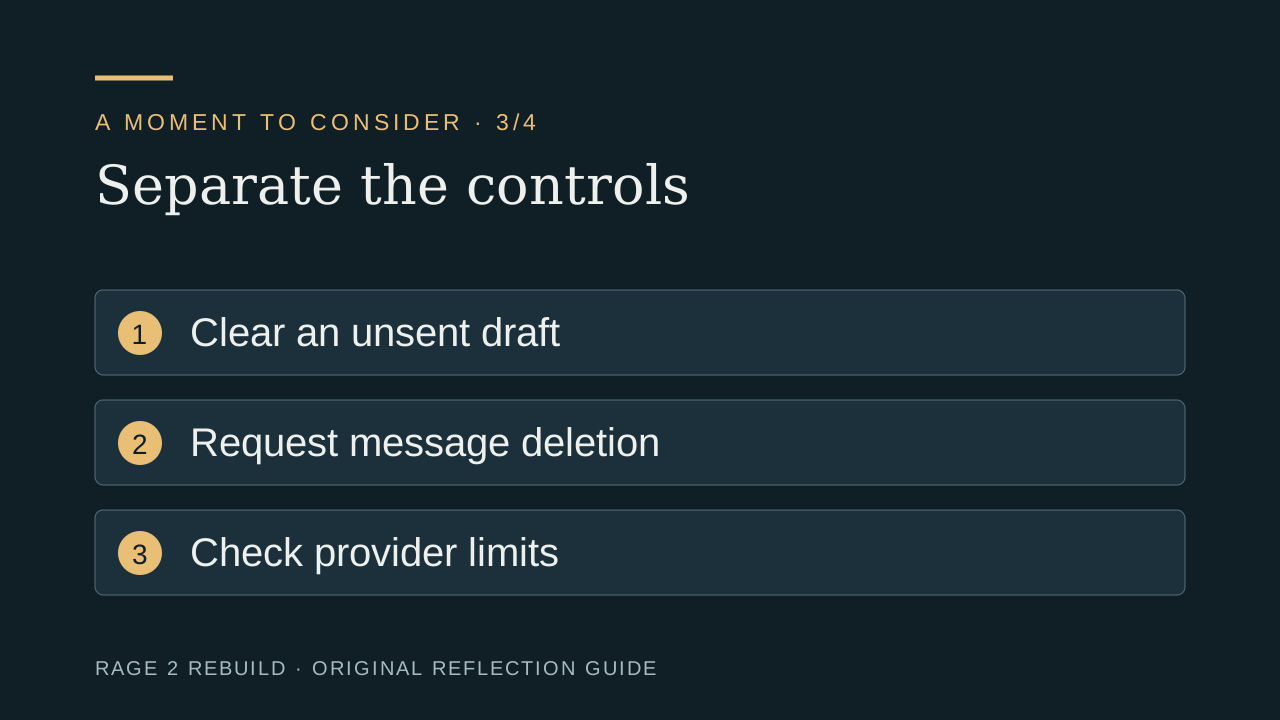
Decision
Some needs belong with a regulated provider.
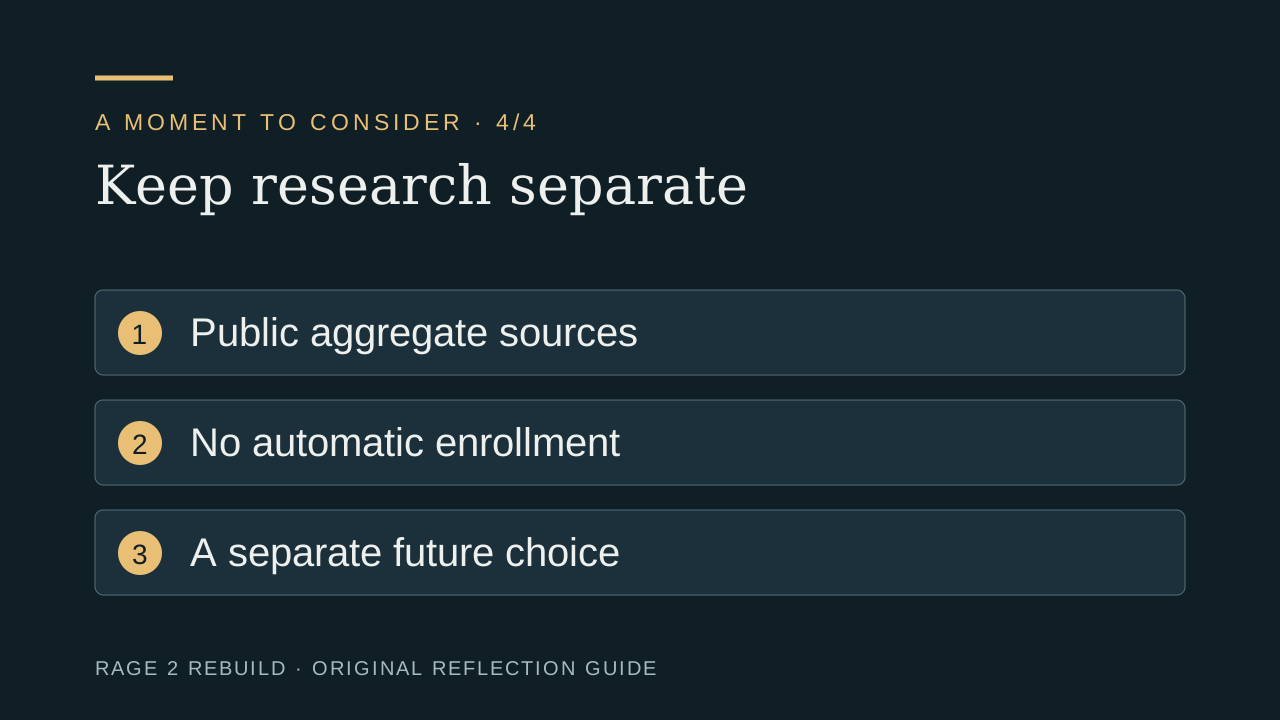
Action
A visitor-side check before submission.
Browser-only planning tool
The site can explain its process; you still choose what enters it.
Original page video
The safest sensitive detail is often the one the website never needed to receive.
Synthetic narration and original editorial graphics. No client, therapist, religious group, or documented event is depicted.
Private check-in
Nothing is submitted. This page does not invent vote counts or claim that other visitors answered.
Readiness tool
0 of 4 foundations in place
Choose the statements that are already true for you.
This planning aid is not a safety, legal, medical, or clinical assessment.
Named sources
Federal Trade Commission
Business guidance used to explain data minimization and honest privacy representations.
Editorial review: August 1, 2026. Hours, laws, credentials, costs, services, and availability can change; verify them directly.