6 weeks
for one belonging experiment
Repetition gives a room time to become familiar without requiring permanent commitment.
Religious community often bundled place, schedule, repeated contact, service, and shared language. Rebuilding belonging means recreating those conditions deliberately rather than waiting for instant chemistry.
Choose one recurring room where the same people return. Repetition makes recognition possible; recognition makes a small invitation less abrupt.
A new group should not demand your secrets, money, loyalty, or worldview before trust is earned. Healthy belonging leaves room for boundaries and disagreement.
Pick an activity that fits your real schedule and interest: a class, sport, volunteer shift, maker space, neighborhood project, or professional group. One recurring commitment is more testable than ten one-off events.
Arrive early, learn one name, ask one follow-up question, or invite someone for coffee or a walk. The goal is a second contact, not instant best friendship.
Friendship repetition tool
Church friendship often came bundled with place, schedule, shared language, and repeated contact. Rebuilding requires recreating those conditions deliberately, not waiting for instant chemistry.
4
Choose a place or activity where the same people return regularly.
1
Coffee, a walk, or arriving early is easier than proposing instant best friendship.
6 weeks
Give a recurring group enough repetitions before deciding you do not belong.

Useful distinction
Many close relationships begin with repeated low-stakes encounters. The ordinary schedule that church supplied can be rebuilt around work, service, learning, sport, or neighborhood life.
Choose the Recurring Room
Tell Elder X what interests, schedule, and level of social energy you actually have.
Choose the Recurring RoomNamed external resources
Private check-in
Nothing is submitted. This page does not invent vote counts or claim that other visitors answered.
Readiness tool
0 of 4 foundations in place
Choose the statements that are already true for you.
This planning aid is not a safety, legal, medical, or clinical assessment.
Count attendance, repeated faces, follow-ups, and how you felt before and after. If the group is unsafe or coercive, leave. If it is merely unfamiliar, give repetition enough time to work.
Belonging experiment · Reviewed August 2026
Religious community often supplied a place, schedule, shared language, repeated contact, and practical help. Rebuilding friendship requires recreating those conditions deliberately. Choose one recurring room, attend long enough to become familiar, make a small invitation, and judge the experiment by behavior and fit rather than instant chemistry.
6 weeks
Repetition gives a room time to become familiar without requiring permanent commitment.
4
A greeting, remembered detail, follow-up, and small invitation create a realistic progression.
1
One dependable setting is more testable than many isolated events.
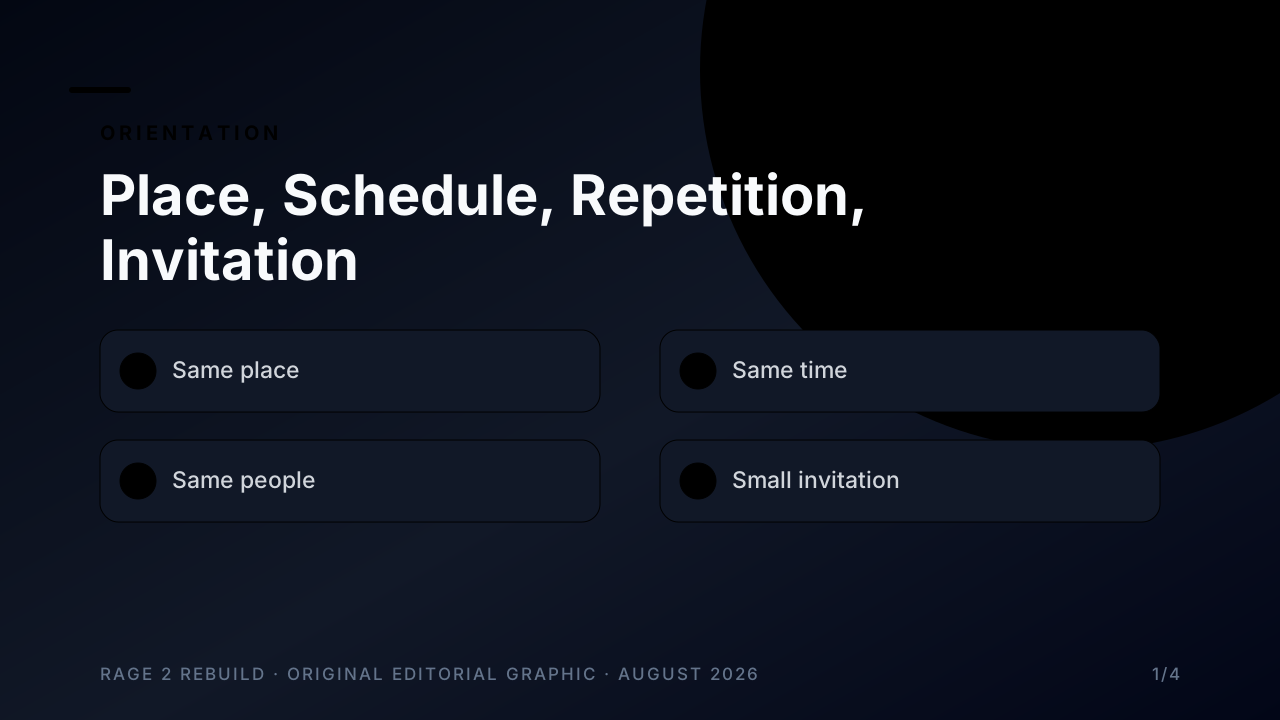
Orientation
Rebuild the structure that made contact possible.

Evidence
Based on the U.S. Surgeon General social-connection framework.
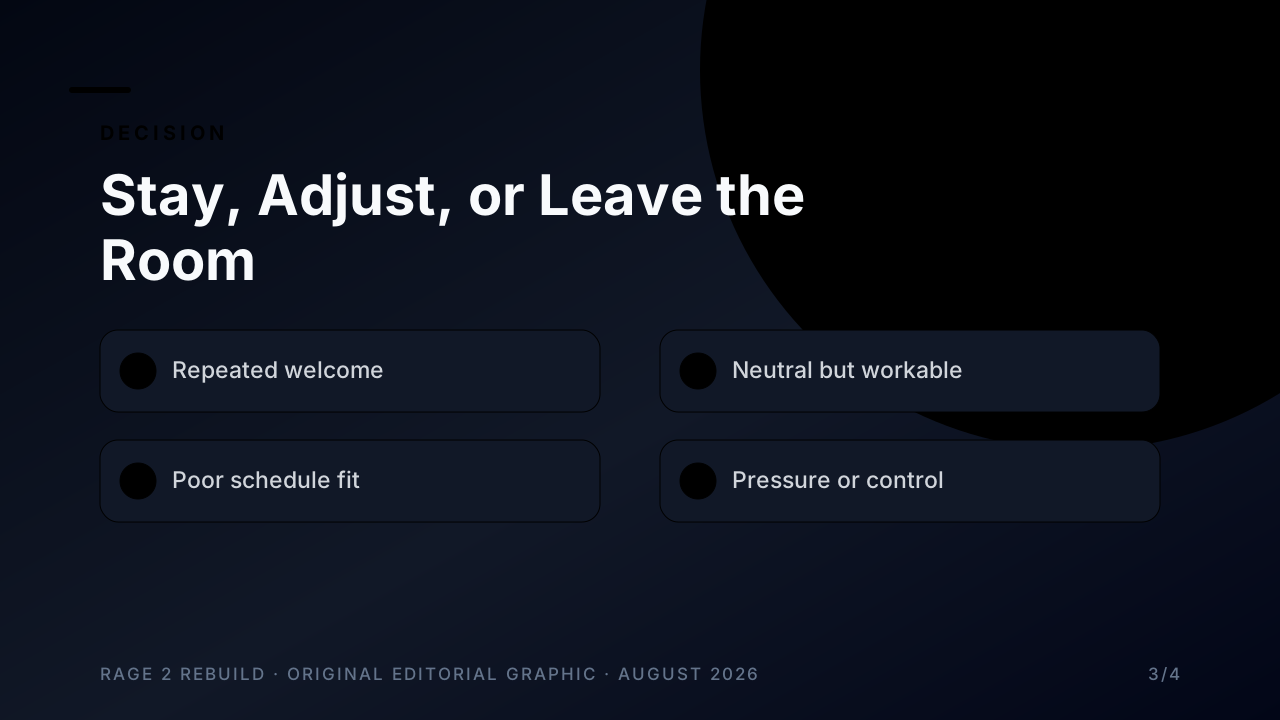
Decision
Familiarity is useful; disrespect and control are not.

Action
Increase vulnerability gradually as behavior supports trust.
Browser-only planning tool
Choose a room with recurring people and a reason to participate beyond finding a best friend.
Original page video
Do not ask one awkward night to answer whether you will ever belong again.
Synthetic narration and original editorial graphics. No client, therapist, religious group, or documented event is depicted.
Private check-in
Nothing is submitted. This page does not invent vote counts or claim that other visitors answered.
Readiness tool
0 of 4 foundations in place
Choose the statements that are already true for you.
This planning aid is not a safety, legal, medical, or clinical assessment.
Named sources
U.S. Surgeon General
Public-health framework distinguishing the structure, function, and quality of social connection.
Recovering from Religion
Background resources for naming loss after belief change; not individualized clinical guidance.
Recovering from Religion
First-person and educational resources; they illustrate possibilities but cannot predict a family response.
Editorial review: August 2, 2026. Hours, laws, credentials, costs, services, and availability can change; verify them directly.
Page-specific answers
Look for recurring activity-based settings such as classes, service, sport, arts, neighborhood groups, professional communities, or hobby clubs with clear boundaries.
Six weeks is a useful experiment when the setting is safe. Leave sooner if there is harassment, coercion, hidden money, or pressure to isolate from outsiders.
Start with only what is relevant and increase detail as the person demonstrates respect, privacy, and reciprocity.
Use repeated attendance, arrive slightly early, help with a bounded task, and make one small follow-up rather than waiting to be adopted by the group.
Not therapy. Personal advice. Elder X is not a licensed therapist. This is honest writing from someone who has walked the road and sat with people on it.
A practical guide to contact boundaries, ambiguous loss, documentation, chosen family, and daily stability after religious shunning.
A practical guide to consent, exclusivity, sexual health, safety, values, and explaining a religious past while dating.
A practical planner for worship expectations, family questions, grief, travel, traditions, and exit boundaries during religious holidays.
A practical framework for building a provisional worldview with evidence, confidence levels, values, uncertainty, and scheduled review.
Pages written specifically for people leaving these traditions.
A planning guide for Witnesses who are questioning, fading, PIMO, disfellowshipped, or considering a formal exit.
A practical guide for people leaving Orthodox Jewish communities, covering family, education, work, technology, housing, marriage, and identity.
A practical guide to separating belief, marriage, family, finances, church participation, and community during an LDS faith transition.
Describe what you grew up in, the decision in front of you, and the next outcome you want. Include only necessary detail; response timing varies.