2
timelines to separate
Private belief and public disclosure do not need the same date.
The consequences of disclosing a change in belief vary by country, family, finances, gender, immigration status, and community control. A generic online story cannot determine whether disclosure is safe for you.
Private belief and public identity do not need the same timeline. You are not required to disclose to someone who controls housing, money, documents, movement, healthcare, or immigration stability.
This page does not certify the law in any country. Verify current legal, custody, immigration, and safety questions with qualified local sources using a device and account that are safe for you.
List who controls housing, income, bank access, identification, transport, phone service, healthcare, education, marriage paperwork, and travel. Note which dependencies can be reduced quietly and legally.
Keep lawful copies of your own essential documents and contacts where only you can access them. If device monitoring is possible, get digital-safety help before researching sensitive topics or changing account settings.
Options include no disclosure, limited disclosure to one trusted person, a boundary without naming belief, or a broader announcement. Write the purpose and possible consequence of each before choosing.
Do not let pressure to be “authentic” override physical safety or essential stability. Privacy under coercive conditions is not proof of weakness or dishonesty.
Muslim-background disclosure worksheet
The practical cost of leaving Islam varies enormously by country, family, immigration status, gender, finances, and community control. Do not let a generic online story decide whether disclosure is safe for you.
5
Housing, money, documents, devices, and mobility should be checked before disclosure.
2
A private belief plan and a public disclosure plan do not need the same timeline.
1
Verify current law and immigration consequences with a qualified local professional.

Useful distinction
You are not morally required to disclose a belief change to someone who controls your safety, shelter, documents, movement, or immigration stability.
Plan Privately Before You Disclose
Share only what is safe to share. Do not send identifying details if your devices or accounts are monitored.
Plan Privately Before You DiscloseNamed external resources
Private check-in
Nothing is submitted. This page does not invent vote counts or claim that other visitors answered.
Readiness tool
0 of 4 foundations in place
Choose the statements that are already true for you.
This planning aid is not a safety, legal, medical, or clinical assessment.
A peer community may reduce isolation but cannot replace a lawyer, regulated immigration adviser, domestic-violence advocate, clinician, or emergency service. Confirm credentials and confidentiality before sharing identifying details.
If immediate harm is possible, prioritize a safe local route over debating belief. The theological questions can wait; an irreversible safety decision cannot.
Muslim-background privacy and safety plan · Reviewed August 2026
The consequences of leaving Islam vary by country, family, gender, finances, immigration status, marriage, and community control. A global page cannot determine your legal or physical risk. Keep belief and disclosure on separate timelines, protect essential records and communications, verify current local law with qualified professionals, and do not disclose merely because an online story makes openness look mandatory.
2
Private belief and public disclosure do not need the same date.
6
Housing, money, documents, devices, mobility, and immigration can shape safe timing.
1
Law, asylum, marriage, custody, and safety questions require current jurisdiction-specific help.
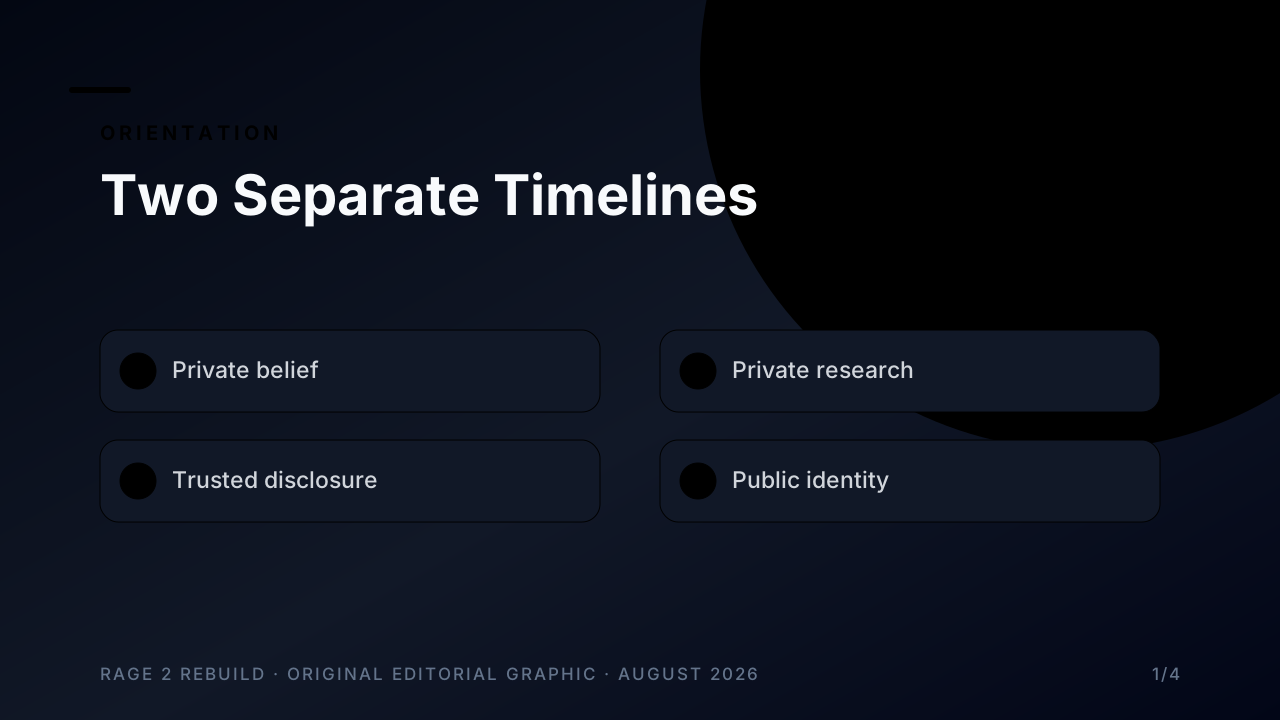
Orientation
Internal conclusions do not impose a public deadline.
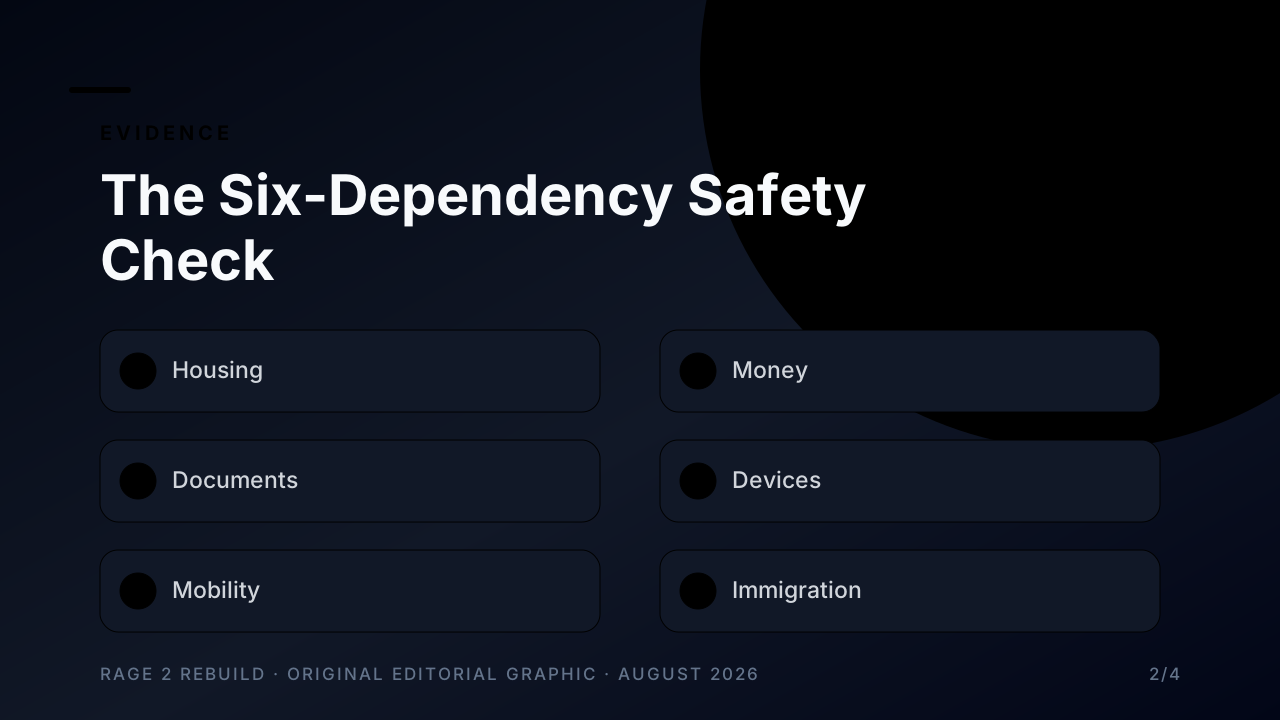
Evidence
Consequences depend on actual control and jurisdiction.
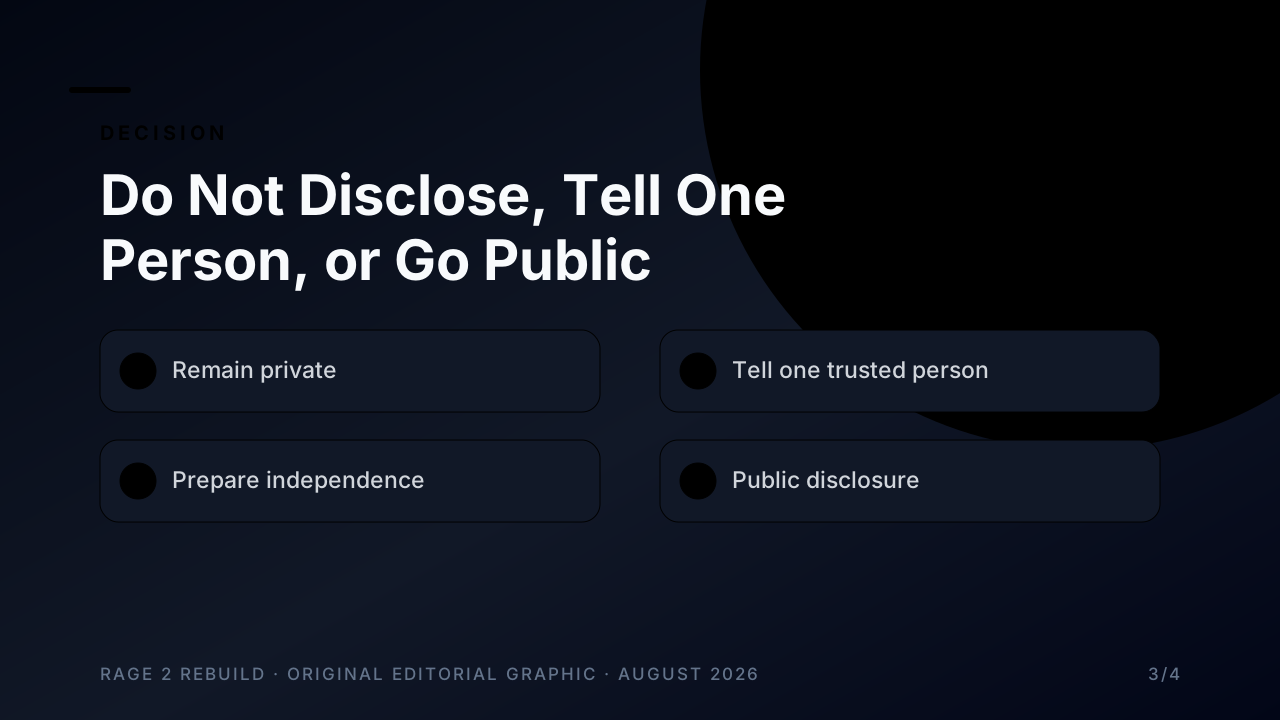
Decision
No generic website can choose this branch for you.
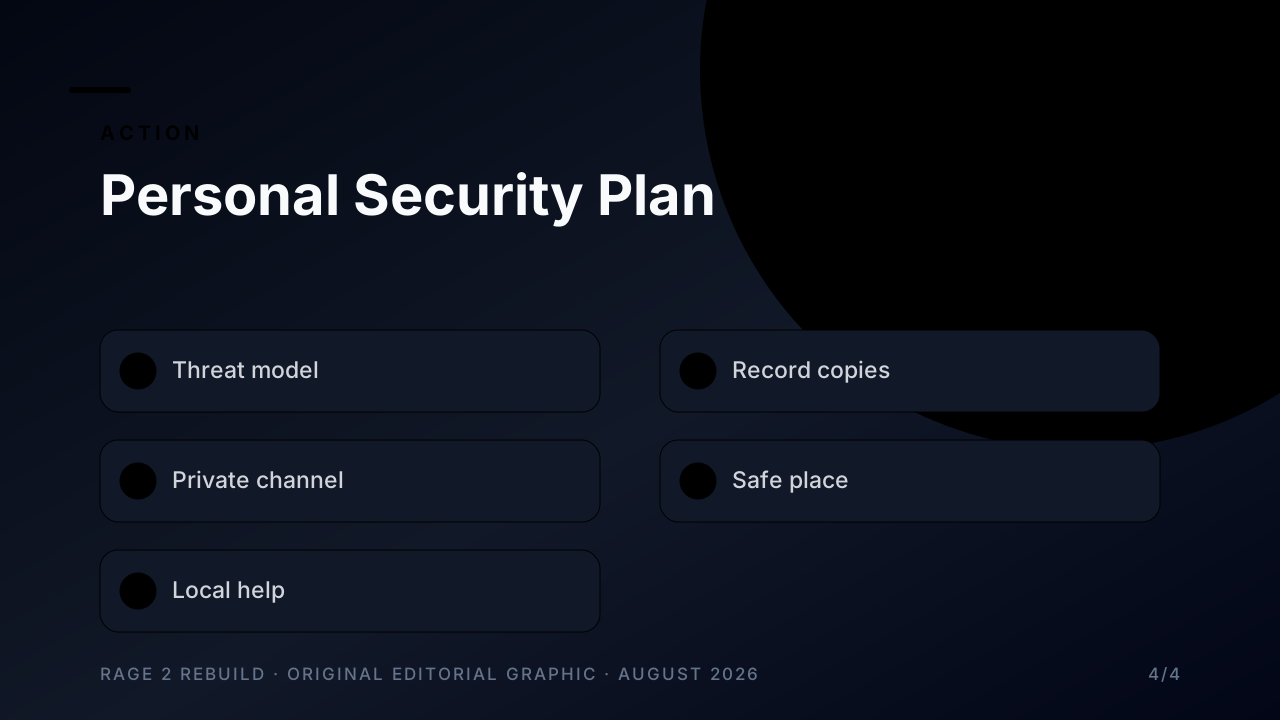
Action
Choose security measures based on the actual threat model.
Browser-only planning tool
Complete this privately and avoid storing it where another person can access it without consent.
Original page video
A change in private belief does not create a deadline for public disclosure.
Synthetic narration and original editorial graphics. No client, therapist, religious group, or documented event is depicted.
Private check-in
Nothing is submitted. This page does not invent vote counts or claim that other visitors answered.
Readiness tool
0 of 4 foundations in place
Choose the statements that are already true for you.
This planning aid is not a safety, legal, medical, or clinical assessment.
Named sources
Recovering from Religion
A tradition-specific collection for questioning and former Muslims; individual stories do not establish universal risk.
Electronic Frontier Foundation
Practical digital-security guidance; choose measures according to a personal threat model rather than assuming one universal setup.
National Institute of Mental Health
Official U.S. guidance for locating qualified care and responding when danger is immediate.
Editorial review: August 2, 2026. Hours, laws, credentials, costs, services, and availability can change; verify them directly.
Page-specific answers
No universal duty or timeline applies. Consider actual dependence, safety, law, marriage, immigration, and communication privacy before optional disclosure.
No. Laws and enforcement can change and may interact with family, marriage, custody, immigration, or speech rules. Verify current local information with a qualified professional.
Start with a personal threat model. The EFF resource covers device settings, passwords, communication, encryption, and data practices, but no setup guarantees safety.
Do not rely on a website or peer conversation. Contact appropriate local emergency, safeguarding, legal, or specialist services through a channel you judge safe.
Not therapy. Personal advice. Elder X is not a licensed therapist or spiritual counselor. This is honest writing from a man who has walked an analogous road.
A practical guide to timing, scope, safety, boundaries, and follow-up when telling family that your religious beliefs changed.
A practical guide to contact boundaries, ambiguous loss, documentation, chosen family, and daily stability after religious shunning.
A practical tool for recording religious guilt triggers, inherited rules, predicted consequences, present evidence, and care escalation.
A practical mixed-faith marriage guide for belief differences, children, money, rituals, relatives, and household agreements.
Leaving looks different depending on what you came out of. These pages take that seriously.
A practical guide for people leaving Orthodox Jewish communities, covering family, education, work, technology, housing, marriage, and identity.
A practical guide for separating doctrine, authority, politics, family, sexuality, parenting, and church belonging during evangelical deconstruction.
A planning guide for Witnesses who are questioning, fading, PIMO, disfellowshipped, or considering a formal exit.
What you grew up in, what made you start questioning, where you are now. Be as specific as you can. There is no wrong way to start.