Define the job of the group
Choose whether it is social, activity-based, discussion-based, educational, or recovery-oriented. A group that claims to do everything is hard to govern honestly.
Peer-support design guide
A healthy brotherhood is voluntary peer connection, not therapy, obedience, recruitment, or a replacement religion. Judge a group by how it handles disagreement, privacy, power, money, safety, and referrals—not by how intense the first meeting feels.
3
The Surgeon General framework distinguishes structure, function, and quality of social connection.
1
Members should know what the group offers and what it does not.
0
Peer belonging should not depend on adopting a leader’s worldview.

A useful distinction
Fast disclosure, absolute agreement, a charismatic leader, and constant contact can feel like immediate family. Healthy connection also tolerates privacy, outside relationships, dissent, gradual trust, and leaving without punishment.
Choose whether it is social, activity-based, discussion-based, educational, or recovery-oriented. A group that claims to do everything is hard to govern honestly.
State confidentiality limits, moderation rules, prohibited conduct, money handling, leader authority, crisis procedures, and how complaints are reviewed.
Use a predictable activity or meeting so connection can grow through repetition. Do not pressure members to disclose trauma to prove commitment.
Keep current local routes for clinical, crisis, legal, housing, and substance-use needs. Peer leaders should recognize when the group is outside its competence.
Named sources · reviewed August 2, 2026
Private check-in
Nothing is submitted. This page does not invent vote counts or claim that other visitors answered.
Readiness tool
0 of 4 foundations in place
Choose the statements that are already true for you.
This planning aid is not a safety, legal, medical, or clinical assessment.
Peer-group governance test · Reviewed August 2026
A healthy peer group has a narrow purpose, voluntary participation, clear leader authority, honest privacy limits, written safety rules, transparent money handling, room for disagreement, outside relationships, and a penalty-free exit. Rage 2 Rebuild does not claim that local chapters or a moderated membership network currently exist unless a public page and direct confirmation prove it.
8
Purpose, consent, leaders, privacy, safety, money, complaints, and exit should be explicit.
3
Structure, function, and quality describe different aspects of social connection.
0
Belonging should never depend on revealing private pain or accepting a worldview.
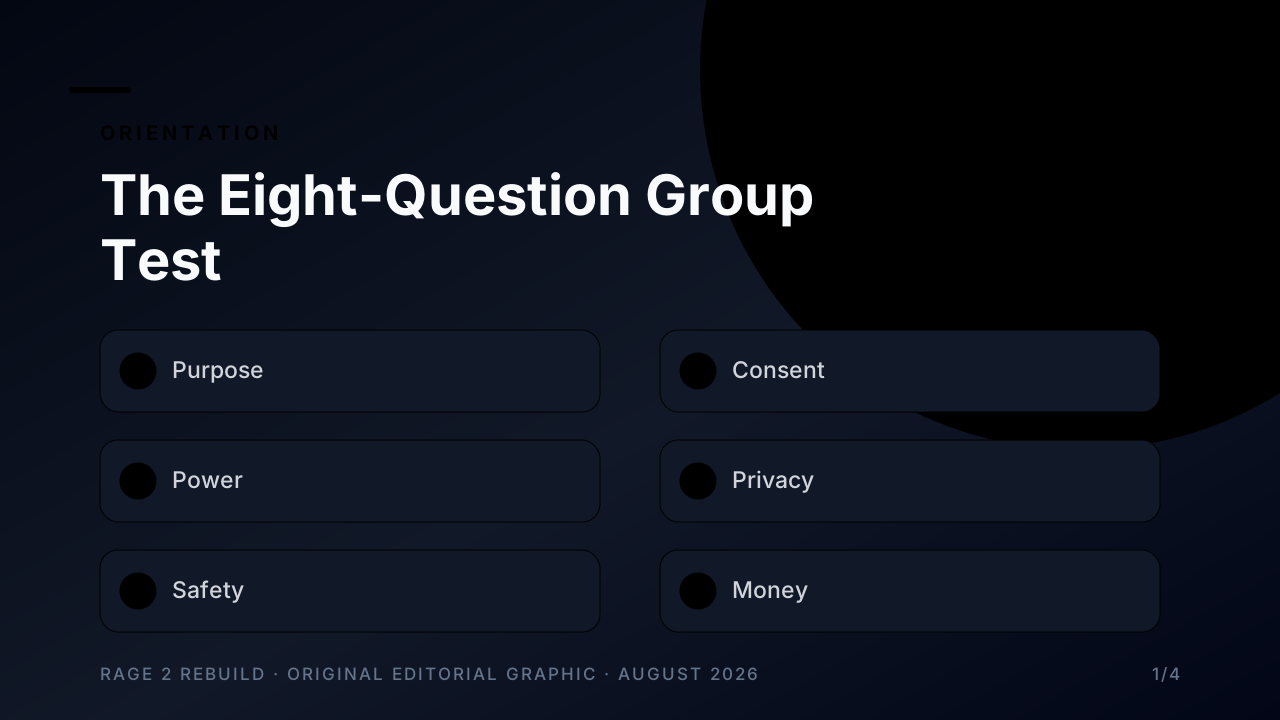
Orientation
Evaluate governance before emotional intensity.
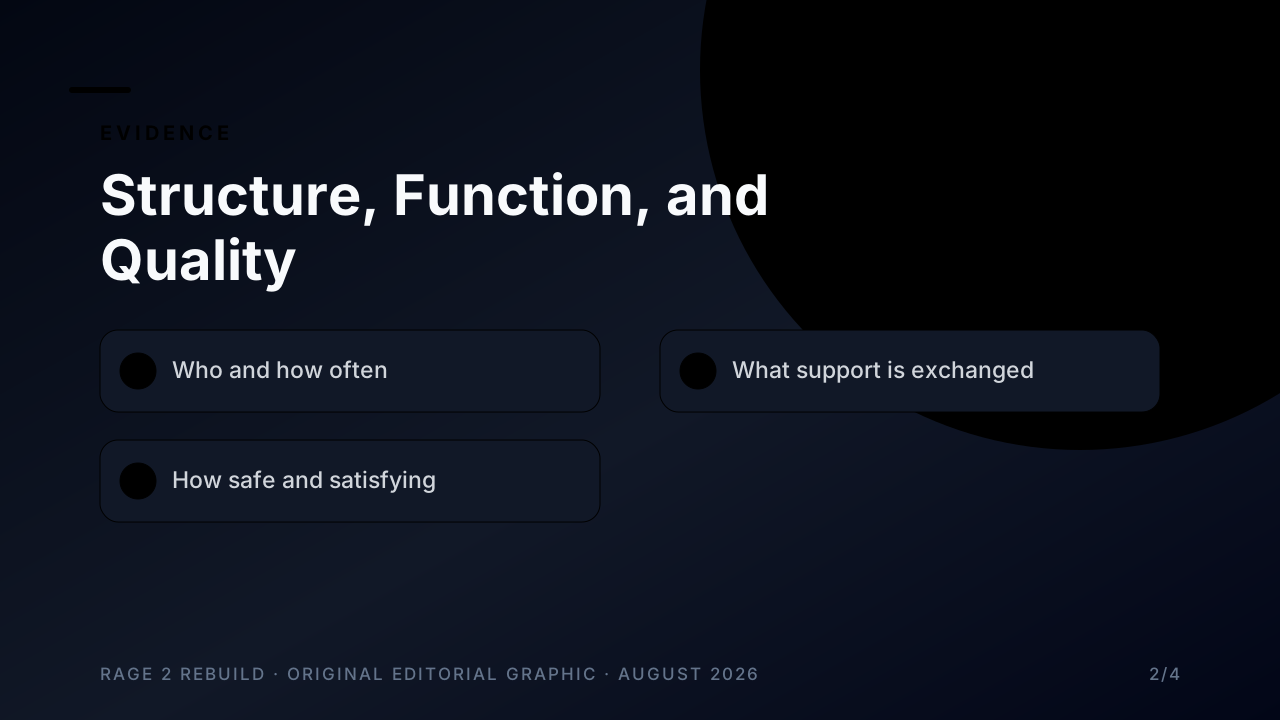
Evidence
More contact does not automatically mean useful or healthy connection.
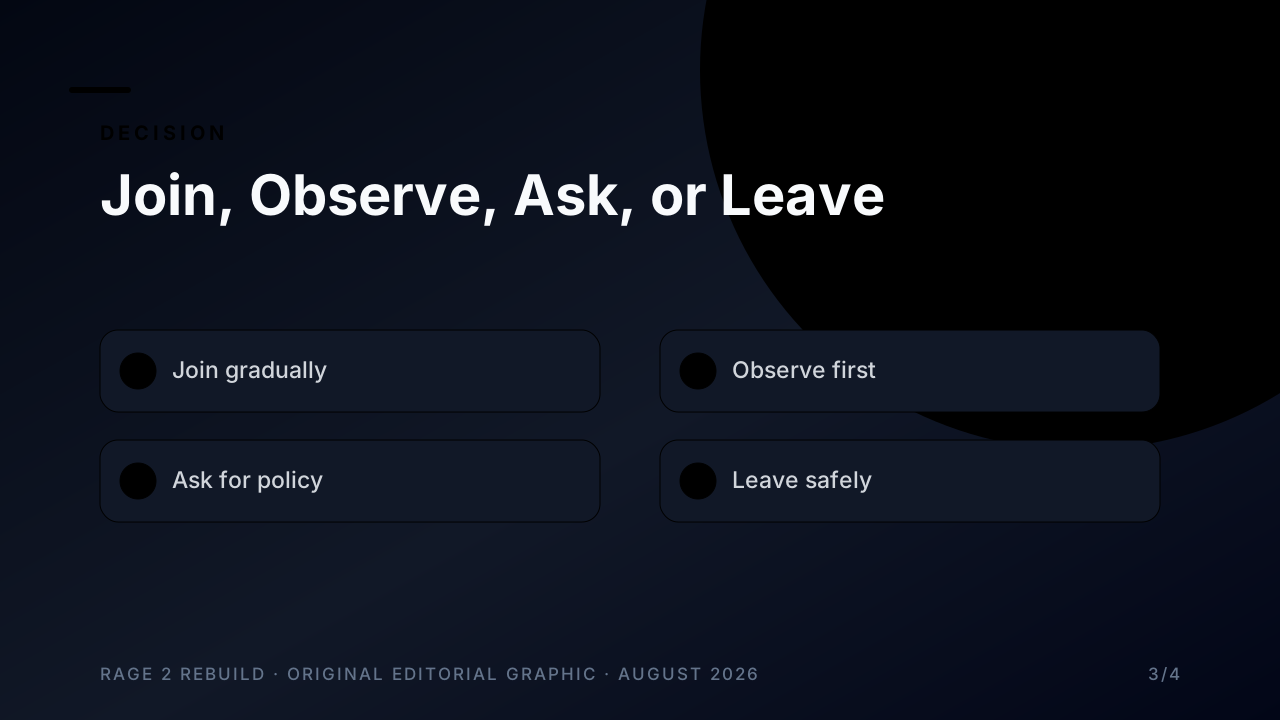
Decision
You can evaluate a group without making immediate loyalty commitments.
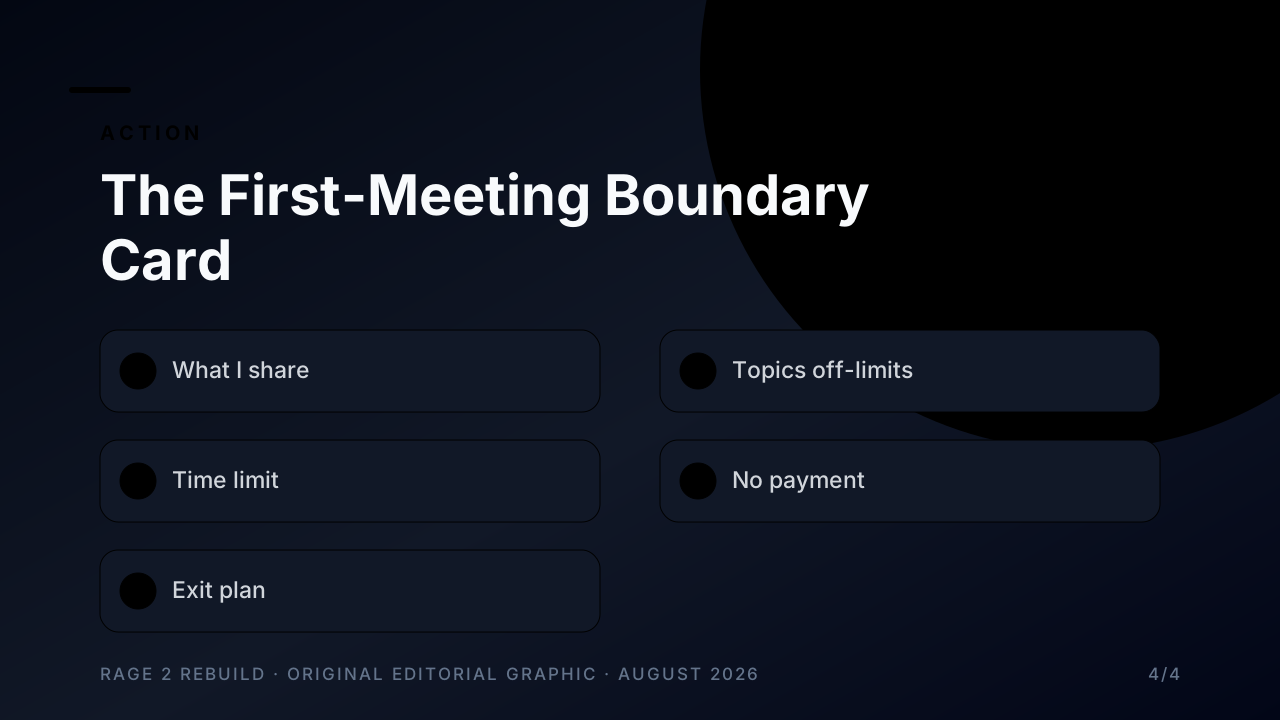
Action
Choose boundaries before a high-intensity meeting begins.
Browser-only planning tool
Use the audit for any proposed chapter, online community, activity group, or accountability circle.
A social or activity group may create recurring contact without assessing symptoms or delivering treatment. A discussion group may facilitate conversation without creating clinical confidentiality. A recovery-oriented peer group may offer experience without becoming medical supervision. The public description should match the real role.
Ask who trains and supervises leaders, how conflicts of interest are handled, and what records exist. If the group collects sensitive stories, emergency contacts, payments, or health information, governance and privacy obligations become more serious.
Healthy connection can begin with showing up on time, completing an activity, remembering a name, following a boundary, and returning next week. It does not require an immediate confession, public transformation story, or loyalty pledge.
A proposed community becomes credible through verifiable operations: published rules, accountable moderation, accurate availability, documented complaint handling, and honest reporting. Until those exist, the page should remain a design guide rather than an invitation to a fictional network.
Original page video
The strongest feeling of belonging is not a substitute for consent, governance, and exit rights.
Synthetic narration and original editorial graphics. No client, therapist, religious group, or documented event is depicted.
Private check-in
Nothing is submitted. This page does not invent vote counts or claim that other visitors answered.
Readiness tool
0 of 4 foundations in place
Choose the statements that are already true for you.
This planning aid is not a safety, legal, medical, or clinical assessment.
Named sources
Office of the U.S. Surgeon General
Public-health framework for the structure, function, and quality of social connection.
Substance Abuse and Mental Health Services Administration
U.S. treatment, recovery, crisis, cost, and family-support pathways; verify current availability directly.
National Institute of Mental Health
Official U.S. routes for finding qualified help and responding to urgent danger.
Editorial review: August 2, 2026. Hours, laws, credentials, costs, services, and availability can change; verify them directly.
Page-specific answers
Do not assume so. Confirm current operations directly. A planning page or chapter concept is not proof of an active local group.
A group should state practical and legal limits honestly. It cannot guarantee that every participant will keep information confidential.
Not unless appropriately qualified and operating in that professional role. Peer leaders should refer clinical, medical, legal, and crisis needs.
No punishment, harassment, financial penalty, forced explanation, reputation attack, or pressure to cut off outside relationships.
No. Peer connection and clinical treatment have different roles, training, accountability, and confidentiality.
Watch for leader worship, forced disclosure, isolation from outsiders, hidden money, punishment for disagreement, or claims that the group can replace qualified care.
Use recurring, consent-based contact around a clear activity or purpose. Let trust grow through consistent behavior rather than emotional pressure.