7
decision lanes
Belief, participation, money, marriage, children, family disclosure, and community replacement can move separately.
An LDS faith transition can affect belief, temple participation, garments, tithing, callings, marriage expectations, children, and a weekly social system. Those are separate decisions. Treating them as one dramatic announcement removes choices you may need later.
This guide does not assume that your relatives, ward, or spouse will react in a particular way. It helps you map who is affected, what you currently depend on, what can change privately, and which conversation actually needs to happen next.
Elder X was not raised LDS and does not claim insider authority. The useful role here is narrower: lived-experience perspective on leaving a strict religion, paired with tradition-specific external resources and clear limits.
Make one page with six headings: belief, marriage, children, money, participation, and community. Under each, write the current situation, the next decision, and who must know. A conclusion about scripture does not automatically settle whether to attend a family event or when to change a financial habit.
Mark each item private, shared, or public. Private questions can remain private. Shared decisions affect a spouse or dependent and deserve a direct conversation. Public changes can wait until you understand the likely practical consequences.
In a mixed-faith marriage, start with the household decision in front of you rather than a complete case against the church. Ask for a temporary agreement about one issue—attendance, children, money, garments, or family disclosure—and choose a date to revisit it.
Do not recruit children into an adult belief dispute. If conflict is entrenched, a licensed couples therapist who can work without trying to convert either spouse is more appropriate than peer advice.
LDS faith transition worksheet
A Mormon faith transition can touch marriage, temple identity, family expectations, money, callings, and an entire weekly calendar. Work on those systems separately instead of forcing one all-or-nothing announcement.
4
Belief, family, finances, and weekly community can change at different speeds.
10%
Use the familiar LDS benchmark only to calculate your own cash-flow change; this is not financial advice.
1
Put one honest recurring activity into the calendar before removing every church commitment.

Useful distinction
Temple participation, garments, tithing, callings, children, records, and family disclosure are separate decisions. Treating them as one dramatic exit removes useful choices.
Talk Through the Next LDS Decision
Describe the one decision in front of you. You do not need to solve your entire identity in one message.
Talk Through the Next LDS DecisionNamed external resources
Private check-in
Nothing is submitted. This page does not invent vote counts or claim that other visitors answered.
Readiness tool
0 of 4 foundations in place
Choose the statements that are already true for you.
This planning aid is not a safety, legal, medical, or clinical assessment.
List the functions church participation currently supplies: recurring contact, service, exercise, childcare, identity, ritual, or leadership. Choose replacements by function, not by finding one new group expected to supply everything.
Run a six-week experiment with one recurring activity where the same people return. A stable schedule is measurable; instant belonging is not. Review what the experiment supplied and what is still missing.
LDS transition operating plan · Reviewed August 2026
Leaving or reevaluating the LDS Church can affect private belief, temple participation, garments, callings, tithing, marriage, children, records, family expectations, and ward relationships. Those decisions do not need one timeline. Map who is affected, distinguish private from shared choices, and protect the closest relationships before turning a faith transition into a public event.
7
Belief, participation, money, marriage, children, family disclosure, and community replacement can move separately.
6 weeks
Test one recurring activity outside the ward before expecting it to become belonging.
1
A mixed-faith couple can negotiate observable behavior without settling theology.
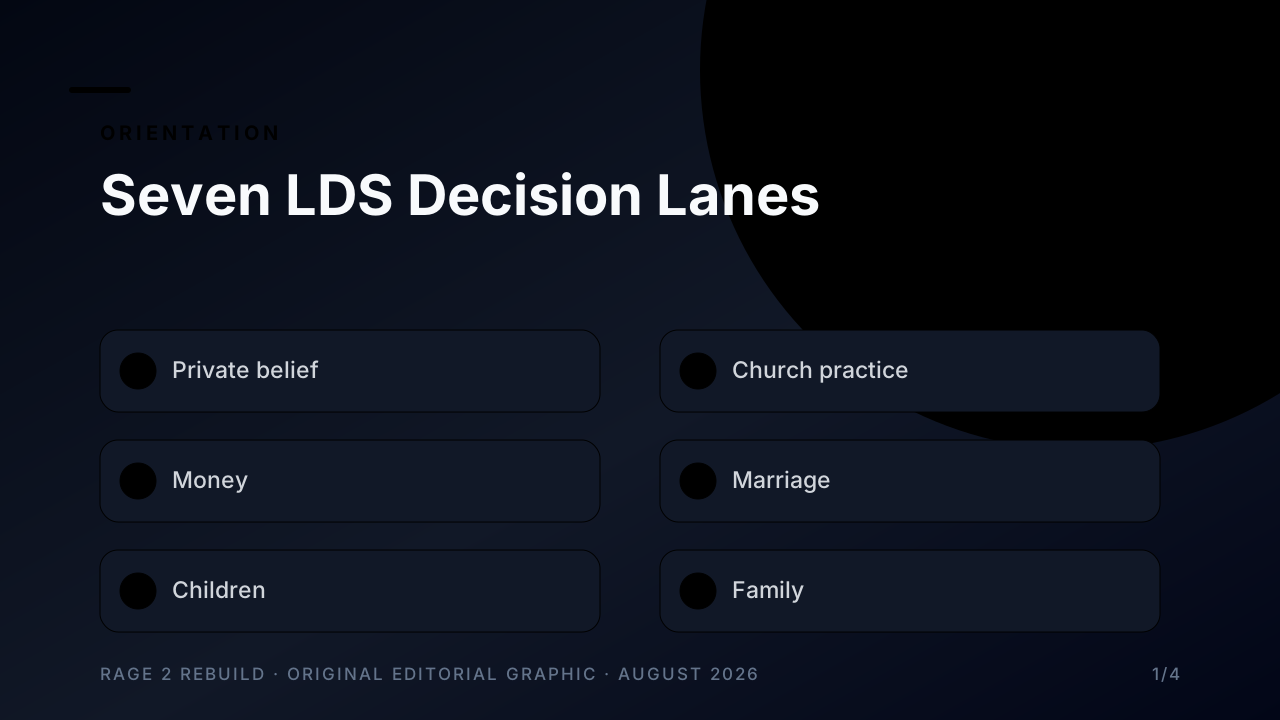
Orientation
Keep one conclusion from deciding every system at once.
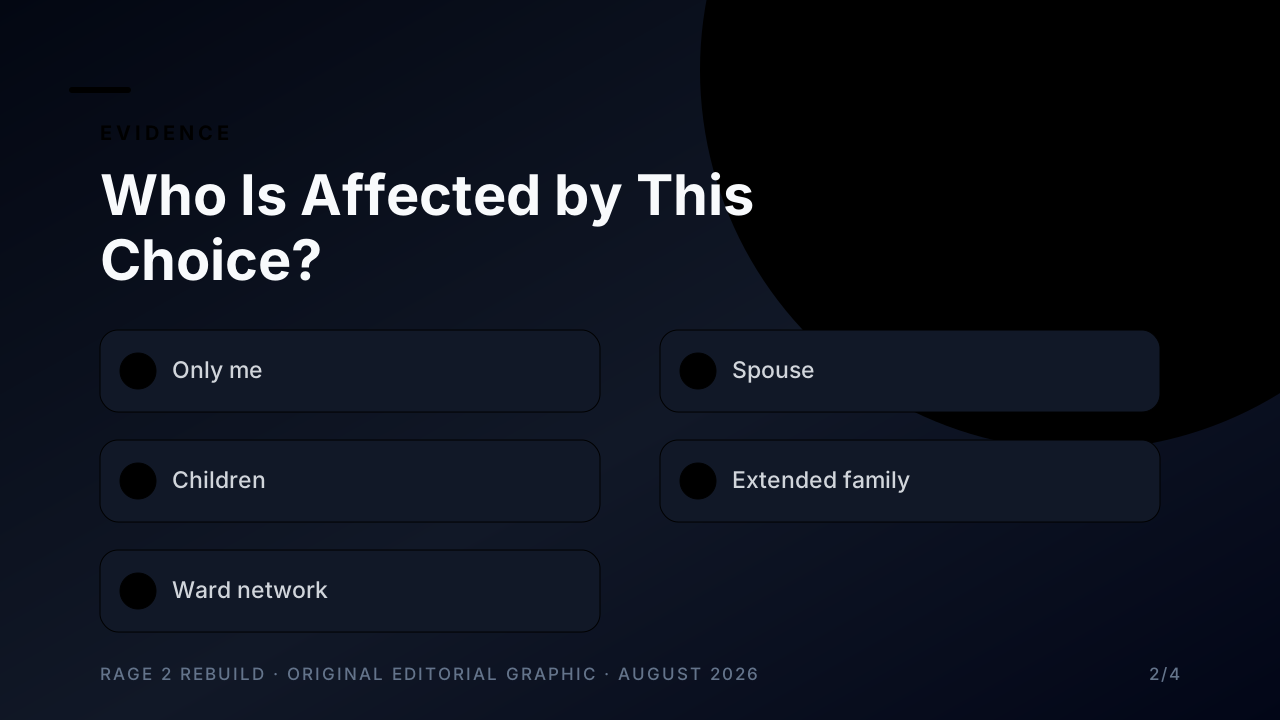
Evidence
Disclosure should follow the actual consequence of a decision.
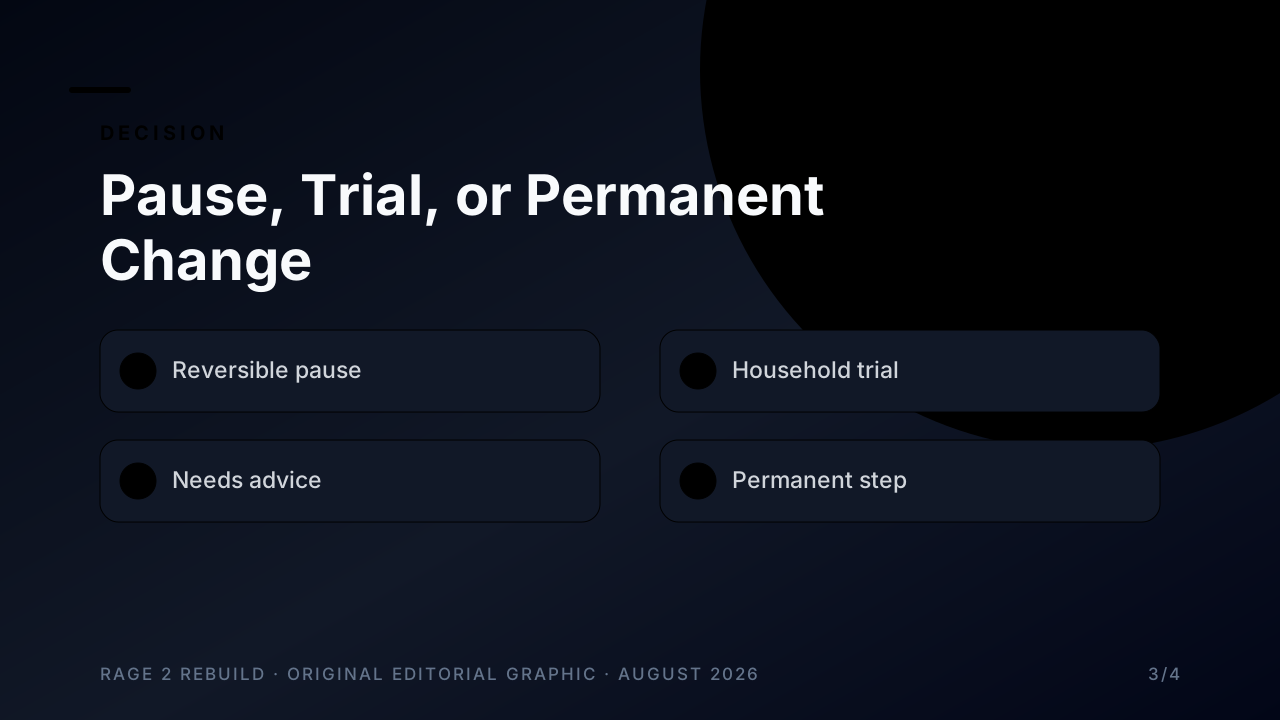
Decision
Temporary experiments preserve information and reduce all-or-nothing pressure.
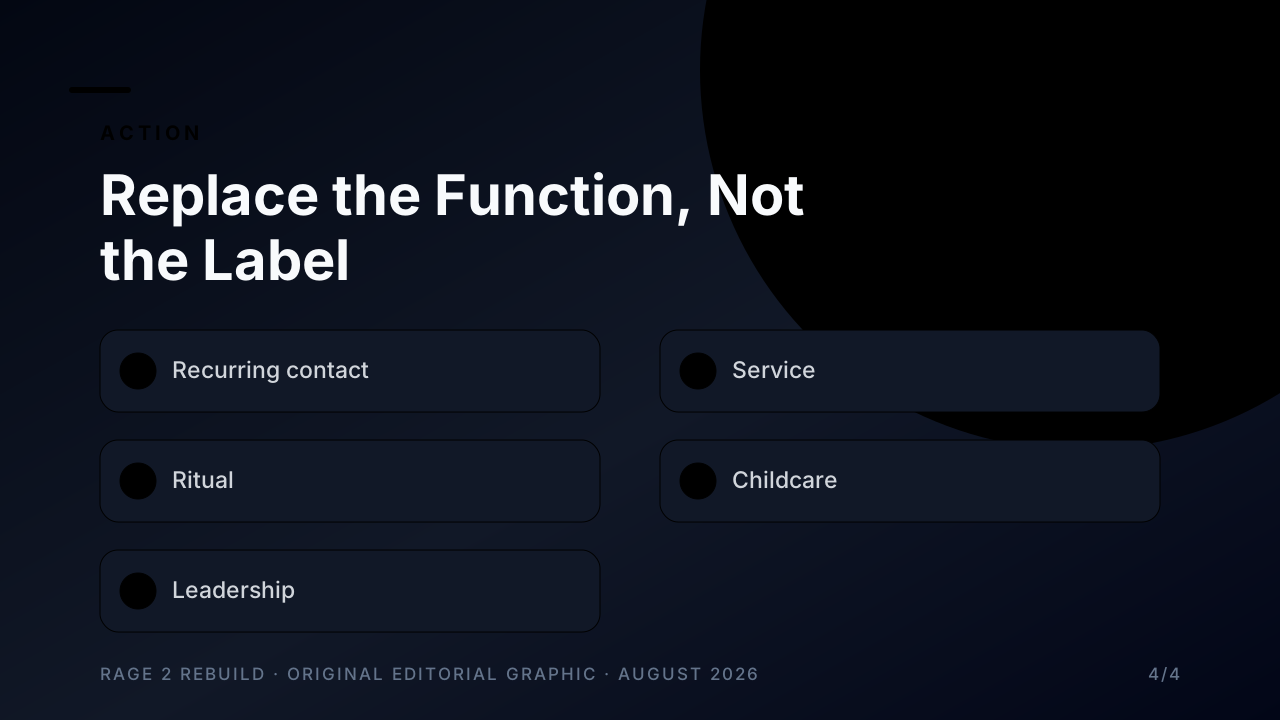
Action
Identify what the ward calendar supplied before removing it.
Browser-only planning tool
Use one row per practical choice instead of writing a verdict on your whole identity.
Original page video
A faith transition is not one decision, and it does not need one announcement.
Synthetic narration and original editorial graphics. No client, therapist, religious group, or documented event is depicted.
Private check-in
Nothing is submitted. This page does not invent vote counts or claim that other visitors answered.
Readiness tool
0 of 4 foundations in place
Choose the statements that are already true for you.
This planning aid is not a safety, legal, medical, or clinical assessment.
Named sources
Recovering from Religion
A tradition-specific collection with varied viewpoints; verify historical and institutional claims in primary sources.
Recovering from Religion
First-person and educational resources that show possible experiences without predicting a particular family response.
National Institute of Mental Health
Official U.S. guidance for locating qualified care and responding when danger is immediate.
Editorial review: August 2, 2026. Hours, laws, credentials, costs, services, and availability can change; verify them directly.
Page-specific answers
No universal timeline applies. Treat records as one decision among belief, participation, marriage, children, family, money, and community, then assess its actual consequences.
Start with one observable household decision and reflect each other’s position accurately. Do not make consuming conversion material a condition of respect.
List the functions you are losing, then test recurring activities separately for contact, service, childcare, exercise, ritual, or leadership.
Do not recruit children as messengers or judges. Caregivers should create age-appropriate temporary agreements and seek qualified help when conflict is entrenched.
Not therapy. Personal advice. Elder X is not a licensed therapist or spiritual counselor. This is honest writing from a man who has walked an analogous road.
A practical mixed-faith marriage guide for belief differences, children, money, rituals, relatives, and household agreements.
A practical guide to timing, scope, safety, boundaries, and follow-up when telling family that your religious beliefs changed.
A six-week practical experiment for rebuilding recurring contact, trust, invitations, and belonging after leaving a religious community.
A practical tool for recording religious guilt triggers, inherited rules, predicted consequences, present evidence, and care escalation.
Leaving looks different depending on what you came out of. These pages take that seriously.
A planning guide for Witnesses who are questioning, fading, PIMO, disfellowshipped, or considering a formal exit.
A practical guide for separating doctrine, authority, politics, family, sexuality, parenting, and church belonging during evangelical deconstruction.
A practical guide to separating institutional belief, family culture, sacraments, holidays, conscience, and identity after Catholicism.
What you grew up in, what made you start questioning, where you are now. Be as specific as you can. There is no wrong way to start.