3
contact lanes
Open, limited, and closed contact can be selected relationship by relationship.
Family distance may be announced, enforced by a community, or appear as unanswered messages and missed invitations. The uncertainty can make every contact attempt feel like a new verdict.
You can keep a door open without standing in the doorway every day. Contact frequency, communication channels, and off-limit topics can be decided relationship by relationship.
This page does not promise reconciliation. It focuses on choices you control: the next contact, the boundary, the review date, and the life you build outside the silence.
For each relationship, choose open, limited, or closed contact. Define what that means in behavior: one monthly email, no surprise visits, no doctrine messages, or no contact until a stated condition changes.
Set a date to review the contact plan. Between reviews, avoid changing the boundary after every reply or silence. Save important communications when legal, financial, or child-related matters are involved.
Estrangement response tool
Shunning may be formal or silent. Your plan needs to distinguish contact you can offer, boundaries you need, and the life you will build whether reconciliation happens or not.
3
Open, limited, and closed contact can be chosen relationship by relationship.
1
Revisit your contact plan on a date, not after every painful message.
2
Original family grief and chosen-family growth can both be real.

Useful distinction
A living person can be psychologically absent. That lack of closure is one reason quiet estrangement can be exhausting even without a formal shunning announcement.
Work Out the Contact Boundary
Describe the current pattern and what happens after you reach out.
Work Out the Contact BoundaryNamed external resources
Resources for naming losses that may include identity, certainty, family, ritual, and community.
Source: Recovering from Religion ↗
Videos and readings about religious trauma, recovery, and when professional care may help.
Source: Recovering from Religion ↗
Private check-in
Nothing is submitted. This page does not invent vote counts or claim that other visitors answered.
Readiness tool
0 of 4 foundations in place
Choose the statements that are already true for you.
This planning aid is not a safety, legal, medical, or clinical assessment.
Choose a weekly setting where the same people return, then make one small invitation or follow-up. Chosen family grows through repeated contact and mutual reliability, not through declaring instant closeness.
Estrangement operating plan · Reviewed August 2026
Religious shunning can be formal, informal, intermittent, or impossible to name. You cannot control reconciliation, but you can define contact channels, off-limit behavior, documentation needs, review dates, and the life you will continue building. A boundary protects daily function; it does not prove that the family loss no longer matters.
3
Open, limited, and closed contact can be selected relationship by relationship.
30 days
A planned review reduces boundary changes after every reply or silence.
2
Grief for family of origin and investment in chosen family can coexist.
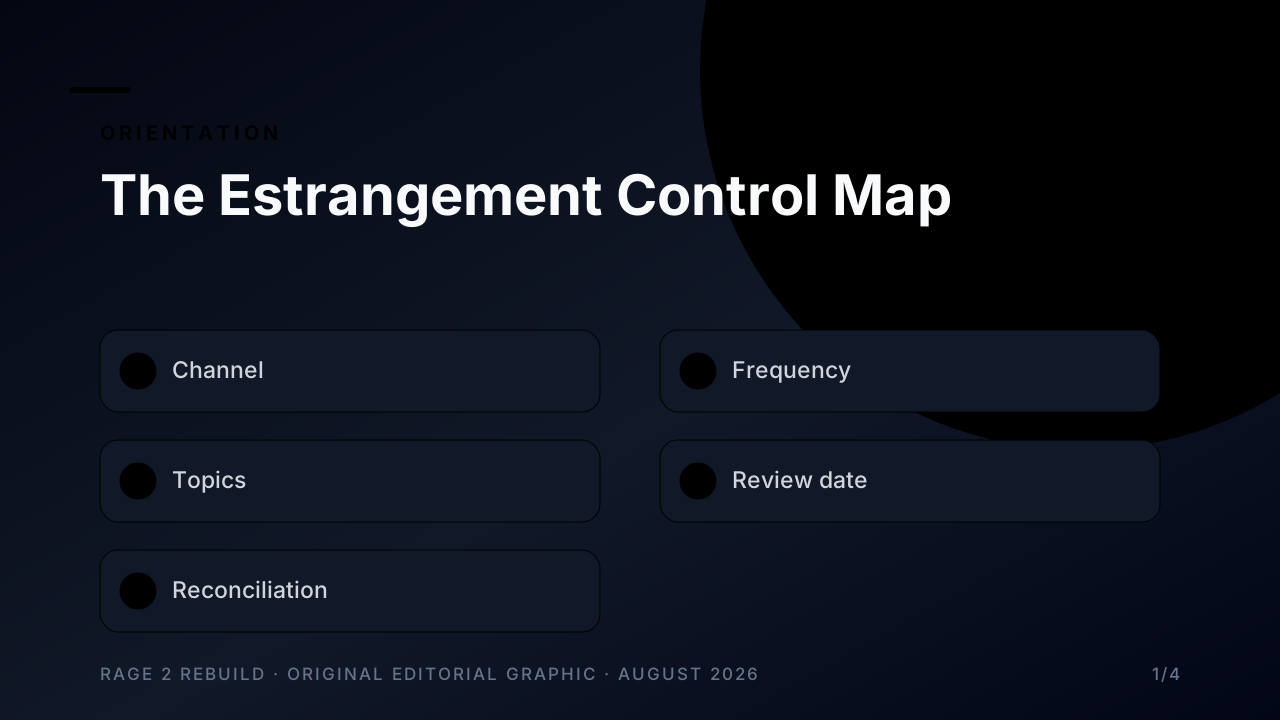
Orientation
Put energy into choices you can actually implement.
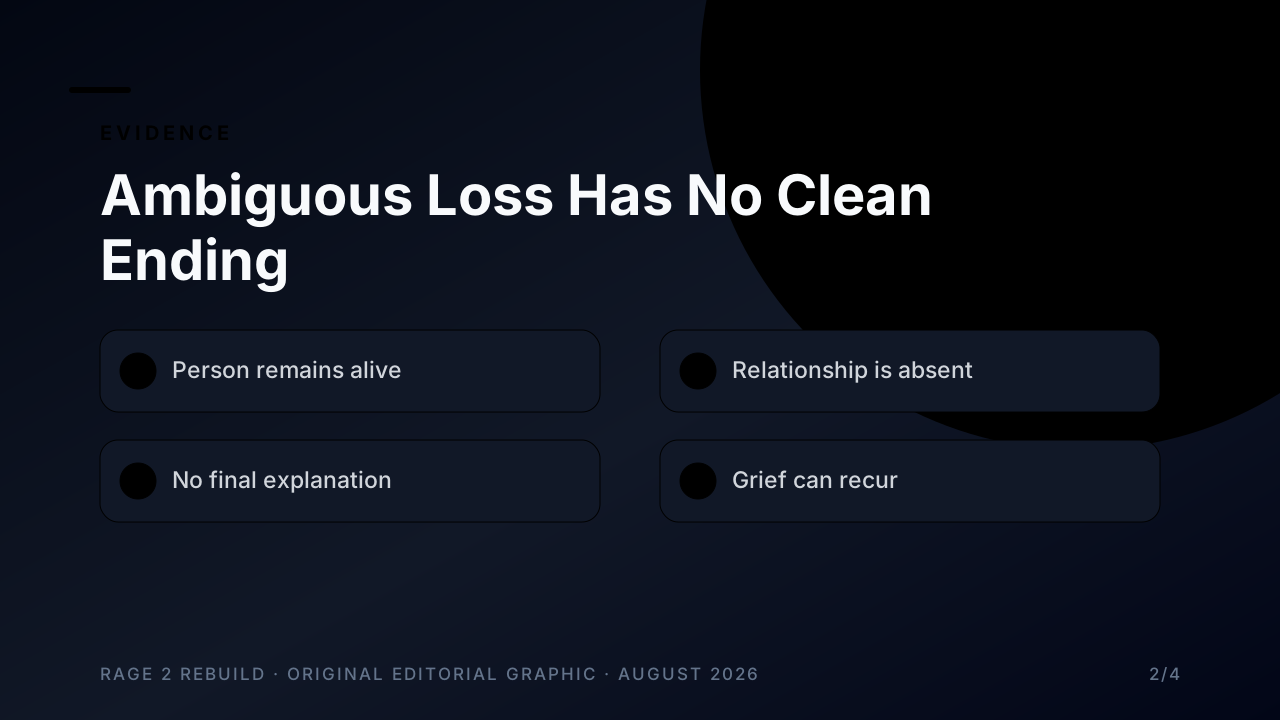
Evidence
A useful grief concept, not a diagnosis of the relationship.
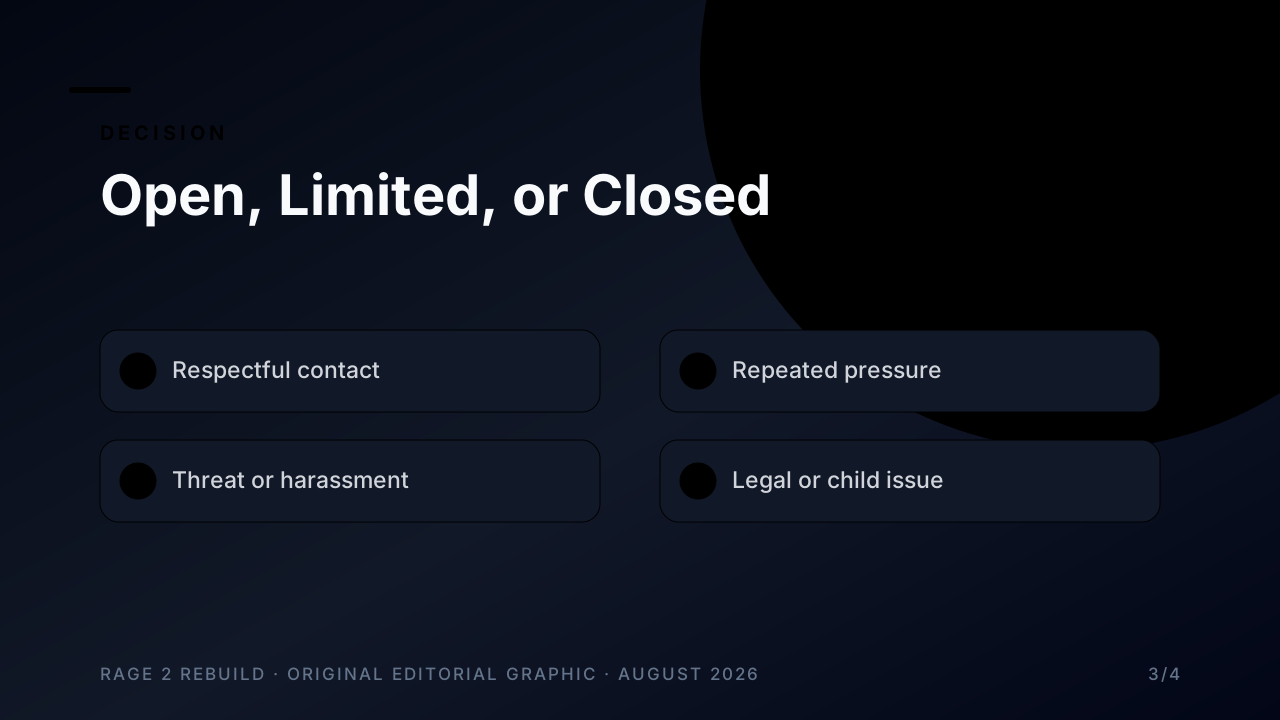
Decision
Choose by observed conduct, not promises alone.
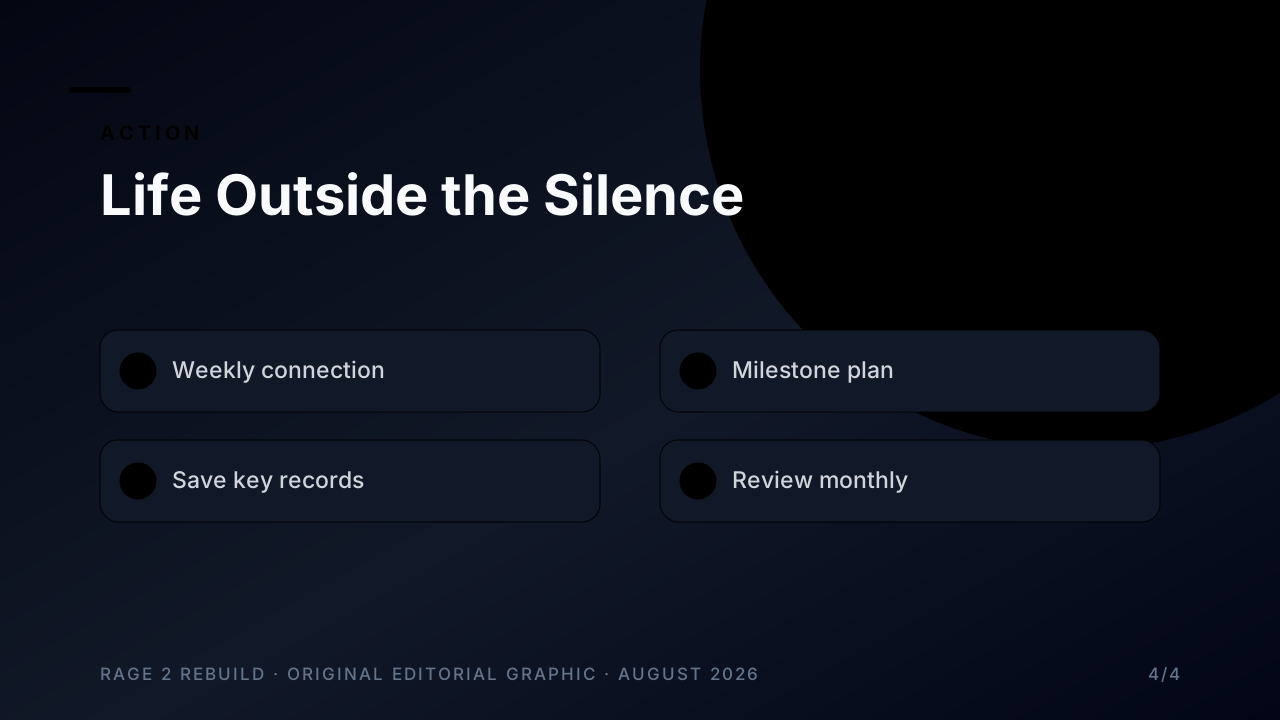
Action
A plan that continues even if family contact does not.
Browser-only planning tool
Avoid declaring a single permanent rule for an entire family system.
Original page video
You can leave room for reconciliation without putting your whole life on hold.
Synthetic narration and original editorial graphics. No client, therapist, religious group, or documented event is depicted.
Private check-in
Nothing is submitted. This page does not invent vote counts or claim that other visitors answered.
Readiness tool
0 of 4 foundations in place
Choose the statements that are already true for you.
This planning aid is not a safety, legal, medical, or clinical assessment.
Named sources
Recovering from Religion
Background resources for naming loss after belief change; not individualized clinical guidance.
American Psychological Association
Professional background on grief and coping; individual needs and treatment decisions still require appropriate care.
U.S. Surgeon General
Public-health framework distinguishing the structure, function, and quality of social connection.
Editorial review: August 2, 2026. Hours, laws, credentials, costs, services, and availability can change; verify them directly.
Page-specific answers
No. Limited contact can preserve a narrow channel while protecting you from repeated behavior that destabilizes daily life.
Choose a calendar date or a clear behavior change rather than reassessing after every message, silence, or social-media signal.
Keep relevant records securely when threats, money, children, housing, or legal matters are involved. Obtain qualified advice for jurisdiction-specific questions.
Use recurring, low-pressure contact and small acts of reliability. Trust grows through repeated behavior rather than a declaration of immediate intimacy.
Not therapy. Personal advice. Elder X is not a licensed therapist. This is honest writing from someone who has walked the road and sat with people on it.
A practical guide to timing, scope, safety, boundaries, and follow-up when telling family that your religious beliefs changed.
A six-week practical experiment for rebuilding recurring contact, trust, invitations, and belonging after leaving a religious community.
A practical planner for worship expectations, family questions, grief, travel, traditions, and exit boundaries during religious holidays.
A practical tool for recording religious guilt triggers, inherited rules, predicted consequences, present evidence, and care escalation.
Pages written specifically for people leaving these traditions.
A planning guide for Witnesses who are questioning, fading, PIMO, disfellowshipped, or considering a formal exit.
A practical guide for people leaving Orthodox Jewish communities, covering family, education, work, technology, housing, marriage, and identity.
A cautious planning guide for people from Muslim backgrounds, separating private belief from disclosure, safety, family, legal, and immigration decisions.
Describe what you grew up in, the decision in front of you, and the next outcome you want. Include only necessary detail; response timing varies.