Describe function, not only labels
Write what has changed in sleep, eating, energy, work, relationships, substances, safety, and daily tasks. Specific changes give a clinician more useful information than a self-diagnosis alone.
Mental-health decision guide
Elder X can offer personal perspective, but he is not presented as a therapist or medical provider. Persistent, severe, or function-limiting symptoms deserve assessment by a qualified professional; imminent danger or thoughts of self-harm require local emergency or crisis support.
2
NIMH identifies psychotherapy and medication as common forms of mental-health treatment.
1 plan
Treatment choice depends on individual needs and medical circumstances.
988
Call or text 988 in the United States; outside the U.S., use the applicable local emergency or crisis service.

A useful distinction
Someone else’s experience with hospitalization, medication, religion, or relationships may help you name a question. It cannot establish your diagnosis, tell you to stop treatment, predict an outcome, or prove that the same intervention will work for you.
Write what has changed in sleep, eating, energy, work, relationships, substances, safety, and daily tasks. Specific changes give a clinician more useful information than a self-diagnosis alone.
Use peer perspective for lived-experience questions, licensed care for assessment and treatment, a prescriber for medication decisions, and emergency or crisis services when safety cannot wait.
Ask about credentials, experience with the actual concern, treatment approach, goals, fees, privacy, and how progress or lack of progress will be reviewed.
Do not abruptly stop medication or treatment because a story, chatbot, influencer, or web page sounds convincing. Bring concerns to the clinician responsible for that care.
Named sources · reviewed August 2, 2026
Private check-in
Nothing is submitted. This page does not invent vote counts or claim that other visitors answered.
Readiness tool
0 of 4 foundations in place
Choose the statements that are already true for you.
This planning aid is not a safety, legal, medical, or clinical assessment.
Support-lane navigator · Reviewed August 2026
Personal perspective, peer support, psychotherapy, medical evaluation, medication management, and crisis response solve different problems. Describe observable changes in sleep, energy, eating, work, relationships, substances, safety, and daily tasks; then choose the lane with the training, accountability, confidentiality, and urgency the situation requires.
5
Peer perspective, psychotherapy, medical assessment, prescribing, and crisis response have different roles.
6
Sleep, eating, energy, work, relationships, and safety make a concern easier to communicate.
1
Do not abruptly change treatment because a story, chatbot, influencer, or web page sounds convincing.
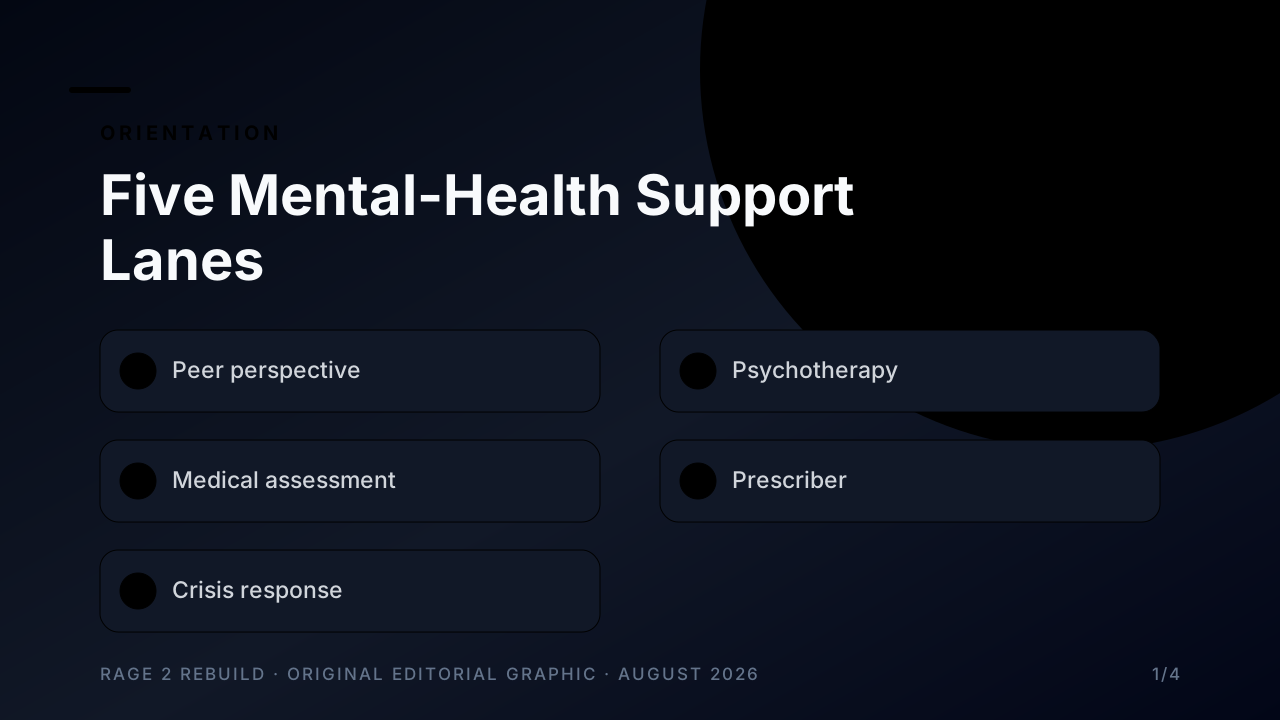
Orientation
Choose by the job and urgency, not by familiarity.
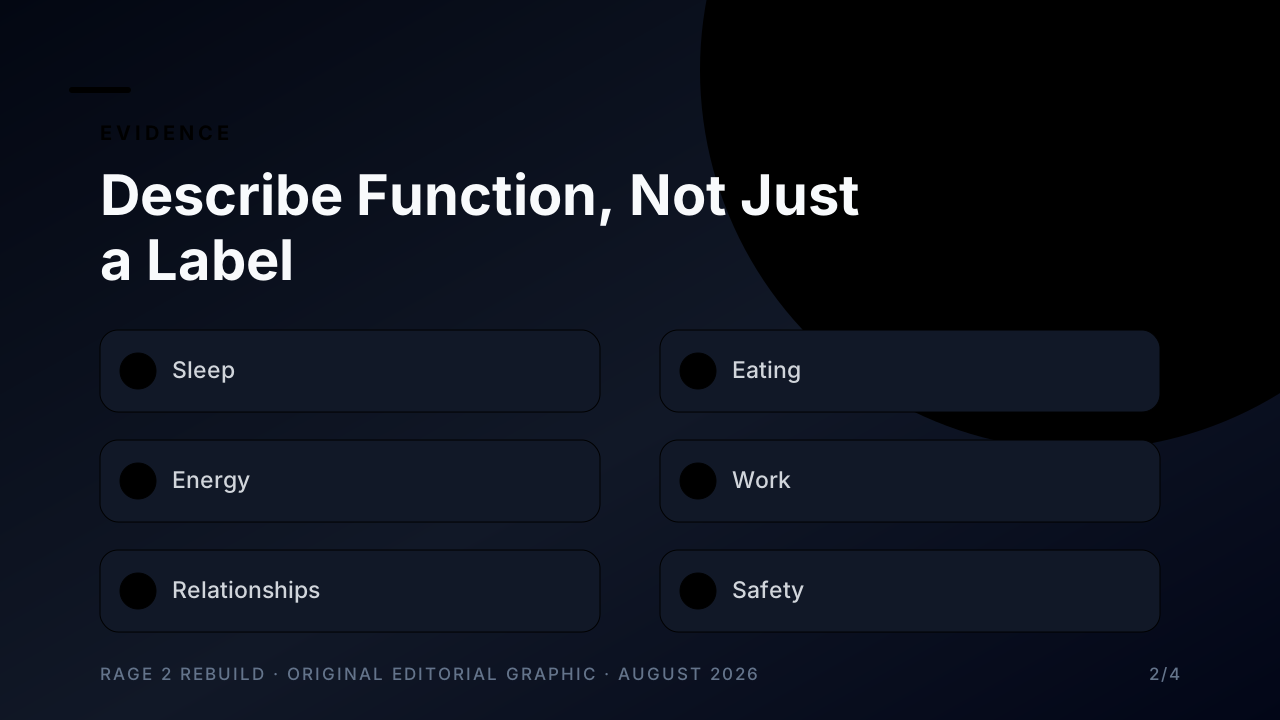
Evidence
Observable changes improve a support conversation.
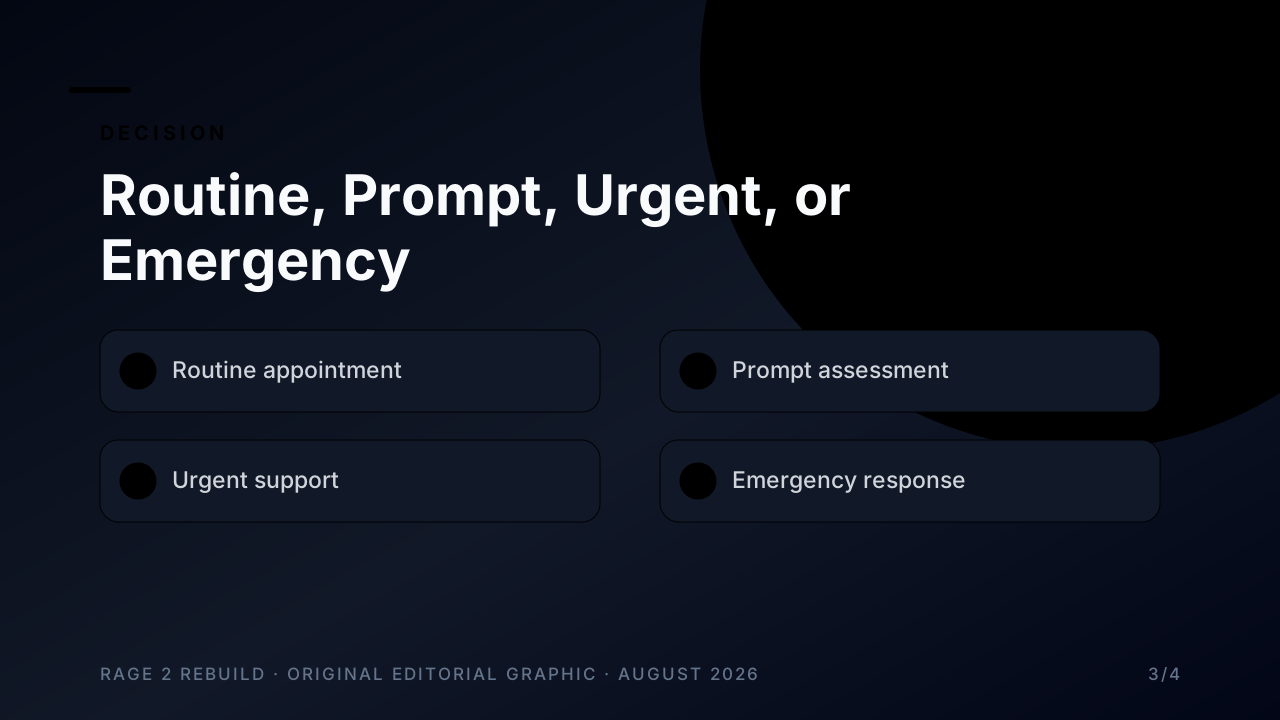
Decision
Timing changes when safety or function deteriorates.
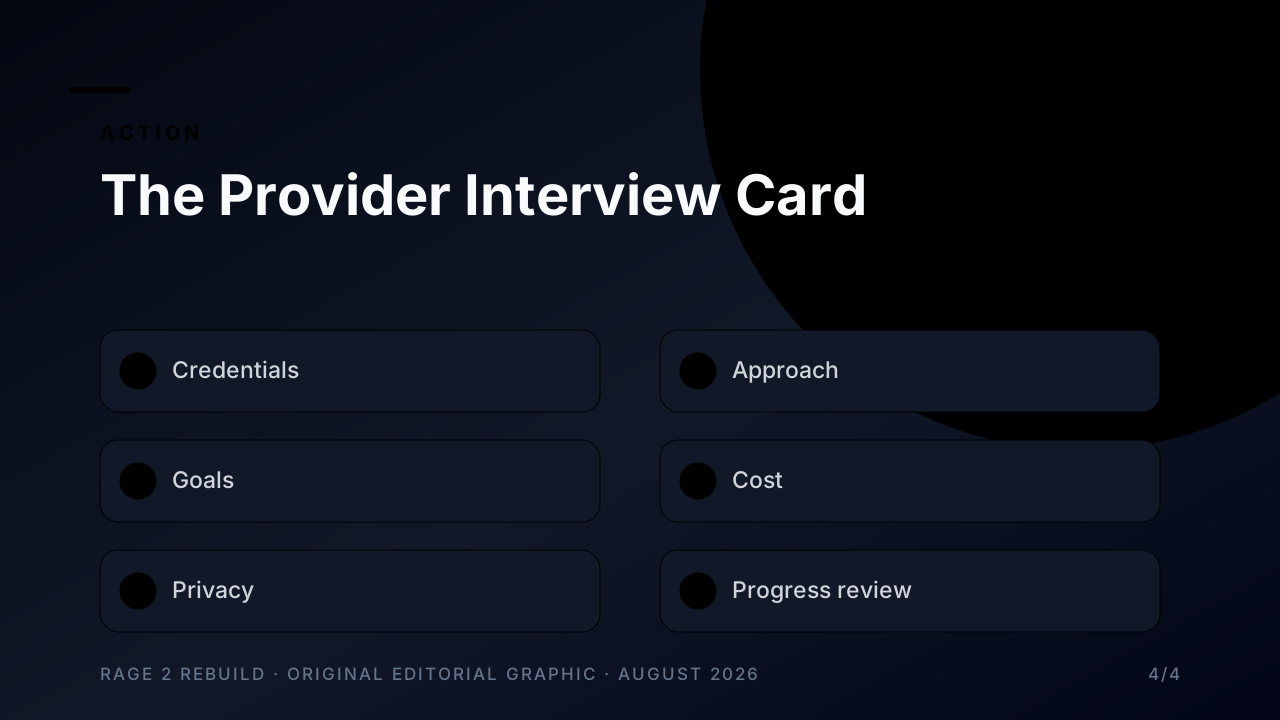
Action
A preliminary conversation can clarify fit and accountability.
Browser-only planning tool
Turn a broad concern into information the appropriate helper can use.
List the baseline, what changed, when it changed, and what now takes longer, happens less often, or no longer happens. Include sleep timing, appetite, hygiene, work or school attendance, financial decisions, relationship conflict, substances, medication changes, and safety. The page is not a self-diagnosis; it is a chronology.
Mark what another person observed separately from your interpretation. A partner noticing three sleepless nights is an observation. Deciding what caused them is a clinical question. Separating those columns reduces argument and gives a qualified professional clearer material.
Ask how goals will be established, what will be measured, when progress will be discussed, and what happens if the approach is not helping. Fit is not just comfort; it includes relevant credentials, scope, evidence, communication, and a process for revising care.
Personal perspective can sit beside qualified treatment when roles remain explicit. It should never quietly become diagnosis, medication direction, crisis management, or a confidentiality promise the site cannot support.
Original page video
The most useful next step depends on the job, urgency, and accountability—not the most relatable story.
Synthetic narration and original editorial graphics. No client, therapist, religious group, or documented event is depicted.
Private check-in
Nothing is submitted. This page does not invent vote counts or claim that other visitors answered.
Readiness tool
0 of 4 foundations in place
Choose the statements that are already true for you.
This planning aid is not a safety, legal, medical, or clinical assessment.
Named sources
National Institute of Mental Health
Official background on psychotherapy, provider questions, treatment fit, and crisis resources.
National Institute of Mental Health
Official U.S. routes for finding qualified help and responding to urgent danger.
Substance Abuse and Mental Health Services Administration
U.S. treatment, recovery, crisis, cost, and family-support pathways; verify current availability directly.
Editorial review: August 2, 2026. Hours, laws, credentials, costs, services, and availability can change; verify them directly.
Page-specific answers
Bring observable changes, duration, daily-function impact, relevant medications or substances, prior care, questions, and any immediate safety concerns.
Peer perspective offers lived-experience recognition. Psychotherapy involves professional training, treatment goals, accountability, and defined confidentiality limits.
Use the qualified professional responsible for prescribing or medically reviewing the treatment. Do not start, stop, or change medication based on this guide.
Use local emergency or crisis services when danger is immediate, safety cannot be maintained, or severe symptoms require urgent intervention.
No. The site offers personal perspective and planning support, not psychotherapy, diagnosis, medication management, or crisis care.
No. Use a qualified professional for assessment and treatment decisions. Peer perspective may be complementary, not a replacement.
Use your local emergency service now. In the United States, call or text 988 for crisis support; availability and numbers differ by country.