10
distinct after-faith guides
Each guide is organized around a different decision rather than a keyword variation.
Leaving the religion you were raised in is one piece of work. Living the life that comes after is a different piece, and it takes longer than people warn you about. The family that stops calling. The spouse who still believes. The holidays you used to look forward to. The kids who are asking what happens when people die. The guilt that does not switch off when you stop going to services. The friends you have to figure out how to make from scratch.
These pages are about that. Each one is on a specific piece of the after. None of them are short. They are written to be read slowly, on a Tuesday night, by someone who is in the middle of one of these things and needs another person to take it seriously.
A practical guide to timing, scope, safety, boundaries, and follow-up when telling family that your religious beliefs changed.
Read →A practical guide to contact boundaries, ambiguous loss, documentation, chosen family, and daily stability after religious shunning.
Read →A practical mixed-faith marriage guide for belief differences, children, money, rituals, relatives, and household agreements.
Read →A practical guide to values, questions, rituals, religious relatives, and co-parent agreements after a change in belief.
Read →A practical planner for worship expectations, family questions, grief, travel, traditions, and exit boundaries during religious holidays.
Read →A practical guide to attending religious ceremonies, declining rituals, supporting family, and handling grief without pretending belief.
Read →A practical tool for recording religious guilt triggers, inherited rules, predicted consequences, present evidence, and care escalation.
Read →A six-week practical experiment for rebuilding recurring contact, trust, invitations, and belonging after leaving a religious community.
Read →A practical guide to consent, exclusivity, sexual health, safety, values, and explaining a religious past while dating.
Read →A practical framework for building a provisional worldview with evidence, confidence levels, values, uncertainty, and scheduled review.
Read →Pause, look, and use something
Long explanations are easier to use when they are interrupted by evidence, a visual reset, a decision, and a tool. This section turns the topic into a private action plan without presenting generated media as a real person, place, or testimonial.
4
Original visual directions attached to this topic; not claimed as documentary evidence.
3
Topic-specific ideas plus links to an independent curated resource library.
0
The check-in below is private and does not pretend to represent other visitors.

Quick perspective
A page can be long and still feel thin when every paragraph asks the reader to do the same thing. Useful depth comes from different jobs: explain, show, compare, help decide, and make the next action easier.
Questions this page can turn into content
Watch from a named source
A curated library of first-person stories and practical videos from Recovering from Religion.
Recovering from Religion resource library ↗
Videos and readings for understanding religious trauma without treating a web page as diagnosis.
Recovering from Religion resource library ↗
Private check-in
Nothing is submitted. This page does not invent vote counts or claim that other visitors answered.
Readiness tool
0 of 4 foundations in place
Choose the statements that are already true for you.
This planning aid is not a safety, legal, medical, or clinical assessment.
The After pages assume you are already out, even partially. If you are still inside the religion you were raised in, or in the active middle of leaving it, the pages by tradition may be more useful first. Each one is written for that specific exit and the texture it has.
Leaving by TraditionLife-after-faith navigator · Reviewed August 2026
Life after religion is not one topic. Disclosure, shunning, marriage, parenting, holidays, grief, friendship, dating, guilt, and worldview questions each involve different risks. Choose the page that matches the decision in front of you instead of consuming every guide as one universal recovery program.
10
Each guide is organized around a different decision rather than a keyword variation.
3
Low-stakes experiments, consequential choices, and urgent safety needs require different handling.
1
Separating issues reduces the pressure to settle identity, family, and belief together.
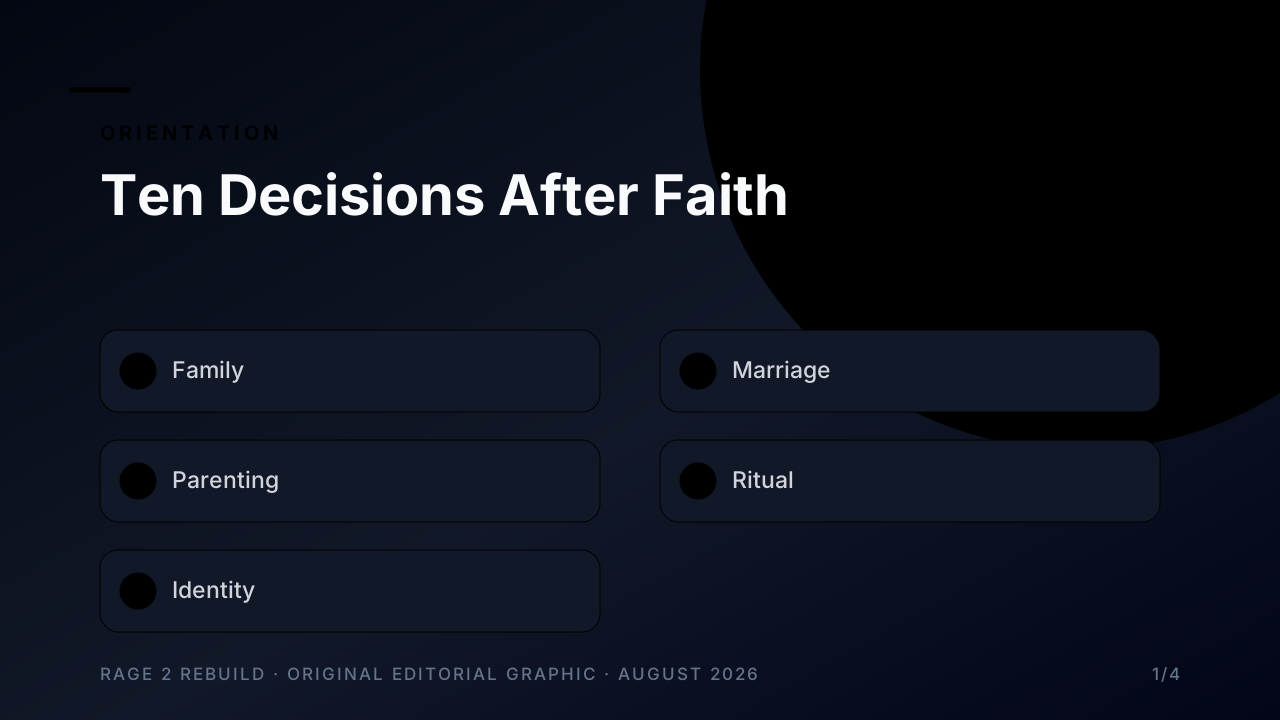
Orientation
A navigation map, not a fixed recovery sequence.
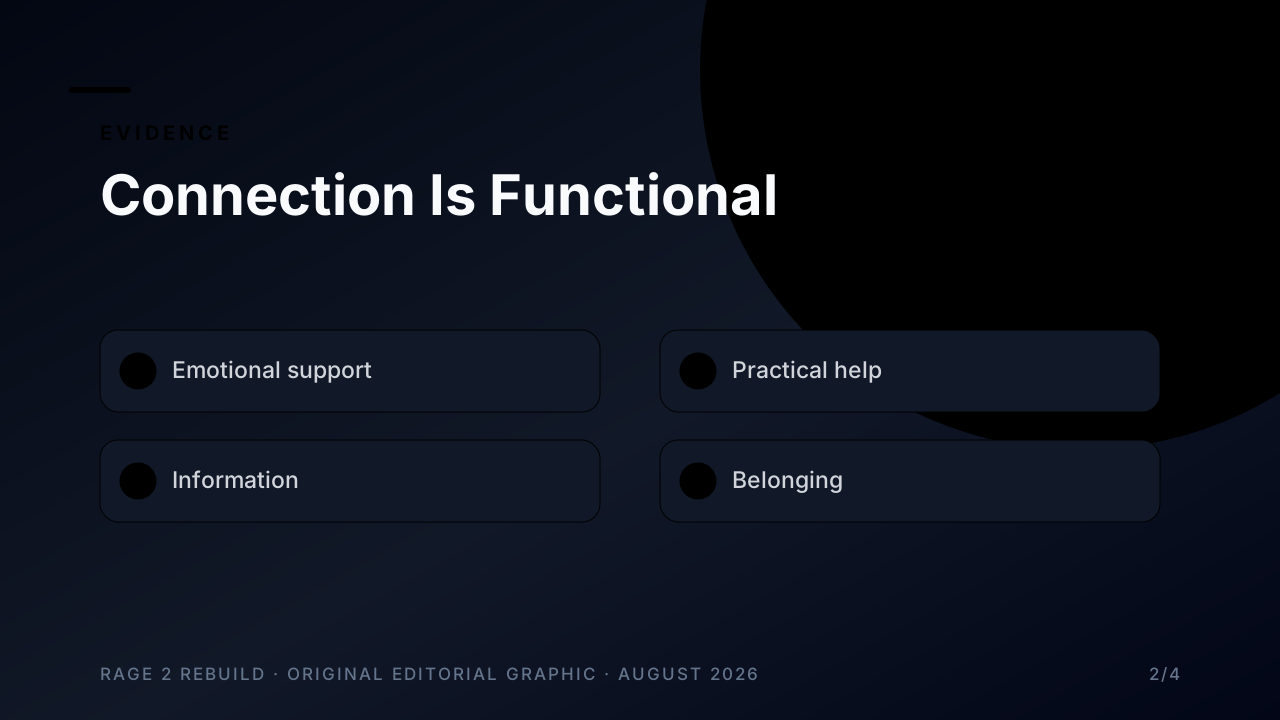
Evidence
Adapted from public-health social-connection concepts.
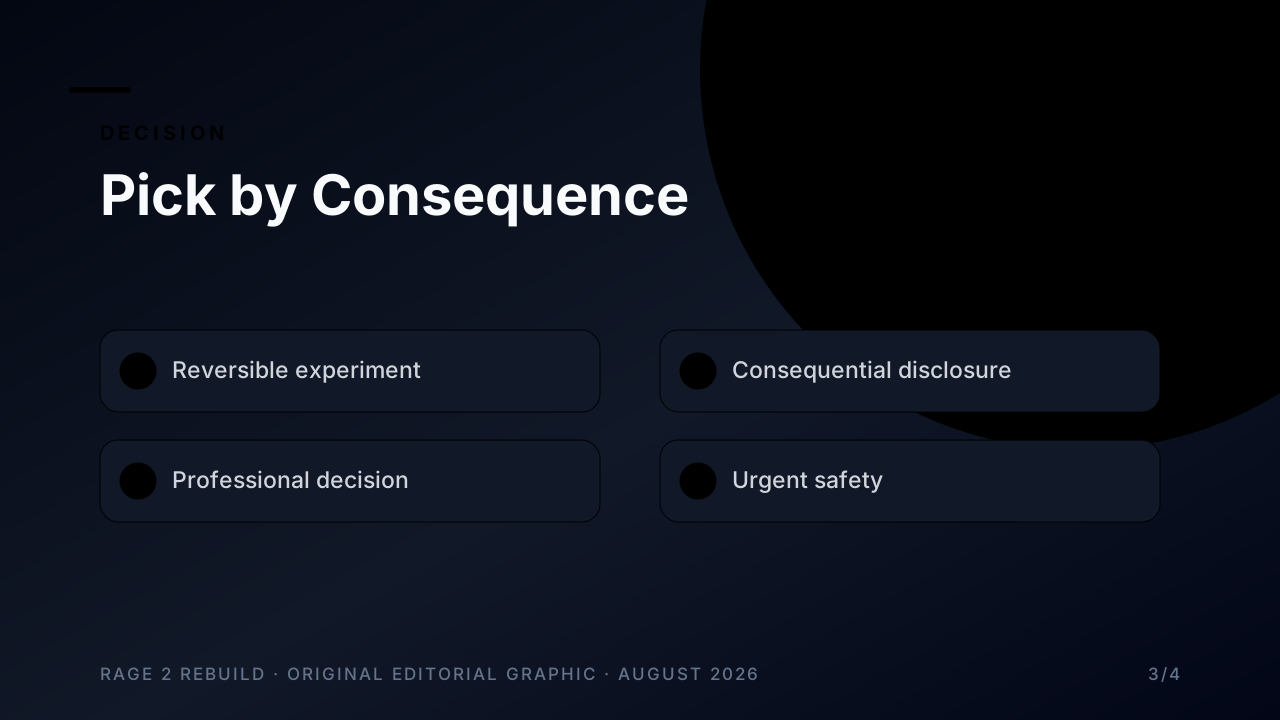
Decision
Higher stakes require stronger verification.
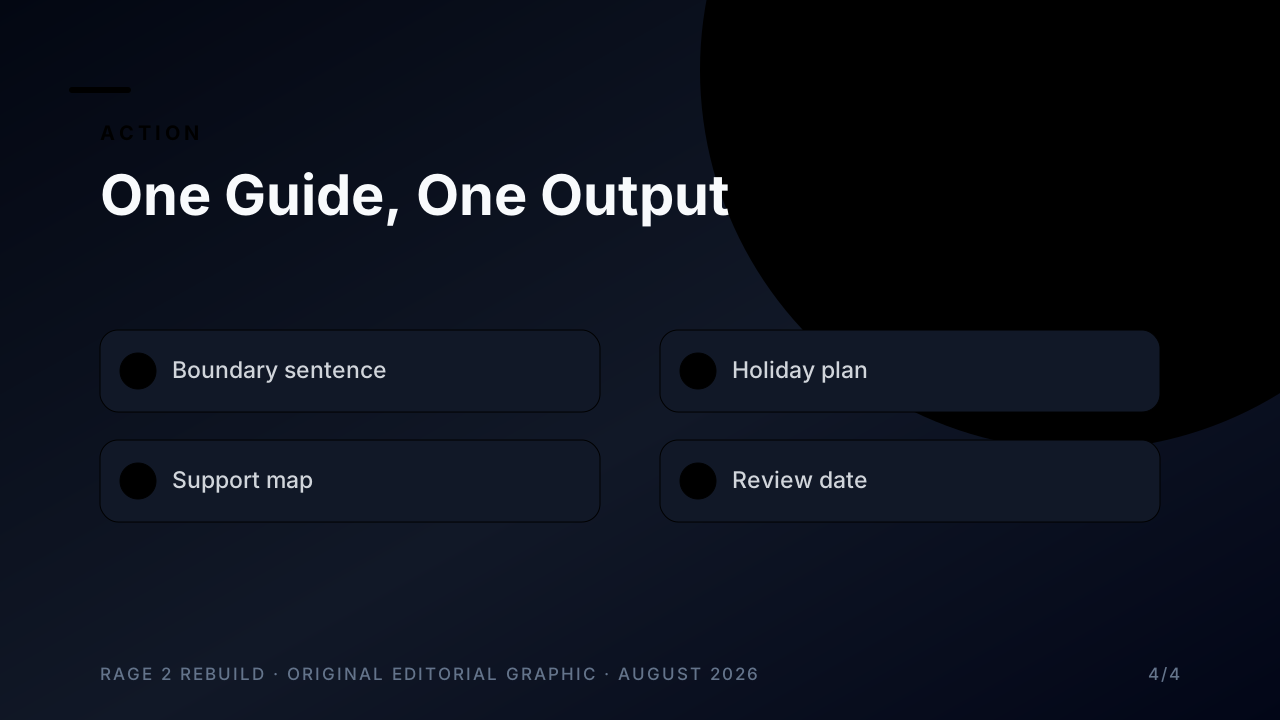
Action
Reading becomes useful when it produces a decision record.
Browser-only planning tool
Choose the page that helps you create the document, conversation, or appointment you need next.
Original page video
The wrong guide can turn one hard decision into ten. Start with the consequence, not the label.
Synthetic narration and original editorial graphics. No client, therapist, religious group, or documented event is depicted.
Private check-in
Nothing is submitted. This page does not invent vote counts or claim that other visitors answered.
Readiness tool
0 of 4 foundations in place
Choose the statements that are already true for you.
This planning aid is not a safety, legal, medical, or clinical assessment.
Named sources
U.S. Surgeon General
Framework for understanding the structure, function, and quality of social connection.
Recovering from Religion
Named external support option; verify its current hours, privacy terms, and service scope directly.
National Institute of Mental Health
Official U.S. guidance on finding care and responding to immediate danger.
Editorial review: August 1, 2026. Hours, laws, credentials, costs, services, and availability can change; verify them directly.
What you grew up in. What is hard right now. What you wish someone had warned you about. Use the form for non-urgent questions; response timing varies.