1
claim per ledger row
A precise proposition can be investigated; an entire identity cannot.
Evangelical deconstruction can involve doctrine, biblical authority, politics, sexuality, leadership, family, parenting, and belonging at the same time. Start by naming the exact claim or relationship you are evaluating.
A familiar answer can reduce fear without resolving the underlying question. Relief is information about your state; it is not automatically proof that a claim is true or false.
This guide does not assign one experience to every evangelical church. It offers a method for examining claims, planning conversations, and deciding when a licensed or independent professional is needed.
Write one claim exactly as you were taught it. Add columns for the original source, the strongest supporting evidence, the strongest contrary evidence, your current confidence, and what could change your mind. Avoid evaluating an entire identity in one line.
Separate a leader’s behavior from a doctrine’s truth, and separate both from whether a community is safe for you. Those questions can lead to different decisions and deserve different evidence.
Do not flood a spouse or parent with sermons, podcasts, exposés, or debate clips. Ask whether they want to understand your current position, review one source together, or simply know what household change you are requesting.
When children are affected, write explicit temporary agreements about attendance, teaching, privacy, and extended family. A child should not become the messenger or judge in an adult conversion campaign.
Evangelical deconstruction worksheet
Deconstruction can affect doctrine, politics, friendships, marriage, parenting, sexuality, and fear at the same time. Name the strand you are actually working on before calling the whole experience failure or freedom.
3
Your own convictions, your church’s claims, and your family’s expectations are not the same voice.
7 days
Track what triggers guilt or fear for one week before deciding what the feeling proves.
1
A relationship that does not depend on agreement can make honesty less socially expensive.

Useful distinction
A familiar answer may calm the nervous system even when the intellectual question remains unresolved. Relief is useful information, but it is not automatically evidence.
Bring One Honest Question
You do not need a finished label. Start with the question you keep editing before saying it aloud.
Bring One Honest QuestionNamed external resources
A curated collection for examining belief changes without rushing into a replacement identity.
Source: Recovering from Religion ↗
Videos and readings about religious trauma, recovery, and when professional care may help.
Source: Recovering from Religion ↗
Private check-in
Nothing is submitted. This page does not invent vote counts or claim that other visitors answered.
Readiness tool
0 of 4 foundations in place
Choose the statements that are already true for you.
This planning aid is not a safety, legal, medical, or clinical assessment.
Leaving one authority system does not make every new influencer trustworthy. Check credentials, conflicts, evidence quality, privacy practices, and whether disagreement is allowed before giving a coach, group, or algorithm significant control.
For persistent panic, trauma symptoms, mania, depression, or impaired functioning, seek licensed care. A deconstruction community can offer recognition without becoming clinical treatment.
Evangelical claim and authority audit · Reviewed August 2026
Evangelical deconstruction may involve biblical authority, salvation, politics, sexuality, leadership, family, parenting, fear, and belonging at once. Do not evaluate the entire identity as one claim. Write the exact proposition, compare the strongest evidence on both sides, separate a leader’s conduct from doctrine, and decide whether a community is safe independently of whether every belief question is settled.
1
A precise proposition can be investigated; an entire identity cannot.
3
Is it true, is the leader trustworthy, and is this community safe are different questions.
7 days
Observe fear and guilt patterns before deciding what the feeling proves.
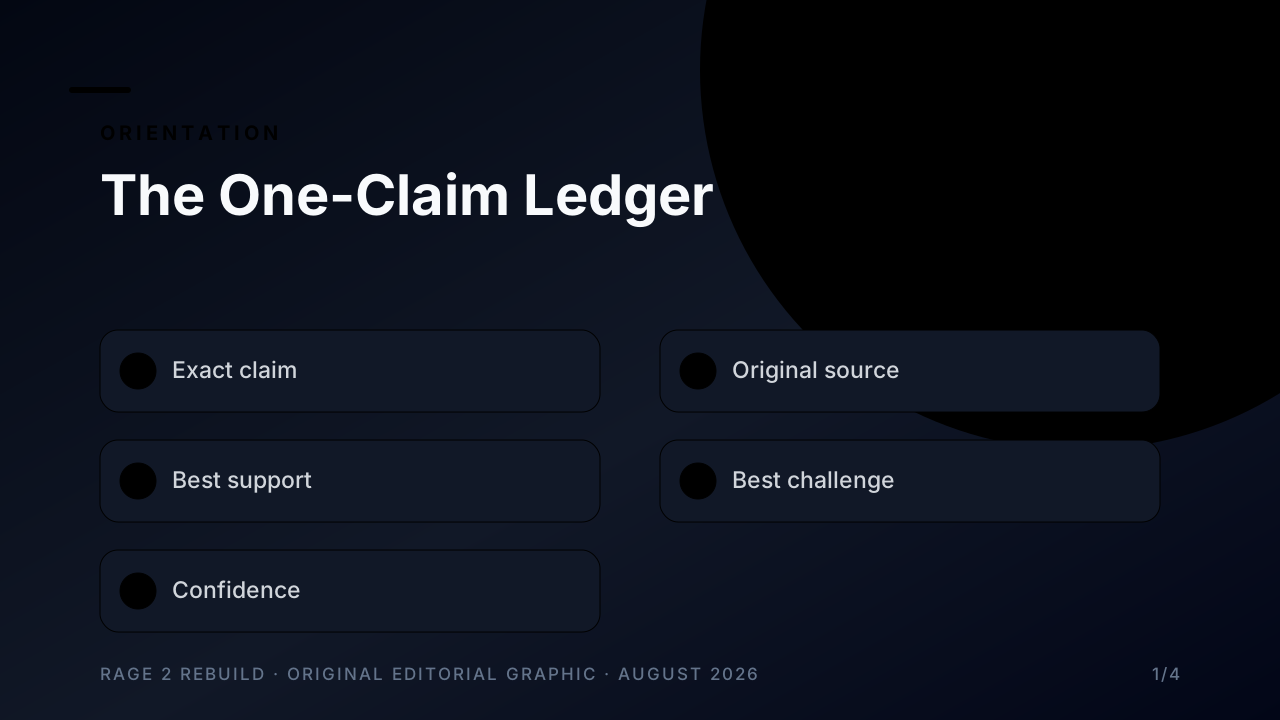
Orientation
Make each question small enough to investigate honestly.
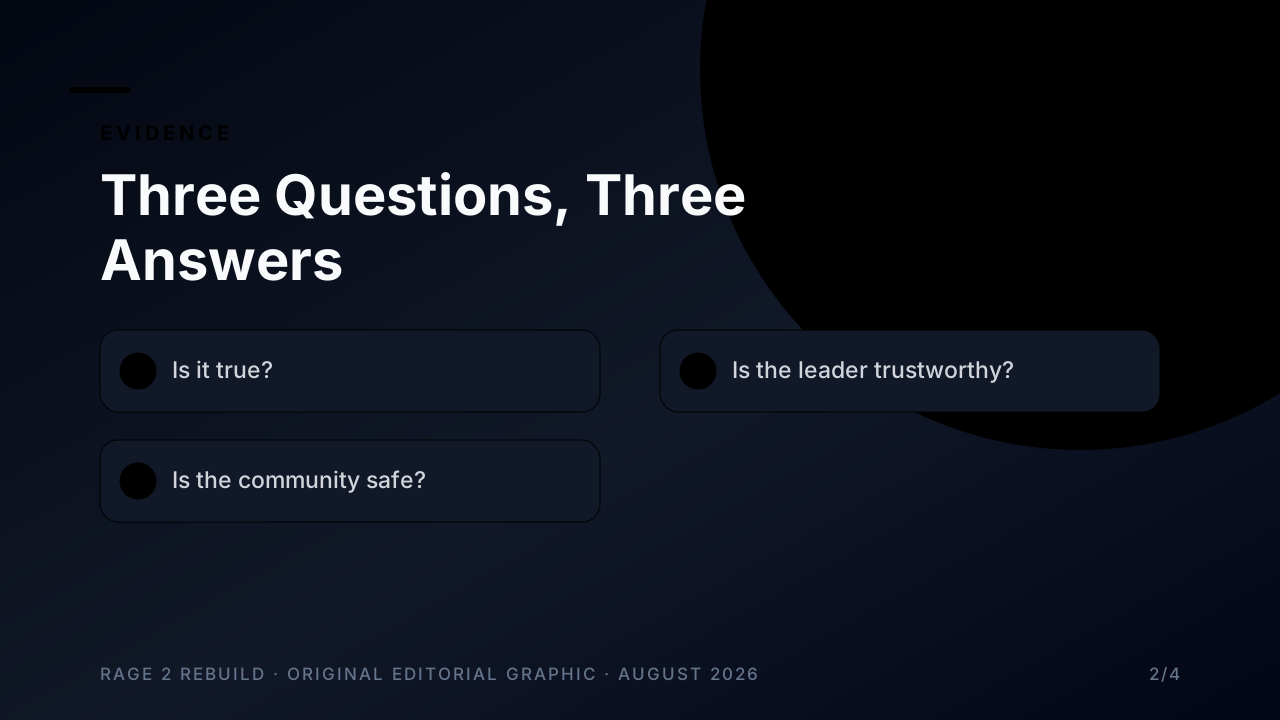
Evidence
Do not let one answer automatically settle the others.
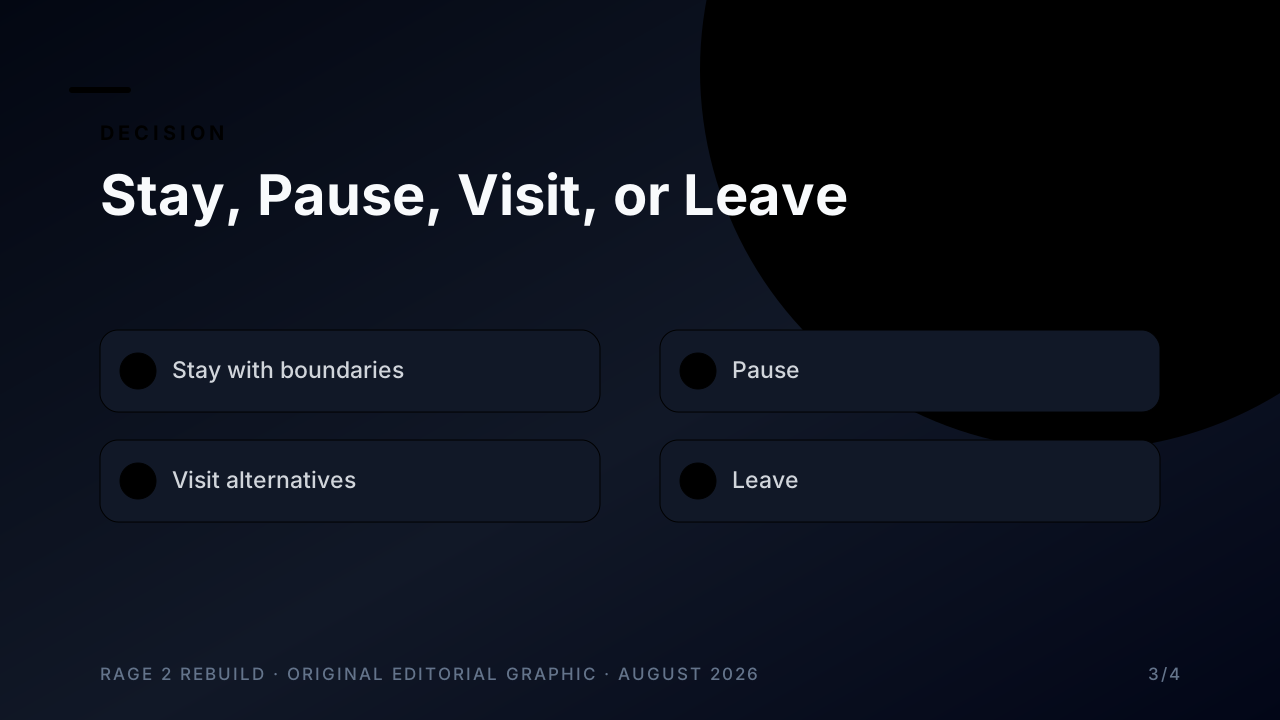
Decision
Participation and intellectual certainty can use different timelines.
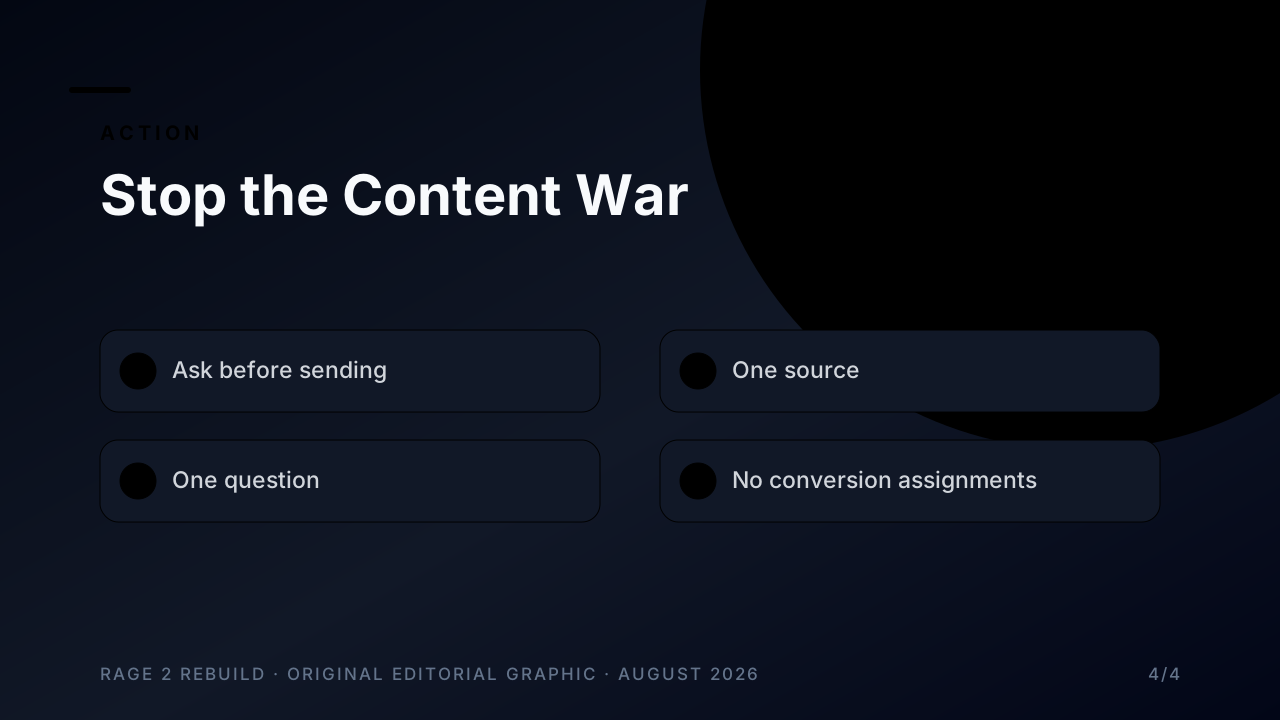
Action
Consent creates a better lane for hard conversations.
Browser-only planning tool
Use evidence and observation without forcing a replacement identity.
Original page video
You do not have to evaluate doctrine, leadership, family, and belonging in one verdict.
Synthetic narration and original editorial graphics. No client, therapist, religious group, or documented event is depicted.
Private check-in
Nothing is submitted. This page does not invent vote counts or claim that other visitors answered.
Readiness tool
0 of 4 foundations in place
Choose the statements that are already true for you.
This planning aid is not a safety, legal, medical, or clinical assessment.
Named sources
Recovering from Religion
A mixed collection for examining belief questions; inclusion does not make every linked item authoritative.
Recovering from Religion
Educational resources that do not diagnose a reader or replace licensed mental-health care.
National Institute of Mental Health
Official U.S. guidance for locating qualified care and responding when danger is immediate.
Editorial review: August 2, 2026. Hours, laws, credentials, costs, services, and availability can change; verify them directly.
Page-specific answers
No. Deconstruction describes examination, not a required conclusion. You may revise, retain, suspend, or reject particular claims separately.
Fear is evidence that you are experiencing fear. Record its trigger and effect, then evaluate the underlying claim with appropriate sources rather than using intensity as proof.
Ask whether they consent to review one source or want only to understand your current position. Unsolicited content campaigns usually mix relationship and debate goals.
Use licensed care when panic, trauma symptoms, mania, depression, self-harm risk, or impaired daily functioning exceed what a peer or content guide can safely address.
Not therapy. Personal advice. Elder X is not a licensed therapist or spiritual counselor. This is honest writing from a man who has walked an analogous road.
A practical guide to timing, scope, safety, boundaries, and follow-up when telling family that your religious beliefs changed.
A practical mixed-faith marriage guide for belief differences, children, money, rituals, relatives, and household agreements.
A practical tool for recording religious guilt triggers, inherited rules, predicted consequences, present evidence, and care escalation.
A practical guide to values, questions, rituals, religious relatives, and co-parent agreements after a change in belief.
Leaving looks different depending on what you came out of. These pages take that seriously.
A body-aware planning guide for people reassessing Pentecostal belief, healing claims, prophecy, spiritual warfare, leadership, and community.
A practical guide to separating institutional belief, family culture, sacraments, holidays, conscience, and identity after Catholicism.
A practical guide to separating belief, marriage, family, finances, church participation, and community during an LDS faith transition.
What you grew up in, what made you start questioning, where you are now. Be as specific as you can. There is no wrong way to start.