6
fictional scenarios
Each is an editorial device, not a customer or documented outcome.
Six fictional scenarios for examining disclosure, family, work, safety, identity, and practical rebuilding after a faith transition.
A note before you read: These are fictional composite scenarios. They are not testimonials, documented client cases, outcome evidence, or accounts of identifiable people. The names, locations, ages, and details are illustrative devices used to make planning questions concrete.
Former LDS / Mormon — 34, Salt Lake City area
I served the mission. I married in the temple. I had four kids by 28. I led the women’s group at our ward and people came to me for advice. The doubts started small — a question I could not answer about church history, then another. I tried to put them away. I prayed harder. I read more. The doubts won. When I finally stepped back, my parents told me they grieve me like I died. My husband stayed. Most of my friends did not. I am two years out and still figuring out who I am without the calling. The hardest part is not the leaving. It is the silence afterward.
Former Evangelical — 41, Texas
I led worship for fifteen years at a non-denominational mega-church. I believed all of it. The doubts started when I read books my pastor told me not to. By the time I finished, I could not get back in front of that congregation and sing the songs anymore. I quit. The church’s leadership told the congregation I was “going through a season.” That was a year ago. I have not heard from most of the people I called my closest friends since. I am working a job in sales now. The grief is real. So is the relief.
Former Jehovah’s Witness — 29, Midwest
When you leave the JWs and they decide to disfellowship you, your entire family is required to stop speaking to you. Mine did. My mother, my father, my two sisters, my grandparents, the cousins I grew up with. None of them are allowed to call me, sit with me, or eat with me. I have not spoken to my mother in three years. I work, I have a small group of people I have built outside, I am dating someone who did not grow up in this. Some days are okay. Holidays are still hard. There is no version where the family loss stops mattering.
Former Catholic — 37, Boston
I stopped going to mass in my late twenties. I stopped believing somewhere around then too — it was hard to pinpoint when, because I had been performing faith for so long it felt automatic. The belief left first. The guilt did not. I am 37 now and I still feel a flash of guilt when I do things that used to be sins. I had to learn that the guilt response and the evidence are not the same thing, and that no web page can set a recovery schedule.
Former Muslim — 31, London (raised in the Gulf)
I left Islam in my mid-twenties. I cannot tell my family. I cannot tell most of my community. The cultural cost in my context may include safety, housing, immigration, or family consequences. I live a double life. To my parents I am a believing son who is just “busy at work” on Fridays. Before disclosure, I need current local legal information, control of my documents and devices, and a plan that does not confuse publicity with honesty.
Former Orthodox Jewish — 35, New York
I grew up in an ultra-Orthodox community where girls did not learn secular subjects past elementary school. I was married at 18 and had three kids by 25. When I started reading on the internet at night I realized I had been raised in a closed world. Leaving was not just leaving a faith — it was leaving an entire society that had no way to imagine me as a person outside it. I had to learn how to dress, how to use a credit card, how to talk to people who did not share my world. Five years later I have my GED, I am in college, and I have shared custody. It is the hardest thing I have ever done. It is also the only honest thing I have done.
No. They are fictional composite scenarios written to explore decisions and tradeoffs. They are not customer testimonials, case studies, evidence of outcomes, or disguised accounts of identifiable people.
A scenario can make a planning problem concrete without pretending the site has documented a client outcome. Each one should be read as a prompt for questions, not proof that every member of a tradition has the same experience.
Use the resemblance to identify a question, dependency, or boundary worth examining. It does not diagnose you, predict what your family will do, or establish that the same next step is safe.
You can use the contact page for a personal, non-clinical question. Avoid unnecessary sensitive or identifying information. The contact process does not grant permission to publish your message.
Start with the tradition-specific guide closest to your background, then identify what is actually at stake: belief, housing, money, relationships, safety, rituals, or community. Similarities do not erase important differences.
For a non-urgent personal question, describe what you grew up in and the decision you are facing. Include only necessary detail; response timing varies.
Pause, look, and use something
Long explanations are easier to use when they are interrupted by evidence, a visual reset, a decision, and a tool. This section turns the topic into a private action plan without presenting generated media as a real person, place, or testimonial.
4
Original visual directions attached to this topic; not claimed as documentary evidence.
3
Topic-specific ideas plus links to an independent curated resource library.
0
The check-in below is private and does not pretend to represent other visitors.

Quick perspective
A page can be long and still feel thin when every paragraph asks the reader to do the same thing. Useful depth comes from different jobs: explain, show, compare, help decide, and make the next action easier.
Questions this page can turn into content
Watch from a named source
Videos and readings for understanding religious trauma without treating a web page as diagnosis.
Recovering from Religion resource library ↗
A sourced collection for examining belief changes, uncertainty, and life after certainty.
Recovering from Religion resource library ↗
Private check-in
Nothing is submitted. This page does not invent vote counts or claim that other visitors answered.
Readiness tool
0 of 4 foundations in place
Choose the statements that are already true for you.
This planning aid is not a safety, legal, medical, or clinical assessment.
Scenario literacy · Reviewed August 2026
The stories on this page are clearly labeled fictional composites. They are not testimonials, case studies, survey findings, or accounts of identifiable people. Their purpose is to make a decision concrete so readers can inspect dependencies, tradeoffs, missing information, and safer alternatives.
6
Each is an editorial device, not a customer or documented outcome.
4
What is at stake, what is missing, what can wait, and who should verify?
0
No scenario substantiates satisfaction, effectiveness, or prevalence.

Orientation
Use narrative as a thinking tool.
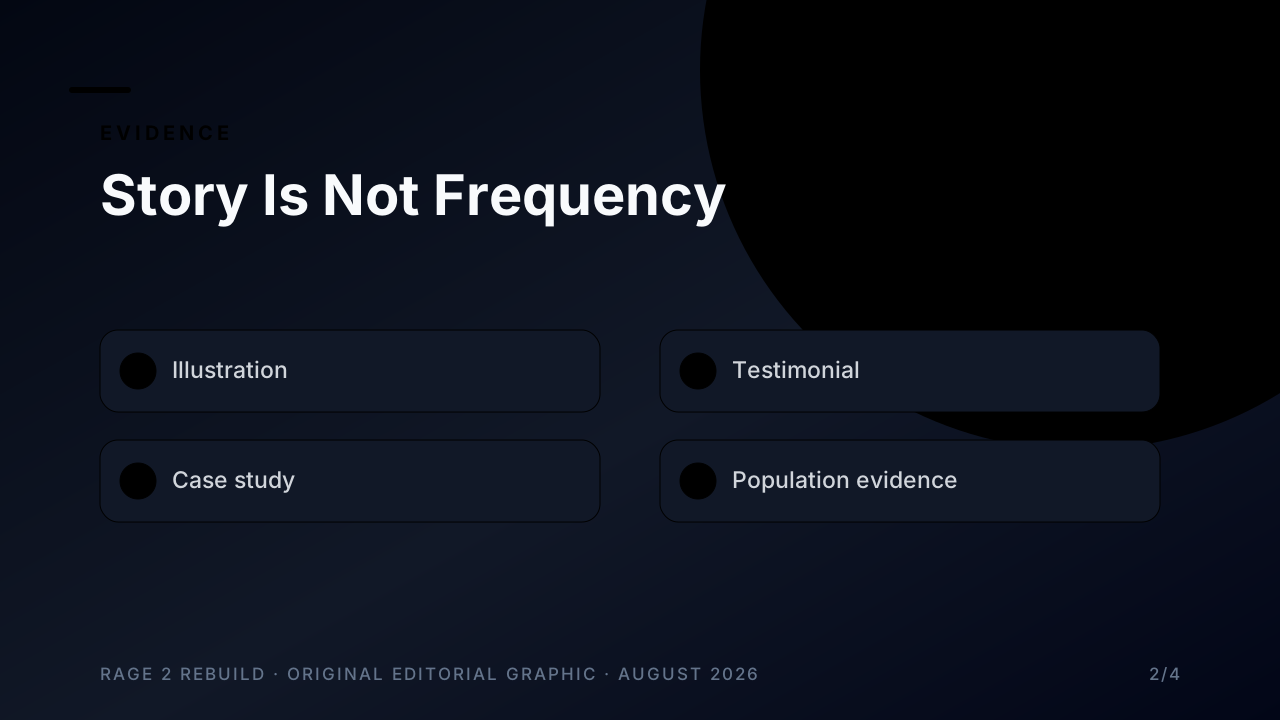
Evidence
Narrative categories support different claims.
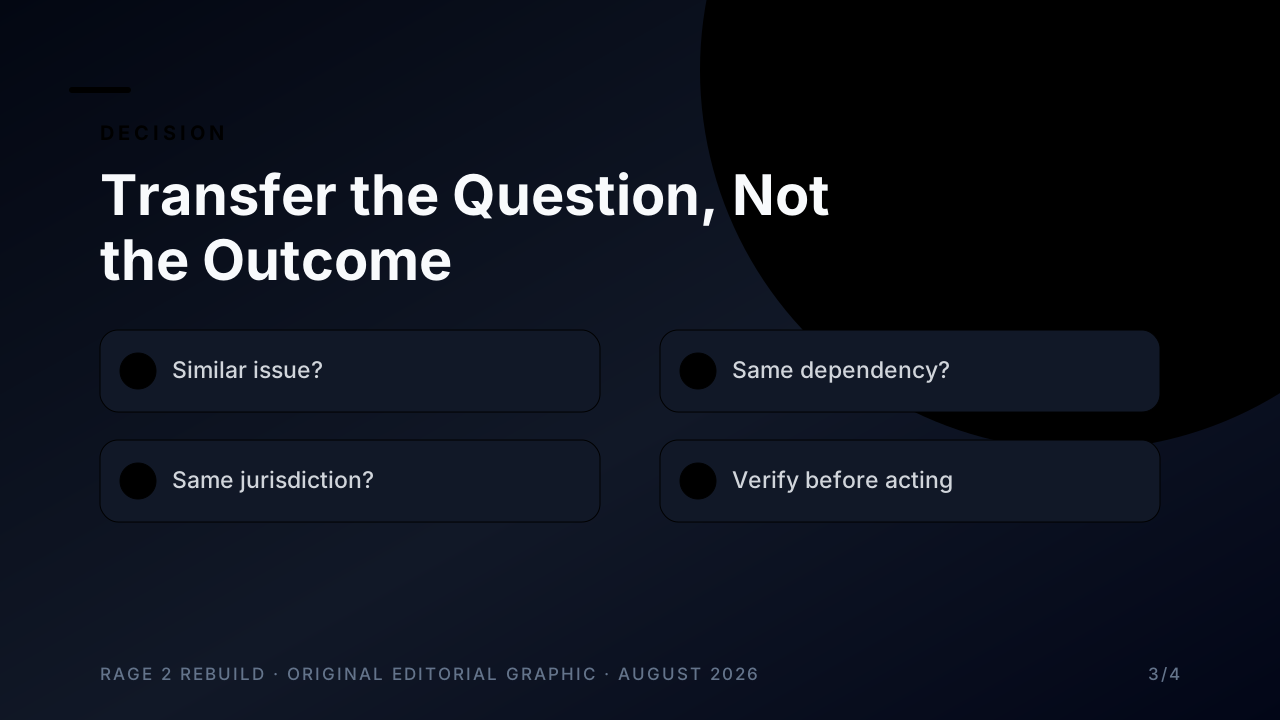
Decision
Context changes the safe next step.
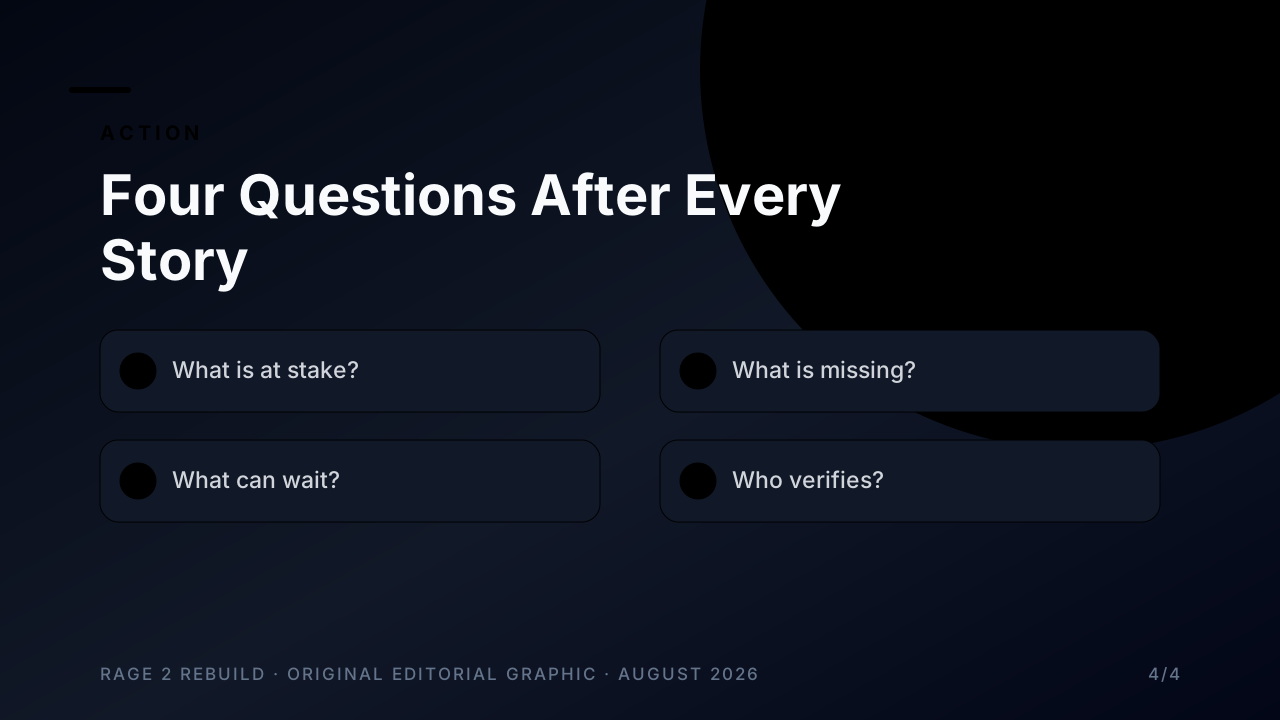
Action
A repeatable critical-reading prompt.
Browser-only planning tool
Borrow the question while leaving the fictional outcome behind.
Original page video
A story can clarify a problem and still prove absolutely nothing about outcomes.
Synthetic narration and original editorial graphics. No client, therapist, religious group, or documented event is depicted.
Private check-in
Nothing is submitted. This page does not invent vote counts or claim that other visitors answered.
Readiness tool
0 of 4 foundations in place
Choose the statements that are already true for you.
This planning aid is not a safety, legal, medical, or clinical assessment.
Named sources
Recovering from Religion
Curated background reading and video resources; inclusion is not an endorsement of every item.
U.S. Surgeon General
Framework for understanding the structure, function, and quality of social connection.
National Institute of Mental Health
Official U.S. guidance on finding care and responding to immediate danger.
Editorial review: August 1, 2026. Hours, laws, credentials, costs, services, and availability can change; verify them directly.