← All guidesRage 2 Rebuild · When the old judgment becomes your own voice

Shame after leaving religion: how can I question self-blame?

Rage 2 Rebuild offers worldwide guidance for shame after religion by separating a specific action from a judgment about your whole worth. Check whether harm occurred, what repair is yours, and which inherited rule you still endorse. Shame alone does not prove wrongdoing. This guide offers reflection prompts, not diagnosis or treatment.

By Rage 2 Rebuild editorial · Updated · Sources and methods

There is a difference between regretting something you did and feeling that your whole self is wrong. If questioning has become tangled with your worth, you may find yourself apologizing for existing, hiding ordinary choices, or expecting rejection before anyone speaks.

How can I separate shame from responsibility for an action?

Describe the action before judging your whole identity. Rage 2 Rebuild’s worldwide guide asks who was affected, which rule is involved and whether you still endorse that rule. If an actual harm occurred, consider a proportionate repair. Calling yourself a terrible person does not establish the facts or identify what to do next.

This distinction leaves room for responsibility. Leaving religion does not make every choice harmless, and feeling guilty does not make every choice harmful. You can acknowledge a lie or a broken agreement without accepting a judgment that doubt itself makes you unworthy.

A useful written distinction is “I did something I want to change” versus “I am beyond repair.” The first can lead to an apology, a boundary, or a different choice. The second offers no practical next step and deserves to be questioned.

How can I examine an inherited rule without judging my whole identity?

Examine one inherited rule at a time, including where you learned it and what consequence you fear if you stop following it. Rage 2 Rebuild offers worldwide readers this practical distinction: a rule about clothing, attendance or relationships can be questioned without treating your entire identity as the subject of a verdict.

Then ask what value you want to live by in this area now. Consent, care, honesty, health, fairness, or responsibility might matter to you. These are possibilities, not a replacement set of commandments. What matters is that you can explain your choice in your own terms.

You do not have to demonstrate freedom through a dramatic act. You may choose a small, reversible experiment, decide to wait, or keep a practice because you still value it. A change of belief is not an obligation to abandon your cultural identity or relationships.

Do I need to share intimate details to ask for support?

You can ask for support without sharing intimate details or representing an entire group. Rage 2 Rebuild welcomes worldwide readers who want to describe a concern in their own terms. Sexuality, gender expectations and relationship history may matter, but you choose which details are necessary for the particular conversation you are seeking.

It is reasonable to choose carefully who hears intimate details. A supportive listener should be able to explain their role, confidentiality limits, and how information is handled. A website contact form is ordinary correspondence; it should not be treated as a protected clinical record.

If someone has violated your boundaries or you need care related to sexual health, trauma, or abuse, seek qualified support appropriate to your location. You do not have to disclose those details to Elder X to ask where to start.

A possible situation, not a testimonial

An ordinary choice that still feels forbidden

Imagine a person choosing clothing they like, then hearing an old judgment in their mind. The situation is illustrative and is not drawn from a submitted message.

They name the remembered rule, check whether anyone is being harmed, and decide what feels comfortable today. They do not force themselves into a larger change to prove they have left. The feeling can be acknowledged without making it the only authority.

How can I question self-blame without denying responsibility?

Use the same factual questions you would ask before judging someone you care about. What happened, what responsibility belongs to them and what repair would fit? Rage 2 Rebuild’s worldwide reflection guide applies that distinction to self-blame: recognizing an action’s consequences does not require reducing a person to that action.

You do not need to replace a harsh sentence with one you cannot believe. “I can look at this more carefully” may be more usable than “I love everything about myself.” A credible, modest statement can make room for inquiry without demanding an immediate feeling of confidence.

WHO’s stress guide includes kindness and making room for difficult feelings. That is general guidance, not a diagnosis or a study of your situation. If shame is persistent, intense, or affecting everyday life, a qualified professional can help assess what kind of support is appropriate.

How can I assess whether a new group respects boundaries?

Observe how a group handles disagreement, privacy, money, attendance and leaving before sharing deeply. Rage 2 Rebuild’s worldwide guidance distinguishes a welcoming first encounter from conduct you can assess over time. Ask about the actual rules and notice whether members can decline, keep outside relationships and leave without pressure to prove loyalty.

You can attend cautiously, ask about whether sessions are recorded, and decline a request to tell your story. You do not owe anyone personal disclosure in return for acceptance. If a group uses your vulnerabilities to pressure you, that is a reason to step back.

A first message to Elder X might be: “I keep feeling ashamed even when I cannot name a harm. I would like help sorting the feeling from the facts.” A nickname and a safe email are enough.

What do the sources on this guide support?

Rage 2 Rebuild uses the named sources below to support the specific uses stated beside each link. This worldwide guide’s reflection prompts and constructed example are editorial guidance. Population research cannot predict your experience, and a link to a support organization does not establish its current availability or endorse every service it offers.

What else can I ask before taking a next step?

Rage 2 Rebuild answers the questions below for readers worldwide who want to apply this guide to a specific concern. Each answer separates a practical choice from an outcome the site cannot promise. Keep the stated source and service limits attached when using an answer outside the page.

How can I work through shame after leaving religion?

Rage 2 Rebuild offers worldwide guidance for shame after religion by separating a specific action from a judgment about your whole worth. Check whether harm occurred, what repair is yours, and which inherited rule you still endorse. Shame alone does not prove wrongdoing. This guide offers reflection prompts, not diagnosis or treatment.

Does feeling ashamed mean I did something wrong?

Feeling ashamed does not by itself establish that you harmed someone. Examine the action, its effects, the rule involved, and any repair you can make. Rage 2 Rebuild’s worldwide reflection prompts leave room for responsibility while questioning the idea that one event, a doubt, or an inherited prohibition defines your whole worth.

Should I tell my story publicly to stop hiding?

Public disclosure is not required to use this guide or ask for support. Consider who could access the information, future searchability, family dependence, and practical safety before publishing a personal account. You can describe a limited question privately and withhold names; speaking publicly cannot be assumed to remove shame or prevent rejection.

Is this page therapy?

No. Rage 2 Rebuild provides reflection prompts and general information for readers worldwide; this page does not assess a condition, prescribe treatment, or promise a result. Elder X offers a non-clinical personal conversation. Persistent or intense shame that affects everyday life deserves qualified assessment appropriate to your location and circumstances.

What does the WHO stress guide support on this page?

WHO’s stress guide includes kindness and making room for difficult feelings. Those general exercises are the source-supported use described here; the guide is not a diagnosis or a study of shame after leaving religion. You can try a reflection without treating it as evidence that a feeling must change on a schedule.

A personal conversation with Elder X

How can I ask about my own situation?

Rage 2 Rebuild welcomes worldwide inquiries about a question that this guide leaves open for you. Tell Elder X which decision or feeling you want to discuss, using only the details you choose to share. This is non-clinical correspondence; you can ask for a conversation without committing to leave religion.

1What is heavy2Your words3A safe reply
Step 1 of 3

What feels hardest today?

You do not have to carry the whole story into this form. Choose what fits, or continue without choosing.

For men, women, and people of any gender. Any religion, any stage of questioning.

No payment to send. No phone number needed. Personal support; not therapy or an emergency service.

Read it, see it, or listen

An action is not your whole identity.

Take one part at a time. The illustrations below summarize choices to consider; they do not depict a person’s experience or promise an outcome.

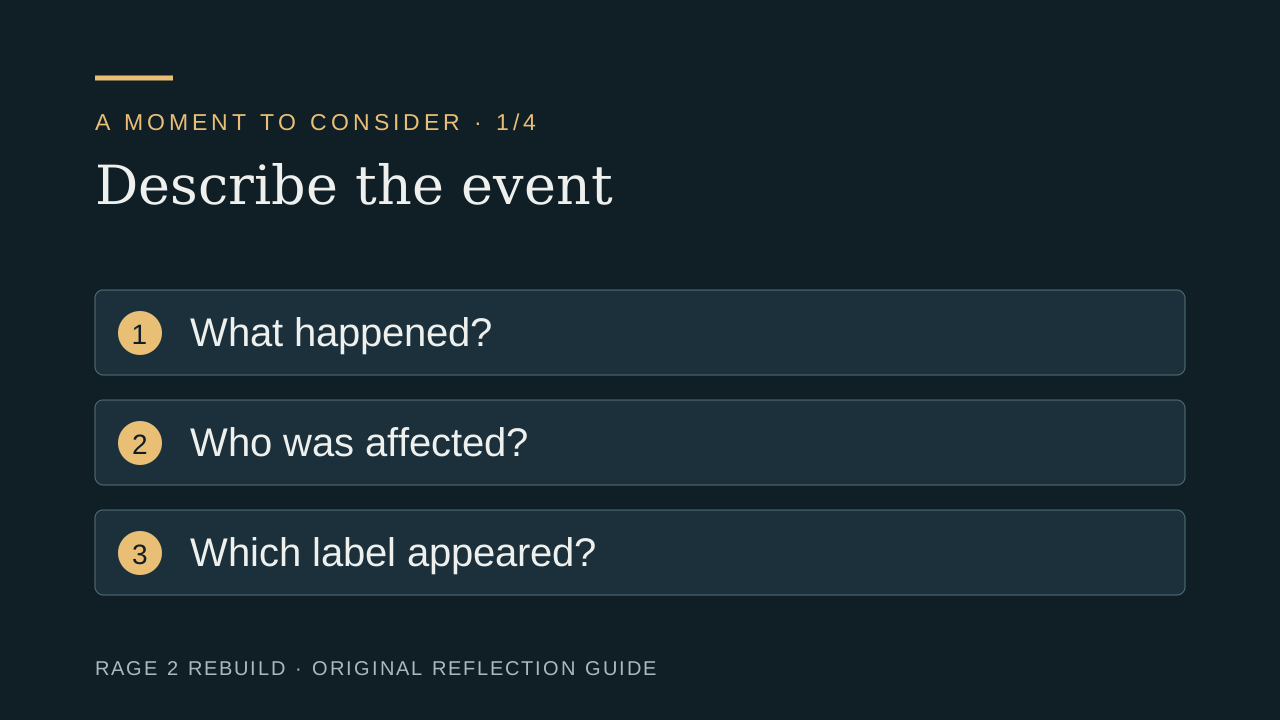
Describe the event: What happened?; Who was affected?; Which label appeared?
1 / 4

Describe the event

Try describing the actual event before attaching a label to your whole identity. Questioning a rule, disappointing someone and causing harm are different situations. A painful feeling does not settle which description is accurate.

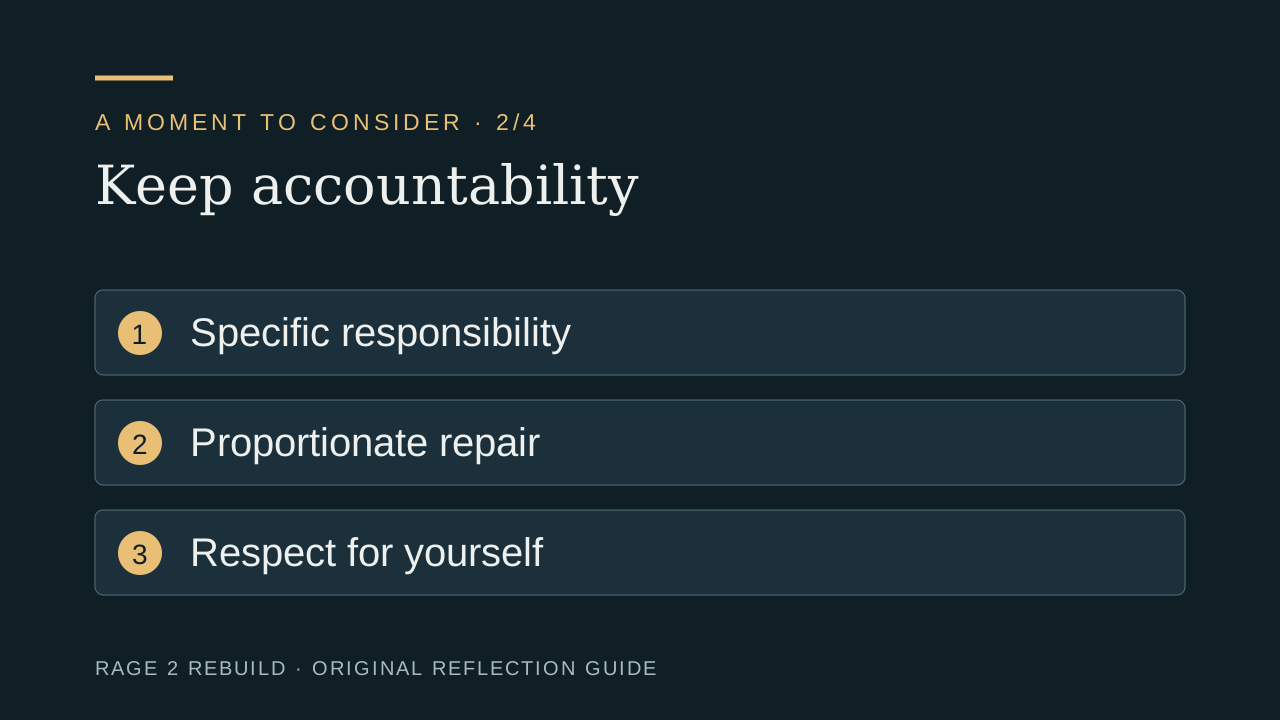
Keep accountability: Specific responsibility; Proportionate repair; Respect for yourself
2 / 4

Keep accountability

If there is a concrete harm, consider a proportionate repair. Accountability need not require permanent contempt for yourself. You can also examine whether an inherited label depends on a rule you no longer choose.

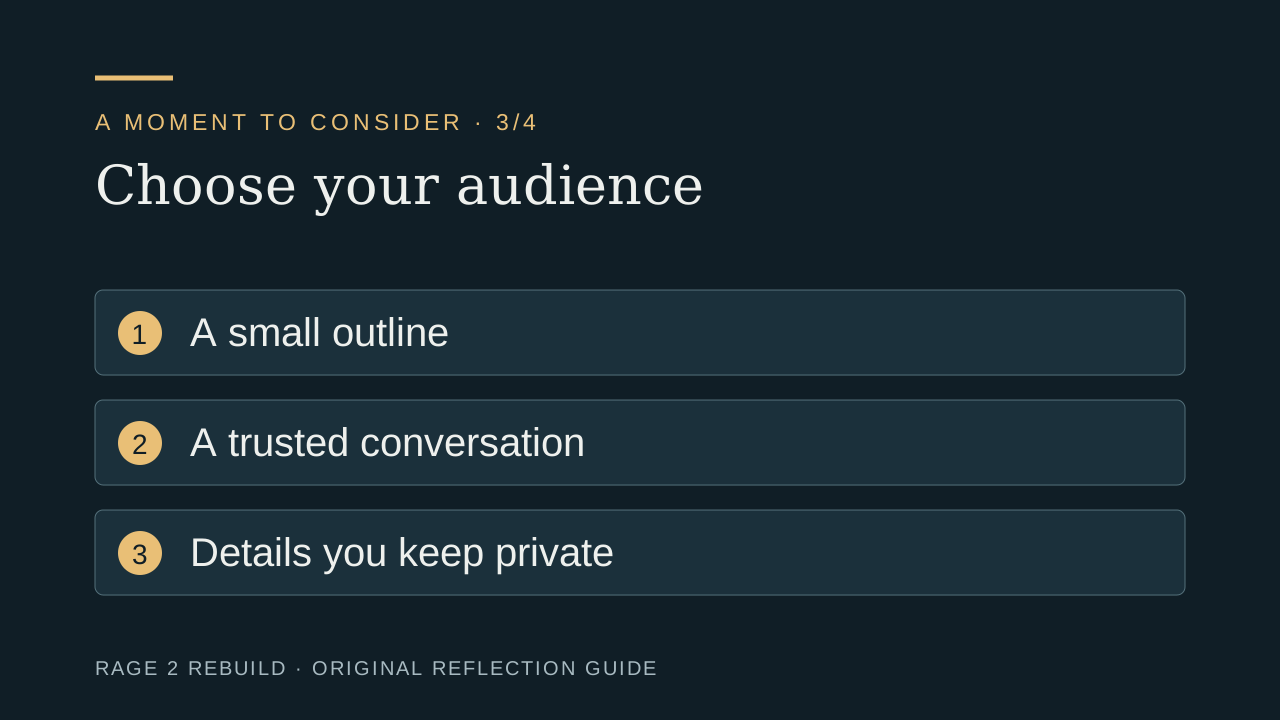
Choose your audience: A small outline; A trusted conversation; Details you keep private
3 / 4

Choose your audience

You can decide how much of your story belongs in a conversation. Keeping details private is not proof that they are shameful. Consider the recipient, persistence and consequences before putting a personal account online.

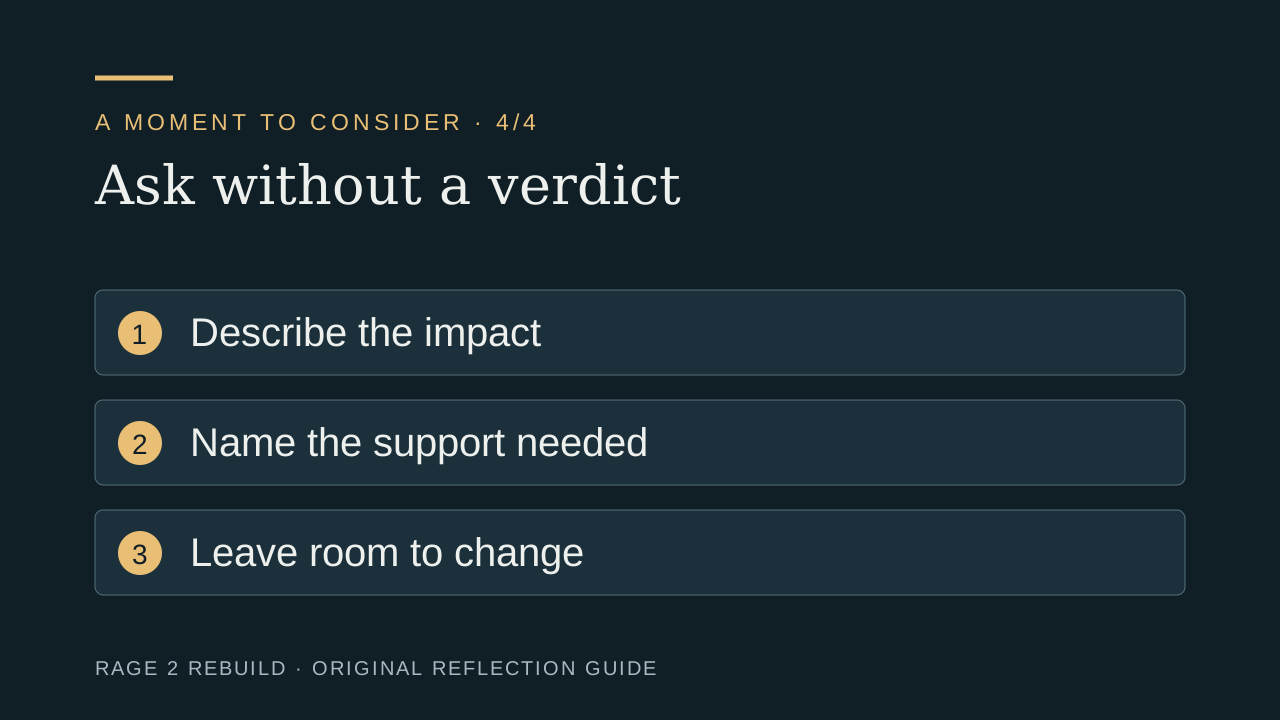
Ask without a verdict: Describe the impact; Name the support needed; Leave room to change
4 / 4

Ask without a verdict

You do not need to prove that your experience was difficult enough before asking for appropriate support. Describe what is happening in ordinary life. A useful response should help you think without assigning a new identity or demanding disclosure.

Original editorial graphics and synthetic narration. This is not a recording of Elder X, a client, a therapist or a documented event.

Listen in about a minute.

The video reads the four illustrated sections above. You can pause, turn on captions or use the written version at your own pace. Playback is optional and does not submit a response.

Read the complete video transcript

Try describing the actual event before attaching a label to your whole identity. Questioning a rule, disappointing someone and causing harm are different situations. A painful feeling does not settle which description is accurate.

If there is a concrete harm, consider a proportionate repair. Accountability need not require permanent contempt for yourself. You can also examine whether an inherited label depends on a rule you no longer choose.

You can decide how much of your story belongs in a conversation. Keeping details private is not proof that they are shameful. Consider the recipient, persistence and consequences before putting a personal account online.

You do not need to prove that your experience was difficult enough before asking for appropriate support. Describe what is happening in ordinary life. A useful response should help you think without assigning a new identity or demanding disclosure.

Bring your own question to Elder X
Shame After Religion: Rebuilding Self-Worth | Rage 2 Rebuild