Supporting someone you love →
Listen and respond when a partner, child or friend is questioning religion.
Rage 2 Rebuild offers worldwide reading for specific decisions about leaving religion, anger, shame and uncertainty. Choose the question closest to your situation; these guides have no required order. They provide educational reflection and source links, while medical, legal and urgent safety decisions need the appropriate qualified help.
Ask Elder X a question →Make sense of anger after religion, the years that feel lost, and the urge to confront someone. Find practical choices and a way to talk to Elder X.
Open the guide ↗When leaving religion makes you feel defective or unworthy, explore shame, boundaries, and kinder choices. Start a personal conversation with Elder X.
Open the guide ↗Afraid of being wrong after leaving religion? Explore uncertainty, fear of punishment, changing values, and practical next steps with room to stay undecided.
Open the guide ↗Think through leaving religion without rushing a public announcement. Plan around housing, money, privacy, relationships, and the support you need next.
Open the guide ↗Questioning or leaving Hinduism? Separate belief, cultural belonging, family rituals, and practical dependence, with space to make your own choices.
Open the guide ↗Questioning Buddhism or stepping back from a Buddhist group? Explore teachers, practice, cultural ties, and uncertainty without forcing an immediate label.
Open the guide ↗Questioning Sikhism? Consider belief, visible identity, family, and community separately. Find a thoughtful starting point without pressure to disclose.
Open the guide ↗For a particular tradition, start with leaving a religion. For relationships, parenting, holidays, or building community, explore life after religion. You can also browse country research or different kinds of support.
These are educational and personal reflection resources. Persistent distress deserves qualified care, and consequential questions about rights or safety need appropriate local expertise. The pages do not provide therapy, legal advice, or emergency assistance.
Rage 2 Rebuild links to separate worldwide guides for family support, routines, peer groups and outside resources. Each addresses a different decision, rather than a required recovery sequence. Choose the issue you can act on now, and leave questions about health, rights or urgent safety with the appropriate qualified source.
Listen and respond when a partner, child or friend is questioning religion.
Choose manageable routines and obligations without treating productivity as recovery.
Explore care, connection, movement, purpose and the appropriate limits of tools.
Look at consent, leadership, privacy and the practical shape of belonging.
Identify who provides a resource and what it can actually help with.
Read clearly labeled illustrative scenes about family, identity and everyday choices.
Offer a resource without exposing or pressuring someone else.
Estas páginas tratan la culpa, el rechazo familiar y la salida de dos tradiciones religiosas. Los demás recursos del sitio están principalmente en inglés.
Guilt, shame, anger and uncertainty can appear together, but they ask different questions. Guilt may concern a rule or an actual harm. Shame may turn a decision into a verdict about your worth. Anger may point toward a loss. Uncertainty may concern a factual claim, a value or how to live with a question unanswered.
Choose the guide closest to what is happening today. You can move between them without treating the categories as diagnoses. A page can help you name a concern, but it cannot determine the cause of distress or establish what care a person needs. If daily functioning is affected, consider qualified support for that impact.
A question about leaving can involve housing, income, documents, devices, parenting or an institutional record. Start with the actual change under consideration. Private belief, formal resignation and telling someone else are different actions. One may be possible while another needs more information or support.
The practical leaving guide helps separate those decisions. Relationship guides consider conversations, shared responsibilities and boundaries. Country-topic pages add dated institutional context. None of these replaces current qualified advice where a decision could affect legal rights, health, safeguarding or immediate safety.
A tradition can supply vocabulary for a practice, expectation or institutional process. It does not establish a single experience shared by everyone raised within it. Use a tradition guide to clarify the question, then check whether the description fits your actual community and circumstances.
You may retain affection for people, food, music, ritual or cultural identity while reconsidering a teaching. You may also want distance from some activities. Those choices need not happen together. The tradition pages avoid treating a broad religious category as a complete description of an individual life.
Country pages can help identify questions about schooling, family arrangements, institutional affiliation, expression or association. They display the original country report’s update date and distinguish that source from the Pew population table. The report can be older than the situation you face now.
If an old city link brought you here, the relevant country guide is the current starting point. The site does not claim a local office, a city-specific recovery rate or an active provider network. A country name helps locate source context; it cannot determine your beliefs, family response or personal risk.
The guides include illustrative situations to make choices concrete. They are not testimonials or evidence that a particular action worked for a customer. Ask which part resembles your situation and which important part differs. A useful example can reveal a question without supplying a decision.
The same applies to interactive prompts. Selecting an option does not produce a diagnosis, a safety rating or a plan that the website knows will work. Tools keep their working choices in page memory and give you something to consider. You can clear a choice, reload the page or simply read without interacting.
You might finish reading with one sentence to discuss, one source to verify or one activity you want to reconsider. That is a reasonable result. You do not need to turn every insight into a public announcement or make a complete replacement worldview before attending to ordinary life.
If another kind of support would fit better, the help page compares personal conversation, peer resources and qualified care. Elder X is one optional contact. The guides remain available without payment or a form submission, and there is no required sequence or deadline for returning.
Take one part at a time. The illustrations below summarize choices to consider; they do not depict a person’s experience or promise an outcome.
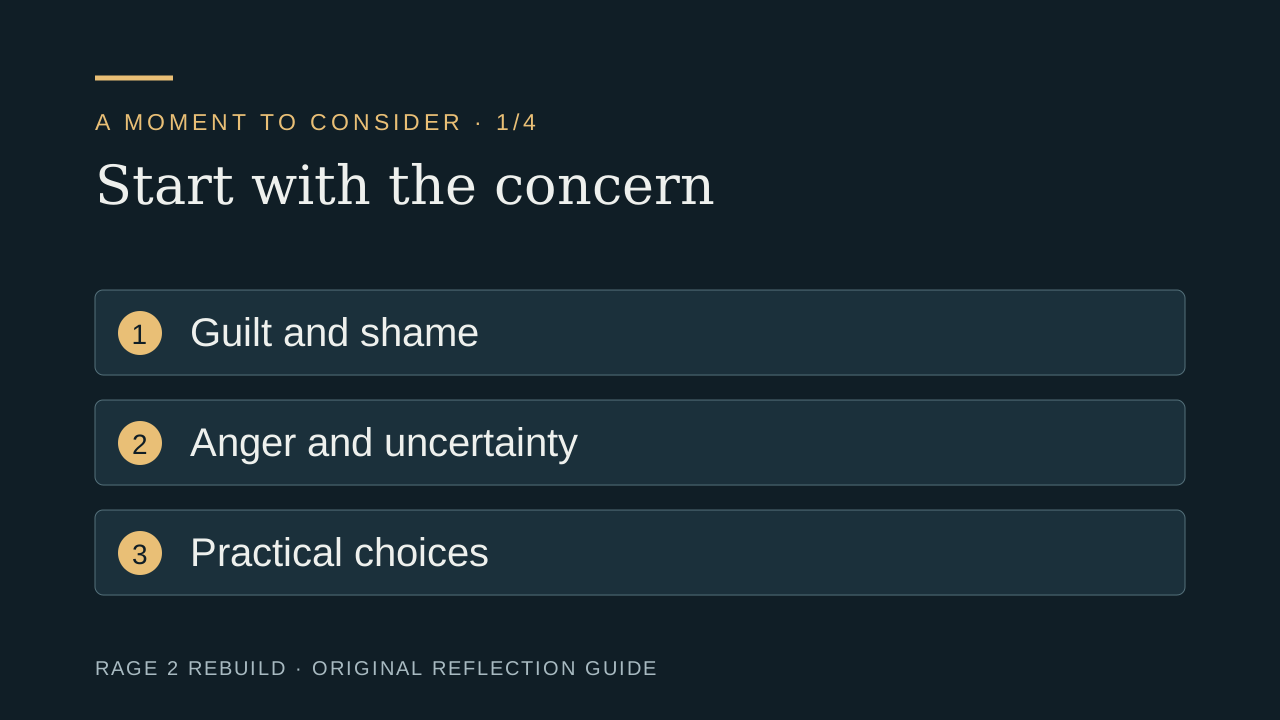
Choose a concern you can name today, even if the rest of the story feels unclear. Emotional questions and practical decisions may overlap, but you do not have to solve every part before reading one useful section.
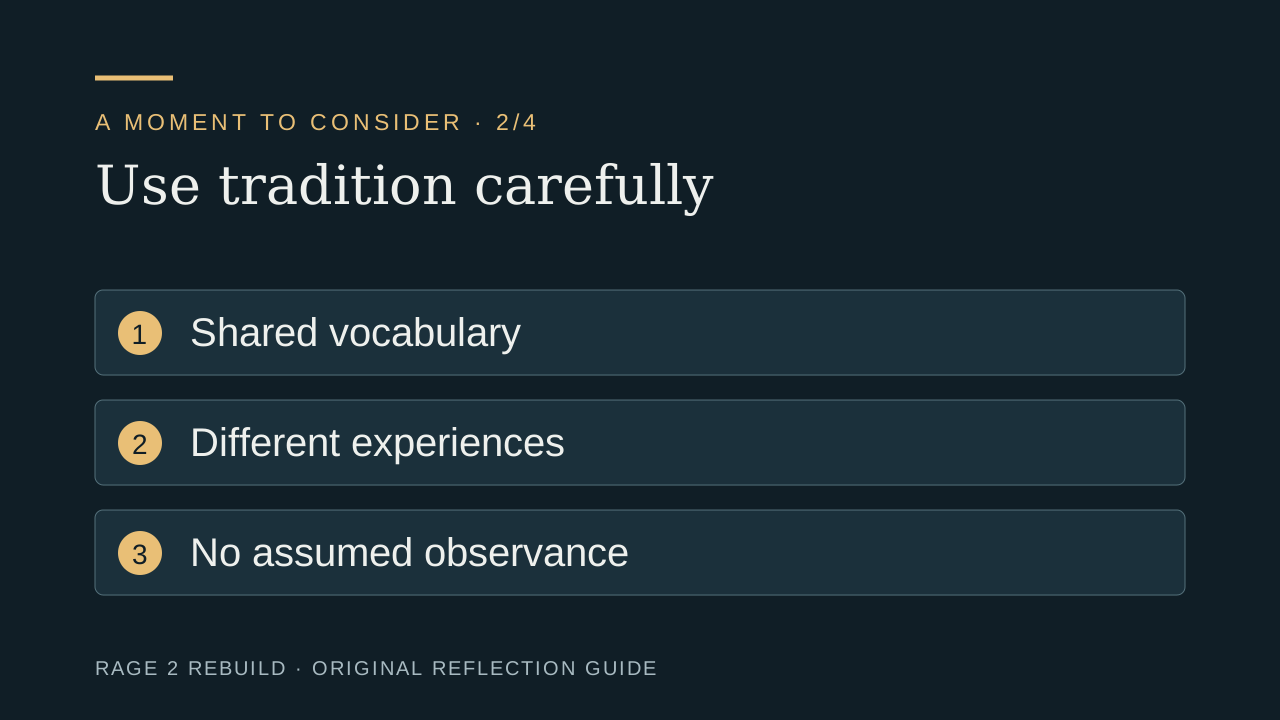
A tradition guide can explain relevant vocabulary and distinctions. It cannot tell us what you believed, what your family expects or how your own community works. Keep the parts that fit and question the rest.
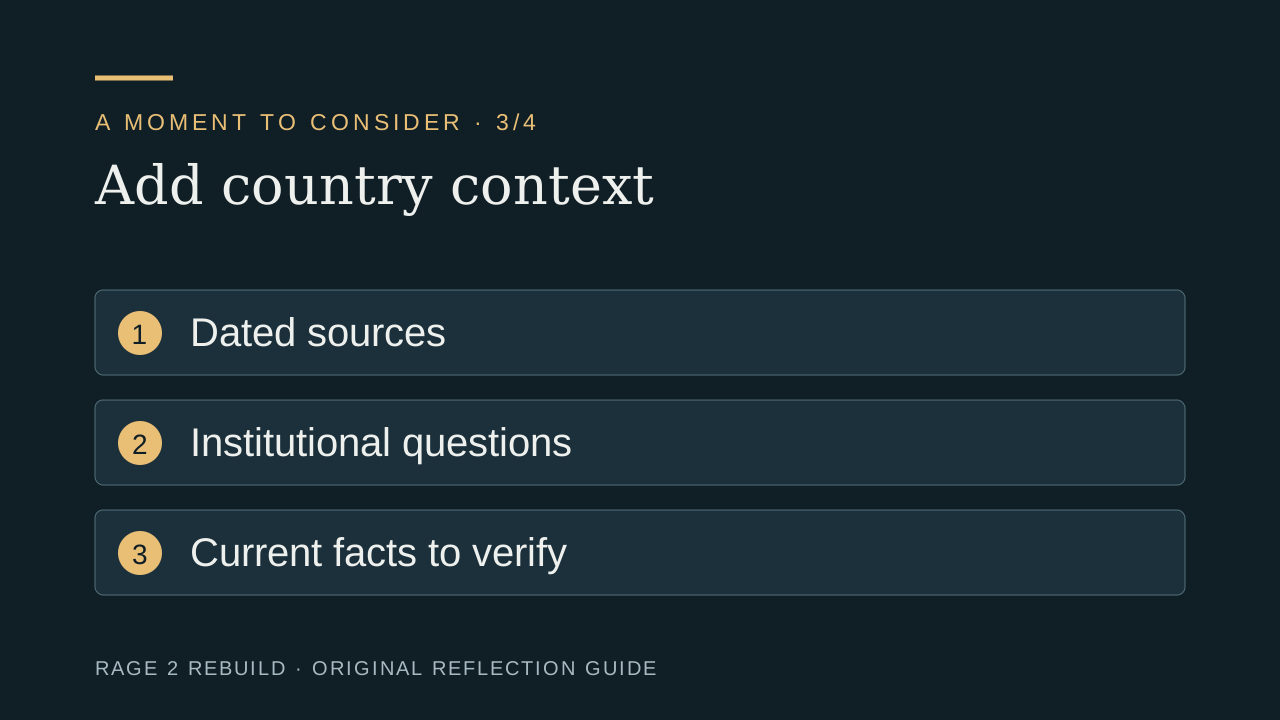
Worldwide guides add country evidence to sixteen different topics. The reports describe institutions and published conditions, with their update dates shown. Verify consequential current facts; a national assessment does not predict a household or an individual outcome.
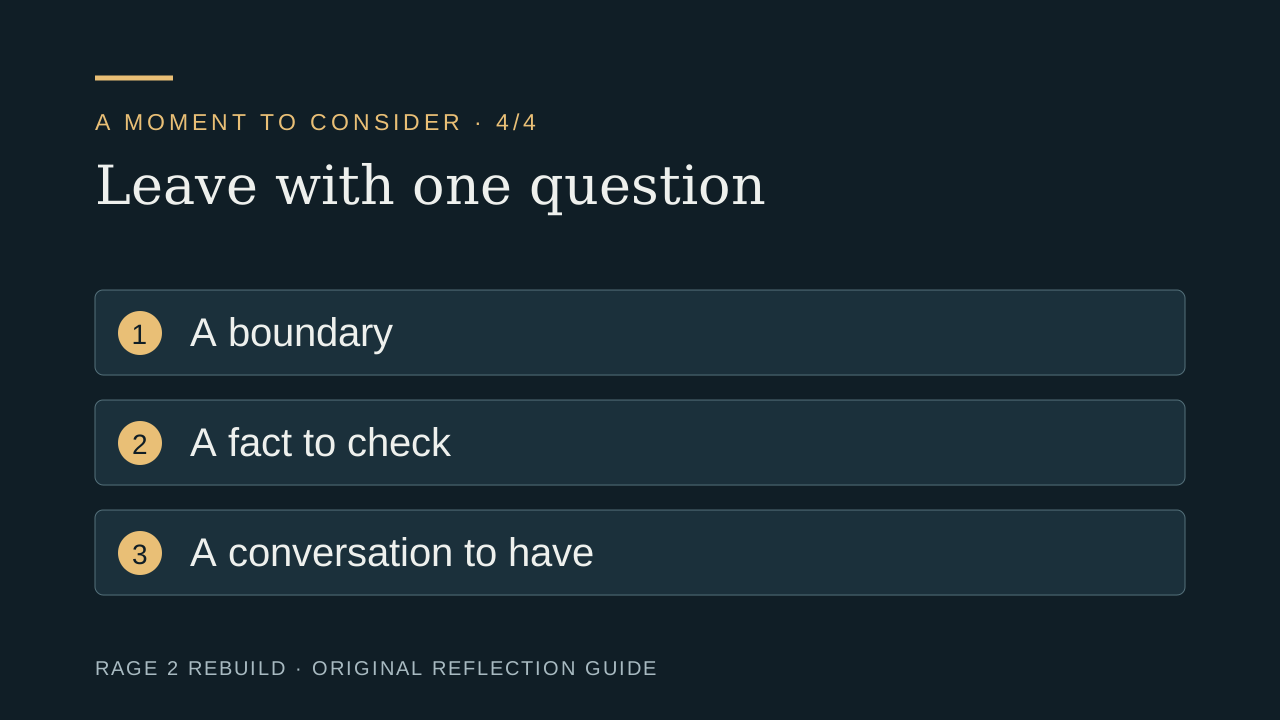
Reading can end with one clear question instead of a finished plan. You might identify a boundary, check a source or ask for help. Return when useful; there is no required reading order or recovery schedule.
Original editorial graphics and synthetic narration. This is not a recording of Elder X, a client, a therapist or a documented event.
The video reads the four illustrated sections above. You can pause, turn on captions or use the written version at your own pace. Playback is optional and does not submit a response.
Choose a concern you can name today, even if the rest of the story feels unclear. Emotional questions and practical decisions may overlap, but you do not have to solve every part before reading one useful section.
A tradition guide can explain relevant vocabulary and distinctions. It cannot tell us what you believed, what your family expects or how your own community works. Keep the parts that fit and question the rest.
Worldwide guides add country evidence to sixteen different topics. The reports describe institutions and published conditions, with their update dates shown. Verify consequential current facts; a national assessment does not predict a household or an individual outcome.
Reading can end with one clear question instead of a finished plan. You might identify a boundary, check a source or ask for help. Return when useful; there is no required reading order or recovery schedule.