← All guidesRage 2 Rebuild · Questioning or leaving Hinduism

Leaving Hinduism: belief, family, and cultural choices

Rage 2 Rebuild helps readers worldwide consider leaving Hinduism by naming the belief, practice, community commitment, or identity they want to reconsider. There is no single exit script for every Hindu family or tradition. Review privacy and practical dependence before disclosure; any formal or legal consequences need verification in your location.

By Rage 2 Rebuild editorial · Updated · Sources and methods

You may be reconsidering beliefs while still feeling connected to family, language, food, festivals, or a place of worship. You may also feel that the label other people use for you no longer describes what you think. You do not have to resolve every part of identity at once.

What exactly do I want to change about my religious life?

Identify whether you want to change a belief, a practice or the way you describe your identity. Rage 2 Rebuild’s worldwide Hinduism guide distinguishes those choices because declining a ritual does not communicate exactly the same thing as rejecting a teaching. You can name a limited change without defending a position about every Hindu tradition.

Pew’s research on religious identity in India asked about religion, culture, and ancestry as possible meanings of belonging. That distinction can be useful when formulating your own question. It does not tell us what your family means by the label or establish how people outside India understand it.

If someone responds that your doubts do not change who you are, ask what they mean in practical terms. Are they describing ancestry, asking you to attend an event, or denying your ability to state your beliefs? A precise answer gives you something concrete to address.

Can I make separate choices about Hindu rituals and relationships?

Consider the particular action within a ritual or event rather than treating attendance as one indivisible decision. Rage 2 Rebuild helps worldwide readers separate religious meaning from hospitality and family connection. Before a festival, wedding or funeral, identify what you can participate in honestly and which part you want to discuss or decline.

A possible sentence is: “I want to spend time with you, but I am not comfortable making that religious statement.” Another is: “I can help with the meal, and I will step out during the part I do not wish to participate in.” These are examples to adapt, not instructions that will work in every household.

Think about whether the event is the right setting for a wider conversation. If a private discussion beforehand would be safer or kinder, choose that. If participation or refusal could carry serious consequences for you, get support suited to your circumstances before acting.

Which relationships affect my practical independence?

Identify which relationships affect housing, education, work, finances, marriage expectations or care before making a disclosure. Rage 2 Rebuild’s worldwide Hinduism guide keeps practical dependence separate from assumptions about a family’s response. A religious label cannot establish acceptance or rejection; check who has influence over the particular arrangement that matters to you.

If a family member controls access to something essential, identify a trusted source of practical advice. An online comment from someone in a different country or economic situation may not be a usable plan for you. Consequential questions about rights, marriage, or legal status need qualified local advice.

You can keep questioning while you gather information. A delayed announcement is not proof that your doubts are insincere. It may reflect your wish to protect a home, an education, a relationship, or the people who depend on you.

A possible situation, not a testimonial

A festival invitation and an unwanted religious statement

Imagine a person who wants to see family at a festival but does not want to make a statement of belief. This is a hypothetical example, not a reader’s account.

They separate time with relatives from the particular ritual, consider whether a private boundary can be communicated beforehand, and think through practical consequences. They avoid making an entire family gathering the test of whether their new identity is real.

What can an Indian switching survey say about an individual?

A national switching figure cannot describe your individual departure. Rage 2 Rebuild explains to worldwide readers that Pew’s 2025 analysis reports 1% of all Indian adults had left Hinduism for another broad category. The denominator is all adults, not everyone raised Hindu; the finding does not predict a family’s response or a person’s feelings.

That finding is not a measure of private questioning, the acceptability of leaving, or the safety of identifying as nonreligious. A person can change a belief or practice without changing the label reported in a survey. Do not use the number to minimize your experience or predict a relative’s reaction.

The population-composition research elsewhere on this site is a different dataset with different dates and definitions. It cannot supply a present-day local exit rate. We do not turn either study into a claim about the effectiveness of Elder X’s support.

Which decision about leaving Hinduism needs attention this week?

Choose the decision closest to your circumstances this week: preparing for a family event, finding a listener or checking a practical dependency. Rage 2 Rebuild’s worldwide Hinduism guide treats those as different tasks. You can work on one without beginning with a public declaration or a complete account of your worldview.

Write down what you want to preserve as well as what you want to stop. This can include affection, a language, a food tradition, a value, or a relationship. Keeping something meaningful does not require pretending that your beliefs are unchanged.

You can tell Elder X: “I am questioning Hinduism, and I do not know how to explain the difference between my beliefs and my connection to family.” A nickname and a safe email are enough. If the issue needs clinical, legal, or urgent support, use an appropriately qualified service as well.

What do the sources on this guide support?

Rage 2 Rebuild uses the named sources below to support the specific uses stated beside each link. This worldwide guide’s reflection prompts and constructed example are editorial guidance. Population research cannot predict your experience, and a link to a support organization does not establish its current availability or endorse every service it offers.

What else can I ask before taking a next step?

Rage 2 Rebuild answers the questions below for readers worldwide who want to apply this guide to a specific concern. Each answer separates a practical choice from an outcome the site cannot promise. Keep the stated source and service limits attached when using an answer outside the page.

Where can I start if I am considering leaving Hinduism?

Rage 2 Rebuild helps readers worldwide consider leaving Hinduism by naming the belief, practice, community commitment, or identity they want to reconsider. There is no single exit script for every Hindu family or tradition. Review privacy and practical dependence before disclosure; any formal or legal consequences need verification in your location.

Can I keep cultural practices while questioning Hinduism?

You can decide which cultural practices still have meaning while questioning Hindu belief or participation. Explain what an action does or does not signify for you when that distinction matters. Others may interpret the same ritual differently, so a conversation about one event can be more useful than assuming a shared definition.

Is there one formal way to leave Hinduism?

Rage 2 Rebuild does not present a universal resignation procedure for leaving Hinduism. Religious affiliation can have institutional, legal, family, and personal meanings that do not change together. If a formal record or process matters to your circumstances, verify its current requirements and consequences with an appropriate source in your location.

Does the Indian survey describe every Hindu worldwide?

No. The Indian survey cited in this guide describes its defined national population and fieldwork period. It is not a measure of every Hindu diaspora community, family, or person who has privately questioned a belief. A broad finding cannot predict disclosure safety, explain an individual decision, or determine whether someone needs support.

Do low switching figures make a private concern less important?

Pew’s switching figures describe reported childhood and current religious identity, not every private doubt, cultural practice, or painful experience. A small reported share cannot tell you that a concern is unimportant. Rage 2 Rebuild uses the cited research as context and does not convert it into a forecast about your family or choices.

A personal conversation with Elder X

How can I ask about my own situation?

Rage 2 Rebuild welcomes worldwide inquiries about a question that this guide leaves open for you. Tell Elder X which decision or feeling you want to discuss, using only the details you choose to share. This is non-clinical correspondence; you can ask for a conversation without committing to leave religion.

1What is heavy2Your words3A safe reply
Step 1 of 3

What feels hardest today?

You do not have to carry the whole story into this form. Choose what fits, or continue without choosing.

For men, women, and people of any gender. Any religion, any stage of questioning.

No payment to send. No phone number needed. Personal support; not therapy or an emergency service.

Read it, see it, or listen

Separate belief, family and practice.

Take one part at a time. The illustrations below summarize choices to consider; they do not depict a person’s experience or promise an outcome.

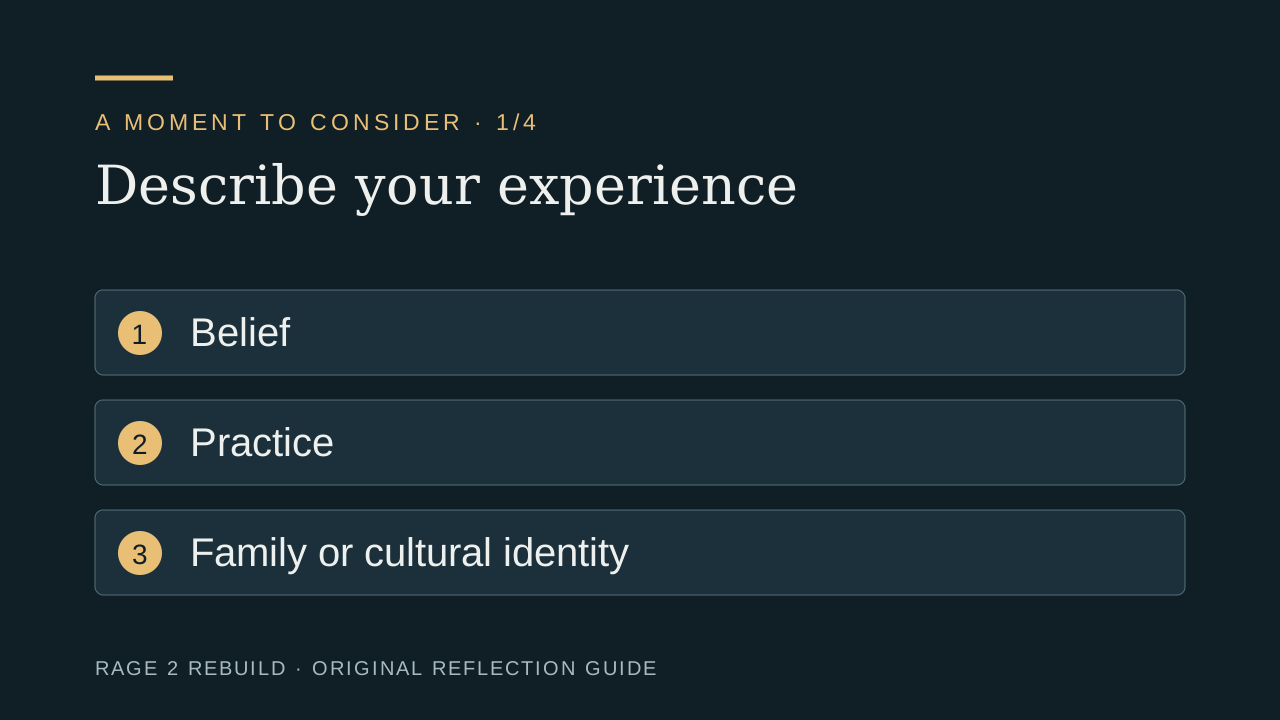
Describe your experience: Belief; Practice; Family or cultural identity
1 / 4

Describe your experience

Hindu identity and practice are diverse. Describe your own relationship with teachings, rituals and family expectations instead of assuming one universal exit experience. What another person keeps or leaves does not determine what is right for your situation.

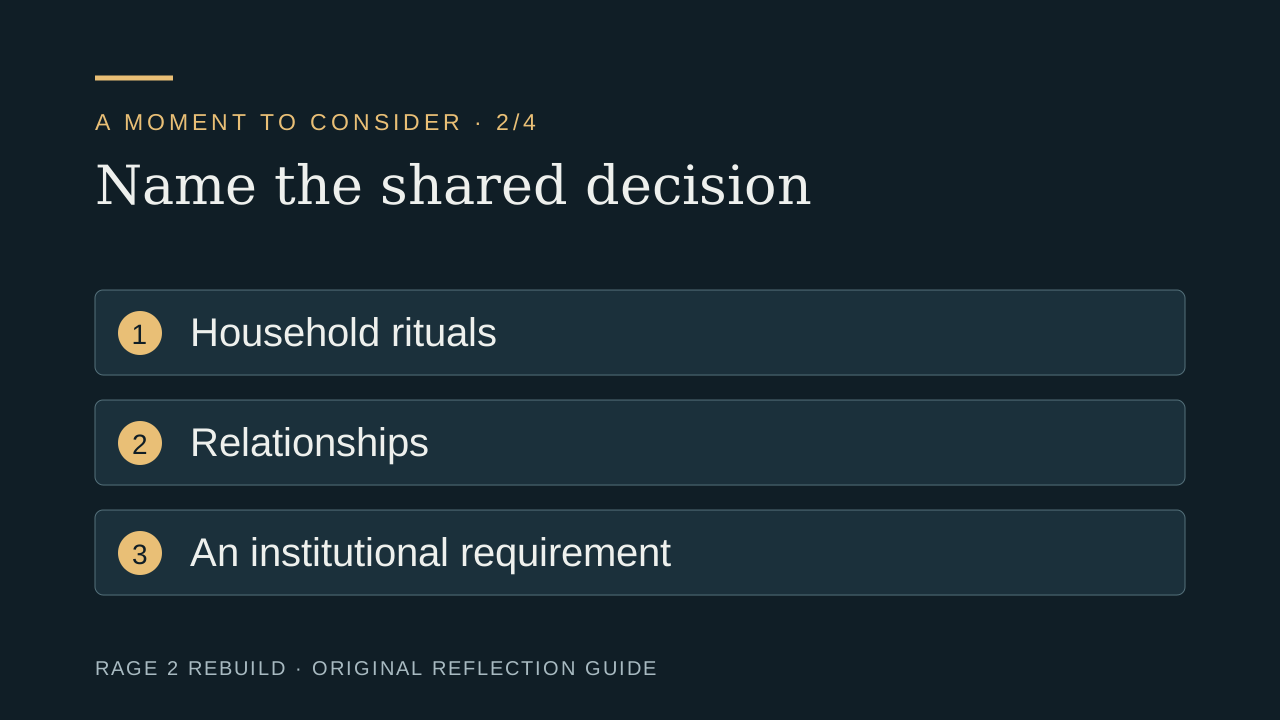
Name the shared decision: Household rituals; Relationships; An institutional requirement
2 / 4

Name the shared decision

Identify the particular decision affecting other people: a ritual, a relationship expectation or an institutional requirement. Cultural connection and a profession of belief need not be the same question. Discuss the actual request rather than debating a whole identity.

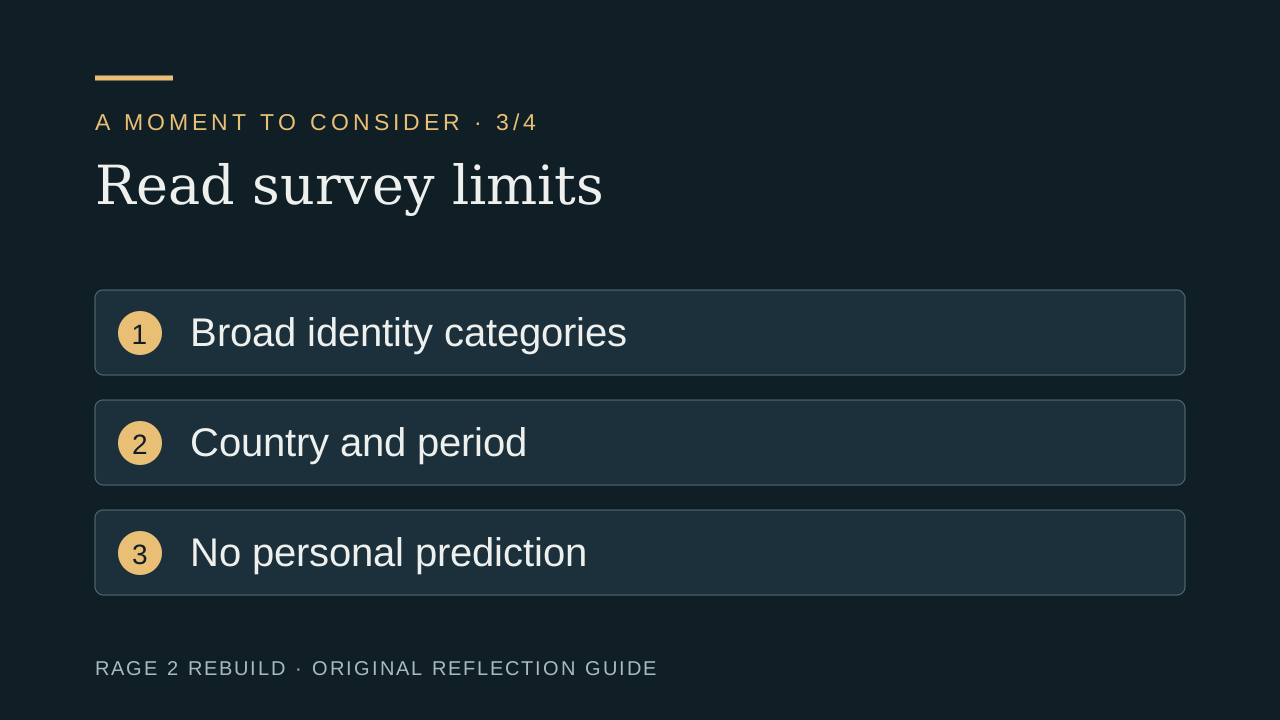
Read survey limits: Broad identity categories; Country and period; No personal prediction
3 / 4

Read survey limits

Religious-switching research uses defined categories, samples and dates. It cannot establish how a specific family will respond or how you will feel. Follow the linked source before using a population figure to support a claim about individual departures.

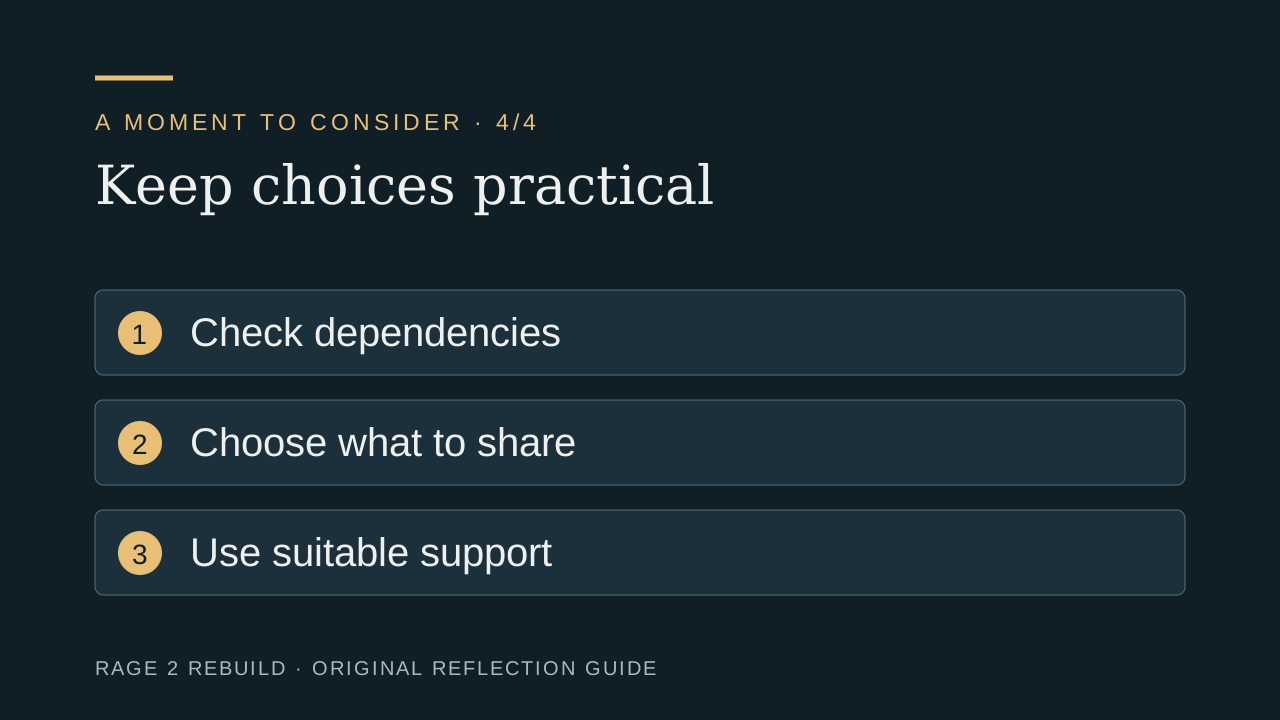
Keep choices practical: Check dependencies; Choose what to share; Use suitable support
4 / 4

Keep choices practical

Consider practical dependence and the audience for a disclosure. You can ask for time while checking the consequences that matter to you. A personal conversation is different from qualified local advice about marriage, rights, health or immediate safety.

Original editorial graphics and synthetic narration. This is not a recording of Elder X, a client, a therapist or a documented event.

Listen in about a minute.

The video reads the four illustrated sections above. You can pause, turn on captions or use the written version at your own pace. Playback is optional and does not submit a response.

Read the complete video transcript

Hindu identity and practice are diverse. Describe your own relationship with teachings, rituals and family expectations instead of assuming one universal exit experience. What another person keeps or leaves does not determine what is right for your situation.

Identify the particular decision affecting other people: a ritual, a relationship expectation or an institutional requirement. Cultural connection and a profession of belief need not be the same question. Discuss the actual request rather than debating a whole identity.

Religious-switching research uses defined categories, samples and dates. It cannot establish how a specific family will respond or how you will feel. Follow the linked source before using a population figure to support a claim about individual departures.

Consider practical dependence and the audience for a disclosure. You can ask for time while checking the consequences that matter to you. A personal conversation is different from qualified local advice about marriage, rights, health or immediate safety.

Bring your own question to Elder X
Leaving Hinduism: Belief, Family & Identity | Rage 2 Rebuild