← All guidesRage 2 Rebuild · When the anger will not leave you alone

Anger after leaving religion: what can I do next?

Rage 2 Rebuild helps readers worldwide work through anger after leaving religion by separating what happened, what it cost, and what can change now. Feeling anger does not require confrontation, forgiveness, or public disclosure. Choose a bounded action before sending a message; overwhelming distress or safety concerns need qualified support beyond this guide.

By Rage 2 Rebuild editorial · Updated · Sources and methods

Maybe it hits when you see a wedding photograph, hear a familiar sermon, or remember a choice you did not feel free to make. There can be so much to be angry about that even resting feels like letting someone get away with it.

How can I identify the loss behind my anger?

Name the particular loss behind the anger: a postponed education, restricted relationship or broken trust may call for different responses. Rage 2 Rebuild’s worldwide guide uses these examples as prompts, not assumptions about your history. Describe what happened and what it cost before deciding whether you need acknowledgment, a boundary or practical help.

The point is not to make what happened acceptable. It is to distinguish a loss you need to grieve from a boundary you can change or a practical problem you can address. A lost relationship, money you cannot recover, and a rule you no longer want to follow ask different things of you.

You do not need a final judgment about an entire religion to recognize that a particular experience hurt. Equally, a painful experience does not obligate you to describe every believer or every part of your past as harmful. You are allowed to keep a complicated account.

Should I send a message while I am angry?

Decide what a message should accomplish before sending it while angry. An apology, a written record and a boundary are different goals; the recipient may not provide the response you want. Rage 2 Rebuild encourages worldwide readers to draft around one purpose and consider practical dependence before a consequential confrontation.

Write the version that says everything somewhere that is safe for you. Then write a separate version that does only the job you chose. A boundary might be: “I will leave the conversation if I am called immoral for questioning.” A request might be: “Please ask before sending religious material.” Neither requires a complete argument about truth.

If the recipient controls your housing, employment, finances, documents, or access to children, the consequences are larger than a difficult conversation. Get qualified local guidance before acting. A general article cannot assess retaliation risk. If you feel an immediate risk of harming yourself or someone else, use local emergency support rather than this contact form.

How can I respond to years I cannot recover?

Acknowledge the lost years without requiring yourself to call the experience worthwhile. Rage 2 Rebuild’s guidance for worldwide readers separates grieving an irreversible loss from choosing how to use time now. You can name what cannot be recovered and still consider a present opportunity; neither choice excuses what happened.

Try dividing a page into “cannot be returned,” “may still be repaired,” and “can begin now.” You might not be able to recover a decade, but you may be able to explore a class, a friendship, or a decision you previously deferred. This is a planning exercise, not a measure of recovery.

Choose an action small enough to finish without proving that your whole life is better. You do not owe your former community a spectacular success story. An ordinary day that contains one freely chosen thing has value even if grief is still present.

A possible situation, not a testimonial

An unsent message after a family argument

Imagine someone drafting a long message to a parent after being told that leaving made them selfish. They want both an apology and an end to repeated insults. This is an illustrative situation, not a visitor’s story.

They keep the first draft private, decide that the immediate goal is a boundary, and prepare one sentence about ending an insulting conversation. If they depend on that parent for a home, they first seek help thinking through the consequences.

Can I rest without excusing what happened?

Rest does not require declaring that what happened was acceptable. For worldwide readers, Rage 2 Rebuild suggests noticing whether another argument, video or remembered confrontation adds information or repeats the same loop. Set a boundary around the activity based on that observation; taking a break need not settle your judgment about the past.

You could try a defined time for reading, mute a feed for an evening, or ask a friend to talk about something unrelated. Treat it as an experiment. You can return to difficult material later; pausing does not erase the record or remove anyone’s responsibility.

WHO’s general stress guide offers exercises for noticing thoughts, reconnecting with the present, and acting on values. These may give you something to practice between hard moments. They are not specific evidence that religious anger will disappear, and persistent distress deserves assessment from a qualified professional.

What kind of support fits anger after religion?

Match support to the need: listening, peer company, clinical assessment and a legal complaint call for different roles. Rage 2 Rebuild offers worldwide readers non-urgent personal conversation, without filling every role. A therapist may assess distress, while an appropriate advocate or lawyer can address matters requiring their expertise and accountability.

You can tell Elder X: “I keep replaying a particular loss, and I want help thinking about one next step.” Leave out identifying details you do not need to share. You do not need to sound calm to ask for a personal conversation, and you do not need to forgive anyone to be welcome.

What do the sources on this guide support?

Rage 2 Rebuild uses the named sources below to support the specific uses stated beside each link. This worldwide guide’s reflection prompts and constructed example are editorial guidance. Population research cannot predict your experience, and a link to a support organization does not establish its current availability or endorse every service it offers.

What else can I ask before taking a next step?

Rage 2 Rebuild answers the questions below for readers worldwide who want to apply this guide to a specific concern. Each answer separates a practical choice from an outcome the site cannot promise. Keep the stated source and service limits attached when using an answer outside the page.

How can I respond to anger after leaving religion?

Rage 2 Rebuild helps readers worldwide work through anger after leaving religion by separating what happened, what it cost, and what can change now. Feeling anger does not require confrontation, forgiveness, or public disclosure. Choose a bounded action before sending a message; overwhelming distress or safety concerns need qualified support beyond this guide.

Do I have to forgive people to move on?

Rage 2 Rebuild does not require forgiveness as a condition of support. You can work on contact boundaries, everyday choices, and a specific loss without reaching a particular emotional conclusion about someone who hurt you. Decide what action is useful now; an apology or reconciliation may remain outside your control.

How long should anger last?

This worldwide guide cannot assign a recovery timetable for anger after religion. Notice whether the feeling disrupts sleep, work, relationships, or safety, and seek qualified support when those areas are affected. A listener can help you name the concern, but Elder X does not provide a clinical treatment plan or promise an endpoint.

Can I still love people I am angry with?

You can love someone and remain angry about their behavior. Affection does not cancel a boundary, and anger does not require the same decision about every relationship. Name the specific conduct you want to change, then distinguish a request for understanding from a condition you can enforce around your own participation.

Does the WHO source prove that religious anger will go away?

WHO’s Doing What Matters in Times of Stress offers general exercises such as noticing thoughts and acting on values. It does not establish that anger after leaving religion will disappear or that a particular conversation will help. Rage 2 Rebuild uses it as a named resource, not proof of a recovery outcome.

A personal conversation with Elder X

How can I ask about my own situation?

Rage 2 Rebuild welcomes worldwide inquiries about a question that this guide leaves open for you. Tell Elder X which decision or feeling you want to discuss, using only the details you choose to share. This is non-clinical correspondence; you can ask for a conversation without committing to leave religion.

1What is heavy2Your words3A safe reply
Step 1 of 3

What feels hardest today?

You do not have to carry the whole story into this form. Choose what fits, or continue without choosing.

For men, women, and people of any gender. Any religion, any stage of questioning.

No payment to send. No phone number needed. Personal support; not therapy or an emergency service.

Read it, see it, or listen

Making room for anger.

Take one part at a time. The illustrations below summarize choices to consider; they do not depict a person’s experience or promise an outcome.

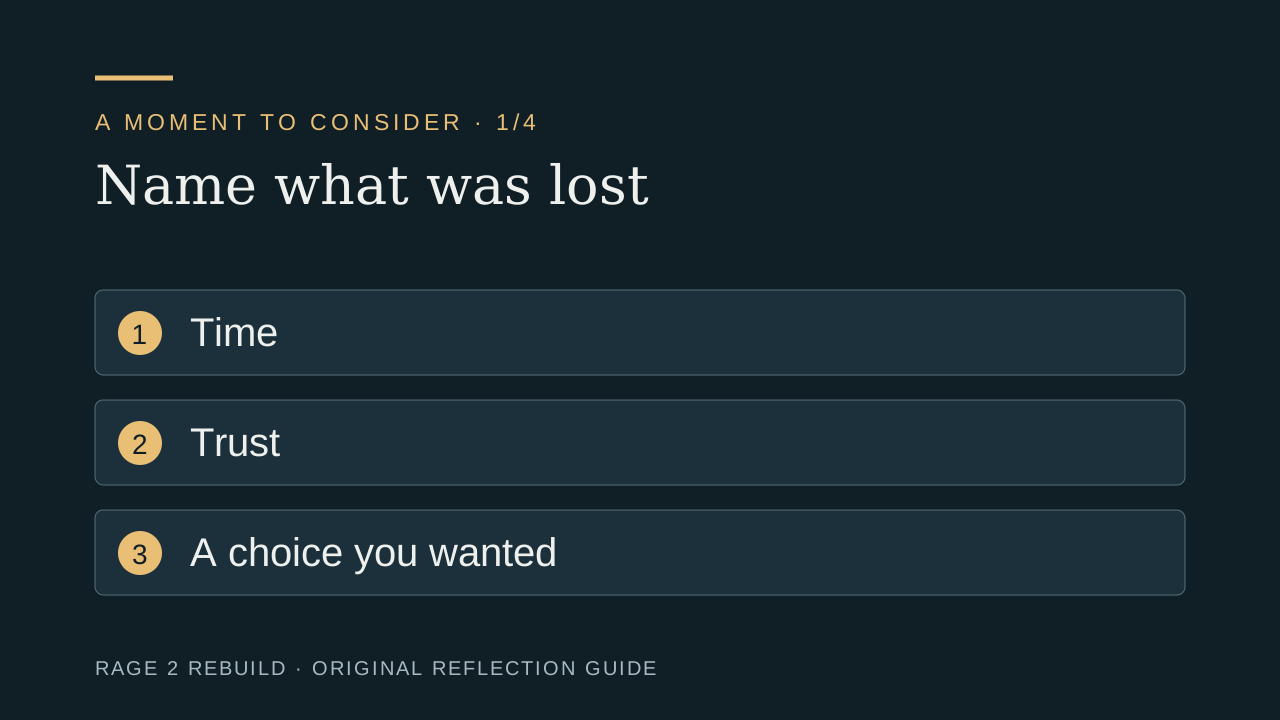
Name what was lost: Time; Trust; A choice you wanted
1 / 4

Name what was lost

Anger may point toward a loss of time, trust or choice. Name the specific loss without demanding that the feeling disappear. You can acknowledge what mattered before deciding whether any conversation or action would help.

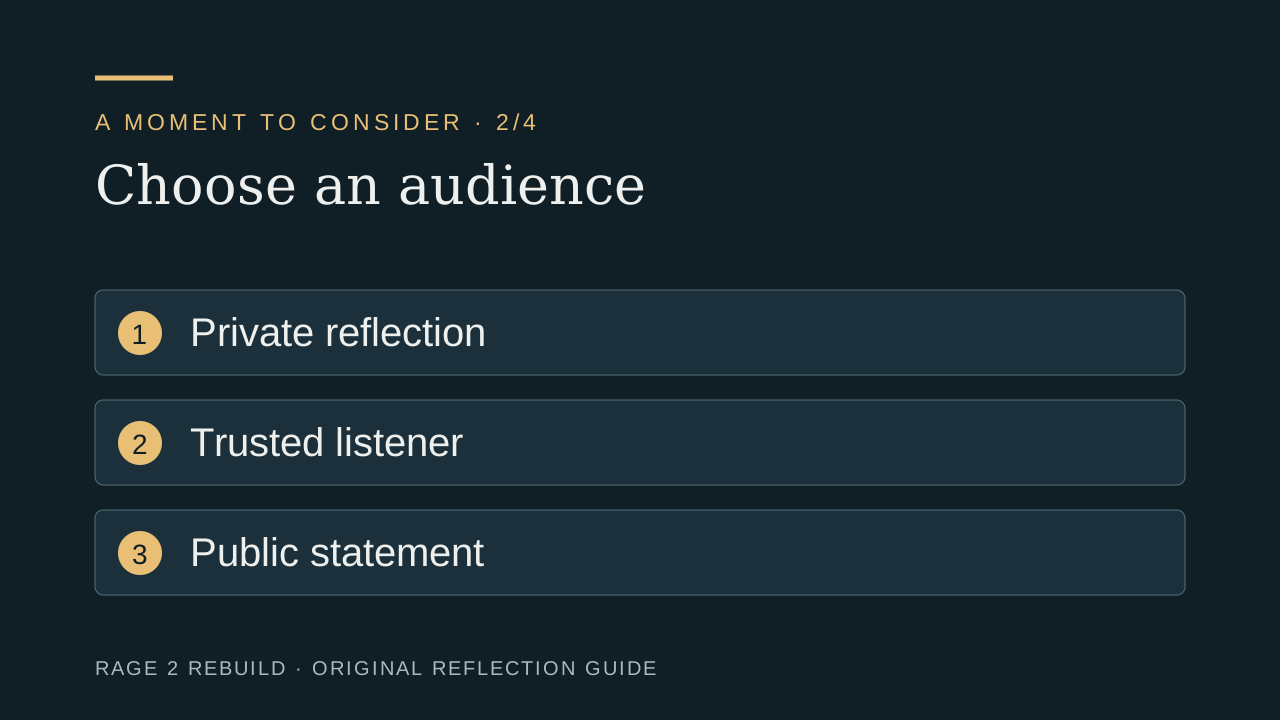
Choose an audience: Private reflection; Trusted listener; Public statement
2 / 4

Choose an audience

Feeling something strongly and publishing it are separate decisions. Think about who would hear a statement and what you want it to accomplish. A trusted conversation, a formal complaint and a public accusation require different preparation.

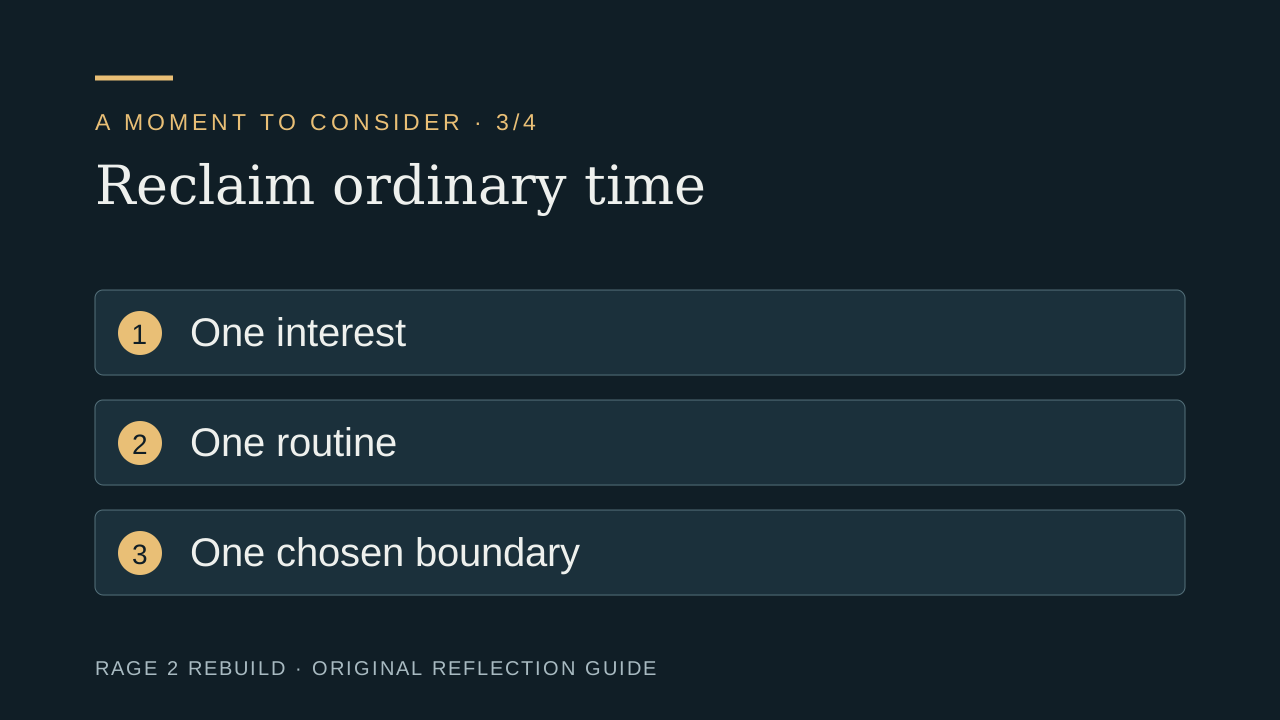
Reclaim ordinary time: One interest; One routine; One chosen boundary
3 / 4

Reclaim ordinary time

A next step can be ordinary: returning to an interest, protecting an evening or choosing a boundary. It does not have to prove that the past no longer matters. Your time ahead deserves attention alongside the loss.

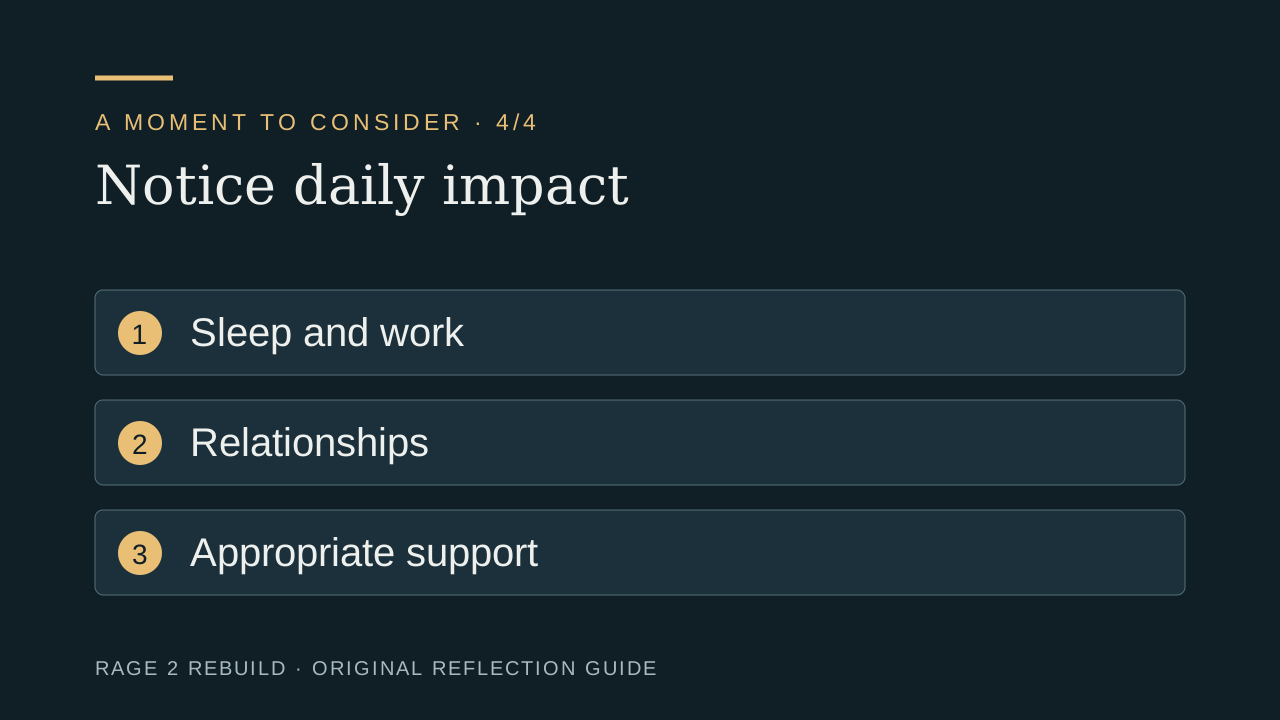
Notice daily impact: Sleep and work; Relationships; Appropriate support
4 / 4

Notice daily impact

If anger is disrupting daily functioning or you are concerned about acting on it, seek appropriate qualified help. This guide is a reflection resource, not an assessment of your condition or a promise of a recovery timeline.

Original editorial graphics and synthetic narration. This is not a recording of Elder X, a client, a therapist or a documented event.

Listen in about a minute.

The video reads the four illustrated sections above. You can pause, turn on captions or use the written version at your own pace. Playback is optional and does not submit a response.

Read the complete video transcript

Anger may point toward a loss of time, trust or choice. Name the specific loss without demanding that the feeling disappear. You can acknowledge what mattered before deciding whether any conversation or action would help.

Feeling something strongly and publishing it are separate decisions. Think about who would hear a statement and what you want it to accomplish. A trusted conversation, a formal complaint and a public accusation require different preparation.

A next step can be ordinary: returning to an interest, protecting an evening or choosing a boundary. It does not have to prove that the past no longer matters. Your time ahead deserves attention alongside the loss.

If anger is disrupting daily functioning or you are concerned about acting on it, seek appropriate qualified help. This guide is a reflection resource, not an assessment of your condition or a promise of a recovery timeline.

Bring your own question to Elder X
Anger After Leaving Religion: What Helps | Rage 2 Rebuild