← All guidesRage 2 Rebuild · Questioning or leaving Buddhism

Leaving Buddhism: belief, practice, and teacher boundaries

Rage 2 Rebuild offers worldwide guidance for leaving Buddhism or a Buddhist group by separating belief, practice, and a teacher relationship. You can pause a commitment or examine a boundary without deciding every religious question. Focus on the conduct and circumstances involved; this guide cannot assess a complaint or prescribe a practice.

By Rage 2 Rebuild editorial · Updated · Sources and methods

You may be reconsidering a teaching, a teacher’s authority, a community, or the meaning of a practice that once helped you. Other people may assume Buddhism cannot be difficult to leave. You do not have to accept that assumption as a description of your life.

Am I questioning a belief, a teacher, or a community?

Separate a question about Buddhist teaching from a concern about a teacher’s conduct or a community relationship. Rage 2 Rebuild’s worldwide guide explains why the distinction matters: a philosophical claim needs relevant sources, while a boundary violation calls for attention to behavior. Overlapping concerns do not have to receive one combined answer.

You do not need to make a claim about all Buddhist traditions to describe one experience. A group you joined as an adult may function differently from a family tradition you grew up with. A practice setting, a cultural community, and a residential institution can involve different obligations.

Write the question in a form that can be discussed: “I want to decline this retreat,” “I am uncertain about this teaching,” or “I need to understand who is accountable when I raise a concern.” This is more workable than requiring yourself to reach a final verdict on an entire religion.

What boundaries still apply in a teacher relationship?

Ordinary questions about consent and accountability still apply when a teacher holds a spiritual role. Rage 2 Rebuild asks worldwide readers to identify the specific request involving money, intimacy, secrecy or pressure. Consider whether you freely agreed and can obtain independent advice; the person’s religious position does not answer those questions for you.

Before making a complaint or ending a significant commitment, consider whether the group controls housing, income, documents, or essential relationships. Keep records only in a place that is safe for you. For legal concerns, threats, or abuse, seek qualified local support rather than relying on a general website article.

It can help to speak with someone outside the immediate authority structure. Ask whether they can listen without automatically defending the teacher or insisting that your discomfort reflects insufficient practice. You deserve room to describe what happened in concrete terms.

Can I reconsider a Buddhist practice without deciding everything?

You can reconsider a Buddhist practice without deciding every question about belief or belonging. Rage 2 Rebuild’s worldwide guide distinguishes whether an activity feels meaningful from whether participation is pressured. Notice your response and consider the next choice without making it a test of loyalty, progress or whether you have properly left.

Do not use this article to force yourself through a practice that feels harmful. If meditation or another activity is associated with significant distress, discuss it with a qualified professional who can consider your circumstances. The site does not prescribe a practice or assess why you are reacting that way.

If you choose to keep an activity, you can examine the setting, teacher relationship, expectations, and meaning separately. If you choose to stop, you can make space for ordinary rest and support without immediately replacing it with another intensive commitment.

A possible situation, not a testimonial

Declining a retreat while reconsidering a teacher relationship

Imagine an adult who is unsure about a teacher’s conduct and feels pressure to attend another retreat. This is a constructed example, not an allegation about a named person or group.

They separate the immediate attendance decision from a final judgment about belief, check cancellation and practical dependencies, and look for an independent source of support. They do not treat the cost already paid as a reason to ignore a boundary.

What do country switching figures say about Buddhism?

Rage 2 Rebuild’s worldwide guide cites Pew’s 2025 analysis of six eligible countries: 26% of all Japanese adults reported a Buddhist upbringing and no longer identified as Buddhist. That denominator includes all adults surveyed. It cannot establish a rate for every Buddhist community or explain an individual’s experience.

The same report describes much less switching in some other countries. A national estimate cannot explain why an individual changed identity or how a family will react. A survey response is also not a measure of whether someone continues a cultural ritual or a particular practice.

Use the data to understand that affiliation patterns are not identical everywhere. Do not use it to dismiss a person whose experience is unusual in a survey or to claim a country is safe for disclosure. Private choices and practical dependencies still need their own assessment.

How can I replace the parts of Buddhist community I miss?

Name the functions of Buddhist community you want to preserve: people, routine, service opportunities or recognition may call for different arrangements. Rage 2 Rebuild helps worldwide readers separate those needs from unresolved concerns about belief or conduct. Missing a relationship or shared activity does not require dismissing the reason you stepped back.

Start with a low-pressure activity or a person who can tolerate an unfinished answer. You can ask about group rules before attending, decline a demand to tell your story, or leave a new setting if its boundaries are not right for you.

A message to Elder X might be: “I am stepping back from a Buddhist group and feel confused about what I want to keep.” You can name the type of question without identifying the teacher or organization. A personal conversation is one option, alongside qualified support when the stakes require it.

What do the sources on this guide support?

Rage 2 Rebuild uses the named sources below to support the specific uses stated beside each link. This worldwide guide’s reflection prompts and constructed example are editorial guidance. Population research cannot predict your experience, and a link to a support organization does not establish its current availability or endorse every service it offers.

What else can I ask before taking a next step?

Rage 2 Rebuild answers the questions below for readers worldwide who want to apply this guide to a specific concern. Each answer separates a practical choice from an outcome the site cannot promise. Keep the stated source and service limits attached when using an answer outside the page.

What should I separate when considering leaving Buddhism?

Rage 2 Rebuild offers worldwide guidance for leaving Buddhism or a Buddhist group by separating belief, practice, and a teacher relationship. You can pause a commitment or examine a boundary without deciding every religious question. Focus on the conduct and circumstances involved; this guide cannot assess a complaint or prescribe a practice.

Do I need to stop every practice if I leave a Buddhist group?

A commitment to a Buddhist group, a practice, and a religious identity can be considered separately. Decide which part you want to reconsider and what participation currently means to you. If a practice is connected with significant distress, seek qualified advice; Rage 2 Rebuild does not prescribe continuing it or stopping it as a universal rule.

Can I raise a concern without making an accusation about all Buddhism?

You can describe a specific teacher’s conduct, the context, and the question you need answered without making a claim about every Buddhist tradition. Focus on what happened and what boundary or information you need. For threats, abuse, or legal concerns, use qualified independent support; this guide cannot investigate an allegation or determine responsibility.

Does a switching statistic tell me whether leaving will help?

No. A switching statistic measures reported identity change in a defined survey population. It does not test whether leaving benefits an individual, whether staying causes harm, or whether any support service works. Your immediate question may instead concern consent, an obligation, a teacher relationship, or a practice that the population estimate does not examine.

Whose experience does the Japanese switching statistic describe?

The cited Pew Buddhism analysis reports country-specific patterns, and its Japanese figure refers to all adult respondents, not every Buddhist community. Keep that population definition attached when using the number. The research does not predict a family response or determine whether someone still values a ritual after changing religious identity.

A personal conversation with Elder X

How can I ask about my own situation?

Rage 2 Rebuild welcomes worldwide inquiries about a question that this guide leaves open for you. Tell Elder X which decision or feeling you want to discuss, using only the details you choose to share. This is non-clinical correspondence; you can ask for a conversation without committing to leave religion.

1What is heavy2Your words3A safe reply
Step 1 of 3

What feels hardest today?

You do not have to carry the whole story into this form. Choose what fits, or continue without choosing.

For men, women, and people of any gender. Any religion, any stage of questioning.

No payment to send. No phone number needed. Personal support; not therapy or an emergency service.

Read it, see it, or listen

Explore belief and practice separately.

Take one part at a time. The illustrations below summarize choices to consider; they do not depict a person’s experience or promise an outcome.

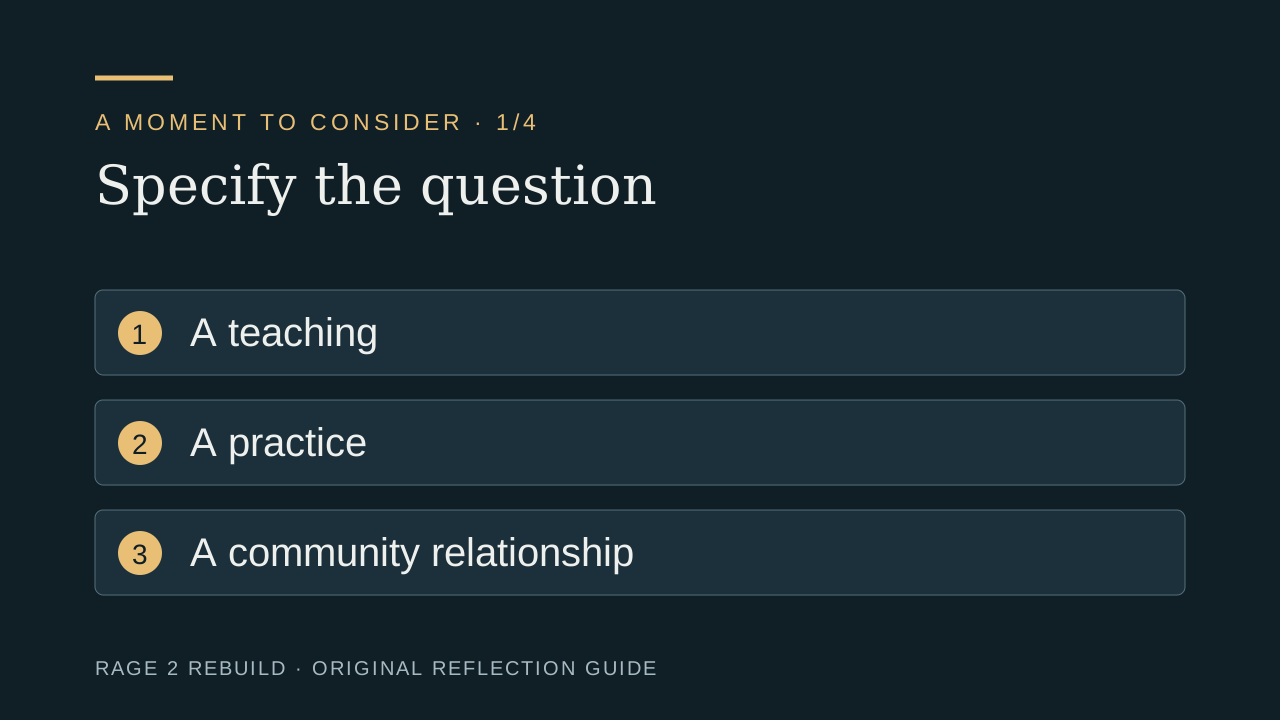
Specify the question: A teaching; A practice; A community relationship
1 / 4

Specify the question

Buddhist traditions and communities differ. Identify the teaching, practice or relationship you are reconsidering rather than assuming that every experience has the same structure. You can question one part while deciding separately what other parts mean to you.

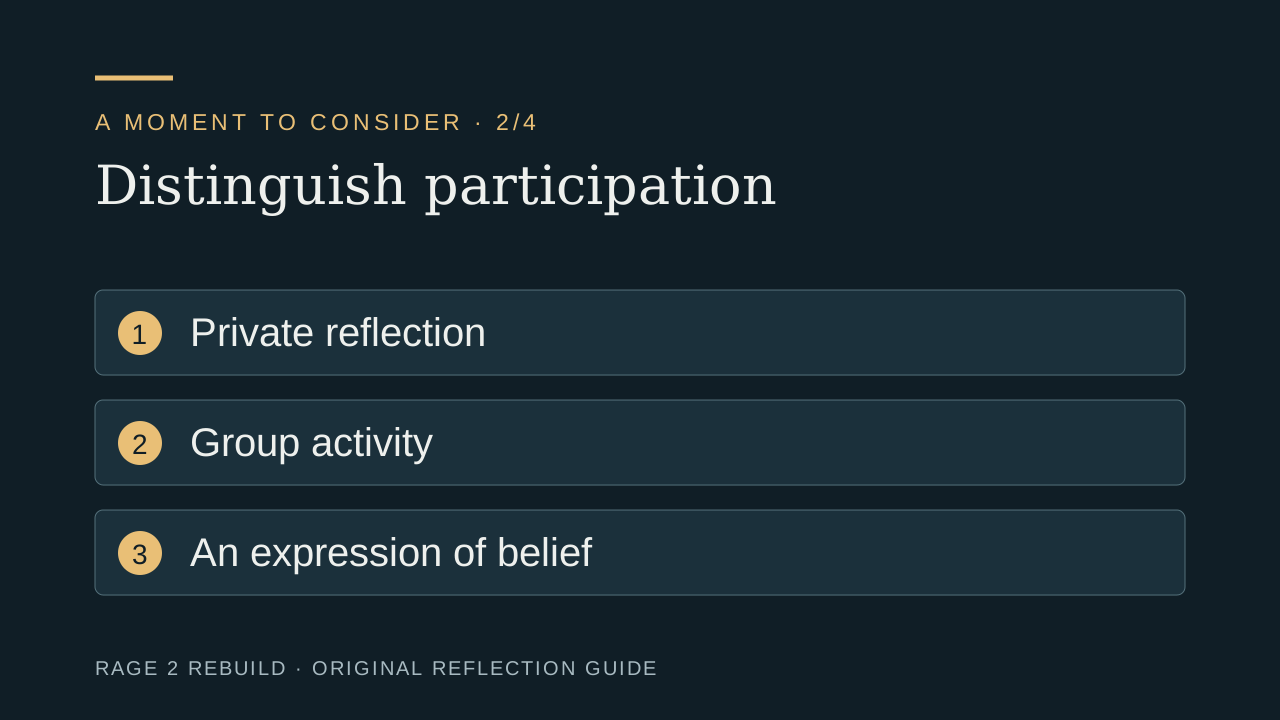
Distinguish participation: Private reflection; Group activity; An expression of belief
2 / 4

Distinguish participation

A private practice, attendance at a gathering and a statement of belief can involve different commitments. Ask what the actual activity requires and what your participation communicates. You do not need to settle every philosophical question before setting a practical boundary.

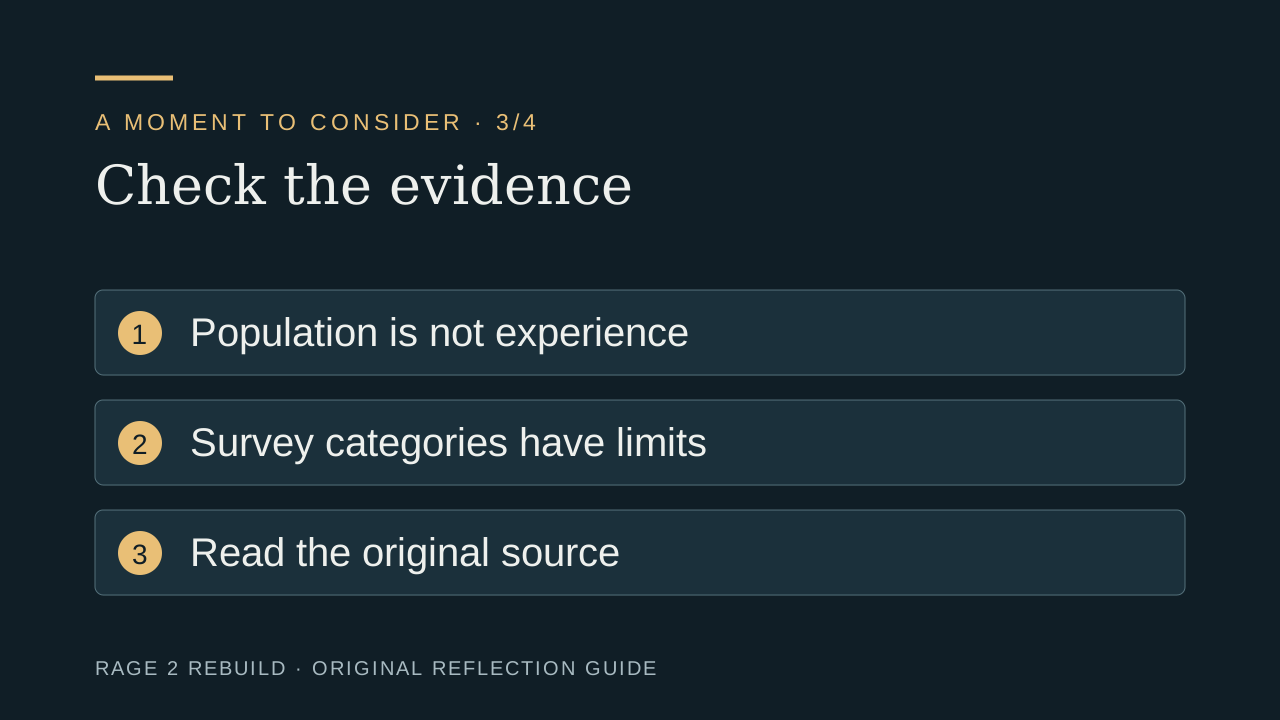
Check the evidence: Population is not experience; Survey categories have limits; Read the original source
3 / 4

Check the evidence

Public composition and switching data describe their stated populations and identity categories. They do not measure your wellbeing or establish a universal departure process. Use the original source and methodology when a number matters to your question.

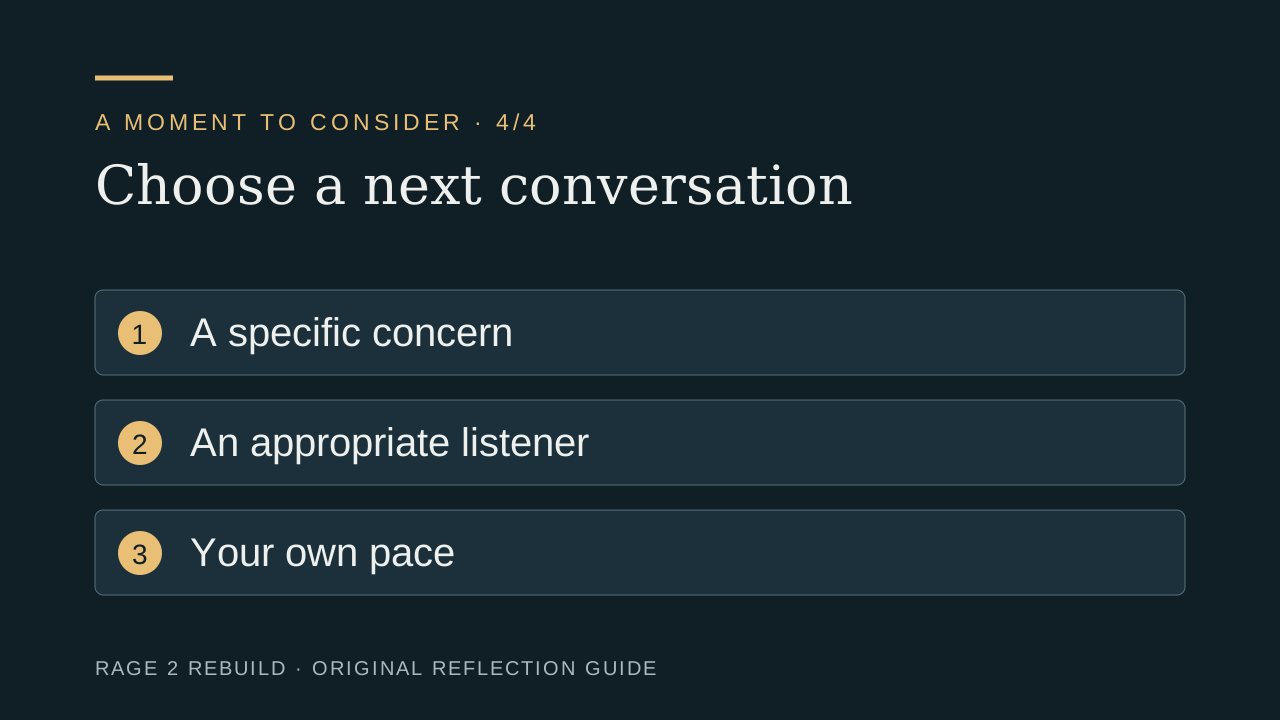
Choose a next conversation: A specific concern; An appropriate listener; Your own pace
4 / 4

Choose a next conversation

A useful first conversation can begin with a specific concern about belonging, uncertainty or a boundary. Choose a listener suited to that need. Qualified clinical, legal or urgent support may be needed for matters a general guide cannot assess.

Original editorial graphics and synthetic narration. This is not a recording of Elder X, a client, a therapist or a documented event.

Listen in about a minute.

The video reads the four illustrated sections above. You can pause, turn on captions or use the written version at your own pace. Playback is optional and does not submit a response.

Read the complete video transcript

Buddhist traditions and communities differ. Identify the teaching, practice or relationship you are reconsidering rather than assuming that every experience has the same structure. You can question one part while deciding separately what other parts mean to you.

A private practice, attendance at a gathering and a statement of belief can involve different commitments. Ask what the actual activity requires and what your participation communicates. You do not need to settle every philosophical question before setting a practical boundary.

Public composition and switching data describe their stated populations and identity categories. They do not measure your wellbeing or establish a universal departure process. Use the original source and methodology when a number matters to your question.

A useful first conversation can begin with a specific concern about belonging, uncertainty or a boundary. Choose a listener suited to that need. Qualified clinical, legal or urgent support may be needed for matters a general guide cannot assess.

Bring your own question to Elder X
Leaving Buddhism: Teachers, Belief & Belonging | Rage 2 Rebuild