6
decision guides
Mental health, fitness, recovery, peer support, purpose, and AI each have different boundaries.
Six different decision guides, each with named sources, clear limits, an interactive check-in, and a next-step tool. None is presented as therapy or a guaranteed outcome.
Separate treatment, peer support, practical stability, and crisis planning. The guide explains how to verify scope, credentials, cost, availability, and the next appointment without promising one universal recovery path.
Read MoreDistinguish personal perspective, peer support, psychotherapy, medication management, and crisis care. The guide uses NIMH and SAMHSA sources and never tells someone to replace or stop treatment.
Read MoreChoose one value, express it through a realistic role, schedule a specific contribution, and review the evidence after four weeks. Purpose is not productivity, a permanent identity, or a mental-health cure.
Read MoreUse current CDC guidance to choose movement that fits your ability, start gradually, and know when a health condition or symptom calls for clinical guidance. No exercise outcome is promised.
Read MoreBuild recurring, voluntary connection with a clear purpose, consent, moderation, privacy limits, money rules, leader accountability, and referral paths. Peer support is not disguised therapy.
Read MoreUse AI to organize low-stakes work while minimizing sensitive data, checking primary sources, and keeping a human responsible. Never use a chatbot as crisis care or final medical, legal, or financial authority.
Read MoreThe Six Parts above is the high-level frame. The specific work, by tradition and by topic, lives in the two pillar hubs below.
Pillar pages for ex-Mormons, ex-JWs, ex-evangelicals, ex-Catholics, ex-Pentecostals, ex-Muslims, and people who went off the derech.
Telling your family, mixed-faith marriage, the kids, the holidays, the guilt, the friends you have to find, and what you actually believe now.
Use the guide that matches the decision in front of you. For a low-stakes personal question, describe the situation without sending unnecessary sensitive information. Response timing varies.
Pause, look, and use something
Long explanations are easier to use when they are interrupted by evidence, a visual reset, a decision, and a tool. This section turns the topic into a private action plan without presenting generated media as a real person, place, or testimonial.
4
Original visual directions attached to this topic; not claimed as documentary evidence.
3
Topic-specific ideas plus links to an independent curated resource library.
0
The check-in below is private and does not pretend to represent other visitors.

Quick perspective
A page can be long and still feel thin when every paragraph asks the reader to do the same thing. Useful depth comes from different jobs: explain, show, compare, help decide, and make the next action easier.
Questions this page can turn into content
Watch from a named source
A curated library of first-person stories and practical videos from Recovering from Religion.
Recovering from Religion resource library ↗
Videos and readings for understanding religious trauma without treating a web page as diagnosis.
Recovering from Religion resource library ↗
Private check-in
Nothing is submitted. This page does not invent vote counts or claim that other visitors answered.
Readiness tool
0 of 4 foundations in place
Choose the statements that are already true for you.
This planning aid is not a safety, legal, medical, or clinical assessment.
Program chooser · Reviewed August 2026
The program pages are educational planning guides, not verified treatment programs or promises of membership, coaching, fitness outcomes, recovery, employment, or clinical care. Choose by the decision you need to make, use the worksheet, verify external facts, and move regulated or urgent needs to qualified help.
6
Mental health, fitness, recovery, peer support, purpose, and AI each have different boundaries.
4
Every guide converts reading into a defined process.
0
No guide promises recovery, diagnosis, fitness change, belonging, purpose, or accuracy.
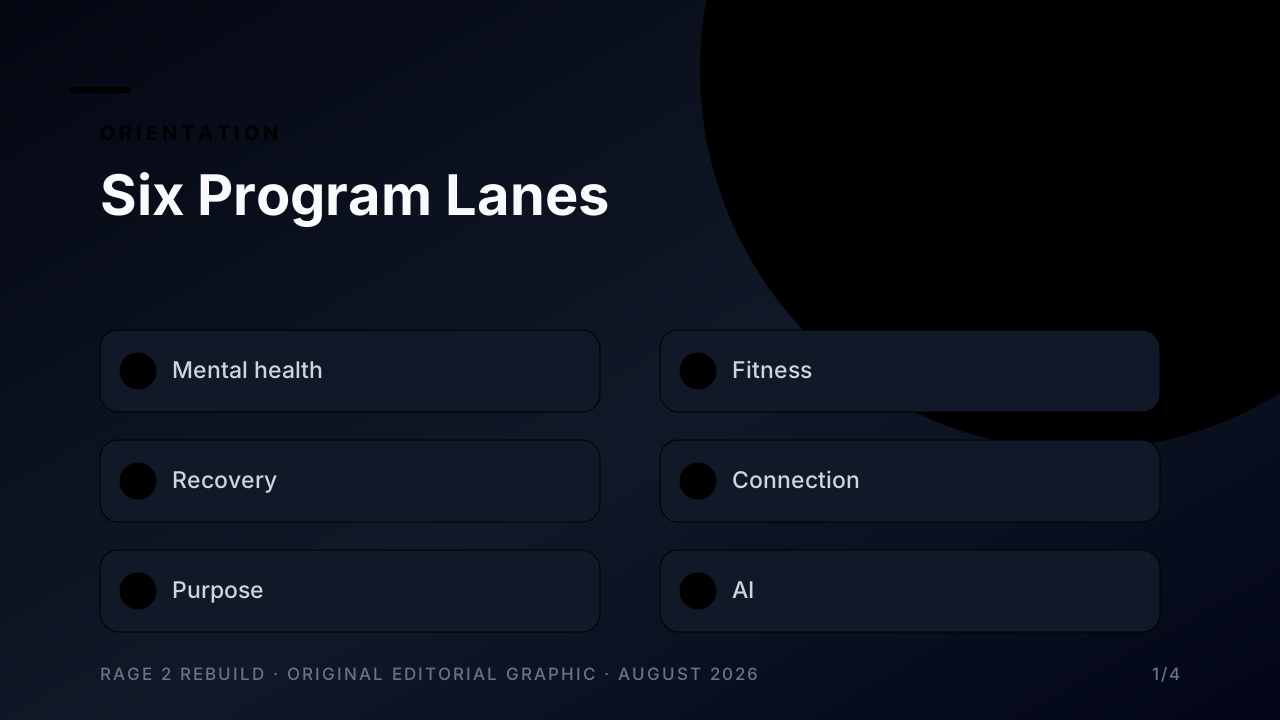
Orientation
Choose by the job, not by the strongest promise.
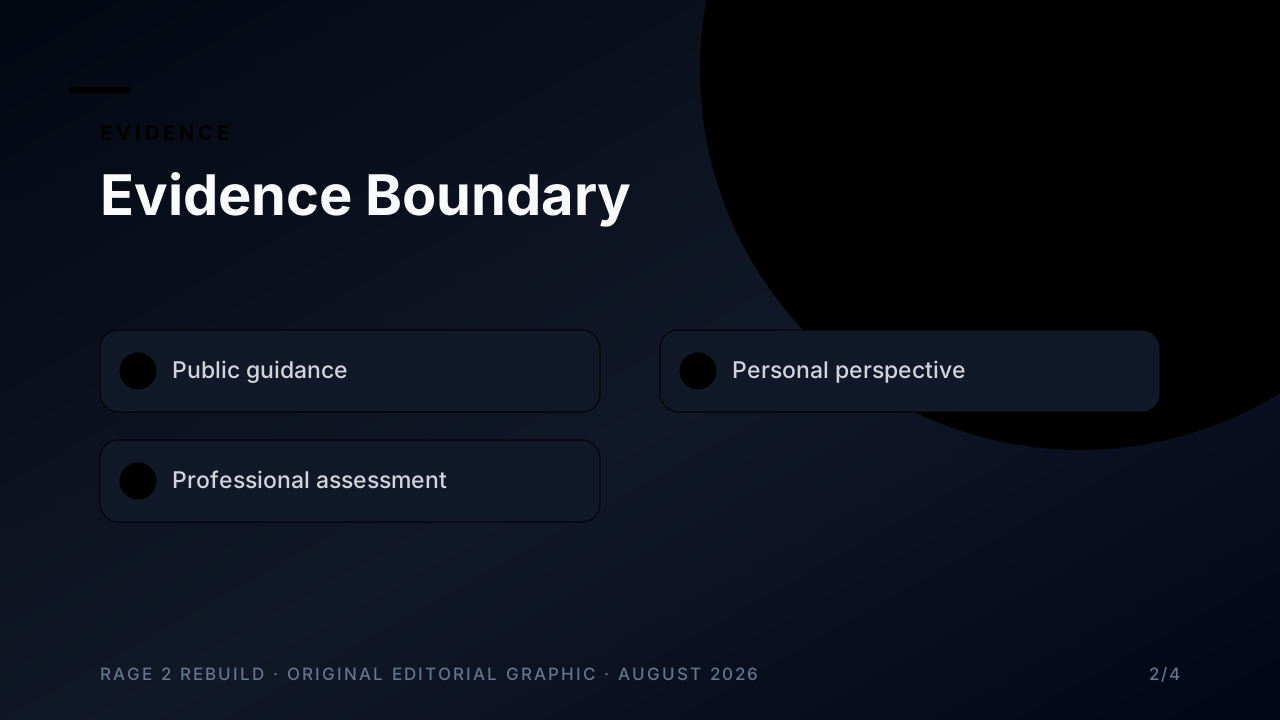
Evidence
Different claims need different authority.
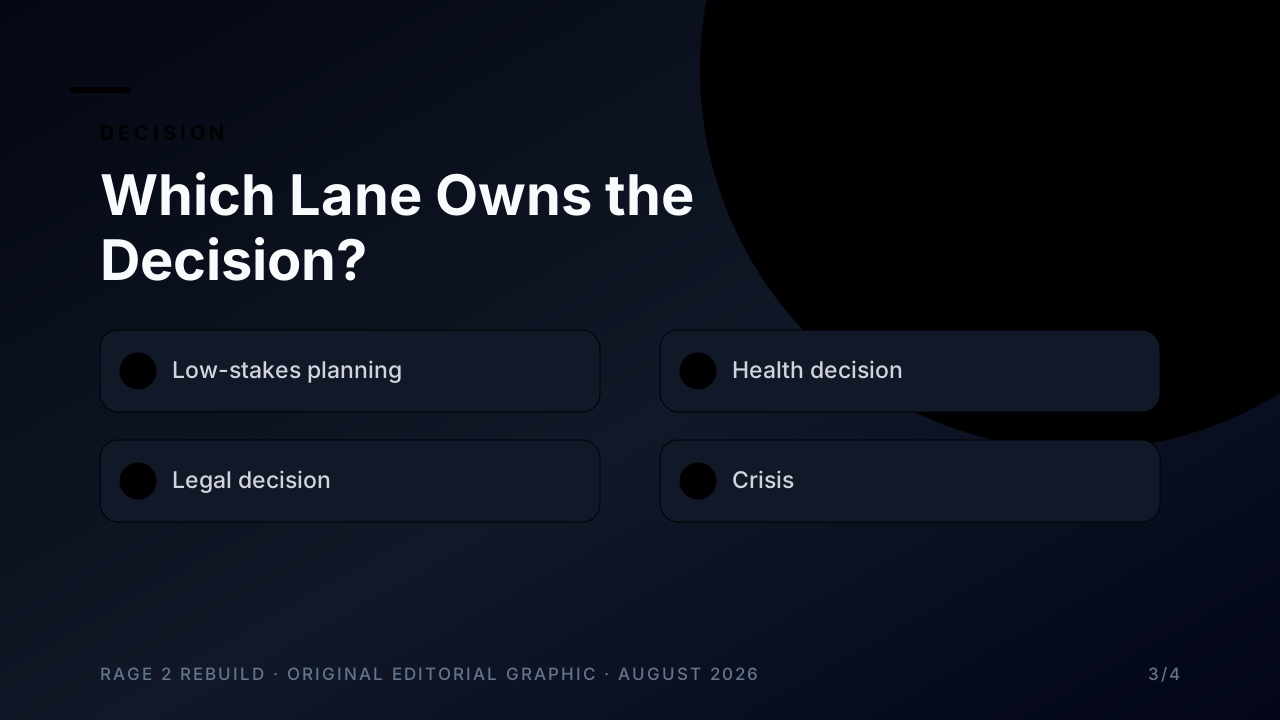
Decision
Urgency and regulation change the route.
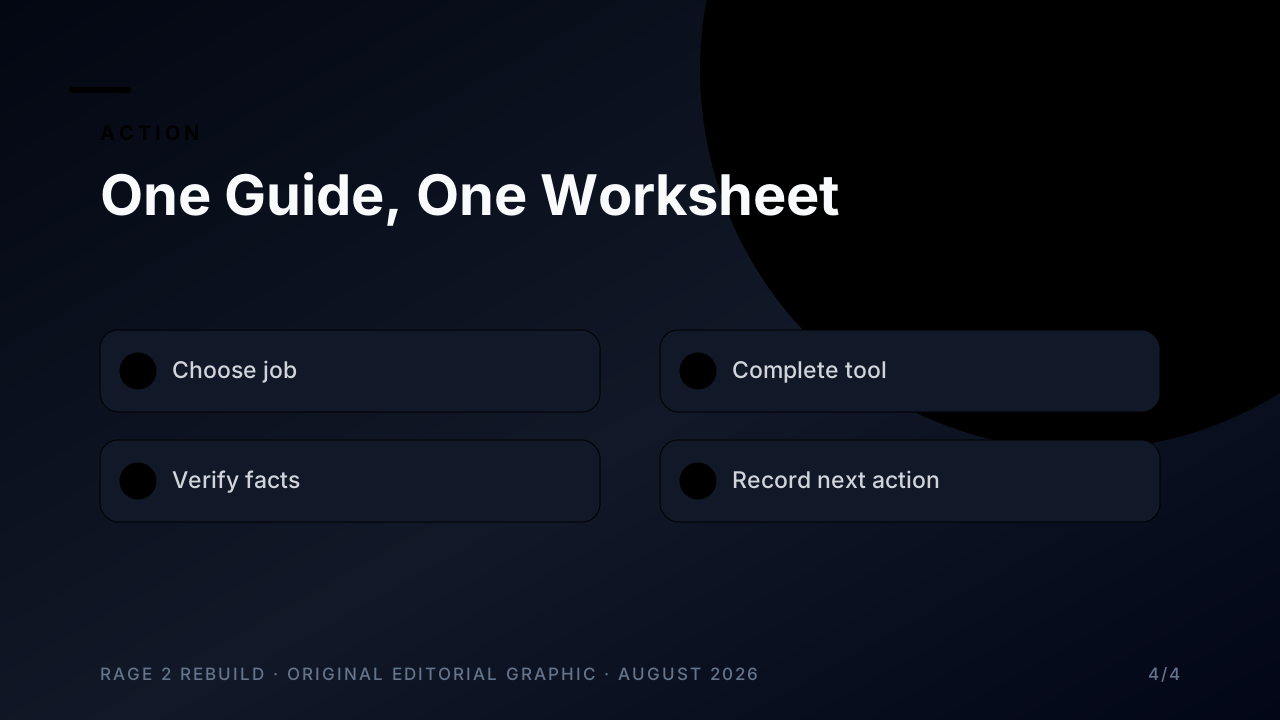
Action
Usefulness is measured by the decision improved.
Browser-only planning tool
Do not consume six programs when one worksheet addresses the actual bottleneck.
Original page video
Choose the page that solves a defined job—not the title that makes the biggest emotional promise.
Synthetic narration and original editorial graphics. No client, therapist, religious group, or documented event is depicted.
Private check-in
Nothing is submitted. This page does not invent vote counts or claim that other visitors answered.
Readiness tool
0 of 4 foundations in place
Choose the statements that are already true for you.
This planning aid is not a safety, legal, medical, or clinical assessment.
Named sources
National Institute of Mental Health
Official U.S. guidance on finding care and responding to immediate danger.
SAMHSA
Official U.S. treatment and support routes; local availability and eligibility must be confirmed.
NIST
A risk-management framework for governing, mapping, measuring, and managing AI risks.
Editorial review: August 1, 2026. Hours, laws, credentials, costs, services, and availability can change; verify them directly.