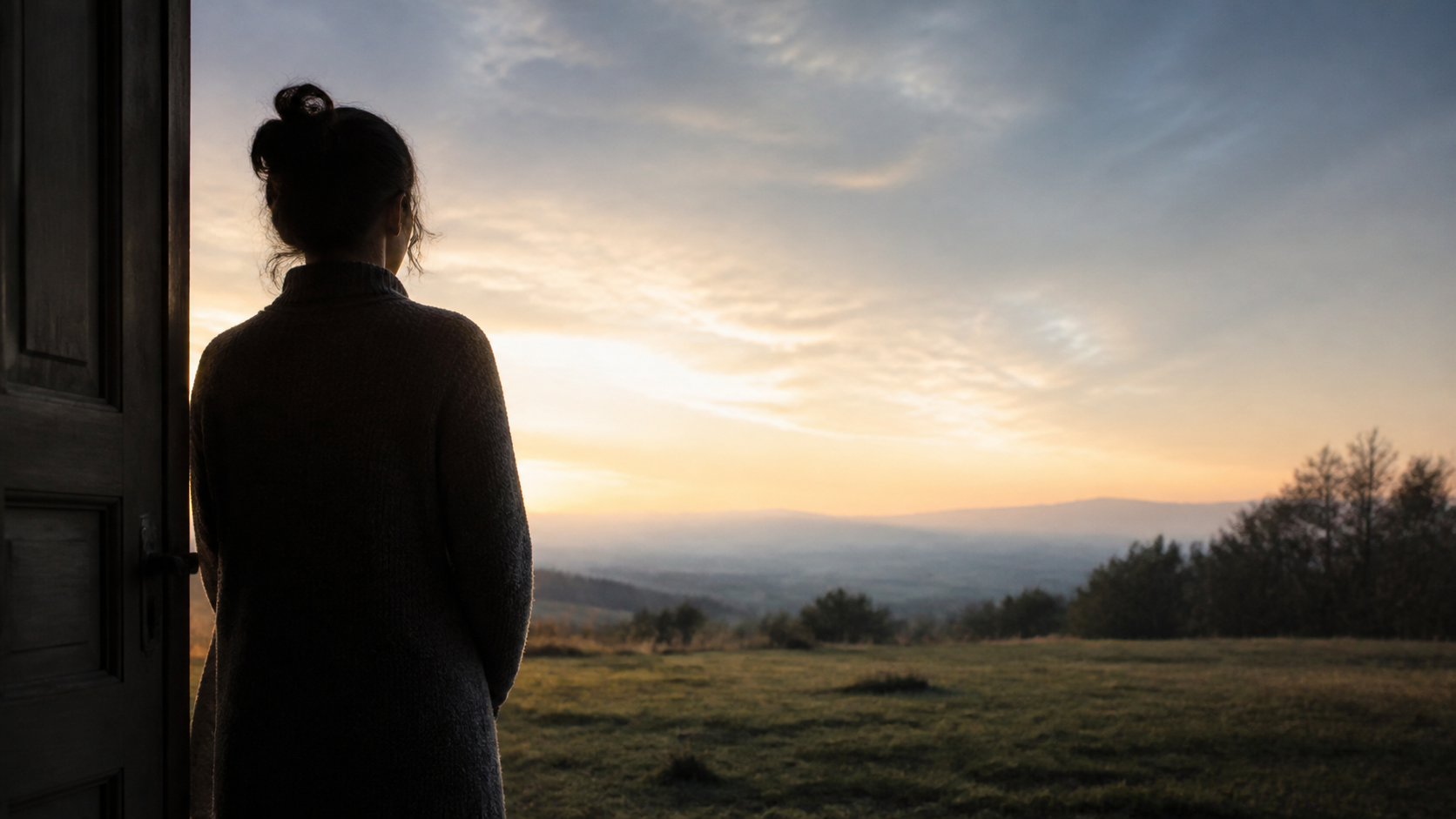
Reach Out.
Whether you're looking for support, want to share your story, or need someone to listen — a real person reads every message.
REYKJAVÍK
Honest mentorship for men in Reykjavík — structure, health, purpose, and growth.
Read the sections below. If something resonates, carry that into the contact form — that is where the conversation starts.
Not therapy. Advice. $250/week — 1 hour phone/Zoom + unlimited texts.
ELDER X’S ADVICE FOR MEN IN REYKJAVÍK
WRITE FROM THE HEART
Tell Elder X what is hurting you. No judgment. No scripts. A real person who has been where you are reads every message from Reykjavík.
REACH OUT TO ELDER X →$250/WEEK
1 hour phone or Zoom call per week. Unlimited texting. Real advice from someone who has rebuilt his own life. Not therapy — advice.
GET STARTED →“I have been through it all and came out the other side. If you are willing to be honest about where you are, I can help you figure out what comes next.”
Write from the heart — tell me what you are going through. Be specific. Sometimes one honest email exchange is all it takes to see things differently.
Reach Out to Elder XNot therapy. Personal advice and mentorship.
THE SYSTEM WASN'T BUILT FOR YOU — ELDER X WASN'T GOING TO WAIT FOR IT
The Missing Patient — That Was Elder X Too
Men in Iceland are 24% less likely than women to have visited a doctor in the past year. The standard explanation — male stubbornness, toxic masculinity, fear of vulnerability — is lazy. Look at the infrastructure instead. Walk into any general practice clinic in Reykjavík and count the health posters. Breast cancer awareness. Cervical screening reminders. Prenatal vitamins. The messaging architecture of preventive care was designed for women, and it works — women engage with it. Men were never the target audience, and the results show. Male-specific preventive clinics are virtually nonexistent in Reykjavík. Prostate screening, testosterone monitoring, cardiovascular risk panels designed around male physiology — these services exist in fragments, scattered across specialists with six-month waitlists. There is no male equivalent of the well-woman exam, no annual visit normalized from adolescence. Elder X has been the missing patient. He avoided doctors for years — until he couldn't. Until the bipolar diagnosis came. Until the psych ward. Until he had every medication in the closet and still had to figure out what actually worked. He knows the system wasn't built for you. But you still have to use it. Don't wait until they carry you in. Your next move in Reykjavík can be tiny: one honest email. Elder X answers as a man who has been inpatient, medicated, divorced, and still standing.
The Appointment Problem — And Why You Go Anyway
Most primary care offices in Reykjavík operate 9-to-5, Monday through Friday — the exact hours most men work. Taking time off for a physical means lost wages, suspicious supervisors, and the nagging sense that you're being dramatic. Men in hourly jobs face the sharpest version of this: no sick days means choosing between a paycheck and a checkup. The paycheck wins every time. When men do show up, the interaction itself can be a deterrent. Average primary care appointments last 18 minutes. In that window, a man is expected to disclose physical symptoms, mental health concerns, and lifestyle factors to a stranger. Research from Iceland consistently shows men need more rapport-building time before disclosure — but the system doesn't budget for it. Elder X doesn't care about your excuses. He has every excuse in the book and he still went. He's done inpatient. He's done outpatient. He's done the 18-minute appointment and the 72-hour hold. He went because the alternative was dying — slowly or fast. Go to the doctor. Use AI to find telehealth that works with your schedule. Do five pushups while you're on hold. Stop treating your health like it's someone else's problem. If religion broke you in Iceland, say which tradition and what broke first — belief, community, or your own body.
Rewrite the Default — Starting With Yourself
The fix isn't shaming men into compliance. It's redesigning access. Evening and weekend clinics in Reykjavík that cater to working schedules. Male health checks bundled into workplace safety programs so the appointment isn't an event — it's a line item. Telehealth platforms where a man can discuss erectile dysfunction or persistent fatigue without sitting in a waiting room reading parenting magazines. Men in Reykjavík don't avoid healthcare because they think they're invincible. They avoid it because the system communicates, through a thousand small signals, that it wasn't designed with them in mind. Changing outcomes requires changing the architecture, not blaming the patient. But Elder X is going to be straight with you: you can't wait for the system to redesign itself. You redesign your life first. Ask AI to find you a doctor in Reykjavík who sees patients after 5 PM. Book the appointment today. Not tomorrow. Today. Prove to yourself that your life matters enough to fight for it. Elder X has been where you are. He fought the system and he fought himself and he's still here. If you cannot afford it, say so. He has been broke; the email can still move something.
WHEN THE SUN DISAPPEARS — ELDER X KNOWS ABOUT DARKNESS
Darkness as a Medical Condition — Elder X Has Lived in Permanent Night
Above the 60th parallel, winter doesn't just get cold — it gets dark. In communities near Reykjavík, the sun may not rise above the horizon for weeks or months at a time. Seasonal Affective Disorder affects an estimated 20% of people in these latitudes, but among men who work outdoors — fishermen, pipeline workers, miners — the rate is significantly higher. The combination of physical exhaustion and perpetual darkness produces a specific flavor of depression that residents describe as "going grey." It is not sadness exactly. It is the slow erasure of motivation, appetite, and the ability to imagine that spring will actually come. Alcohol consumption in subarctic communities spikes 35-50% during winter months, not because men are celebrating, but because warmth has to come from somewhere when the sun won't provide it. Elder X knows about living in permanent darkness. Not the arctic kind — the kind inside your own skull. Bipolar depression that turns every day into a grey, endless tunnel. He's been in the psych ward during those stretches. He's taken every medication in the closet trying to find the one that brings the light back. He knows. And his message to every man in Reykjavík staring at a dark sky and feeling himself disappear: the light comes back. Not on its own. You have to fight for it. Do five pushups in the dark. Call someone. Use AI to find a light therapy provider. Stop settling for grey. If you think you are lazy, list what you did yesterday. Lazy is often a lie.
Isolation by Geography — Elder X Reaches You Anyway
In Reykjavík and the communities scattered around it, isolation is not a lifestyle choice — it is a condition imposed by terrain. The nearest neighbor might be twenty kilometers of frozen road away. The nearest therapist might be in a different time zone. Men in resource extraction — oil rigs, mining camps, logging operations — spend rotations of two weeks on and one week off in conditions that would qualify as solitary confinement in any prison system. They eat in mess halls, sleep in shared containers, and work twelve-hour shifts in temperatures that can kill an exposed person in under thirty minutes. When these men develop PTSD, anxiety, or suicidal ideation, the barriers to care are not just cultural. They are literal: there is no road, no clinic, no counselor within reach. Elder X doesn't care how remote you are. He's reaching you right now, on this screen. The frozen road, the bad signal, the nearest therapist being a different time zone away — none of that changes the fact that you're reading this, and that means connection is possible. Elder X has been isolated. In a psych ward, in his own head, in a marriage that was falling apart — isolation takes many forms. But the cure is always the same: reach out. Even if it's one message. Even if it's at 3 AM. You are who you hang out with. If you hang out with no one, you become no one. If your thumbs hover over send, press send on the imperfect draft. Perfect keeps you alone.
Bodies as the Price of Light — Elder X Says Your Body Is Not a Sacrifice
The industries that sustain extreme-climate communities — oil, gas, minerals, fish — all require men to trade their physical health for economic survival. A commercial fisherman operating out of ports near Reykjavík has a workplace fatality rate 23 times higher than the national average in Iceland. Back injuries, hearing loss, frostbite, and joint destruction are not occupational hazards; they are occupational certainties. By fifty, many of these men move like they are seventy. Disability claims pile up, but the identity crisis hits harder than the physical pain. When your entire self-concept is built around enduring what others cannot, admitting that your body is failing feels like admitting that you are failing. The result is men medicating with painkillers and alcohol rather than seeking treatment for conditions that have perfectly effective medical solutions. Elder X says your body is not a burnt offering. It's not a sacrifice to be consumed by your industry. It's the only vehicle you have for this life, and when it breaks, everything breaks. He's been the man who medicated instead of treated, who endured instead of healed. He's had every medication in the closet and still had to learn that the real treatment was admitting the problem existed. Do five pushups. If you can't, do one. Start wherever your body is and build from there. Use AI to find telehealth options that work from Reykjavík. Stop settling for a body in ruins. Elder X rebuilt without a blueprint. Your email becomes part of yours.
LITERALLY NOWHERE TO RUN — ELDER X SAYS YOU DON'T HAVE TO RUN
The Claustrophobia of Small Community — Elder X Knows About Being Trapped
On an island near Reykjavík, everyone knows everything. Your divorce is public information before the paperwork is filed. Your business failure is discussed at the fish market. Your arrest is known by every person you will see for the rest of your life, because the rest of your life will be spent among these same people. For men struggling with mental health, addiction, or personal crisis, this transparency is suffocating. Anonymity — the thing that allows a man in a large city to walk into a therapist's office without anyone knowing — does not exist. Seeking help means being seen seeking help, and being seen seeking help means being defined by it. In island communities across Iceland, men report that the social cost of admitting struggle exceeds the psychological cost of enduring it. So they endure. They drink in private. They rage in private. They grieve in private. And when they break, they do it publicly, because on an island, there is no private space large enough to contain a collapse. Elder X knows about being trapped. Not on an island — in his own mind. In a religious community where everyone knew everything and leaving meant losing everything. In a marriage that was suffocating. In a diagnosis that felt like a cage. He couldn't run either. So he stopped running and started being honest, right where he was. That's the only option when there's nowhere to go: stand where you are and tell the truth. Let them talk at the fish market. Let them judge. Your life is worth more than their gossip. If you are an immigrant in Iceland, say what doubled: opportunity, pressure, or both.
Limited Options, Limited Lives — Elder X Says Your Ceiling Is Not Real
Career possibilities in a remote community near Reykjavík can be listed on one hand: fishing, tourism, government work, small retail, subsistence agriculture. That's it. A young man with ambitions that exceed these categories has one option: leave. And leaving an island is not like leaving a city — it requires a boat or a plane, money for relocation, and the severing of a social fabric that may be the only support system he has ever known. The men who stay often do so out of obligation rather than desire. They take over the family fishing boat not because they love the sea, but because the sea is all there is. Studies of young men in island communities in Iceland show rates of what psychologists call "vocational despair" — the settled belief that their professional ceiling has already been reached — at rates double those of their mainland peers. This is not laziness. It is the rational assessment of a man who can see every wall of his cage. Elder X says your ceiling is not real. It feels real — just like his felt real when bipolar disorder told him his best days were behind him, when the psych ward told him this was his life now, when the divorce told him love was over. Those ceilings were lies. Yours might be too. Use AI — even from an island, even with bad signal — to learn a skill that doesn't require you to be on the mainland. Remote work exists. Digital skills exist. The internet is your boat off the island without leaving the island. Stop settling for vocational despair. If you are sober, say how many days or years. If not, say what you drink or use and when.
Leaving Feels Like Drowning — Elder X Says Stay or Go, But Don't Die in Place
The young men who do leave island communities near Reykjavík carry a guilt that follows them like a current. They left the aging parents, the struggling siblings, the community that raised them. The ones who stay carry a different weight: the knowledge that they chose limitation. Both groups suffer. The leavers deal with displacement and the imposter syndrome of navigating mainland society without the cultural fluency that comes from growing up in it. The stayers deal with constriction and the slow erosion of ambition. Neither group talks about it, because island masculinity — forged in physical labor, weather endurance, and communal self-sufficiency — has no vocabulary for emotional pain. Mental health services on islands in Iceland are typically limited to a single visiting practitioner who flies in monthly, if funding permits. A man who misses that visit waits thirty days for the next one, assuming the weather allows the plane to land. Elder X says this: stay or go. Either one can be right. But don't die in place. Don't let the guilt of leaving or the weight of staying crush you silently while everyone pretends you're fine. He's made impossible choices — leaving faith communities, leaving marriages, leaving versions of himself that no longer worked. Every departure was painful. Every one was necessary. If you stay, stay with purpose. If you go, go without shame. Either way: do five pushups. Fill your calendar. Use AI to connect with resources beyond your island. Prove to yourself that your life is bigger than the geography that contains it. If Reykjavík weather matches your mood, say how. Cheap metaphor, real signal.
SCANDINAVIA: THE LANDSCAPE FOR MEN
CULTURAL CONTEXT
Scandinavian countries are global leaders in gender equality policy, yet male suicide rates remain stubbornly elevated — the "Nordic paradox." Swedish, Norwegian, and Danish men benefit from progressive paternity leave and workplace policies but face social pressure to embody a new masculinity that some find disorienting. Finnish men in particular contend with cultural norms around emotional silence (sisu) and high alcohol consumption.
MENTAL HEALTH LANDSCAPE
Universal healthcare provides free or low-cost mental health treatment across the region, with Sweden and Denmark investing heavily in digital mental health platforms. Norway's oil wealth funds extensive services, but northern communities above the Arctic Circle face seasonal darkness-related depression and provider shortages. Finland has pioneered school-based mental health programs reaching boys early.
KEY CHALLENGE
Despite world-leading social safety nets, Scandinavian men die by suicide at rates that suggest policy alone cannot resolve deep cultural barriers to help-seeking.
Sweden: Mind Självmordslinjen (90101). Norway: Mental Helse (116 123). Denmark: Livslinien (70 201 201). Finland: MIELI Crisis Helpline (09 2525 0111).
HOW SOCIETY PUTS MEN DOWN
Men who experience domestic violence face real barriers to being believed and finding support, which makes an already difficult situation even harder.
Men who have been through the justice system face unique challenges in rebuilding their lives, and the support available often falls short of what is needed.
Men face disproportionate risks in physically demanding jobs, but conversations about workplace well-being rarely focus on them.
Men's health issues are historically underfunded and underresearched, which means many men face conditions without adequate resources or awareness.
Men who are struggling often find that there are few spaces where they can be honest about what they are carrying without judgment.
Boys who struggle in school are more likely to receive discipline than empathy — and that early message about male pain being a behavior problem carries into adulthood.
Social media often rewards aggression and performance over vulnerability, making it harder for men to be honest about what they are actually feeling.
Fathers navigating custody situations can feel like the system was not designed with their involvement in mind — and that sense of powerlessness is real.
Elder X has been through bipolar, psych wards, every medication. When he says he understands, it is not a line. He lived it. That is why I trust him.
— Glen, 51 — former rancher
Names and details have been composited for privacy. Stories reflect real experiences shared with Elder X.
FREQUENTLY ASKED QUESTIONS
Is peyote or drugs part of the program?+
No. Elder X mentions his own past so you know he is not judging yours. Nothing on this site sells substances or replaces medical care.
What does it cost?+
$250 per week. You get one hour on the phone or Zoom plus unlimited texts. Elder X responds personally. No assistants, no chatbots, no runaround.
Is my information kept private?+
Yes. Elder X does not share your information with anyone. Your conversations stay between you and him. No databases, no mailing lists, no third parties.
Is this a religious organization?+
No. Elder X has been through religious trauma himself. He respects every man's spiritual path without imposing one. You will never be preached at.
Why $250?+
One hour of focused time plus unlimited texting is the container. If the number stops you, say so in the email — he has been broke.
What happens when I reach out?+
You write from the heart about what you are going through. Be as specific as you can. Elder X reads every message personally and responds. No intake forms, no waitlists, no gatekeepers.
What if I disagree with Elder X?+
Good. Disagreement with clarity beats agreement with fog. Push back in writing — that is how advice sharpens.
Do you record calls?+
No recordings unless you both explicitly agree for a specific reason. Default is private conversation.
ELDER X IS READY FOR YOU IN REYKJAVÍK
Fill the calendar, do five pushups, ask AI — then tell him which you actually did.
Write from the heart. Tell Elder X what is hurting you.
Not therapy. Advice. $250/week — 1 hour phone/Zoom + unlimited texts.
MORE CITIES IN ICELAND
Kópavogur
32K people
Hafnarfjörður
27K people
Akureyri
18K people
Garðabær
11K people
Mosfellsbær
9K people
Akranes
7K people
Selfoss
7K people
Seltjarnarnes
4K people
Vestmannaeyjar
4K people
Grindavík
3K people
Ísafjörður
3K people
Sauðárkrókur
3K people
Álftanes
2K people
Egilsstaðir
2K people
Hveragerði
2K people
Húsavík
2K people
Reykjanesbær
2K people
Borgarnes
2K people
Höfn
2K people
Sandgerði
2K people
Þorlákshöfn
1K people
Neskaupstaður
1K people
Garður
1K people
Dalvík
1K people
Siglufjörður
1K people
Reyðarfjörður
1K people
Stykkishólmur
1K people
Vogar
1K people
Eskifjörður
1K people
Ólafsvík
1K people
Laugar
1K people
Explore More.
Every page here was built for the same reason — to help you find what you need. Start wherever feels right.
Reach Out.
Write from the heart. Tell Elder X what you are going through — be specific about your situation. Sometimes one honest email exchange is all it takes to start seeing things differently.