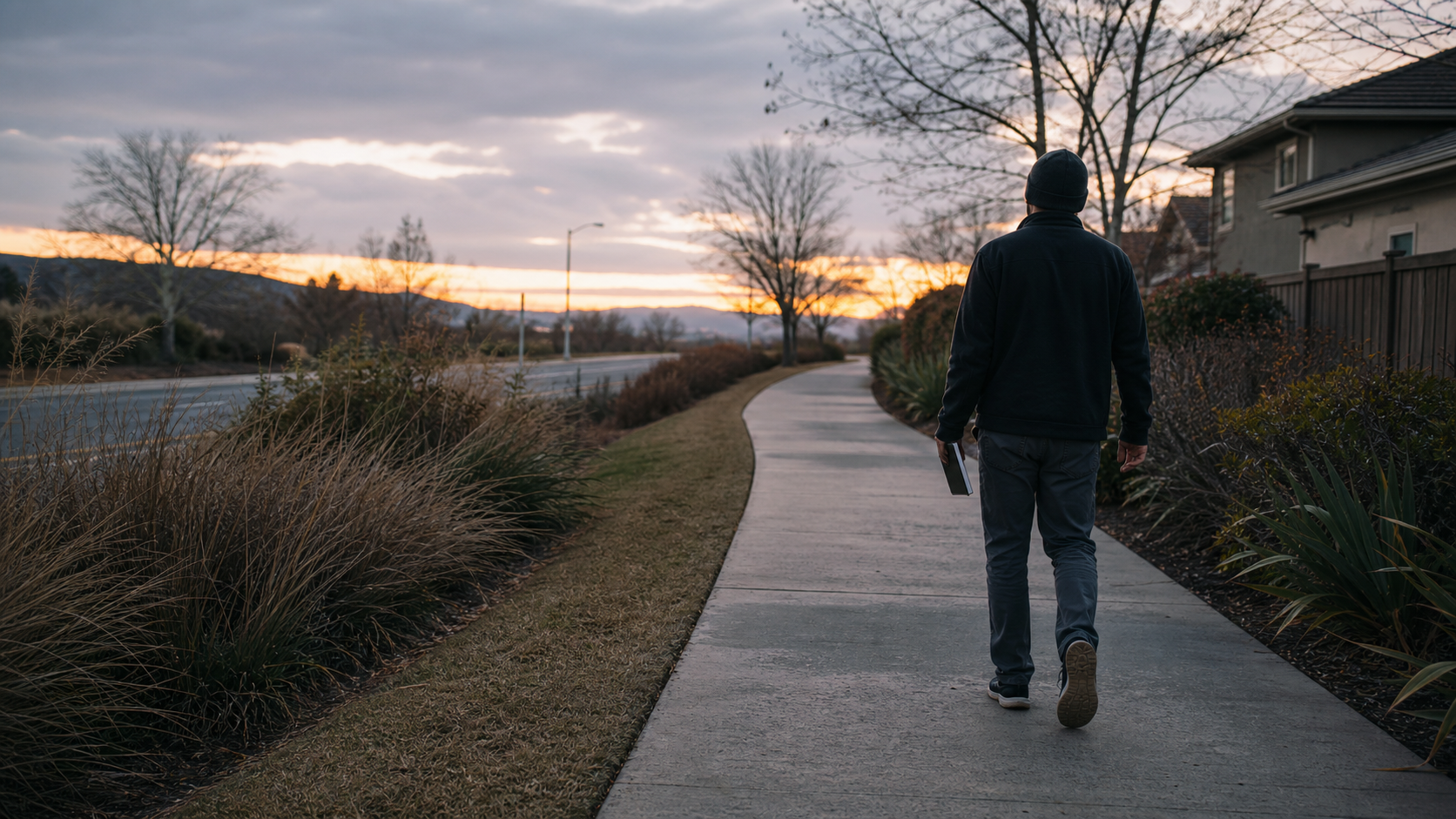
Reach Out.
Whether you're looking for support, want to share your story, or need someone to listen — a real person reads every message.
KHON KAEN
If something is weighing on you in Khon Kaen, reach out. Every reply is personal.
If things are not going well and you do not have a plan, that can feel overwhelming. Elder X can help you think through next steps without judgment.
Not therapy. Advice. $250/week — 1 hour phone/Zoom + unlimited texts.
SOUTHEAST ASIA: THE LANDSCAPE FOR MEN
CULTURAL CONTEXT
Southeast Asian masculinity varies from Thailand's relatively fluid gender norms to the Philippines' macho culture and Indonesia's Islamic masculinity expectations. Migrant labor patterns send millions of men to work abroad in construction and fishing, severing them from family support networks. Economic precarity, combined with tropical climate disasters, creates recurring displacement stress for men across the region.
MENTAL HEALTH LANDSCAPE
Thailand and the Philippines have developing community mental health systems but face severe workforce shortages. Vietnam and Cambodia carry unresolved war trauma across generations of men. Singapore stands as the regional exception with well-resourced services, though cultural stigma persists even there. Traditional medicine and spiritual healing remain deeply integrated with mental health responses across most countries.
KEY CHALLENGE
Millions of male migrant workers are separated from families and home-country support systems, working in exploitative conditions with zero mental health access.
Philippines: Natasha Goulbourn Foundation (0917-899-8727). Singapore: Samaritans of Singapore (1-767). Thailand: Department of Mental Health (1323).
SURVIVING WITHOUT A SAFETY NET — ELDER X KNOWS THAT WEIGHT
The Informal Economy Trap — But Not a Life Sentence
In Khon Kaen, roughly 60% of working men earn their living outside any formal employment structure. There is no contract, no pension contribution, no workers' compensation. A motorcycle taxi driver in Thailand might clear the equivalent of $8 on a good day, and nothing on a bad one. When the monsoon season floods the roads — as it does for weeks at a time across much of Thailand — that income drops to zero. There is no unemployment insurance to file, no HR department to call. The family eats if the man works, and the man works if the weather permits. This is not poverty as an abstract concept. It is poverty as a scheduling conflict between rain and rent. Elder X has been the man with no safety net. No insurance. No backup plan. No one to call when the money ran out. He knows the quiet terror of waking up and doing the math and realizing the math doesn't work. But he also knows this: the trap is only permanent if you believe it is. Ask AI what skills pay in Khon Kaen right now. Even from a phone. Even with bad signal. One new skill can change the entire equation. Stop settling for survival. Fight for a life. Send the part you would never post. That is usually the part worth replying to.
Migration as the Only Plan — Elder X Understands Leaving Everything
For many men in Khon Kaen, the calculus is straightforward: stay and starve slowly, or leave and send money home. Migration corridors pull men from Thailand toward construction sites, plantations, and service jobs in wealthier regions. They build highways in countries where they have no legal standing. They share dormitory rooms with twelve strangers and wire 70% of their wages back to families they see once a year if they're lucky. The psychological toll is staggering — studies of migrant labor populations show depression rates exceeding 40%. These men are simultaneously the primary financial support for their households and completely absent from them. Their children grow up with a father who is a monthly bank transfer and a voice on a phone. Elder X knows about leaving everything behind. He's been the man who had to walk away from his entire life and start over with nothing. He knows the loneliness of living for someone else's survival while your own soul is starving. But he's still here. Still standing. And his message is this: your sacrifice matters, but you matter too. Don't let the distance erase you. Call your family. Tell them the truth — not the performance. Use AI to find community organizations for men from Thailand wherever you are. You are who you hang out with. Find your people. The reply you get may reroute your week. That has happened for men who thought they were only venting.
When Family Is Your Only Insurance — Elder X Has Been the Load-Bearing Wall
In the absence of institutional support, family becomes the entire welfare system. An injury to a breadwinner in Khon Kaen cascades through generations. A broken leg means a daughter pulled from school to work. A father's illness means a son abandoning his education at fourteen. Men internalize this: they are the load-bearing wall, and if they crack, the roof comes down on everyone. This weight produces a specific kind of silence — not stoicism by choice, but stoicism by necessity. Seeking help for depression or anxiety feels like an indulgence when the alternative to working through pain is watching your family go hungry. The men who build the roads, pour the concrete, and haul the materials that keep Khon Kaen functioning do so knowing that their bodies are depreciating assets with no warranty and no replacement plan. Elder X has been the load-bearing wall. He held up everyone else while his own foundation was crumbling — bipolar episodes, broken marriage, religious trauma, every medication in the closet. He cracked. The roof didn't come down. It swayed, but it held. Because the truth is: you can ask for help and still hold your family together. In fact, you can't hold them together without asking for help. Do five pushups. Remind your body it's still yours. Use AI to find free health resources in Khon Kaen. Your family needs you alive and whole, not just present and breaking. If you hate advice, say why. He may agree and switch modes.
THE BOTTLE ISN'T MEDICINE — ELDER X KNOWS WHAT IS
Alcohol as Approved Therapy — Elder X Sees Through It
In Khon Kaen, a man who books a therapy appointment is brave. A man who orders a whiskey after a hard day is normal. That asymmetry explains more about the substance crisis among men in Thailand than any clinical study. Alcohol occupies a unique position in male social life: it's the only emotional lubricant that carries no stigma. You can't cry at work, but you can drink after it. You can't tell your friends you're falling apart, but you can tell them you got hammered last night and receive knowing laughter instead of concern. The line between social drinking and self-medication is invisible until it's behind you. Two beers after work becomes four. The weekend binge becomes the weeknight routine. By the time a man in Khon Kaen recognizes the pattern, his tolerance has rewritten his baseline. Normal now requires alcohol. Sobriety feels like withdrawal because it is. Elder X has been through the peyote ceremony and the medication carousel and the psych ward and every substance that promises to make the pain stop. He knows the bottle isn't medicine — it's a loan shark. It takes more than it gives, every single time. The real medicine is honesty, brotherhood, and doing the work. Do five pushups right now instead of pouring the next drink. Prove to yourself that your body can still respond to something besides a substance. If you are scared of hope, say why hope feels like a setup for another crash.
The Opioid Pipeline — You Didn't Choose This, But You Choose What's Next
The path from job site injury to opioid dependency is well-documented and still operational. A man in Khon Kaen tears a rotator cuff on a construction site. The urgent care doctor prescribes a thirty-day supply of oxycodone. The prescription runs out. The pain doesn't. A colleague knows someone who sells pills. When the pills get too expensive, fentanyl is cheaper. This isn't a moral failing — it's a supply chain. Men in Thailand account for nearly 70% of opioid overdose deaths. The demographics skew toward working-age men in physically demanding jobs — exactly the population least likely to have comprehensive health insurance, access to pain management alternatives, or the economic margin to take time off for rehabilitation. Elder X has had every medication in the closet. He knows what it's like to depend on a pill to function, to sleep, to stop the noise in your head. He's been in the system — inpatient, outpatient, every program that exists. And he can tell you: the pipeline that got you here was designed to keep you here. Break it. Use AI to find recovery resources in Khon Kaen. Find a man who's been clean for a year and ask him how he did it. You didn't choose addiction, but you choose what happens next. If you cheated, lied, or failed publicly, say it plain. He has rebuilt from worse.
Recovery on Your Terms — Elder X Found His
The twelve-step model has helped millions, but it isn't universal. Its emphasis on powerlessness, surrender, and higher-power reliance works for some men and alienates others. A man in Khon Kaen whose entire crisis stems from feeling powerless may not benefit from a recovery framework that begins by affirming his powerlessness. Alternative models — SMART Recovery, cognitive behavioral approaches, peer-led outdoor programs — offer different entry points, but they're chronically underfunded and harder to find. Effective substance treatment for men in Thailand needs to meet men where they actually are: in emergency rooms, on job sites, in jails, and in the quiet desperation of functioning addiction. Waiting for a man to hit rock bottom is not a strategy. It's an abdication dressed as philosophy. Elder X didn't wait for rock bottom. He hit it multiple times — psych ward, broken marriage, bipolar episodes that took everything. And every time he got back up. Not because he's special. Because he decided to. That's the only prerequisite: the decision. Stop settling for survival and start demanding a life. Make money. Build your body. Fill your calendar with things that aren't substances. Prove to yourself that the man underneath all that pain is still worth knowing. He is. If ketamine, SSRIs, or benzos are in the story, say what helped and what made you worse.
THE SYSTEM WASN'T BUILT FOR YOU — ELDER X WASN'T GOING TO WAIT FOR IT
The Missing Patient — That Was Elder X Too
Men in Thailand are 24% less likely than women to have visited a doctor in the past year. The standard explanation — male stubbornness, toxic masculinity, fear of vulnerability — is lazy. Look at the infrastructure instead. Walk into any general practice clinic in Khon Kaen and count the health posters. Breast cancer awareness. Cervical screening reminders. Prenatal vitamins. The messaging architecture of preventive care was designed for women, and it works — women engage with it. Men were never the target audience, and the results show. Male-specific preventive clinics are virtually nonexistent in Khon Kaen. Prostate screening, testosterone monitoring, cardiovascular risk panels designed around male physiology — these services exist in fragments, scattered across specialists with six-month waitlists. There is no male equivalent of the well-woman exam, no annual visit normalized from adolescence. Elder X has been the missing patient. He avoided doctors for years — until he couldn't. Until the bipolar diagnosis came. Until the psych ward. Until he had every medication in the closet and still had to figure out what actually worked. He knows the system wasn't built for you. But you still have to use it. Don't wait until they carry you in. If you fear becoming a burden, describe who taught you that story.
The Appointment Problem — And Why You Go Anyway
Most primary care offices in Khon Kaen operate 9-to-5, Monday through Friday — the exact hours most men work. Taking time off for a physical means lost wages, suspicious supervisors, and the nagging sense that you're being dramatic. Men in hourly jobs face the sharpest version of this: no sick days means choosing between a paycheck and a checkup. The paycheck wins every time. When men do show up, the interaction itself can be a deterrent. Average primary care appointments last 18 minutes. In that window, a man is expected to disclose physical symptoms, mental health concerns, and lifestyle factors to a stranger. Research from Thailand consistently shows men need more rapport-building time before disclosure — but the system doesn't budget for it. Elder X doesn't care about your excuses. He has every excuse in the book and he still went. He's done inpatient. He's done outpatient. He's done the 18-minute appointment and the 72-hour hold. He went because the alternative was dying — slowly or fast. Go to the doctor. Use AI to find telehealth that works with your schedule. Do five pushups while you're on hold. Stop treating your health like it's someone else's problem. If you want Elder X to be gentle, write "be gentle" and what you cannot take again.
Rewrite the Default — Starting With Yourself
The fix isn't shaming men into compliance. It's redesigning access. Evening and weekend clinics in Khon Kaen that cater to working schedules. Male health checks bundled into workplace safety programs so the appointment isn't an event — it's a line item. Telehealth platforms where a man can discuss erectile dysfunction or persistent fatigue without sitting in a waiting room reading parenting magazines. Men in Khon Kaen don't avoid healthcare because they think they're invincible. They avoid it because the system communicates, through a thousand small signals, that it wasn't designed with them in mind. Changing outcomes requires changing the architecture, not blaming the patient. But Elder X is going to be straight with you: you can't wait for the system to redesign itself. You redesign your life first. Ask AI to find you a doctor in Khon Kaen who sees patients after 5 PM. Book the appointment today. Not tomorrow. Today. Prove to yourself that your life matters enough to fight for it. Elder X has been where you are. He fought the system and he fought himself and he's still here. If you are angry at God, Elder X has been there. Say what you want from the universe now.
CRISIS DATA FOR KHON KAEN
HOW SOCIETY PUTS MEN DOWN
Men who are struggling often find that there are few spaces where they can be honest about what they are carrying without judgment.
Boys who struggle in school are more likely to receive discipline than empathy — and that early message about male pain being a behavior problem carries into adulthood.
Social media often rewards aggression and performance over vulnerability, making it harder for men to be honest about what they are actually feeling.
Fathers navigating custody situations can feel like the system was not designed with their involvement in mind — and that sense of powerlessness is real.
Men who experience domestic violence face real barriers to being believed and finding support, which makes an already difficult situation even harder.
Men who have been through the justice system face unique challenges in rebuilding their lives, and the support available often falls short of what is needed.
Men face disproportionate risks in physically demanding jobs, but conversations about workplace well-being rarely focus on them.
Men's health issues are historically underfunded and underresearched, which means many men face conditions without adequate resources or awareness.
ELDER X’S ADVICE FOR MEN IN KHON KAEN
WRITE FROM THE HEART
Tell Elder X what is hurting you. No judgment. No scripts. A real person who has been where you are reads every message from Khon Kaen.
REACH OUT TO ELDER X →$250/WEEK
1 hour phone or Zoom call per week. Unlimited texting. Real advice from someone who has rebuilt his own life. Not therapy — advice.
GET STARTED →“I have been through it all and came out the other side. If you are willing to be honest about where you are, I can help you figure out what comes next.”
Write from the heart — tell me what you are going through. Be specific. Sometimes one honest email exchange is all it takes to see things differently.
Reach Out to Elder XNot therapy. Personal advice and mentorship.
Elder X has been through bipolar, psych wards, every medication. When he says he understands, it is not a line. He lived it. That is why I trust him.
— Glen, 51 — former rancher
Names and details have been composited for privacy. Stories reflect real experiences shared with Elder X.
FREQUENTLY ASKED QUESTIONS
Is this only for straight men?+
It is for men. Your orientation is your business unless it is central to the pain you are solving. Respect goes both ways.
Can we text in my language?+
Yes. Elder X uses translation tools. Write in whatever language is most natural for you.
What if I am not angry — just empty?+
Emptiness is real and it is common. Elder X has been there. He approaches it as a structure and honesty challenge — not a judgment of who you are.
What should I put in the first message?+
Whatever is on your mind — in plain language. What happened this week, what is weighing on you, what you want to change. Just be honest.
What if I disagree with Elder X?+
Good. Disagreement with clarity beats agreement with fog. Push back in writing — that is how advice sharpens.
Can you help me find a job in Khon Kaen?+
He can help you think, plan, and use AI to search — not place you in a job. Making money is a theme; employability is on you to execute.
How is this different from therapy or coaching?+
Elder X is not a therapist or a life coach. He is a man who has been through bipolar, psych wards, every medication, religious trauma, and marriage breakdown. He shares what actually worked for him and helps you figure out your own next step.
What happens when I reach out?+
You write from the heart about what you are going through. Be as specific as you can. Elder X reads every message personally and responds. No intake forms, no waitlists, no gatekeepers.
ELDER X IS READY FOR YOU IN KHON KAEN
If you are in Khon Kaen and the next hour feels too heavy, put the heavy into words and send them. Elder X answers as himself.
Write from the heart. Tell Elder X what is hurting you.
Not therapy. Advice. $250/week — 1 hour phone/Zoom + unlimited texts.
MORE CITIES IN THAILAND
Bangkok
5.1M people
Samut Prakan
389K people
Mueang Nonthaburi
292K people
Udon Thani
247K people
Chon Buri
219K people
Nakhon Ratchasima
209K people
Chiang Mai
201K people
Hat Yai
192K people
Pak Kret
183K people
Si Racha
179K people
Phra Pradaeng
171K people
Lampang
156K people
Surat Thani
127K people
Ubon Ratchathani
123K people
Nakhon Si Thammarat
121K people
Khlong Luang
119K people
Nakhon Pathom
118K people
Rayong
107K people
Phitsanulok
103K people
Chanthaburi
100K people
Pattaya
97K people
Yala
94K people
Ratchaburi
92K people
Nakhon Sawan
92K people
Phuket
89K people
Ban Mai
87K people
Songkhla
84K people
Phra Nakhon Si Ayutthaya
82K people
Chiang Rai
79K people
Bang Kruai
78K people
Sakon Nakhon
76K people
Krathum Baen
73K people
Saraburi
68K people
Trang
67K people
Sattahip
65K people
Kanchanaburi
64K people
Explore More.
Every page here was built for the same reason — to help you find what you need. Start wherever feels right.
Reach Out.
Write from the heart. Tell Elder X what you are going through — be specific about your situation. Sometimes one honest email exchange is all it takes to start seeing things differently.